
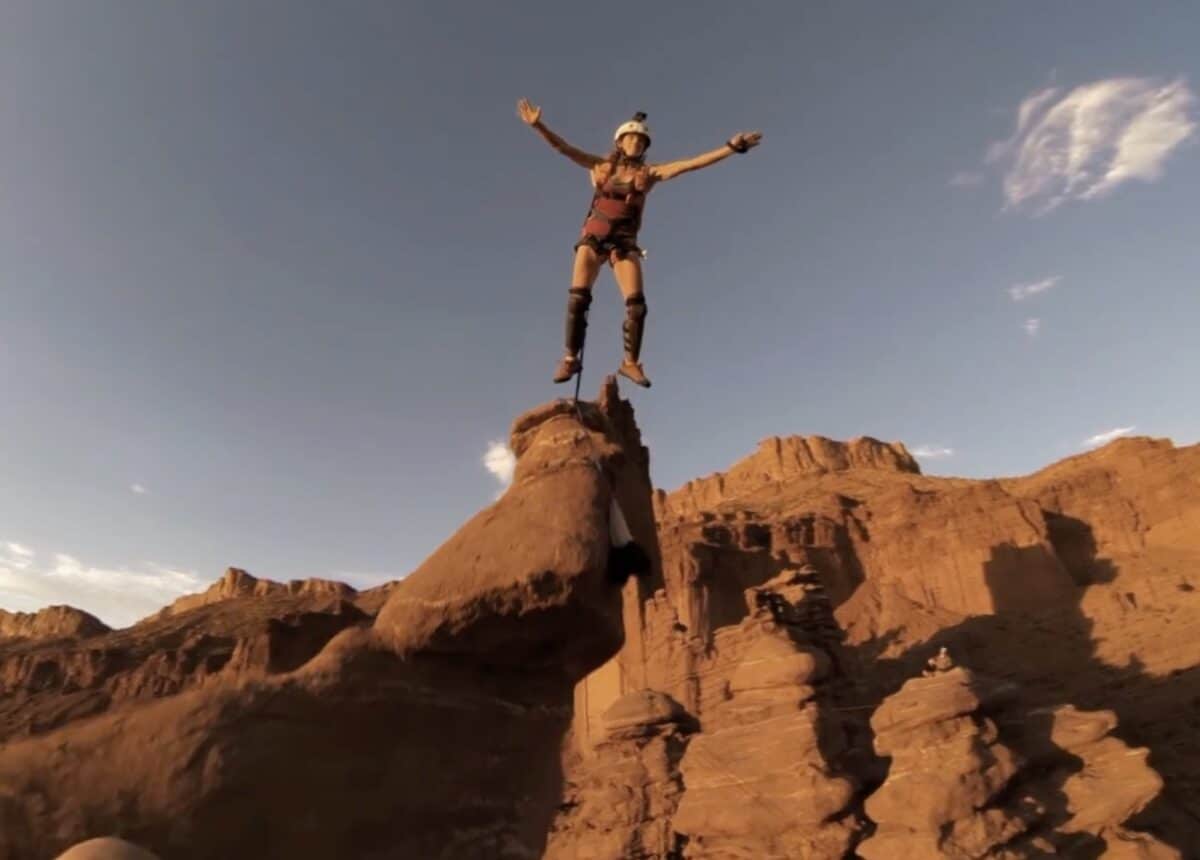
In a breathtaking display of skill and daring, BASE jumpers Hayley Ashburn and Marshall Miller recently ascended and leaped from Ancient Art, one of Moab, Utah’s most iconic and geologically unique rock formations. The daring feat, captured in stunning imagery and video, highlights the allure of this challenging desert landscape for extreme sports enthusiasts. Ancient Art, a prominent spire within the Fisher Towers, presents a formidable challenge even for seasoned climbers due to its steep, textured sandstone and the significant exposure experienced at its summit. The decision to BASE jump from such a precarious perch underscores the extreme nature of this sport and the profound trust BASE jumpers place in their equipment and their own abilities.
The Ascent and the Leap: A High-Stakes Endeavor
The journey to the summit of Ancient Art is a testament to the physical and mental fortitude required for climbing in such an environment. The ascent demands precise route-finding, exceptional balance, and a profound comfort with heights, all while navigating the fragile nature of desert sandstone. For climbers, the primary reward is the unparalleled perspective from one of Moab’s most dramatic and recognizable spires. However, for individuals like Ashburn and Miller, who carry what they refer to as "magic backpacks"—referring to their BASE jumping rigs—the summit of Ancient Art serves as a launchpad for an exhilarating descent to the canyon floor.
The footage shared by the athletes showcases the meticulous preparation involved. The climb itself is a display of expert rock climbing technique, with each move carefully considered on the exposed rock face. Reaching the summit, the jumpers prepare their parachutes, a critical phase where precision and calm under pressure are paramount. The act of leaping from the narrow, corkscrew-shaped summit is a moment of absolute commitment, followed by the unfurling of the parachute, allowing for a controlled descent back to the earth. This event not only showcases individual athletic prowess but also contributes to the ongoing narrative of extreme sports pushing the boundaries of human achievement in natural environments.
Ancient Art: A Geological and Cultural Marvel
Ancient Art, situated within the Fisher Towers area, is a striking desert landmark renowned for its unique geological composition and its position within a landscape rich with cultural history. The Fisher Towers themselves are primarily formed from the Organ Rock Tongue of the Cutler Formation, with a cap of the Moenkopi Formation. This geological layering is responsible for the towers’ distinctive stratified appearance and vibrant red hues. According to the Utah Geological Survey, these formations were laid down in ancient environments and subsequently sculpted by the uplift and erosion processes characteristic of the Colorado Plateau. The soft and highly erosional nature of the rock means that these towers are continuously shedding material, contributing to their dramatically sculpted and seemingly fragile forms.

The broader Moab region is deeply significant from a cultural perspective, boasting an extensive record of Indigenous rock art, including petroglyphs and pictographs created over millennia by various Native American peoples. This rock art is not representative of a single artistic tradition but rather a testament to a long and evolving human presence in the desert. While Ancient Art is primarily recognized for its geological prominence and climbing appeal, it exists within this culturally sensitive landscape. Visitors are consistently reminded to treat the area with care and respect, acknowledging the historical and spiritual significance of the land.
Recreation and Risk in Fisher Towers
The Fisher Towers area has evolved into a significant recreation destination, managed under public land systems, with hiking and climbing attracting the majority of visitors. The Utah Geological Survey provides detailed information on a 2.2-mile trail that winds through the base of these impressive formations, offering hikers stunning views. Climbers are drawn to the challenging routes on Ancient Art and neighboring towers, with Ancient Art’s distinctive summit shape making it a classic objective for desert climbers. Alongside hiking and photography, climbing is a popular activity. However, the inherently soft rock and exposed terrain necessitate a high degree of caution, with visitors advised to stay on marked paths.
The decision by Ashburn and Miller to BASE jump from Ancient Art represents an escalation of recreational activity in the area, pushing the boundaries beyond traditional climbing and hiking. While BASE jumping is an officially recognized extreme sport, its inherent risks are significantly higher than those associated with climbing or hiking. This is due to factors such as lower altitudes, less time for parachute deployment, and the unpredictable nature of the launch sites. The activity, while exhilarating for participants, also raises questions about the management of public lands and the balance between facilitating recreational pursuits and ensuring public safety and environmental preservation.
Historical Context of BASE Jumping
BASE jumping, an acronym for Buildings, Antennas, Spans (bridges), and Earth (cliffs), emerged as a distinct discipline from skydiving in the late 1970s and early 1980s. Pioneered by individuals like Dan Poynter and later popularized by others, it involves jumping with a parachute from fixed objects. The sport is characterized by its extreme nature and the inherent dangers involved. Jumps are typically made from much lower altitudes than traditional skydiving, leaving significantly less time to deploy the parachute and react to unforeseen circumstances. Moab, with its vast canyons, towering spires, and remote terrain, has long been a mecca for BASE jumpers and other extreme sports athletes, drawn by the unique challenges and dramatic landscapes it offers.
The specific location of Ancient Art, a well-known climbing objective, makes it a logical, albeit extremely challenging, target for experienced BASE jumpers. The visual appeal of a jump from such a prominent and visually striking natural formation is undeniable, contributing to its appeal for media capture and sharing within the BASE jumping community and beyond. The sport, however, operates in a complex legal and regulatory environment, with many jumping locations being subject to restrictions or outright bans due to safety concerns and potential impacts on the environment and other users of public lands.
Broader Implications and Future Considerations
The recent BASE jump from Ancient Art, while a remarkable feat of athleticism, also brings to the forefront discussions about the increasing popularity of extreme sports and their intersection with public land management. The allure of iconic natural landmarks for extreme athletes is undeniable, often leading to spectacular visual content that can inspire and captivante audiences. However, it also necessitates careful consideration of the potential impacts.
From a management perspective, authorities responsible for public lands like those managed by the Bureau of Land Management (BLM) in the Moab area must navigate the delicate balance between allowing for diverse recreational opportunities and ensuring the safety of participants and the general public, as well as preserving the natural and cultural integrity of the landscape. The inherent risks associated with BASE jumping mean that incidents, though not always publicized, can occur, placing a burden on search and rescue operations. Furthermore, the visual spectacle of such activities can sometimes attract imitators who may not possess the same level of training or experience, potentially leading to dangerous situations.
The fact that Ashburn and Miller are well-known and experienced BASE jumpers, and that the event was documented, suggests a level of professionalism and preparation. However, the broader implications extend to how such activities are perceived and regulated. Future considerations may involve enhanced communication with extreme sports communities, clearer guidelines for permitted activities, and ongoing assessment of the environmental and safety impacts of increasingly daring endeavors in sensitive natural areas. The continued popularity of Moab as a destination for adventure sports, from traditional climbing to more extreme pursuits, ensures that these conversations will remain vital for the responsible stewardship of this unique and breathtaking landscape. The dramatic leaps from Ancient Art serve as a potent reminder of both the incredible capabilities of the human spirit and the profound responsibility that comes with engaging with the wild and beautiful places on our planet.

