
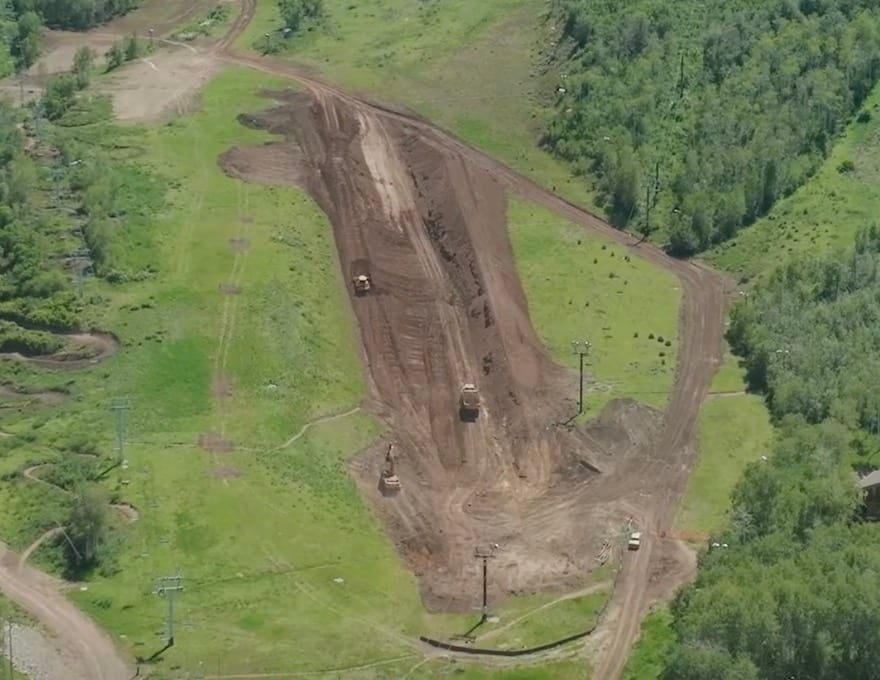
Park City Mountain Resort is making significant strides in the construction of its new Super Pipe, a project poised to redefine the standards of halfpipe snowboarding and freeskiing. Eric Rosenwald, a renowned expert in halfpipe and Super Pipe construction, recently provided an on-site update, highlighting the meticulous planning and advanced engineering involved in this ambitious undertaking. The new facility, an inground feature, has been designed and modeled with a precision of two centimeters, underscoring the resort’s commitment to creating a world-class training and competition venue.
The Engineering Behind a World-Class Super Pipe
The construction of a Super Pipe is far more than simply shaping snow; it is a complex engineering feat requiring extensive planning and execution. Rosenwald emphasized that the process extends over many months, involving detailed design, precise material management, and specialized construction techniques. The sheer scale of the project is impressive, with Rosenwald stating that the amount of material utilized would be sufficient to cover eight football fields to a depth of one foot. Despite its expansive size, the new pipe is engineered to use 60% less snow than traditional builds, a testament to efficient design and material usage. Furthermore, the new Super Pipe will be approximately 125 feet longer than its predecessors, offering athletes significantly more amplitude and room for progression.
This advanced construction methodology is crucial for meeting the demands of modern competitive snowboarding and freeskiing. The evolution of aerial maneuvers and technical tricks in these sports necessitates larger, more precisely sculpted features that allow athletes to achieve greater heights and execute more complex rotations. The inground design provides a stable and consistent base, ensuring predictable transitions and optimal snow conditions throughout the pipe.
A New Era for Competition and Athlete Progression
The upgraded 22-foot halfpipe is slated to host The Snow League in January, an event that is expected to showcase the capabilities of this new facility and set a new benchmark for competitive halfpipe events. The transition from the traditional 18-foot halfpipe to this larger, more advanced 22-foot structure signifies a significant step forward for athlete progression. Wider pipes with steeper transitions allow athletes to gain more speed and height, enabling them to perform more ambitious tricks and combinations. This not only elevates the spectacle of competition but also provides a crucial platform for athletes to push the boundaries of their sport.
The Snow League’s selection of Park City Mountain Resort for this inaugural event underscores the resort’s growing reputation as a premier destination for snow sports. The league itself is a significant development in the competitive landscape, aiming to provide a consistent and high-level platform for athletes to develop and showcase their skills. By choosing a facility that is at the forefront of halfpipe design, The Snow League signals its own commitment to progression and excellence.
Rosenwald’s enthusiasm for the project is palpable: "Super pipe update! What’s taking shape right now is more than a halfpipe, it’s pushing the limits of what’s possible in pipe construction. Big vision, serious precision, and a build that’s going to set the stage for The Snow League this winter and beyond." This statement encapsulates the transformative potential of the new Super Pipe, not just for Park City Mountain Resort but for the entire sport.
Background and Context: The Evolution of Halfpipe Construction
The evolution of halfpipe design has been a critical factor in the progression of snowboarding and freeskiing. Early halfpipes were often carved directly into the snow, with less emphasis on precise dimensions and more on natural terrain features. As the sports gained popularity and became more professionalized, the demand for standardized and meticulously crafted courses increased.
The International Ski Federation (FIS) and other governing bodies have established guidelines for halfpipe dimensions, but there has always been an ongoing debate and drive to improve these specifications. The move from 18-foot walls to 22-foot walls, as seen at Park City, is a direct response to the increasing amplitude and complexity of tricks being performed by elite athletes. Features like the U.S. Ski & Snowboard Center of Excellence and other high-performance training facilities have been instrumental in this evolution, experimenting with different pipe designs to optimize athlete training and performance.
Park City Mountain Resort, as one of North America’s largest ski resorts, has a long history of hosting major events and catering to a diverse range of snow sports enthusiasts. The investment in a state-of-the-art Super Pipe demonstrates a strategic commitment to remaining at the forefront of the industry, attracting top-tier athletes, and providing unparalleled recreational opportunities.
Timeline and Anticipated Impact
While the exact start date of construction is not detailed in the provided update, the mention of The Snow League event in January suggests a completion timeline that allows for ample testing and familiarization by athletes prior to the competition. The months leading up to January will likely involve meticulous grooming, snow management, and fine-tuning of the pipe’s transitions and walls.
The impact of this new Super Pipe is expected to be multi-faceted:
- Athlete Development: It will serve as a premier training ground for professional and aspiring athletes, enabling them to hone their skills in a world-class environment. This could lead to a new generation of record-breaking performances.
- Event Hosting: Park City Mountain Resort will solidify its position as a key venue for major snowboarding and freeskiing competitions, potentially attracting more international events beyond The Snow League.
- Tourism and Economic Impact: The presence of such a significant facility can draw increased visitor numbers, particularly during the competitive season, benefiting the local economy of Park City.
- Innovation in Construction: The advanced techniques and precision employed in building this Super Pipe could influence future halfpipe construction projects globally, promoting more efficient and effective methods.
The resort’s commitment to utilizing 3D modeling and precise engineering reflects a modern approach to snow park construction, prioritizing athlete safety and performance while also considering sustainability through reduced snow usage. This forward-thinking approach is a hallmark of leading resorts aiming to provide the best possible experience for their clientele.
Broader Implications for Snow Sports
The development of enhanced facilities like Park City’s new Super Pipe is indicative of the broader trends within professional snow sports. As athletes continue to push the envelope of what is physically possible, the infrastructure supporting their endeavors must evolve in parallel. This includes not only the size and shape of features but also the quality of snow, the consistency of the surface, and the overall safety protocols.
The investment by Park City Mountain Resort is a clear signal to the industry that the pursuit of excellence in snow sports infrastructure is ongoing. It suggests a recognition that to attract and retain top talent, and to host prestigious events, resorts must continuously innovate and upgrade their facilities. The success of this Super Pipe could serve as a model for other resorts looking to enhance their snow park offerings and solidify their standing in the competitive world of winter sports.
The partnership with The Snow League further amplifies the significance of this project. By aligning with an organization focused on progression and high-level competition, Park City Mountain Resort is strategically positioning itself at the cutting edge of the sport. This collaboration is likely to foster a symbiotic relationship, with The Snow League benefiting from a world-class venue and Park City Mountain Resort gaining exposure and prestige through hosting significant events.
In conclusion, the construction of the new Super Pipe at Park City Mountain Resort represents a substantial investment in the future of snowboarding and freeskiing. It is a project characterized by meticulous planning, advanced engineering, and a clear vision for athlete progression and competitive excellence. As the completion date nears, the excitement within the snow sports community is palpable, with anticipation high for the unveiling of a facility that promises to set new standards and inspire new heights of athletic achievement.

