
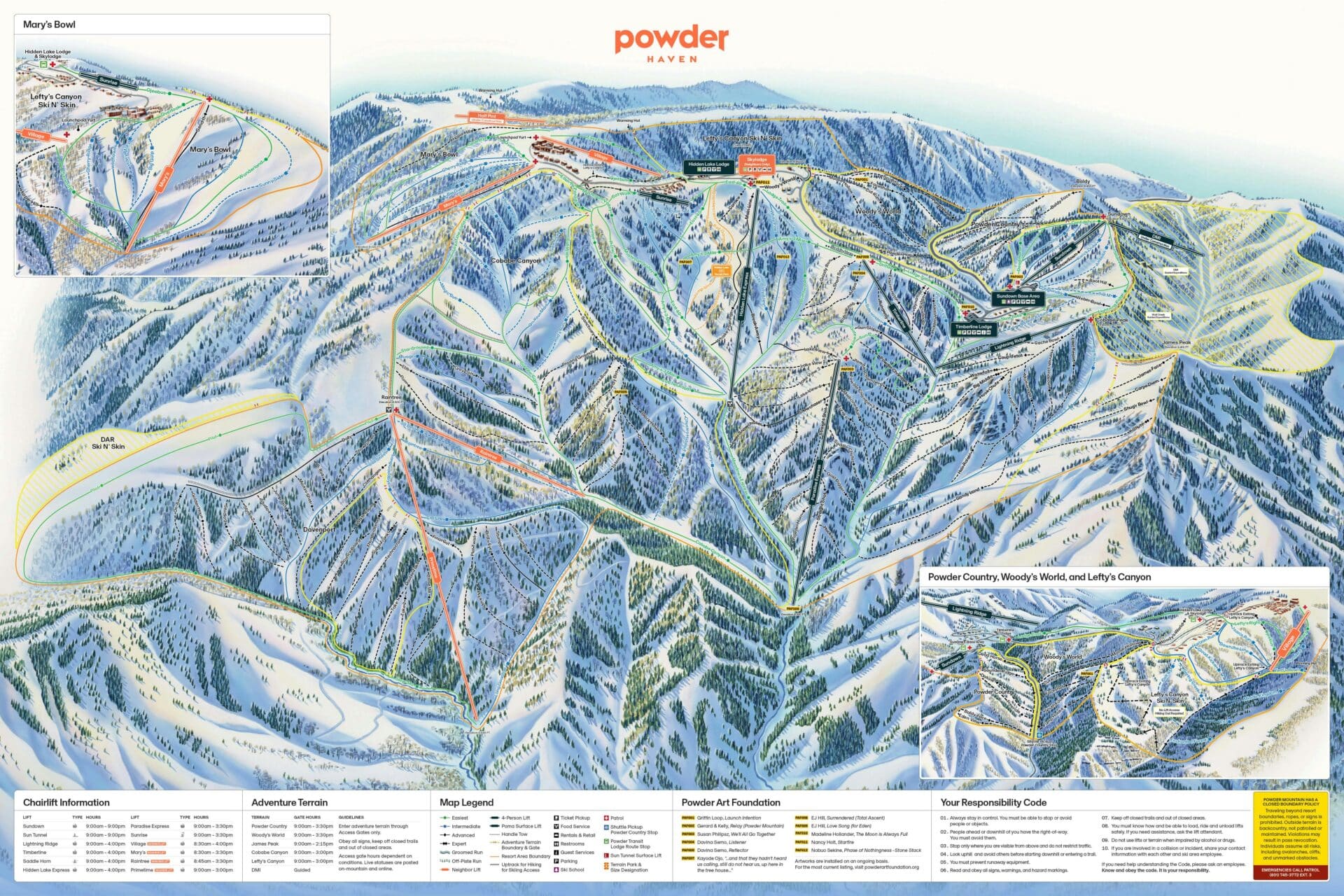
Weber State University has finalized the sale of two significant land parcels, totaling 3.46 acres, located atop Utah’s Powder Mountain, to Powder Haven, the private side of the renowned ski resort. The transaction, valued at $3.2 million, represents a strategic divestment for the university, with proceeds earmarked to advance its commitment to educational development and facility expansion. The sale marks a pivotal moment for both Weber State and Powder Mountain, signaling a new chapter of growth and strategic investment in the region’s educational and recreational landscape.
A Strategic Pivot for Weber State University
The decision by Weber State University to sell its Powder Mountain holdings stems from a long-held aspiration to establish a scientific research facility or an astronomical observatory at the site. These parcels were acquired in the 1980s, a period when Powder Mountain was a considerably more nascent ski area. At the time, the university envisioned leveraging the pristine mountain environment for academic and research purposes, capitalizing on its remote location and potential for clear skies.
However, the ambitious project faced persistent hurdles over the decades. A complex interplay of factors, including protracted permit processes and the inherent challenges of developing infrastructure in such a high-alpine environment, led to ongoing delays. Furthermore, the university cited concerns related to light pollution, which could have potentially compromised the effectiveness of astronomical observations, as a significant impediment to realizing its original vision.
Consequently, Weber State University has strategically shifted its focus. The substantial capital generated from the Powder Mountain land sale will now be reinvested in a property the university already owns in proximity to Yellowstone National Park. This new investment is intended to facilitate the development of a more robust and achievable educational facility, aligning with the university’s evolving strategic priorities and maximizing the impact of its resources. The sale price of $3.2 million was reported by the university to be "well above" the parcels’ current market value, indicating a favorable financial outcome for Weber State.

Powder Mountain’s Expansion Under New Vision
The acquisition of these 3.46 acres by Powder Haven is a significant development for the private side of Powder Mountain, which has been experiencing a notable surge in property and land sales. This momentum is largely attributed to the influence and investment of Netflix Co-Founder Reed Hastings, who has been instrumental in shaping the vision and development of Powder Haven. Hastings acquired a controlling stake in Powder Mountain in 2014, with a stated goal of transforming it into a year-round destination focused on community, technology, and outdoor recreation.
Under this new leadership, Powder Mountain has been actively pursuing a strategy of expanding its private residential and recreational offerings. The purchase of the Weber State parcels is seen as a strategic move to consolidate landholdings and potentially integrate new developments that align with Powder Haven’s exclusive and amenity-rich offerings. The area, known for its vast skiable terrain and commitment to preserving a less commercialized mountain experience, is increasingly attracting a discerning clientele interested in luxury mountain living and access to pristine natural environments.
Timeline of the Land Transaction
The genesis of this land sale can be traced back to the 1980s when Weber State University first acquired the parcels with the intention of establishing a research outpost. For over three decades, the university maintained ownership, periodically exploring development possibilities.
- 1980s: Weber State University acquires two parcels of land totaling 3.46 acres on Powder Mountain with the intent of developing a scientific research facility or observatory.
- Late 2000s – Early 2010s: Development plans for the university’s parcels face increasing challenges due to permitting complexities and environmental considerations, including light pollution.
- 2014: Reed Hastings acquires a majority stake in Powder Mountain, initiating a new era of development and investment focused on creating a private, exclusive mountain community.
- Early 2020s: Powder Haven, under Hastings’ leadership, experiences a significant uptick in land and property sales, driving demand for contiguous land parcels.
- 2025-2026: Negotiations between Weber State University and Powder Haven intensify regarding the sale of the university’s long-held parcels.
- May 2026: Weber State University’s Board of Trustees formally approves the sale of the 3.46 acres to Powder Haven for $3.2 million.
- May 2026 (Anticipated): Final approval from the Utah Board of Higher Education is expected to be granted, completing the transaction.
Official Responses and Endorsements
The sale has garnered positive reactions from key stakeholders involved in higher education and regional development in Utah.
Dr. Brad Bartel, President of Weber State University, expressed optimism about the strategic implications of the sale. "This transaction allows us to divest an asset that, while historically significant, did not align with our current strategic trajectory," Dr. Bartel stated in a hypothetical university press release. "The proceeds from this sale will be instrumental in accelerating the development of our educational facilities, particularly our new property near Yellowstone, which offers a more promising platform for student learning and research."

A spokesperson for Powder Haven, in a statement to the press, highlighted the synergistic nature of the acquisition. "We are thrilled to expand our landholdings at Powder Mountain. This acquisition represents a significant step in our ongoing commitment to enhancing the exclusive offerings and natural beauty of Powder Haven. We look forward to integrating these parcels thoughtfully into our long-term development plans, ensuring they complement the existing landscape and community ethos."
The Utah Board of Higher Education, responsible for the final approval, is expected to review the sale based on its financial prudence and strategic alignment with the state’s educational goals. Historically, the board has supported university initiatives that maximize asset utilization and enhance educational outcomes.
Broader Implications for the Region
The sale of Weber State University’s land parcels to Powder Haven has several notable implications for the development of the Powder Mountain area and the broader economic landscape of Northern Utah.
Economic Impact: The $3.2 million infusion into Weber State University is expected to stimulate further investment in its educational infrastructure. This can lead to job creation in construction, facilities management, and academic program development. For Powder Mountain, the acquisition of these prime acres solidifies its expansion plans and potentially paves the way for new luxury residential developments, private amenities, or exclusive recreational facilities. This could further elevate the resort’s profile as a premier destination for high-net-worth individuals and families.
Land Use and Development: The consolidation of land under private ownership at Powder Mountain suggests a continued trend towards exclusive development, potentially altering the accessibility and public perception of the mountain. While Powder Mountain has historically prided itself on its less commercialized approach, the expansion of private enclaves may lead to increased demand for related services and infrastructure, such as improved road access and utilities.
Educational Advancement: For Weber State University, the strategic redirection of funds towards a new facility near Yellowstone National Park could unlock unique research opportunities. The proximity to a world-renowned natural wonder presents a compelling case for fields like environmental science, geology, and ecology. This move underscores the university’s adaptive approach to leveraging its assets for the betterment of its students and academic endeavors.
Regional Tourism and Recreation: The ongoing development at Powder Mountain, driven by significant private investment, is likely to contribute to the region’s tourism sector. As Powder Haven evolves, it may attract a different demographic of visitors and residents, potentially influencing local businesses and services in nearby communities like Eden. The balance between preserving the natural environment and fostering economic growth remains a key consideration for the region.
In conclusion, the sale of Weber State University’s Powder Mountain land is a multifaceted transaction with far-reaching consequences. It represents a strategic realignment for the university, a significant expansion for Powder Haven, and a continued evolution of the Powder Mountain landscape, shaping its future as a destination for both education and exclusive recreation.

