
The inaugural Red Bull Features Cup, a groundbreaking team-based snowboarding competition designed to redefine conventional contest formats, culminated in an unprecedented three-way tie among the world’s elite regional squads, ultimately seeing the Asia-Pacific contingent emerge victorious after a dramatic sudden-death hip session. Held on a revolutionary, purpose-built course that blended technical challenges with creative freedom, the event championed collaboration, adaptability, and innovative riding, setting a new benchmark for competitive snowboarding.
A New Era for Snowboarding Competition
The Red Bull Features Cup was conceived as a direct response to the evolving landscape of action sports, seeking to inject fresh energy and a more session-driven atmosphere into high-stakes competition. Moving beyond the traditional individual focus on big air or slopestyle, this event prioritized team dynamics, diverse skill sets, and an element of spontaneous creativity. Red Bull, a brand synonymous with pushing boundaries in action sports, invested significantly in crafting a course that was as visually stunning as it was technically demanding, featuring distinct zones that tested every facet of a rider’s ability. The objective was clear: create an environment where riders could feed off each other’s energy, pushing progression while maintaining the inherent fun and camaraderie of snowboarding.
Global Talent Converges: The Teams and Their Strengths
Three formidable regional teams assembled, each bringing a unique blend of experience, technical prowess, and innovative style to the challenging course.
Team Europe fielded a star-studded lineup featuring Norway’s prodigy Marcus Kleveland, renowned for his seemingly effortless mastery of complex aerial maneuvers and precision on jumps. He was joined by fellow Norwegian Fridtjof Tischendorf, affectionately known as "Fridge," whose technical rail game and all-around versatility have earned him widespread acclaim. Rounding out the European squad were the dynamic talents of Isak Ulstein and Switzerland’s Celia Petrig, both known for their creative approach and consistent performance across varied terrain. Europe entered the competition with a strong reputation for technical excellence and a deep bench of highly skilled park riders.
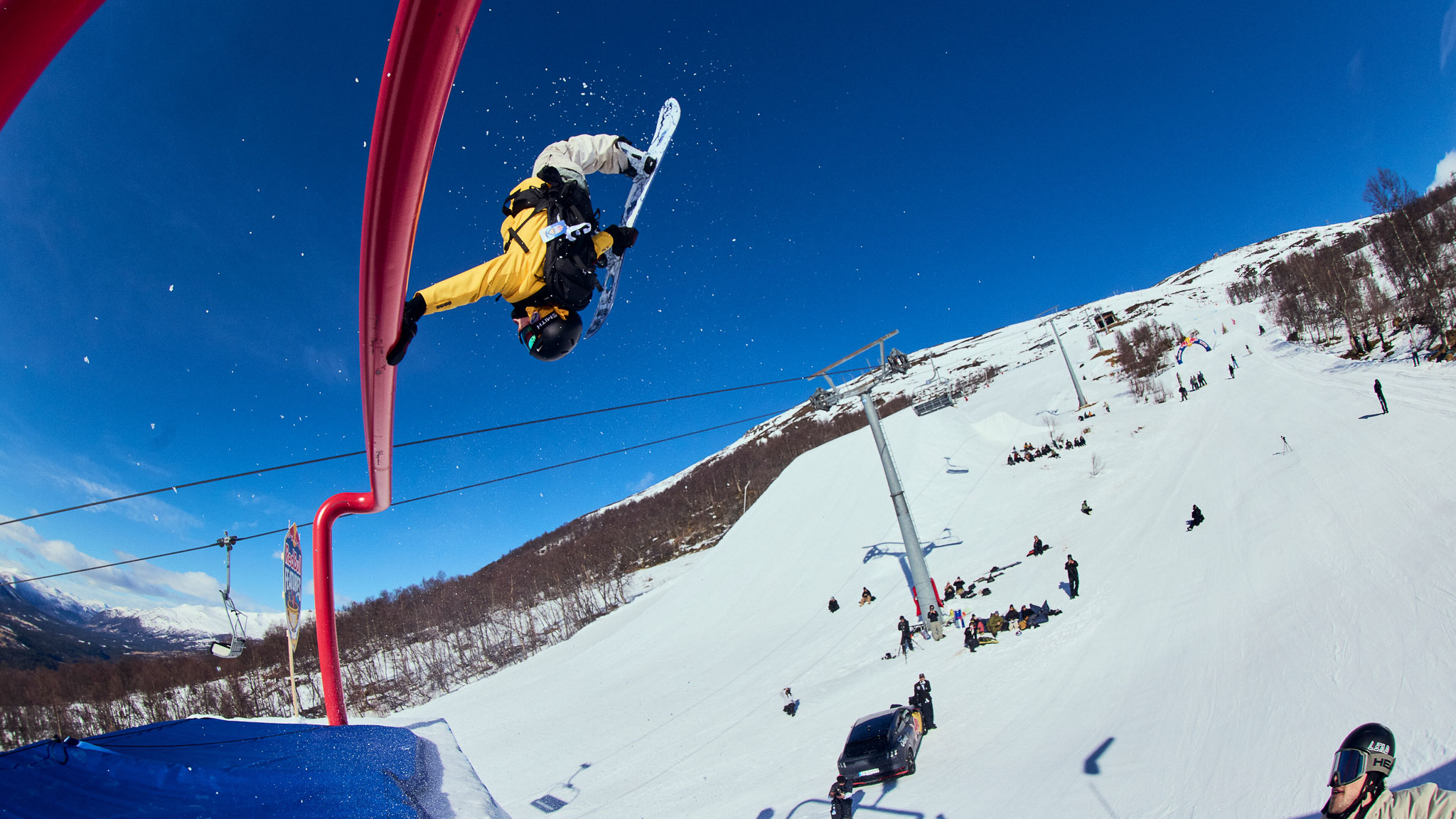
Team North America presented a powerful roster comprising American talents Luke Winkelmann, Denver Orr, Egan Wint, and Lane Weaver. Winkelmann, a consistent presence on the competition circuit, is celebrated for his fluid style and speed, particularly in slopestyle and banked slalom. Orr and Wint are known for their strong technical rail riding and creative lines, while Weaver added a dynamic edge, promising a well-rounded attack across all zones. This team was anticipated to leverage its strength in technical features and dynamic riding.
Team Asia-Pacific brought together a diverse and highly capable group: Japan’s Cool Wakushima, a rising star in women’s snowboarding with a reputation for bold tricks and smooth execution; New Zealand’s Zephyr Lovelock, whose unique style and creativity often stand out; Rocco Jamieson, known for his powerful riding; and Miyabi Onitsuka, another formidable Japanese talent recognized for her amplitude and technical ability. This team was viewed as a dark horse, potentially thriving in the event’s emphasis on adaptability and collaborative strategy, especially given their diverse skill sets and fresh perspectives.
The competition unfolded over four distinct zones – banked slalom, rail jam, quarterpipe, and jump – each designed to challenge different aspects of snowboarding and team strategy. Points were awarded 5-3-1 for first, second, and third place in each zone, but a critical element was the "Mischief Multiplier." This innovative layer introduced creative challenges and unpredictable twists throughout the event, forcing rapid adaptation and rewarding ingenuity, ensuring no two runs were ever truly alike.
The Gauntlet: Zone-by-Zone Breakdown
Zone 1: The Banked Slalom – Speed, Strategy, and Surprise
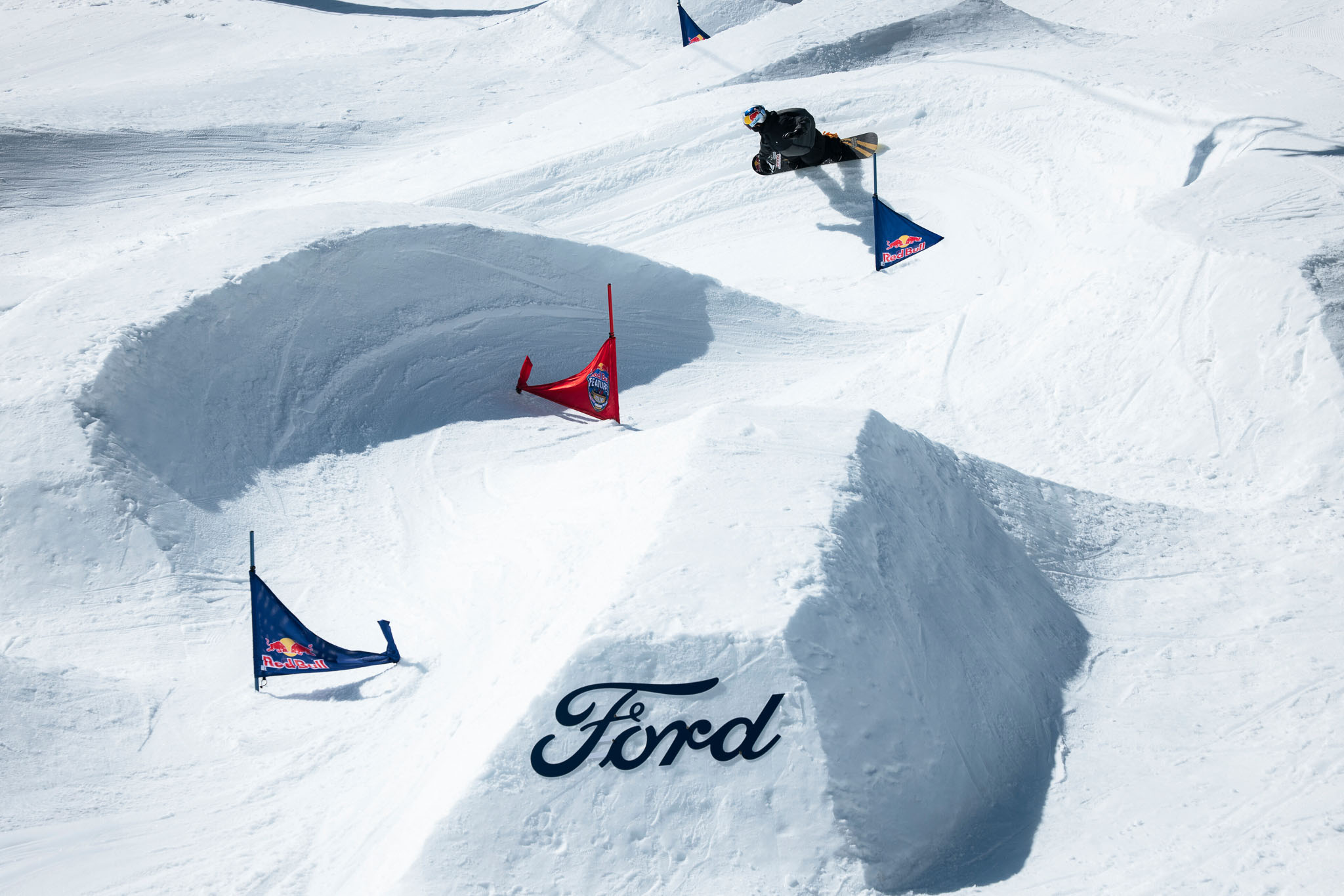
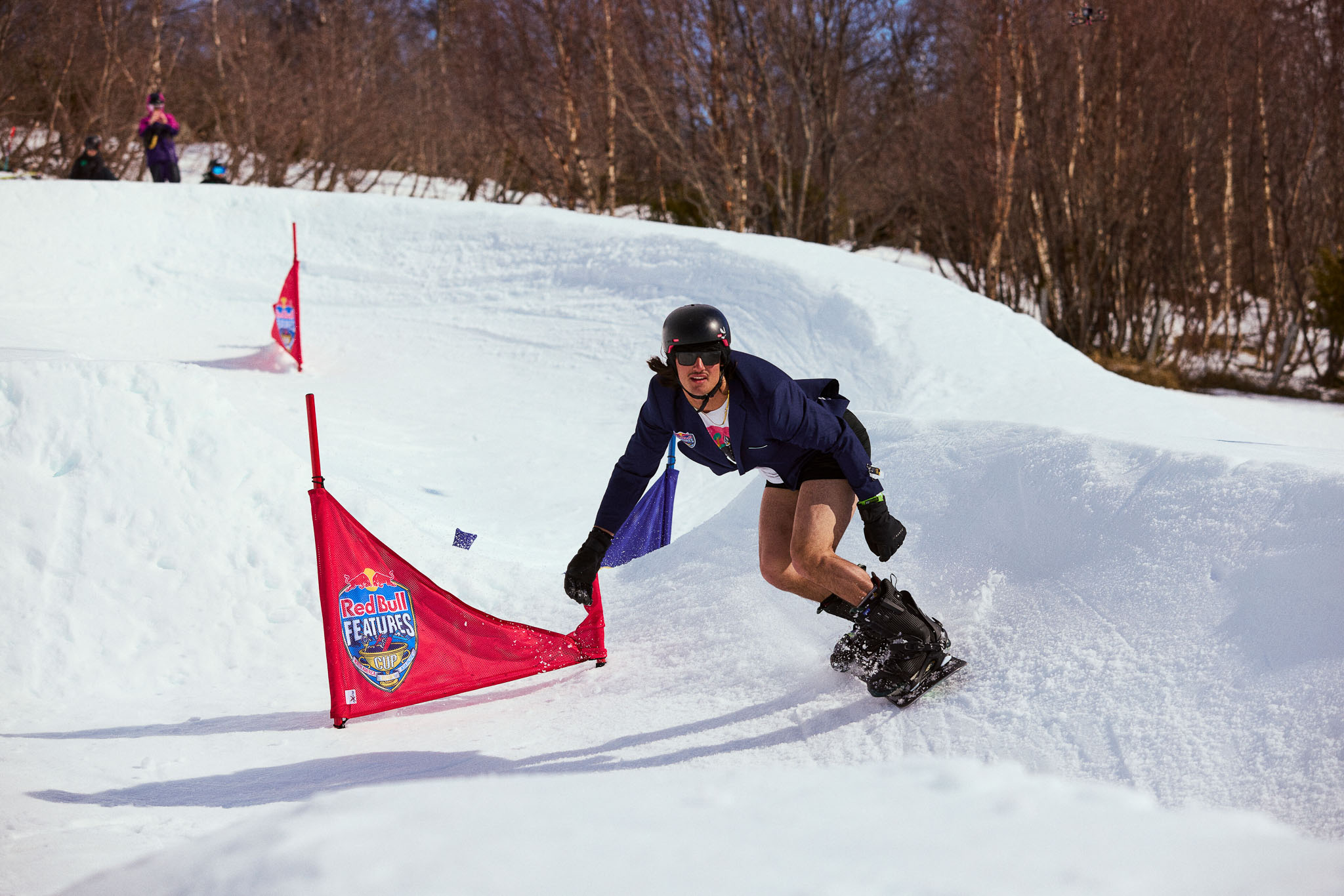
The Red Bull Features Cup kicked off with the banked slalom, a discipline that marries raw speed with precise line selection. The course was a serpentine marvel, featuring meticulously sculpted berms and transitions that demanded riders maintain momentum while navigating tight turns. Teams faced the unique challenge of logging cumulative times across two runs: one on traditional snowboards, emphasizing power and flow, and a second run on specially designed mini boards, which required entirely different body mechanics and a playful, agile approach. Penalties were strictly enforced for missed gates, adding pressure, but bonuses were on offer for creative risk-taking, including daring tricks like flips performed mid-course, which earned valuable time deductions.
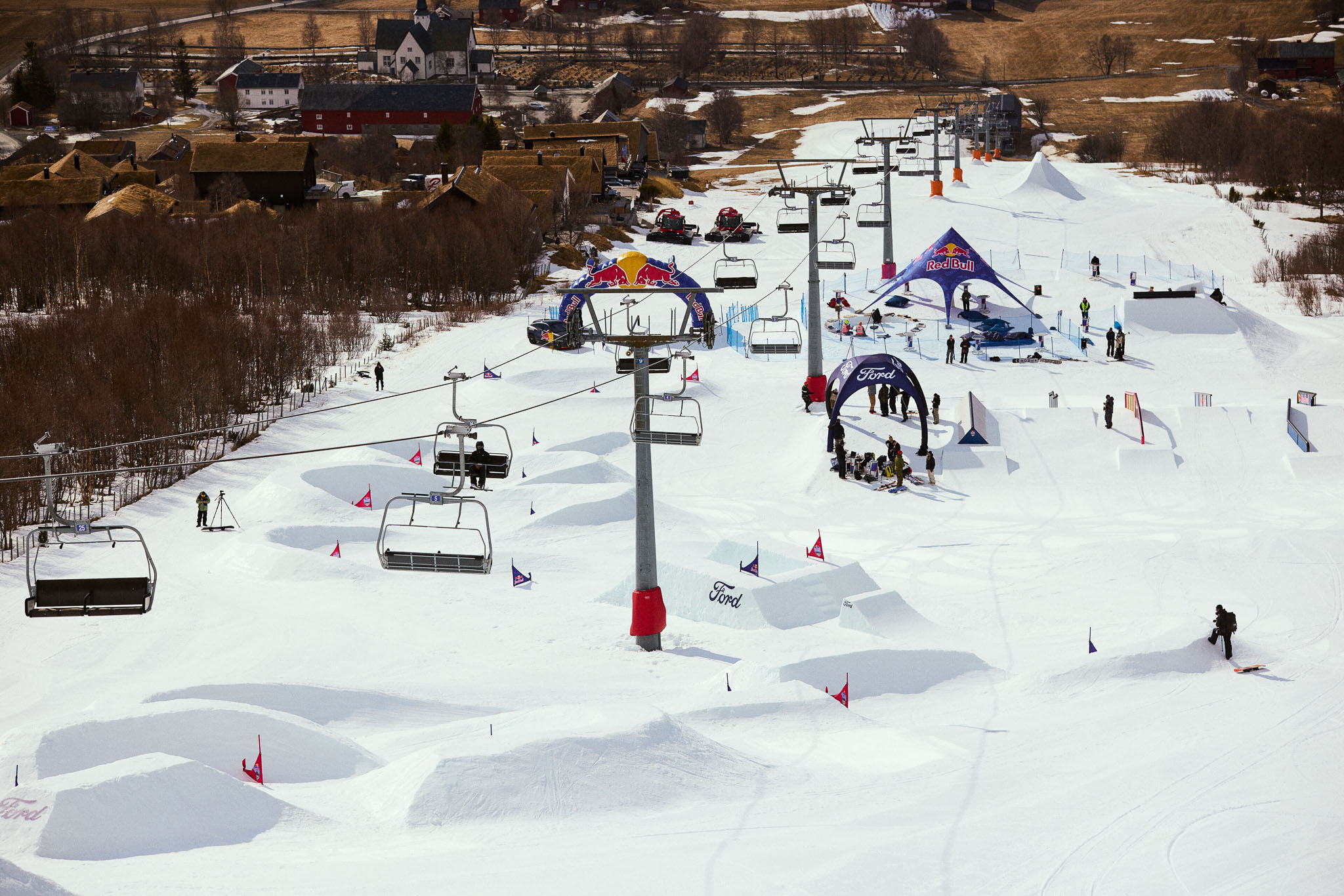
North America’s Luke Winkelmann immediately showcased his team’s speed, setting an blistering pace on his standard board with a run that was both technically sound and aggressively fast. His performance underscored North America’s capability in high-speed scenarios. However, the cumulative nature of the scoring, coupled with the mini board runs and the "Mischief Multiplier" – which, in this zone, included random gate reconfigurations mid-run for selected riders – kept the standings incredibly tight. Europe, with Marcus Kleveland’s precise navigation and Asia-Pacific’s consistent team performance, remained hot on North America’s heels, demonstrating the competitive depth of the field. The unpredictability of the mini boards and the creative bonuses meant that no team could afford a single mistake or missed opportunity for a stylish flourish.
Zone 2: The Rail Jam – Technicality Meets Spontaneity
From the high-speed precision of the banked slalom, the competition transitioned to the technical artistry of the rail jam. This zone quickly became a highlight, showcasing individual prowess and adaptability under pressure. It began as a traditional rail session, allowing riders to display their mastery of various features – including down rails, kink rails, and boxes – with their chosen lines and tricks. However, the "Mischief Multiplier" truly came into its own here, introducing a dynamic randomizer element: a spin wheel that dictated specific tricks or features riders had to incorporate on the fly. One spin might demand a frontside boardslide to fakie on the flat-down rail, while another could require a 270 on to a specific box. This forced instant strategic adjustments and rewarded riders who could think on their feet and execute complex maneuvers under unpredictable conditions.
North America, with its known depth in technical rail riding, leaned heavily into this strength. Luke Winkelmann and Denver Orr delivered a barrage of clean, highly technical rail tricks, consistently adapting to the spin wheel’s demands and making the zone a clear strength for their team. However, Europe’s Fridtjof Tischendorf, "Fridge," emerged as a singular standout. His composure and creative flair were evident as he consistently delivered under both open and randomized conditions, executing intricate slides and spins with a unique style that resonated with judges and spectators alike. His ability to maintain flow and creativity despite the imposed restrictions earned Europe crucial points and cemented his reputation as a rail specialist. Asia-Pacific also showcased strong individual moments, but North America’s collective consistency in this demanding zone gave them a slight edge.
Zone 3: The Quarterpipe – Amplitude, Style, and Synchronicity
The quarterpipe zone shifted the focus dramatically to amplitude, air awareness, and, crucially, team coordination. The quarterpipe itself was a massive, perfectly sculpted ramp designed to launch riders skyward, but it was enhanced with additional features like a wall ride extending off the lip and a "hitching post" that offered creative grind and tap options. The "Mischief Multiplier" for this zone introduced bonus points for synchronized "doubles" runs, a high-risk, high-reward maneuver where one rider hit low on the coping while a teammate aired directly over them, showcasing trust and timing.
In a testament to the collaborative spirit of the Red Bull Features Cup, all three teams successfully pulled off these challenging doubles, much to the delight of the crowd. These synchronized efforts added a unique, collaborative energy to the event, moving beyond individual performance to highlight team cohesion. Fridtjof Tischendorf again played a pivotal role for Europe, anchoring their performance with massive airs and stylish grabs, demonstrating his versatility beyond rails. Asia-Pacific, despite showcasing strong air awareness across its roster with riders like Cool Wakushima and Miyabi Onitsuka launching impressive heights, fell just short in the zone standings due to minor inconsistencies in execution, though their individual amplitude was undeniable. North America also put up a strong fight, with each team pushing the boundaries of what was possible on the quarterpipe.
Zone 4: The Jump Session – Controlled Progression and Execution
The final zone, the jump session, was designed to be a defining highlight, deviating significantly from traditional big air formats. Rather than simply rewarding the biggest or most difficult trick, this zone featured a unique progression format. Each rider was required to build their trick repertoire, starting from 180s and gradually increasing rotation up to a maximum of 900 degrees. This capped rotation level deliberately shifted the focus away from sheer rotational difficulty and instead emphasized execution, style, consistency, and landing perfection. It created a session unlike anything seen in conventional competitions, demanding thoughtful trick selection and flawless technique.
Team Europe, spearheaded by the undisputed jump powerhouse Marcus Kleveland, came into this zone with high expectations. Kleveland did not disappoint, delivering a masterclass in controlled progression, showcasing impeccable style and consistency through his 180s, 360s, 540s, 720s, and culminating in a perfectly executed 900. His performance was a testament to his unparalleled skill and grace. However, the other two teams rose magnificently to the challenge. North America’s Luke Winkelmann brought his signature flow and clean landings, while Asia-Pacific’s Cool Wakushima and Rocco Jamieson demonstrated exceptional air control and composure, matching the technical demands with their own stylish interpretations. The "Mischief Multiplier" here involved random "style challenges" – for instance, requiring a specific grab or a straight air with a tweak at a certain rotation level – adding another layer of complexity to an already meticulously planned session. The competition in this final zone was incredibly tight, with all three teams delivering performances worthy of a grand finale.
The Unprecedented Climax: A Three-Way Tie and Sudden Death
In a testament to how evenly matched the field was, the Red Bull Features Cup culminated in a mathematically improbable and truly rare occurrence: a three-way tie after all four zones. Each team finished on an identical 12 points. Europe had secured two impressive zone wins, leveraging their individual star power. Asia-Pacific combined one zone win with multiple strong second-place finishes, demonstrating consistent performance and depth across various disciplines. North America’s unwavering consistency across all zones, never finishing lower than second, kept them perfectly level with their competitors. The event, designed to break norms, had delivered an unforeseen, dramatic conclusion, forcing a sudden-death scenario to determine the inaugural champion.
The tie was ultimately broken in a high-stakes, unplanned fifth zone: a sudden-death hip session. The hip, a specialized jump feature designed for angled take-offs and landings, rewards style, air time, and creative grabs, often emphasizing amplitude and smooth transitions rather than complex rotations. It demands a unique blend of courage and finesse. Team Asia-Pacific capitalized brilliantly on their collective momentum and depth in this spontaneous format. Their riders, particularly Zephyr Lovelock and Cool Wakushima, demonstrated exceptional air awareness, powerful pop, and unique style, consistently landing clean, high-amplitude tricks with flair. Their cohesive performance in this pressure-cooker environment allowed them to secure the overall victory, etching their names into the history books as the first Red Bull Features Cup champions.
Final Results:
1st Asia-Pacific
2nd North America
3rd Europe
Reactions and Implications: A Resounding Success
The sentiment among riders, organizers, and industry observers was overwhelmingly positive. "This event felt different, truly," commented Marcus Kleveland, reflecting on the unique format. "The team aspect, the Mischief Multiplier – it kept everyone on their toes, and the vibe was incredible. It’s not just about winning; it’s about pushing each other creatively."
Cool Wakushima, a key member of the winning Asia-Pacific team, shared her excitement: "To win the first Red Bull Features Cup, especially in such a crazy finish, is unbelievable. Our team just clicked, and the format really allowed us to showcase everyone’s strengths. The hip session was intense, but we just fed off each other’s energy."
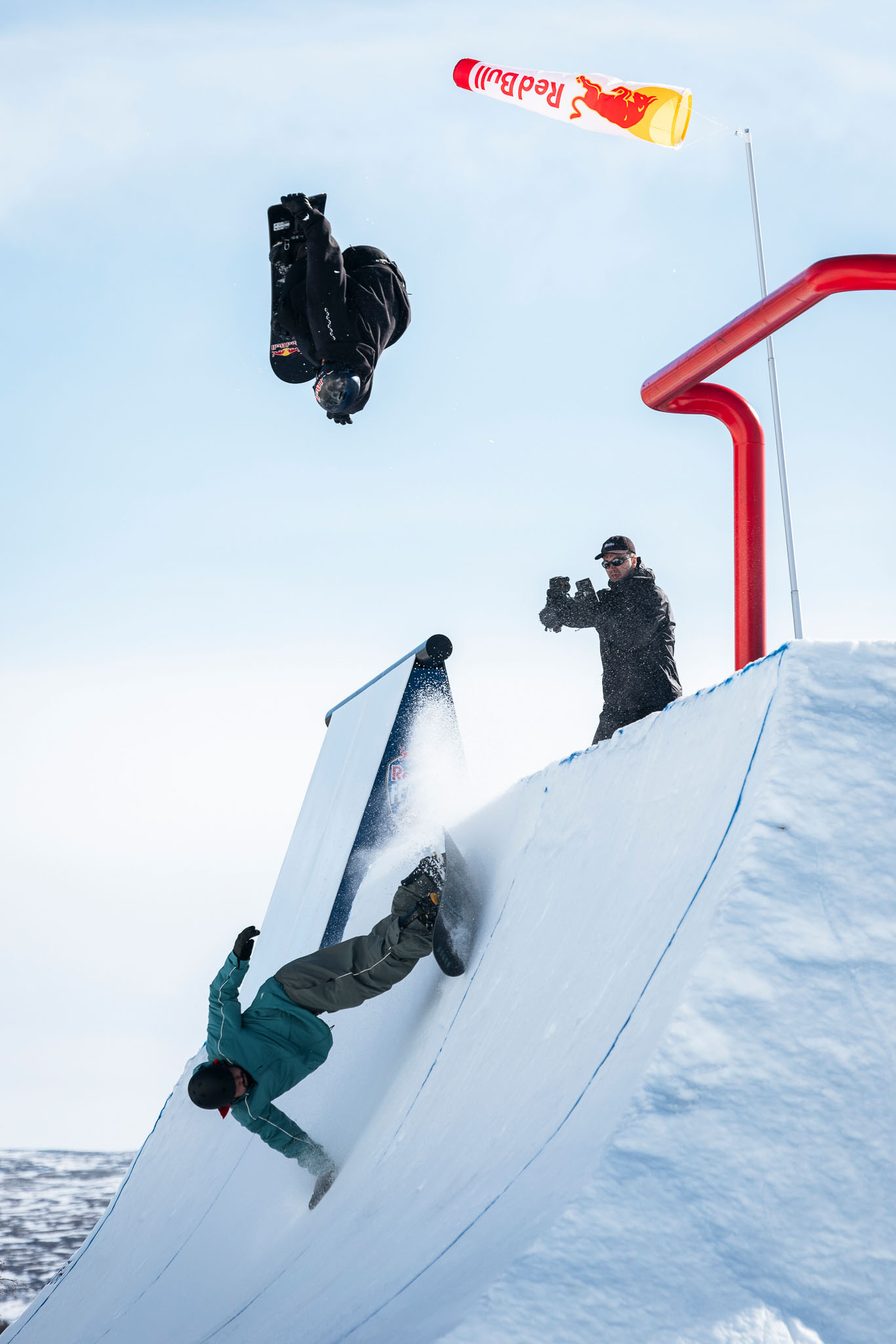
Luke Winkelmann of Team North America acknowledged the unique challenge: "We came so close, and that three-way tie was wild. It shows how high the level of riding was from every team. This kind of event really pushes you to think outside the box and work together, which is something you don’t always get in traditional contests."
Event organizers at Red Bull expressed immense satisfaction with the debut. "Our vision for the Red Bull Features Cup was to create something truly innovative, an event that prioritizes creativity, teamwork, and the inherent joy of snowboarding," stated a Red Bull spokesperson. "The unprecedented three-way tie and the electrifying sudden-death finish exceeded all our expectations. The riders embraced the format, and the level of progression and camaraderie was exactly what we aimed for."
Beyond the podium, the defining takeaway from the Red Bull Features Cup was the palpable vibe: a session-driven environment where riders genuinely fed off each other’s energy, pushing creativity and progression without the often-stifling pressure of a traditional contest circuit. The "Mischief Multiplier" proved to be a stroke of genius, ensuring constant engagement and dynamic adaptation from the competitors.
The successful debut of the Red Bull Features Cup unequivocally sets a new benchmark for competitive snowboarding. It champions a future where creativity leads, teamwork matters, and the fun and authentic spirit of snowboarding remain at the core. Industry analysts suggest this innovative format could inspire similar events across action sports, potentially attracting new audiences who appreciate both high-level competition and the collaborative, expressive nature of the sport. As the snowboarding world looks forward, the Red Bull Features Cup has laid down a compelling blueprint for what a progressive, rider-focused competition can truly be.

