
The Norwegian sprint relay team faces a significant opportunity to solidify their dominance on the international stage as the World Orienteering Championships conclude in Genoa, Italy, with the highly anticipated sprint relay event. While the challenges presented by the Italian terrain and a competitive field are considerable, Norway enters the competition with a strong track record and a clear ambition to claim the top prize. The action is set to unfold live on langrenn.com from 15:30 CET.
Norway’s Unrivaled Sprint Relay Legacy
Norway has established itself as the benchmark in the sprint relay discipline over the past year, a testament to their strategic development and consistent performance. Landslagstrener (National Team Coach) Janne Salmi has repeatedly emphasized the paramount importance of this event, articulating a fervent desire to secure a victory with the Norwegian contingent. This ambition is not unfounded, given their recent successes.
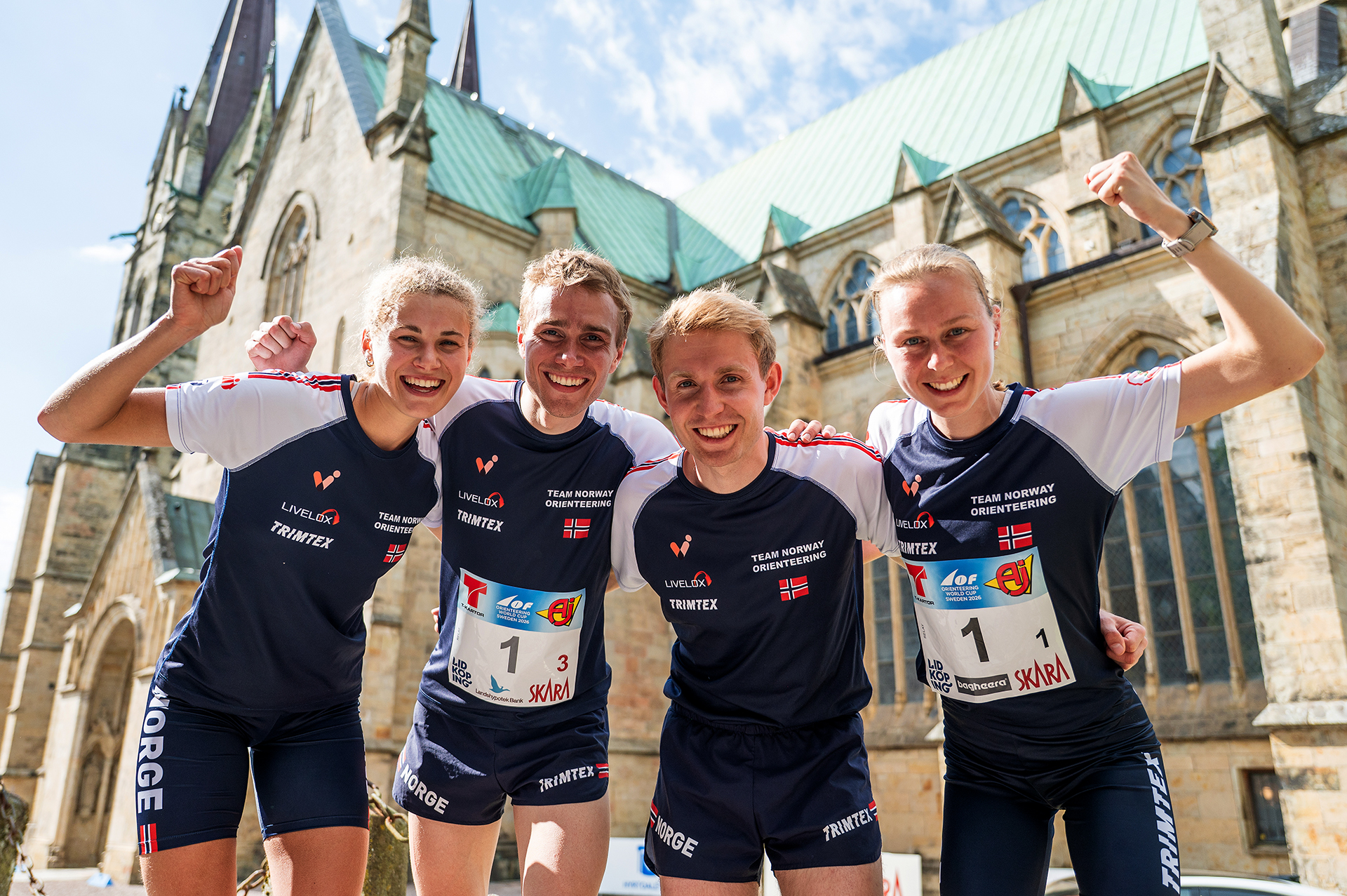
The Norwegian team has showcased exceptional form in the lead-up to Genoa, clinching victories in two World Cup sprint relays held in Locarno and Skara. Furthermore, they achieved a historic European Championship title in Belgium nearly a year ago. While Finland initially crossed the finish line first in that European Championship, a disqualification for missing a control point ultimately handed the gold medal to Norway, underscoring the fine margins and intense competition inherent in the sport.
Team Dynamics and Resilience
Despite a recent setback with Andrine Benjaminsen’s injury, the Norwegian squad has demonstrated remarkable resilience and depth. Victoria Håstad Bjørnstad has seamlessly stepped into the lineup, ensuring no discernible dip in the team’s overall strength. The core trio of Eirik Langedal Breivik, Kasper Fosser, and Pia Young Vik has consistently delivered strong performances, proving their mettle under pressure.
Breivik and Fosser, in particular, are driven by a desire for redemption following a disappointing performance in Friday’s knockout sprint. Their individual aspirations, combined with the team’s collective goal, are expected to fuel an intense effort in the relay. This drive is further informed by their previous World Championship experience, where they secured a bronze medal in Edinburgh two years ago, a result they are keen to improve upon.
Key Competitors Eyeing Norwegian Supremacy
The path to gold in Genoa is fraught with challenges, as several nations possess the talent and tactical acumen to vie for the podium. The following teams represent the most significant threats to Norway’s aspirations:
Switzerland: A Consistent Contender
Switzerland is a perennial contender in sprint relay events, known for their disciplined approach and strong individual athletes. The Aebersold siblings, Fabian and Simona, anchor a formidable team. Simona, in particular, is seeking retribution after missing out on Friday’s KO-final. While the form of veteran Natalia Gemperle on the opening leg remains a slight question mark, her extensive experience and ability to navigate the initial stages of the course are invaluable assets. Switzerland’s tactical prowess and the individual strengths of their athletes make them a dangerous opponent capable of challenging for the win.
Finland: A Resurgent Force
Finland’s presence on the podium at the European Championships, albeit through a disqualification of another team, highlights their potential. Their anchor Maija Sianoja’s experience is crucial, especially after the control point error at the Europeans. Both male athletes on the Finnish team have secured individual medals earlier in the week, demonstrating their current form. Veera Klemettinen’s victory in her qualifying heat for the KO-sprint further solidifies Finland’s status as a strong medal candidate. Their blend of individual success and collective strength positions them as a significant threat.
Czech Republic: The Surprise Package
The Czech Republic presents an intriguing lineup, notably placing Friday’s world champion, Tereza Rauturier, on the opening leg. This decision is somewhat surprising given Rauturier’s exceptional sprinting capabilities, often best utilized in a finishing role. However, it underscores their strategic flexibility. Lucie Dittrichova, last year’s junior world champion, will run the anchor leg, adding a potent combination of youth and proven performance. Dittrichova’s bronze medal in Tuesday’s World Championship sprint further bolsters their credentials. The Czech team’s consistent level of performance across all legs makes them a dangerous dark horse.
France: Bold Strategic Choices
France has made a surprising strategic decision by omitting both their world champion and silver medalist, Guilhem Verove, from the men’s legs. Instead, they are relying on the talents of Adrien Delenne and Mathias Barros Vallet, last year’s European Champion, for the male portions of the relay. The anchor leg will be run by another European Champion, Cecile Calandry. While Calandry appeared to struggle in the latter stages of Friday’s KO-final, her pedigree suggests she remains a formidable competitor. France’s bold strategy could pay dividends, potentially leading to another medal for the nation.
Denmark: Emerging Strengths
Denmark’s sprint relay campaign begins with Hedvig Valbjorn Gydesen, who faced a disqualification in yesterday’s event due to an incident involving Karolin Ohlsson. While Denmark has historically encountered challenges on the men’s legs, they possess two exceptionally strong female runners. Malin Agervig Kristiansen, who narrowly lost the bronze medal sprint to Pia Young Vik in the KO-final, exemplifies this strength. Their ability to leverage their female talent could prove decisive in a tight competition.
Sweden: Driven by a Missing Gold
Sweden enters the sprint relay with a clear objective: to secure the gold medal that has eluded them thus far in the championships. Hanna Lundberg will run the opening leg, with Karolin Ohlsson, the silver medalist from Friday’s sprint, anchoring the team. Gustav Runefors replaces Jonatan Gustafsson in the men’s lineup. Sweden’s hunger for a gold medal, coupled with the individual brilliance of their athletes, suggests they will leave no stone unturned in their pursuit of victory.
The Full Lineups
The strategic decisions and individual strengths of each nation will be on full display in the following lineups:
- Switzerland: Natalia Gemperle, Tino Polsini, Fabian Aebersold, Simona Aebersold
- Finland: Veera Klemettinen, Akseli Ruohola, Tuomas Heikkilä, Maija Sianoja
- Norway: Victoria Håstad Bjørnstad, Eirik Langedal Breivik, Kasper Fosser, Pia Young Vik
- Czech Republic: Tereza Rauturier, Jakub Glonek, Tomas Krivda, Lucie Dittrichova
- France: Maëlle Beauvir, Adrien Delenne, Mathias Barros Vallet, Cecile Calandry
- Hungary: Boglárka Czako, Ferenc Jonas, Zoltán Bujdosó, Rita Maramarosi
- Great Britain: Imogen Pieters, Eddie Narbett, Nathan Lawson, Grace Molloy
- Denmark: Hedvig Valbjørn Gydesen, Elia Hinge Krogsgaard, Andreas Bock Bjørnsen, Malin Agervig Kristiansson
- Sweden: Hanna Lundberg, Gustav Runefors, Isac von Krusenstierna, Karolin Ohlsson
Event Context and Historical Significance
The World Orienteering Championships sprint relay is a relatively new but increasingly prestigious event in the orienteering calendar. Introduced to the World Championships program, it emphasizes speed, precision, and seamless team coordination over short, technical courses. Unlike traditional forest orienteering, sprint relays are contested in urban or park environments, demanding rapid decision-making and efficient route choices.
The sprint relay format involves a team of four athletes, typically two men and two women, each completing a leg of the course. The order of the legs can vary, but a common structure involves alternating genders. The intensity of the competition is amplified by the close proximity of athletes and the rapid transitions between legs, creating a spectator-friendly and thrilling experience.
Norway’s dominance in recent years can be attributed to a concerted effort to excel in this format. The development of specialized sprint orienteering skills within their national team, coupled with the emergence of exceptionally talented individuals, has propelled them to the forefront. Their success in World Cup events and the European Championships has set a high bar for their competitors.
The Impact of Friday’s Knockout Sprint
The performances in Friday’s knockout sprint are likely to have a significant psychological impact on the athletes participating in the relay. For those who achieved individual success, such as the Czech Republic’s Tereza Rauturier and Sweden’s Karolin Ohlsson, there will be a surge of confidence. Conversely, athletes like Eirik Langedal Breivik and Kasper Fosser of Norway, who made mistakes, will be driven by a strong desire to rectify those errors and prove their capabilities in the relay.
The knockout sprint format itself is a high-pressure scenario, where even minor errors can lead to elimination. The athletes who navigated this challenge successfully have demonstrated their ability to perform under extreme duress. Their experience will be a valuable asset in the relay, where sustained concentration and flawless execution are paramount.
Broader Implications for the Sport
The growing prominence of the sprint relay signifies a strategic shift within orienteering towards more dynamic and accessible formats. The faster pace and urban settings of sprint orienteering make it more appealing to a broader audience and potentially attract new participants. The success of nations like Norway in this discipline highlights the importance of adapting training and development strategies to cater to these evolving formats.
The World Orienteering Championships serve as the pinnacle of the sport, and the sprint relay is increasingly becoming a marquee event within these championships. The outcomes in Genoa will not only determine the world champions for this year but also set the narrative for future competitions, influencing training methodologies and team selections for years to come. The battle for supremacy in the sprint relay is a crucial element in the ongoing evolution and globalization of orienteering.
The live broadcast on langrenn.com offers fans an unparalleled opportunity to witness this high-stakes competition as it unfolds, experiencing the tactical intricacies, the physical demands, and the sheer excitement of the World Orienteering Championships sprint relay firsthand. The question remains: can Norway withstand the pressure and continue their reign, or will a new champion emerge from the competitive field in Genoa? The answer will be revealed this afternoon.

