
Aksel Lindenmeyr, the 20-year-old American speed prospect, has officially joined the prestigious Stifel U.S. Ski Team, marking a significant milestone in a burgeoning career deeply rooted in the rugged terrain of Crested Butte, Colorado. His recent nomination comes on the heels of a breakthrough season characterized by formidable performances on the NorAm circuit and a coveted medal at the World Junior Championships. This ascension to the national team not only validates Lindenmeyr’s exceptional talent but also echoes a familiar trajectory within his family, charting a path first blazed by his mother, former Olympian and revered freeskiing icon, Wendy Fisher.
The Rugged Cradle of Crested Butte: Forging an Aggressive Style
Born on November 25, 2005, in Gunnison County, Aksel Lindenmeyr’s formative years were spent amidst the dramatic landscapes of Mount Crested Butte. From an astonishingly early age of 15 months, skiing became an extension of his identity, an intrinsic part of his daily existence in the high Rockies. This immersive introduction to the sport meant that his earliest, most enduring memories are inextricably linked to the slopes of Crested Butte, a mountain renowned for its challenging, untamed terrain and a vibrant culture that celebrates aggressive, exploratory skiing.
Crested Butte, often affectionately dubbed "The Last Great Colorado Ski Town," is distinguished by its steep, varied, and often un-groomed pitches, natural features, and abundant snowfall. Unlike many resorts focused solely on manicured runs, Crested Butte offers a veritable playground for those seeking adventure, fostering a freeskiing ethos that rewards creativity, confidence, and comfort in high-speed, dynamic conditions. Lindenmeyr’s upbringing in this unique environment was instrumental in shaping his distinctive, aggressive style. He recounted to Ski Racing Media, "My earliest memories are skiing around Crested Butte with my family, looking for every piece of terrain I could hit and skiing all over the mountain." These were days spent not merely traversing groomed trails but actively seeking out powder stashes, navigating technical chutes, and launching off every available natural feature.
This constant engagement with the mountain’s raw elements instilled in Lindenmeyr an intuitive understanding of snow conditions and terrain variability, skills that are invaluable in the unpredictable world of speed racing. The emphasis on "attacking" the mountain, rather than simply descending it, cultivated a fearless approach and an innate ability to adapt to changing conditions—hallmarks of a successful speed skier. He further elaborated, "Some of my best memories are definitely skiing powder days in Crested Butte, skiing all the T-bars, and jumping off anything I could find with my friends and family. I think it definitely played a role in how I ski race." This blend of freeskiing freedom and a competitive spirit laid a robust foundation for his future in alpine racing, distinguishing his technique with a powerful, dynamic edge.
A Family Legacy: Wendy Fisher’s Pioneering Path
Aksel’s profound connection to the mountains and his burgeoning career in ski racing gain deeper context when viewed through the lens of his mother’s legendary career. Wendy Fisher is celebrated as one of the most influential American female freeskiers of her generation, a trailblazer whose impact resonated across both competitive alpine racing and the nascent freeskiing movement. Born in California, Fisher’s own journey began at another iconic American ski destination, Squaw Valley (now Palisades Tahoe), a resort equally known for its challenging terrain and a culture that breeds fearless skiers.
Fisher’s talent quickly propelled her into the elite ranks of alpine racing. She joined the U.S. Ski Team in 1987 at the remarkably young age of 15, a testament to her prodigious skill and dedication. Her racing career culminated in a significant achievement: competing at the 1992 Winter Olympics in Albertville, France. This Olympic appearance followed a stellar performance in 1991, where she clinched the U.S. National Overall title, showcasing her versatility across multiple disciplines. After her Olympic tenure, Fisher transitioned seamlessly into freeskiing, where she truly cemented her legend. She became a dominant force in extreme skiing competitions, renowned for her aggressive style, ability to tackle formidable lines, and her pioneering role in shaping the sport. Her exploits were widely documented in ski films and magazines, inspiring a generation of skiers to push the boundaries of the mountain.
Lindenmeyr openly acknowledges the profound influence of both his parents in shaping his career, but his mother’s firsthand experience on the national team proved particularly crucial in guiding one of his most pivotal developmental decisions. Fisher understood the rigorous demands and strategic pathways necessary for elite ski racing. "If you really want to do something with ski racing, then we’ve got to send you away to school," Lindenmeyr recalled his mother advising him. This pragmatic counsel, born from personal experience at the highest level of the sport, underscored the need for specialized training beyond the recreational, albeit character-building, environment of Crested Butte. Wendy Fisher’s legacy not only provided Aksel with a powerful role model but also equipped him with invaluable guidance, helping him navigate the complex journey from talented junior to national team hopeful. Her understanding of the sacrifices and commitments required served as a bedrock for Aksel’s own pursuit of excellence.
The Transformative European Chapter: APEX2100 and Structured Development
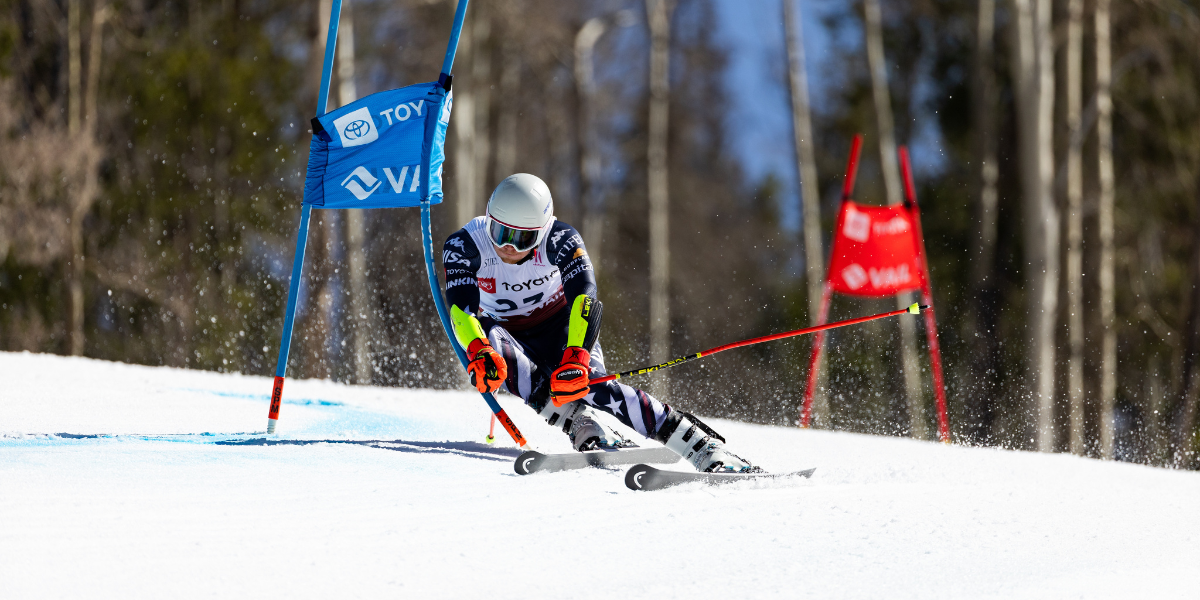
Following his foundational years with the Crested Butte Mountain Sports Team, which nurtured his raw talent and aggressive approach, Lindenmeyr made a decisive move that would prove transformational for his racing career: he left home during high school to join APEX2100 in Europe. This decision, undoubtedly influenced by his mother’s strategic insight, marked a significant shift from his informal, freeski-centric training to a highly structured, performance-driven environment.
APEX2100 is an elite international ski academy, typically based in the Alps, designed to provide comprehensive athletic and academic development for aspiring ski racers. For five years, including two crucial postgraduate seasons, Lindenmeyr immersed himself in this demanding program. His life became a rigorous schedule of training and competition, living primarily in France and racing extensively across Europe and North America. This exposure to diverse snow conditions, varied terrain, and a broad spectrum of international competitors was invaluable. He trained alongside peers from different nations, learning new techniques and adapting to various competitive landscapes—an experience that is indispensable for any athlete aiming for the World Cup circuit.
Lindenmeyr reflected on this pivotal period, stating, "I wouldn’t be the racer I am without that experience. The people I met, the training, and the experience of living in Europe made me who I am." The transition from the "powder days over gate training" mentality of Crested Butte to the disciplined regimen of APEX2100 was stark but necessary. While his early years fostered creativity and a love for speed, the European academy provided the technical refinement, strategic discipline, and consistent, directed training that elite racing demands. He humorously noted the contrast: "If it snowed, we wouldn’t train — we would just go freeski." At APEX2100, training became far more specialized, focusing on specific race disciplines, gate drills, and physical conditioning tailored to alpine racing.
Despite the increased structure, Lindenmeyr consciously maintained the multidisciplinary approach that continues to define his skiing. He competed across all four alpine disciplines—downhill, Super-G, giant slalom, and slalom—even as his natural inclination and strongest results increasingly gravitated towards the speed events. This early recognition of his aptitude for speed was a key indicator of his future trajectory. "My first-year racing FIS, my best points were in downhill and super-G, which wasn’t very common," he observed, highlighting his innate comfort and prowess at high velocity. "I’ve always loved speed." This blend of a freeskiing foundation and disciplined race training created a unique and formidable competitor, capable of adapting to diverse challenges on the race course.
A Breakthrough Season: NorAm Success and World Junior Podium
Lindenmeyr’s dedication and the breadth of his training culminated in a truly breakthrough season, solidifying his reputation as a formidable talent on the international stage. The NorAm Cup series, recognized as the primary development circuit for North American alpine racers vying for World Cup berths, became a significant platform for his progress. Throughout the season, Lindenmeyr consistently demonstrated his prowess in speed events, recording three top-10 finishes in downhill, a highly competitive discipline that demands courage, precision, and raw speed. He further underscored his versatility with a ninth-place finish in a NorAm Super-G race held at Beaver Creek, a venue known for its challenging and technical speed tracks.
Beyond his speed achievements, Lindenmeyr surprised many, including himself, by nearly reaching the podium in slalom, a technical discipline, with an impressive fourth-place finish on home snow in Colorado. This performance was particularly noteworthy as he admitted, "I hadn’t trained much slalom up to that point." His ability to perform at such a high level in a less-practiced discipline speaks volumes about his fundamental skiing skills, adaptability, and competitive mindset. The Beaver Creek performances, where he excelled in both speed and technical events, served as a crucial confirmation of his overall progress and potential. He recounted his approach: "I just tried to ski freely. I didn’t really have pressure on the slalom because I hadn’t trained much slalom up to that point. I just wanted to put down good skiing and see where it could take me." This unburdened approach allowed his natural talent to shine through.
Internationally, Lindenmeyr represented the United States with distinction at the last two FIS Junior World Ski Championships, a vital proving ground for the world’s best young alpine racers. His most significant international achievement came this past season in Narvik, Norway. There, competing in the Team Combined event alongside teammate Jevin Palmquist, Lindenmeyr played a pivotal role in securing a medal for the United States. The Team Combined event requires athletes to demonstrate proficiency in both speed and technical disciplines, typically combining a Super-G run with a slalom run. Lindenmeyr delivered a strong performance in the Super-G portion, achieving an impressive fifth-place result, which set the stage for Palmquist’s subsequent slalom run.
The emotional impact of this achievement was profound. "That was an incredible feeling," Lindenmeyr shared. "Once Jevin came down into the lead after the slalom, that’s when the emotions really hit because I knew we had medaled." This medal performance at a global championship not only brought recognition to him and the U.S. team but also significantly bolstered his self-belief. Competing and succeeding against a field of the world’s best junior racers provided invaluable confidence. "Seeing those results and knowing you can compete with the other nations is definitely a confidence booster," he affirmed, indicating a growing conviction in his ability to contend at the highest levels of the sport.
Earning the Stripes: Nomination to the Stifel U.S. Ski Team
The culmination of Aksel Lindenmeyr’s consistent performances on the NorAm circuit and his medal-winning effort at the Junior World Championships was his official nomination to the Stifel U.S. Ski Team. This nomination represents a significant validation of his talent and potential, marking his transition from a promising junior to a fully integrated member of the national development pipeline. While Lindenmeyr had been "right on the edge" of making the team the previous year, narrowly missing the criteria, his sustained strong results late in the most recent season secured his position unequivocally. "It wasn’t really until NorAm Finals that I knew it was in the cards," he recalled. "So this year, knowing I made it, was a pretty awesome feeling."

Joining the Stifel U.S. Ski Team means Lindenmeyr is now part of the prestigious Europa Cup speed group. The Europa Cup circuit is the tier directly below the World Cup, serving as a critical stepping stone for athletes aspiring to compete on the sport’s highest stage. This group focuses specifically on speed disciplines—downhill and Super-G—and operates primarily in Europe, providing extensive exposure to the continent’s diverse race venues and highly competitive fields. Training with this elite group offers unparalleled opportunities for technical refinement, tactical development, and competitive experience.
Lindenmeyr will train alongside a cohort of other promising American speed prospects, including Jeremy Nolting, Matthias Wilson, Jack Smith, and Alex Krupka. This collaborative environment fosters healthy competition and mutual support, pushing each athlete to elevate their performance. The group will be guided by experienced coaches such as Francio Bertolini and Mike Bansmer, whose expertise in speed events is crucial for developing young talent. This structured team environment, coupled with access to top-tier coaching and facilities, provides Lindenmeyr with the resources necessary to continue his progression towards the World Cup. His inclusion signifies that the U.S. Ski & Snowboard organization recognizes his potential to contribute to the future of American speed skiing, investing in his development as a key component of their long-term strategy.
The Road Ahead: Preparation, Challenges, and Aspirations
With his official nomination secured, Aksel Lindenmeyr’s focus immediately shifts to the demanding preparations required for the upcoming season. The summer months are critical for physical conditioning and technical refinement off-snow. His immediate plans include more than a month of intensive conditioning work at the U.S. Ski & Snowboard Center of Excellence in Park City, Utah. This state-of-the-art facility provides athletes with access to cutting-edge training methodologies, sports science support, and medical expertise, all designed to optimize physical readiness for the rigors of competitive ski racing. Following this period of dryland training, the team will embark on an essential on-snow preparation camp in Chile, taking advantage of the Southern Hemisphere’s winter to get valuable ski time before the European season begins.
Elite ski racing demands relentless travel, continuous training, and consistent international competition. It is a pathway that requires not only immense personal dedication but also a robust community of support. Lindenmeyr’s journey thus far exemplifies this, having benefited from a comprehensive support system throughout his development. Key partners like Head and SHRED provided crucial equipment and backing during his time at APEX2100, facilitating his progression into the Stifel U.S. Ski Team pipeline. This institutional support complements the unwavering encouragement from his family, coaches, and teammates, all of whom play an integral role in his continued growth and success.
Looking ahead, Lindenmeyr identifies consistency—particularly technical consistency—as the next crucial stage in his development. The difference between competing at the Europa Cup level and the World Cup often lies in the ability to execute flawless runs repeatedly, adapting seamlessly to varied course sets and snow conditions. This requires an unwavering trust in one’s training and skillset, even under immense pressure. "I really have to trust that I’ve put the work in and trust my skillset," he articulated, recognizing the mental fortitude required for the next step. Despite the intense demands, his passion for the sport remains undimmed. "At the end of the day, I’m doing what I love and what I’ve always dreamed of doing as a kid," he affirmed, encapsulating the deep-seated motivation that drives him.
Implications for American Speed Skiing
Aksel Lindenmeyr’s rapid ascent and his unique background offer promising implications for the future of American speed skiing. The U.S. Ski Team has historically seen strong contenders in speed events, and the infusion of new, aggressive talent like Lindenmeyr is vital for maintaining and building upon that legacy. His foundation in freeskiing, honed on the challenging slopes of Crested Butte, provides him with a distinct advantage: an innate feel for terrain, exceptional adaptability, and a fearless approach to high speeds and unpredictable conditions. These qualities, combined with the rigorous, structured training received at APEX2100 and now within the U.S. Ski Team’s Europa Cup group, create a powerful combination.
His progression, from a childhood spent attacking natural features to a World Junior medal and a national team nomination, suggests a promising pipeline for American speed specialists. The emphasis on nurturing versatile skiers who are comfortable across disciplines, yet excel in speed, could be a key strategy for U.S. Ski & Snowboard. Furthermore, the narrative of a second-generation Olympian-level athlete, following in the footsteps of a freeskiing legend like Wendy Fisher, adds an inspiring dimension. It highlights the enduring power of family legacy and the diverse pathways that can lead to elite ski racing. For a skier raised attacking the steep terrain of Crested Butte, with one of American skiing’s most influential freeskiers as his mother, the path to the Stifel U.S. Ski Team feels less accidental than inevitable, a testament to raw talent, dedicated training, and an unyielding passion for the sport. His journey will be closely watched as he aims to make his mark on the global stage.

