
The global snowboarding community has long operated under the rigid framework of competitive scoring, commercial pressures, and high-stakes bracket systems. However, a seismic shift in how the sport is celebrated took place against the pristine backdrop of the Scandinavian wilderness. Days of Thunder, an international snowboarding phenomenon born from a collaborative vision between the renowned American creative collective Snowboy Productions and Swedish professional snowboarder PJ Gustafsson, successfully redefined the parameters of modern snowboarding culture. Designed as an antidote to contest fatigue, the event returned to the fundamental roots of the sport: community, uninhibited creativity, and the shared joy of riding, completely stripped of judges, scorecards, and spectator bleachers.
Originating as a groundbreaking concept that made its inaugural Swedish debut, Days of Thunder operates on an ethos that prioritizes artistic expression over algorithmic evaluation. There are no podiums, no financial stakes tied to performance metrics, and no qualifying rounds. Instead, the gathering focuses exclusively on collective session-riding, capturing genuine cinematic moments, and fostering an environment where generational divides, professional status, and international borders dissolve. The overarching philosophy can be distilled into a singular mandate: no rules, no judges, no scoring, no crowds, just riding together, having fun, and documenting the journey.
The Genesis and Evolution of a Radical Concept
To understand the cultural weight of Days of Thunder, one must examine the contemporary trajectory of competitive snowboarding. Over the past three decades, the sport has transformed from an outlaw subculture into a heavily regulated Olympic discipline. While this mainstreaming brought unprecedented global visibility and athletic progression, it also alienated a significant portion of riders who viewed snowboarding primarily as a form of personal expression rather than a metric-driven contest.
Snowboy Productions, celebrated globally for designing avant-garde, hand-shaped snowboard parks that favor flow and creativity over massive, standardized scaffolding jumps, found an ideal partner in PJ Gustafsson. Gustafsson, a veteran Swedish pro known for his deep appreciation of snowboarding’s cultural heritage, envisioned an event that would bridge the gap between American innovative park-building philosophies and the rugged, independent spirit of Scandinavian snowboarding. Following the success of its initial implementation, the planning committee sought to elevate the experience further by relocating to an entirely new site for the recent iteration, setting the stage for what would become an unprecedented showcase of technical prowess and artistic freedom.
A Rigorous Timeline of Preparation and Execution
The realization of the Days of Thunder park was no small feat; it demanded exhaustive physical labor, precise architectural engineering, and an acute understanding of snow dynamics.
Phase One: Construction and Terrain Shaping
Before a single board touched the snow, a dedicated crew spent four intensive days shaping the new location. Operating under brilliant, blistering sunshine, the builders sculpted a terrain park featuring entirely unique obstacles—several of which had never been engineered or executed in the history of snowboarding course design. Unlike traditional contest courses designed for maximum airtime and spin-to-win gymnastics, this course was conceptualized as a living sculpture, encouraging seamless transitions, creative line selection, and interactive features that demanded both technical ingenuity and spatial awareness.
Phase Two: The Arrival of Global Talent
Once the park stood ready, invited riders began arriving from every corner of Scandinavia, alongside international delegations from the United States, Canada, and Bulgaria. The roster reflected a diverse cross-section of the global snowboarding ecosystem, uniting national team members, venerated legends of the sport, X-Games veterans, and even a Finnish television celebrity and professional stuntman. This eclectic mix of participants ensured a dynamic exchange of styles, bridging the gap between old-school power and new-school technical innovation.
Phase Three: Five-Hour Daily Sessions
The core event spanned three intensive days, structured not around heats or timed runs, but around daily five-hour film and photography sessions. These extended windows allowed riders the luxury of time—eliminating the anxiety of a two-run elimination format. Athletes could session specific features repeatedly, session together, push each other’s boundaries organically, and refine their approaches without the pressure of a ticking clock or a panel of judges tallying execution errors.
Architectural Innovation and Environmental Harmony
The success of Days of Thunder relies heavily on the symbiotic relationship between course design and natural topography. The newly selected site offered superior snow retention and wind protection compared to previous iterations, allowing the meticulous hand-shaped features to remain pristine throughout the multi-day gathering.
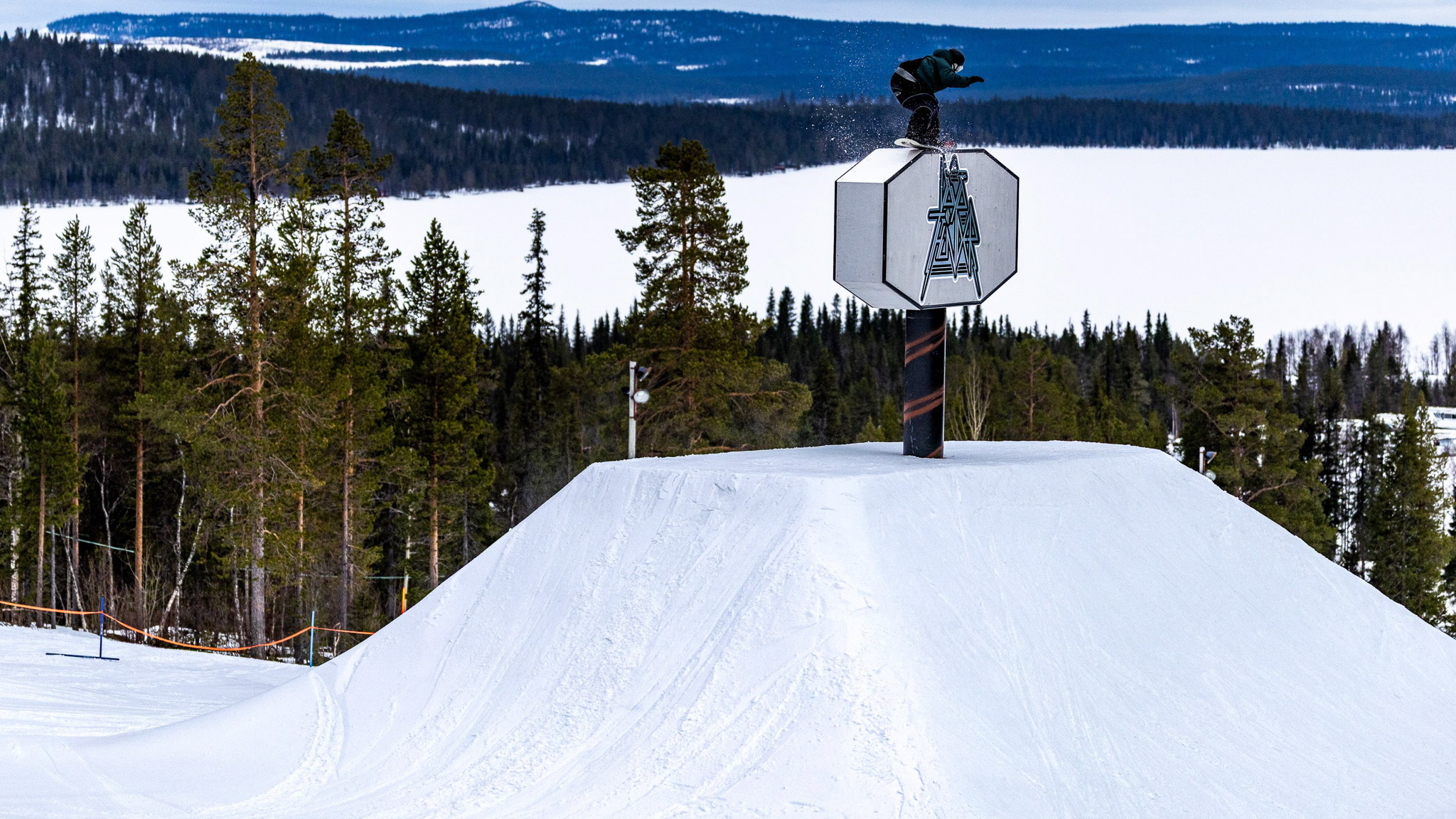
Industry analysts and participating athletes alike noted that the absence of massive corporate scaffolding transformed the aesthetic of the event. By integrating features that respected the natural contours of the mountain while introducing radical, custom-built installations—such as the formidable structure colloquially known as Thor’s Hammer—the event successfully demonstrated that progression does not require increasingly dangerous mega-structures. Instead, progression was achieved through nuanced board control, deep carves, textbook Method airs, and imaginative line choices that utilized the course in ways its creators had barely anticipated.
Standout Performances and Cinematic Highlights
While Days of Thunder explicitly rejects competition, it naturally produced moments of staggering athletic achievement and visual brilliance that dominated conversations among the attending media and peers.
The fluid dynamics of the park were immediately evident through the diverse styles on display. Ruben Rosenfors delivered a masterclass in power and amplitude, executing massive, deeply tweaked airs in close proximity to Thor’s Hammer. Meanwhile, Zenja Potapov showcased an uncanny spatial awareness, threading together lines that ignored conventional trajectories in favor of pure, avant-garde creativity.
Technical versatility was further exemplified by Kevin Rahko and Nigo Omma Simma. The duo targeted the left hip feature, using it as a springboard to launch massive straight airs and fluid 360-degree rotations with absolute control. Family dynamics also played a charming role in the session, as siblings Blanca and Frej Linnes demonstrated a telepathic understanding of the course, executing synchronized, stylish runs that highlighted the harmonious nature of the event.
However, the definitive narrative of the weekend belonged to Finnish upstart Leo Haappalainen. Exhibiting a relentless progression curve, Haappalainen elevated his commitment on virtually every lap he took through the course. During the final fifteen minutes of the closing session on the final day, Haappalainen decided to attempt what many deemed structurally and physically improbable: conquering the apex of Thor’s Hammer.
Approaching a zone that no previous rider had even attempted to scale during the gathering, Haappalainen initiated an astonishing 50-50 balance maneuver across the top ridge of the hammer structure. Defying expectations, he punctuated the maneuver by launching a clean Frontflip off the vertical drop of the obstacle within the dying moments of the session. The feat sent shockwaves through the assembled riders and film crews, providing a cinematic, adrenaline-fueled climax to an otherwise harmonious weekend.
Official Perspectives and Industry Implications
While traditional governing bodies and commercial contest promoters often measure success through broadcast ratings, ticket sales, and podium standings, the organizers and participants of Days of Thunder evaluate the event through entirely different metrics: community cohesion, creative output, and cultural preservation.
Speaking on the underlying philosophy of the gathering, organizers emphasized that the modern snowboarding industry risks losing its soul if every event is funneled through the hyper-competitive apparatus of mainstream sports entertainment. By stripping away the bureaucratic layers of judging criteria and scoring rubrics, events like Days of Thunder restore autonomy to the athlete.
From an economic and marketing standpoint, industry analysts observe that this back-to-basics approach yields significant dividends for brands and endemic media. The content generated during these unfiltered sessions—captured by elite cinematographers and photographers—resonates more deeply with core consumers who suffer from commercial fatigue. The focus shifts from corporate branding to authentic storytelling, establishing a blueprint for how action sports can maintain cultural integrity in an increasingly commodified landscape.
Conclusion: The Enduring Legacy of Unfiltered Riding
As the sun set on the final day of the Swedish gathering, the collective sentiment among participants was one of exhausted fulfillment. Days of Thunder proved that snowboarding does not require artificial urgency or manufactured rivalries to captivate an audience. By providing a world-class canvas, gathering a diverse collective of international talent, and removing the constraints of competition, Snowboy Productions and PJ Gustafsson have carved out a vital space in the sport’s calendar.
The event stands as a testament to the fact that when riders are given the freedom to simply ride, create, and share space together, the resulting culture is not only preserved—it is elevated to heights previously thought unreachable. With the foundational success of this latest iteration secured, the global snowboarding community eagerly anticipates where this nomadic celebration of pure riding will manifest next.

