
Belgrade, Serbia – June 11, 2026 – In a seismic shift that has fractured the International Ski & Snowboard Federation (FIS) down the middle, Johan Eliasch has been ousted as president in an election decided by the narrowest of margins, with a final tally of 65 votes to 64. The vote, held at the 57th FIS Congress in Belgrade, Serbia, marks the end of Eliasch’s tenure, which began in 2021, and ushers in a new era under the leadership of Alexander Ospelt, a lawyer from Liechtenstein. The future of elite snowsport competition, governed by FIS globally, had been the central battleground in this intensely fought election, and the lingering division underscores the significant challenges ahead for the organization.
A Bitterly Contested Election and Its Roots
The election pitted the Swedish-British billionaire Johan Eliasch, a figure known for his ambitious, and often controversial, reform agenda, against a coalition of major ski nations. These nations, including Switzerland, Austria, Germany, Italy, Sweden, the USA, Canada, France, and Norway, had grown increasingly vocal in their opposition to Eliasch’s leadership style and his proposed organizational overhauls. Their concerns, widely reported in the lead-up to the Congress, centered on what they perceived as a top-down, unilateral approach that disregarded the established structures and the diverse needs of national federations.
Alexander Ospelt, the newly elected president, is not an unfamiliar face within FIS. A former head of Liechtenstein’s national ski federation and a member of the FIS Council, Ospelt positioned himself as an internal alternative capable of bridging the divide that had widened significantly under Eliasch’s presidency. His platform emphasized unity, transparency, and a collaborative approach to governance, aiming to restore trust and foster a shared ambition for the sport’s advancement.
The Congress Proceedings: A Shift in Momentum
The proceedings at the Belgrade Congress were marked by a palpable tension and a clear indication of the deep divisions within the FIS membership. The agenda itself underwent a significant alteration when, by an overwhelming 88% vote, the presidential election was moved to become the first item of business. This strategic move, widely interpreted as a pre-emptive strike by those seeking change, signaled a decisive shift in the momentum leading up to the vote.
Further underscoring a potential lack of confidence in the administrative processes, delegates voted by a 60% majority to revert to paper ballots instead of electronic voting. This decision, though seemingly procedural, reflected a deeper sentiment of mistrust and a desire for a more tangible and verifiable electoral process.
Eliasch’s Concession and Accusations

In his concession speech, outgoing president Johan Eliasch did not shy away from controversy. He directly accused the International Olympic Committee (IOC) of attempting to influence the outcome of the election, urging FIS to remain steadfast in its independence. "The IOC tried to influence the outcome of today’s vote. Against this we must stay firm," Eliasch stated, before extending congratulations to Ospelt.
Eliasch, who had previously expressed a sense of relief regardless of the election’s outcome, stating he could "get my life back" if he lost, expressed his pride in his service. He also made a plea for continuity, arguing that the progress made during his tenure should not be abandoned. "It would be a great shame to give that up. It is very important that everyone works together and aims high," he urged, emphasizing the need for collective effort and ambition. The loss of his presidency also means Eliasch relinquishes his membership of the International Olympic Committee.
The IOC’s Response and Athlete Concerns
The International Olympic Committee issued a brief statement congratulating Ospelt on his victory, notably omitting any direct acknowledgment or refutation of Eliasch’s allegations of interference. "We thank Mr. Johan Eliasch for his work as FIS president and IOC member," the IOC stated, a measured response that sidestepped the direct confrontation.
Prior to the election, prominent ski athletes had publicly voiced their concerns about FIS’s direction under Eliasch. Marco Odermatt, the overall World Cup winner, articulated a sentiment shared by many, stating, "We have to say that not much has gone forward in recent years. I have also learned from insiders that the FIS has developed anything but positively in terms of finances. And that’s why there’s not much left but to make a change at the top of the FIS."
Similarly, Mikaela Shiffrin highlighted a perceived deficit in transparency: "Many of us athletes feel that the FIS and the current leadership have shown a significant lack of transparency." These athlete voices, carrying considerable weight in the snowsport world, undoubtedly played a role in shaping the sentiment leading up to the Congress.
Ospelt’s Vision for a United FIS
President Ospelt, acknowledging the deeply divided nature of the organization, immediately framed the narrow victory as an opportunity rather than a crisis. "There’s been some great dialogue in the build-up to this Congress and it’s been very interesting to talk to representatives from all different countries, but the result [65 votes to 64] shows we’re still divided," Ospelt stated. "I see this division as a chance, rather than a problem. My first task will be bringing unity and a common ambition to drive FIS forward together."
Ospelt has pledged to actively listen to the National Ski Associations (NSAs) and the athletes, aiming to gain a comprehensive understanding of their challenges and aspirations. "There’s a lot of work to do, but I want every NSA to feel like now is a new start, that I will take all their concerns seriously and that every NSA must be treated with the same importance as any other," he asserted.

A key focus for Ospelt will be fostering solidarity between larger and smaller federations. "I’ve requested that the bigger states show solidarity with the smaller states – it’s not in anybody’s best interest to just have athletes from the leading nations competing in the World Cup – and the bigger states are committed to that," he added.
Financially, Ospelt outlined plans to explore avenues for increased investment and sponsorship to bolster income streams, which can then be distributed more equitably to NSAs and potentially increase prize money for athletes. "We’re already looking at ways to gain additional stakeholders, investment and sponsors, in order to distribute more income to the NSAs and meet athletes’ requests for increased prize money," Ospelt explained when discussing future action plans.
His strategic vision also encompasses strengthening disciplines by leveraging existing audiences and expanding reach into new markets. "For me, it makes most sense to strengthen the disciplines where each of their audiences are. Taking China as an example, it makes most sense to take Freestyle and Snowboard Alpine events there, as the great athletes they have [in those disciplines] can enable us to put on showpiece events – showpieces we can use to broaden the interest across the whole of Asia," Ospelt elaborated, highlighting a pragmatic approach to global development.
Background and Pre-Election Landscape
The election followed a period of significant turbulence within FIS. Urs Lehmann, the organization’s CEO, resigned just the week prior to the Congress, citing concerns over the financial health of the organization. This resignation further amplified the existing anxieties and contributed to the charged atmosphere surrounding the presidential vote.
Initially, five candidates had put their names forward for the presidency: Anna Harboe Falkenberg, Dexter Paine, Victoria Gosling, Johan Eliasch, and Alexander Ospelt. However, Falkenberg, Paine, and Gosling all withdrew their candidacies in the days leading up to the Congress, narrowing the field to a direct contest between Eliasch and Ospelt. Eliasch had reportedly garnered strong support from smaller federations, a demographic that proved crucial in past elections, but ultimately it was not enough to secure his re-election.
GB Snowsport Secures Historic Council Seat
In a significant development for British snowsport, Victoria Gosling OBE, Chief Executive of GB Snowsport, was elected to the FIS Council. This marks the first time Britain’s National Ski Association has held an elected position on the FIS Council, providing a crucial voice at the highest level of international snowsport governance.
"I’m honoured to have been elected to the FIS Council today, and am very grateful to everyone who cast a vote in support of my candidacy today, as well as to my GB Snowsport colleagues for their support throughout the election process," Gosling stated following her election. "To become the first British representative nominated to Council in FIS history is humbling, and I am aware of the significant responsibility that I hold in that regard."
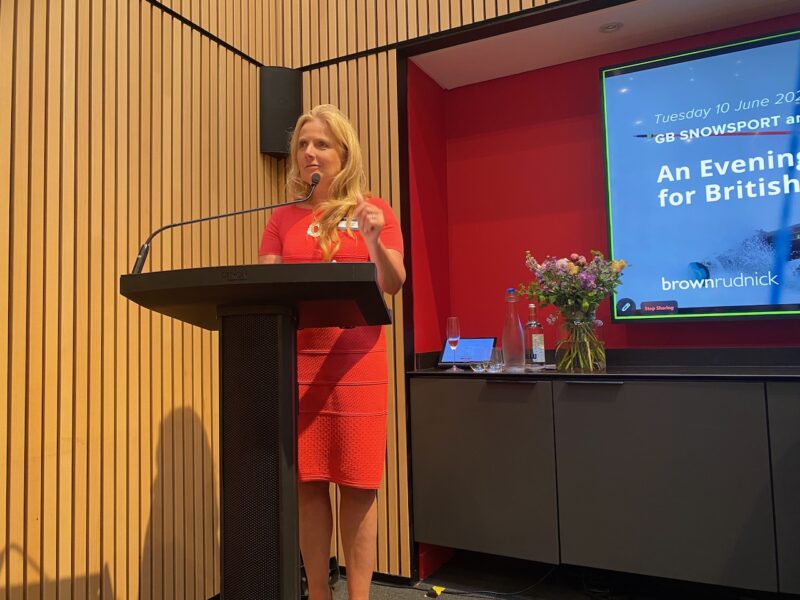
Gosling emphasized the collaborative spirit that characterized the lead-up to the Congress, noting, "Throughout recent weeks, the FIS family has shown that it is unafraid to have the robust and necessary conversations that we need to have for the long-term health of the sport, and I look forward to continuing those discussions in the coming months and years." She also highlighted Britain’s progress within the sport, stating, "As a snowsport nation, Britain has been on a significant journey in recent years. It has not always been easy, but I believe that today shows the high regard that we are held in within the snowsport community. We have much to look forward to as a sport, and I am committed to putting the interests of our sport first from within the FIS Council."
Ospelt’s Further Remarks on Discipline Development and Olympic Future
In subsequent remarks following his victory, President Ospelt elaborated on his vision for the future of various snowsport disciplines and their place within the Olympic program. Drawing inspiration from large-scale events like the Engadina ski marathon, he proposed exploring synergies between mass-participation events and elite World Cup races. "I’ve been to the Engadina [ski marathon] many times and there are over 12,000 people participating in it, so I always wondered, ‘why not combine it with a World Cup Cross-Country race?’ as we’d already have the audience there and it’d be even more attractive to sponsors," Ospelt remarked.
He also stressed the importance of cross-disciplinary learning, citing the success of events like the Four Hills Tournament in ski jumping as a model for sharing best practices. "We can also learn from organizers of big Ski Jumping events like the Four Hills Tournament, sharing good ideas across venues and across disciplines. I think the fact that we’ve got so many disciplines is an opportunity for us," he observed.
Addressing the appeal of Alpine skiing and the potential inclusion of Freeride in the Olympics, Ospelt acknowledged the need for innovation. "With Alpine, there are lots of discussions going on about how to make it more attractive," he said, before adding, "We need to find the right TV format and I think we need to make the athletes more visible, work on promoting them more and turning them into stars – which is what audiences want to see."
Ospelt expressed enthusiasm for Freeride’s potential, describing it as a "totally challenging competition in every way, which is what you want to see, and it’s very fun and very attractive for spectators – especially TV audiences." However, he cautioned that immediate priorities lie in securing the Olympic future of existing disciplines. "But before [fighting for Freeride to get in], the first step is to fight for Snowboard Alpine and Nordic Combined to stay in the Olympics. If we achieve that, we can move on to other disciplines," he stated, outlining a strategic approach to Olympic inclusion.
The election of Alexander Ospelt signals a decisive shift in leadership for the International Ski & Snowboard Federation. His immediate challenge will be to navigate the deep divisions that have emerged and unite the organization under a shared vision for the future of snowsport. The coming months will be crucial in determining whether Ospelt can successfully "build bridges" and restore a sense of cohesion and common purpose within FIS, setting a new course for the global snowsport community. This historic day at the FIS Congress in Belgrade has undoubtedly set the direction for the organization’s trajectory in the years to come.

