
Austrian alpine skiing stalwart Manuel Feller has officially withdrawn from his scheduled on-snow training camp in Chile, marking a significant hurdle in his ongoing rehabilitation following back surgery. The 33-year-old slalom specialist, who has been a dominant force on the World Cup circuit in recent years, confirmed the decision via a candid social media update, citing a lack of physical readiness as he continues to navigate the complexities of a protracted recovery.
The decision to forgo the South American training block, a staple for elite skiers looking to refine technique on winter-like snow conditions during the Northern Hemisphere’s summer, highlights the precarious nature of spinal injuries in professional athletics. Feller, known for his aggressive style and technical prowess, has been sidelined for much of the off-season as he seeks to resolve long-standing back issues that necessitated surgical intervention earlier this year.
The Anatomy of a Setback: A Medical Timeline
The road to recovery for Feller has been far from linear. After concluding his 2025-26 season prematurely in March to address chronic back pain and associated physical complications, Feller underwent surgery with the intent of returning to the start gate fully rejuvenated. However, the path back to the slopes has been marred by complications.
Roughly eight weeks ago, in the midst of his rehabilitative regimen, Feller suffered a secondary herniated disc, which involved a further shifting of disc material within his lumbar region. While the medical team successfully avoided a second surgical procedure, the incident necessitated a complete recalibration of his training load. According to Feller, the primary challenge has been finding the delicate equilibrium between increasing physical intensity and preventing the recurrence of neurological symptoms or acute pain.
This latest complication has effectively pushed his training schedule back by at least one month. While Feller maintains that he is on a positive trajectory, his current status is described as being neither fully recovered nor 100% pain-free. For a high-performance athlete whose sport demands extreme G-forces, spinal integrity is non-negotiable.
A Decorated Career at a Crossroads
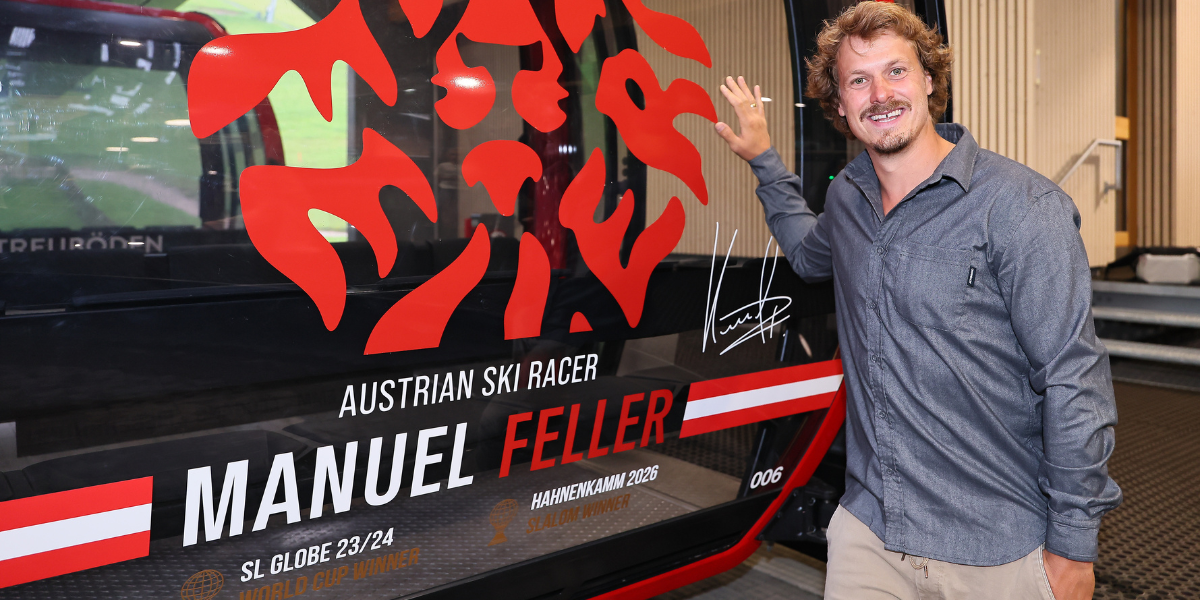
The current health struggles arrive at an inflection point in Feller’s career, which has been characterized by both immense success and recurring physical adversity. During the 2023-24 season, Feller achieved the pinnacle of individual success by clinching his first World Cup slalom Crystal Globe. His campaign was defined by remarkable consistency; he secured four individual slalom victories and maintained a flawless record of top-five finishes throughout the entire World Cup calendar.
His momentum carried into the early months of 2026, where he achieved a career milestone by winning the slalom in Kitzbühel—a feat widely considered one of the most prestigious accomplishments in the sport, particularly for an Austrian athlete racing before a home crowd. Shortly thereafter, he added to his medal haul with a silver in the men’s team combined event at the 2026 Winter Games in Italy. These accolades, combined with his earlier team silver from the 2018 PyeongChang Olympics, cement his status as one of the most decorated technical skiers of his generation.
Despite these achievements, the toll of the sport is evident. Feller has accumulated seven individual World Cup victories, yet his longevity has been perpetually challenged by his physical condition. His public commentary suggests a mature perspective: he intends to remain in the professional ranks for another one to two years, but only if he can perform at a level that remains enjoyable. "It is only fun when you are fit and not in pain," Feller noted, emphasizing that his future participation is contingent upon his ability to compete without the shadow of injury.
Implications for the Austrian Ski Federation
The absence of Feller from the Chile camp presents a logistical and strategic challenge for the Austrian Ski Federation (ÖSV). In the world of elite alpine racing, the training camps in the Southern Hemisphere are essential for equipment testing, tactical adjustments, and regaining the "feel" for the snow after a lengthy break.
From a technical standpoint, missing these sessions can leave a skier at a significant disadvantage when the World Cup season commences in the Northern Hemisphere. The lack of on-snow time means that Feller will have to compress his preparation into a shorter window, potentially leading to a slower start to the upcoming season. The ÖSV technical staff will now be tasked with monitoring his recovery closely, likely shifting his focus toward indoor training facilities or later-season glacier training in Europe to bridge the gap.
While the federation has not released a formal statement regarding the impact of his absence, industry analysts suggest that the team will prioritize his long-term health over immediate results in the early season. Given his standing as a veteran leader, his absence from the team environment in Chile also removes a vital mentor for the younger members of the Austrian slalom squad.
The Challenge of Return-to-Play Protocols
The rehabilitation of a spinal injury in alpine skiing is notoriously difficult. Unlike injuries to the knee or shoulder, where progression is often measurable through strength metrics, spinal recovery is often governed by nerve sensitivity and disc stability. For an athlete like Feller, whose skiing style is characterized by high-speed, high-angle turns, the impact of every gate is magnified.
The medical consensus in such cases generally favors a conservative approach. Rushing the return to training often results in chronic inflammation or structural regression. By opting to stay home rather than traveling to Chile, Feller is adhering to a disciplined recovery protocol, prioritizing his long-term health over the immediate pressure to return to competition. This decision serves as a reminder of the physical cost of elite-level slalom, where the athlete’s back is subjected to intense vibration and torsional force.
Future Outlook and Anticipated Return
Feller has not provided a definitive date for his return to the slopes. His focus remains firmly on pain management and gradual strength building. By opting out of the high-altitude, high-intensity environment of Chile, he is effectively hitting the reset button to ensure that when he does return, he is capable of competing at the intensity required to reach the podium.
The lack of a specific timeline leaves the start of his World Cup season in a state of uncertainty. While he is expected to eventually rejoin the squad, the depth of his preparation will likely determine his level of competitiveness in the early-season races. Supporters and fans, meanwhile, have been encouraged to manage their expectations, with Feller humorously promising updates on his fishing and vacation activities in lieu of technical skiing footage until he is fully fit.
Conclusion: A Measured Approach
The trajectory of Manuel Feller’s career now rests on the success of this rehabilitation phase. As he navigates the delicate process of spinal healing, the primary objective is clear: restoring the pain-free mobility necessary to maintain his position among the world’s elite. While the decision to skip the Chile training camp is a setback for his immediate preparation, it is an essential step in safeguarding his competitive future.
As the alpine skiing world turns its eyes toward the upcoming season, all eyes will be on Feller’s progress. His determination to return to the circuit—balanced by his commitment to his personal well-being—reflects the evolution of the modern professional athlete, who recognizes that longevity in the sport is earned through patience and disciplined recovery as much as it is through time spent on the mountain. For now, the slalom star remains in Austria, methodically working to ensure that his final chapters in the sport are defined by performance, not pain.

