
After a season marked by exceptional performances across multiple competitive circuits, 19-year-old downhill sensation Mattias Wilson has officially embarked on a new chapter, earning a coveted nomination to the Stifel U.S. Ski Team. This significant milestone follows a breakthrough year that saw him achieve strong results on the NorAm circuit, secure a seventh-place finish at the prestigious FIS Alpine Junior World Ski Championships, and make his initial forays into Europa Cup racing. His journey, deeply rooted in the formidable terrain of Jackson Hole, Wyoming, now positions him as one of the nation’s most promising young talents in speed disciplines, poised to advance through the elite ranks of international alpine skiing.
Wilson, currently ranked No. 100 in the world in his discipline, readily admits he lacks a simple, definitive explanation for why downhill has become his strongest event. When pressed on the factors that have molded him into a leading young downhiller, his response is refreshingly candid: "I don’t really know," Wilson shared with Ski Racing Media, acknowledging that "A lot of people ask me that question." Yet, the genesis of his prowess in speed events, which include two top-10 finishes at Junior Worlds, becomes clearer upon closer examination of his formative years and strategic development.
A Foundation Forged in Jackson Hole’s Demanding Terrain
Mattias Wilson’s connection to skiing runs deep, intrinsically linked to his upbringing in Jackson Hole, Wyoming. This iconic mountain destination, renowned for its steep pitches, challenging conditions, and legendary runs, served as his earliest classroom. His father, a lifelong enthusiast who grew up in the area, instilled a passion for the sport, a legacy further solidified by his grandparents’ ownership of a hostel at the base of the resort. Skiing, for Wilson, was not merely a pastime; it was an integral part of his family’s identity and daily life.
He spent much of his childhood immersed in the Jackson Hole Mountain Resort’s Kids Ranch program, a testament to the family’s dedication to his early development on skis. Beyond organized programs, his father frequently pulled him out of school on powder days, ensuring that Wilson’s education in skiing extended beyond the conventional. Crucially, Wilson did not begin as a racer fixated on gates and times. Instead, his initial years were spent exploring the vast, demanding landscape of Jackson Hole, learning to navigate its varied terrain and becoming intimately comfortable with speed and natural challenges. This organic approach to learning, unfettered by early competitive pressures, allowed him to develop an innate feel for the snow and an intuitive understanding of how to manage momentum.
He joined the local Jackson Hole Ski & Snowboard Club between the ages of 10 and 12, dedicating at least eight years to the program. "I credit a lot of my skiing to my dad," Wilson stated, highlighting the profound influence of his family. Beyond parental guidance, a cadre of dedicated coaches played pivotal roles in nurturing his talent and keeping him engaged. Kevin Keane provided crucial mentorship during Wilson’s U14 years and later as he transitioned into FIS competition. Ned Lazarevic, his U16 coach, is also credited with supporting Wilson through a critical developmental phase, ensuring he remained committed to racing. However, the mountain itself, with its relentless demands for adaptability and terrain reading, proved to be his most enduring and influential teacher, instilling a comfort with high speeds and dynamic conditions that now defines his downhill style.
The Calculated Move to Sugar Bowl: A Catalyst for Progression
While Jackson Hole provided an unparalleled foundation, Wilson recognized the need for a more specialized and structured environment to elevate his racing career. He completed his high school education in Jackson, but during his final three years, he strategically spent portions of each season training with the Sugar Bowl Ski Team & Academy in California. This relationship culminated in a full-time move for a postgraduate year, a decision that proved instrumental in transforming his potential into consistent, high-level results.
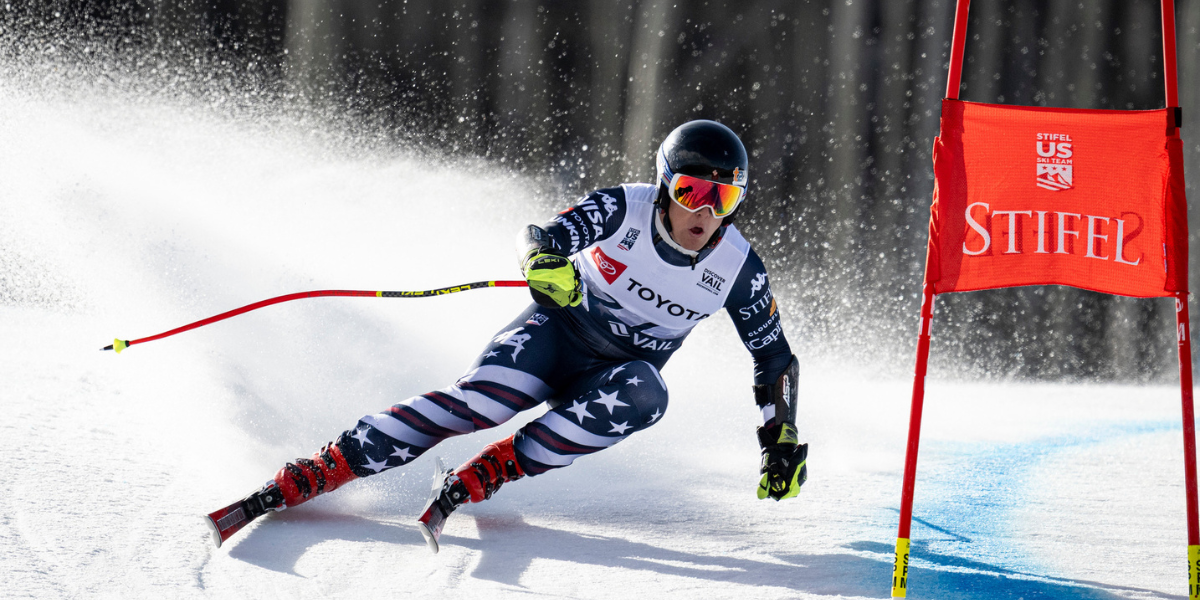
Wilson candidly articulated his rationale for the move: "It wasn’t an environment where I felt like I could succeed at the next level." Sugar Bowl offered a distinct advantage, providing an intensified focus on competitive alpine racing that complemented his raw talent. The transition was made smoother by familiar faces within the Sugar Bowl program. He already knew athletic director Branko "Bronco" Zagar from their shared time in Wyoming. Furthermore, coaches Matej Vidovič and Matilda Sola were familiar figures from his participation in Western Region racing, fostering a sense of continuity amidst change.
What truly distinguished Sugar Bowl for Wilson was the coaching staff’s clear vision and meticulous planning. "They were really dialed in," he remarked. "It just seemed like they knew what they were doing, and they had a plan. I bought in on that plan, and I think it worked out quite all right." This structured approach, combined with the academy’s resources and competitive peer group, allowed Wilson to refine his technical skills and mental approach to racing. His postgraduate season at Sugar Bowl was a period of significant growth, solidifying his technique and boosting his confidence. He also forged strong personal bonds with his coaches and teammates, emphasizing the importance of this support system: "Having my two coaches last year, Matej and Matilda, and being very close and connected to them was very strong. Being able to rely on them if stuff doesn’t go the greatest was a nice benefit."
A Season of Breakthroughs: NorAm, Junior Worlds, and Europa Cup Debuts
The 2023-2024 season proved to be a pivotal one for Mattias Wilson, a year in which his national team aspirations materialized through a series of impressive results. His strong performances began to emerge notably at Whiteface Mountain, where he demonstrated an early indication of his potential, particularly in speed events. While he encountered challenges on the upper sections of the course, his innate ability to carry speed through flatter, gliding sections allowed him to consistently gain time, a testament to his "natural glider" attribute.
This burgeoning form culminated in the speed races at Aspen Highlands, where Wilson delivered the crucial performances needed to satisfy the rigorous nomination criteria for the Stifel U.S. Ski Team. His consistent top finishes and ability to perform under pressure underscored his readiness for the next level. "After Aspen, after I got that second result, I basically knew I was going to make the team," he recounted, reflecting on the moment the possibility transformed into near certainty. The news was met with enthusiasm, with coach Matej Vidovič sending a congratulatory message to the Sugar Bowl group chat, celebrating Wilson’s achievement. Yet, Wilson maintained a grounded perspective, choosing to defer full celebration until the official announcement from U.S. Ski & Snowboard. "It felt really good," he said, "I didn’t really take it in until it was officially announced."
Beyond the domestic NorAm circuit, Wilson’s season was highlighted by his performance at the FIS Alpine Junior World Ski Championships. Representing the United States for the third time, he arrived in Narvik, Norway, with high expectations, particularly for the downhill. Unfortunately, adverse weather conditions forced the cancellation of the downhill race, a significant disappointment for Wilson, who felt prepared to compete in his strongest event. "It was pretty disappointing," he admitted. "I was ready to race, but it got canceled. So, what are you going to do? Move on to the super-G and try to ski my best." Despite the setback, Wilson channeled his focus into the super-G, ultimately securing an impressive seventh-place finish. While not entirely satisfied with every aspect of his run, this result marked his second top-10 finish at a major international championship, following a 10th place in downhill at the 2025 Junior Worlds in Tarvisio, Italy. These consistent showings on the global stage underscored his ability to perform when it mattered most, positioning him as a legitimate international prospect.
His breakthrough season also included his initial exposure to Europa Cup racing, the critical stepping stone directly beneath the World Cup circuit. While attending the Junior World Championships in Norway, Wilson seized the opportunity to participate in his first Europa Cup events. This experience provided an immediate and tangible understanding of the depth and intensity of competition at that level. Though he did not finish either race, attributing his DNFs to nerves and rushing his skiing, the exposure was invaluable. "It’s definitely a high level," he acknowledged. Despite the outcome, he felt he was "definitely close to having maybe an OK result there until I DNF’d." These early experiences, though challenging, served as crucial learning opportunities, clarifying the tactical and mental adjustments needed for success on the demanding European circuit.
Integrating into the National Team Environment: New Standards, Shared Goals
Wilson’s nomination to the Stifel U.S. Ski Team swiftly led to his immersion into the national program. He has already participated in his first official on-snow camp at Copper Mountain, an experience he described as "definitely a surreal feeling." The camp, heavily focused on giant slalom, provided him with direct mentorship from Europa Cup coaches Mike Bansmer and Francio Bertolini, focusing on advanced tactics and technical refinement. While the environment was new, Wilson quickly found comfort within the team, describing it as "a very nice family" where he anticipates "a lot of productivity is to be had."
Beyond on-snow training, Wilson spent over a month in Park City, Utah, engaging in a comprehensive series of activities. This included a rookie camp, extensive conditioning work, and a joint men’s and women’s national team fitness camp. Training alongside more seasoned and established athletes offered Wilson a stark yet motivating perspective on the physical standards required to compete at the highest levels. "It’s nice to train with them and see how strong they are and see where I need to be," he observed. This exposure not only highlighted areas for personal improvement but also reinforced his belief in the importance of a cohesive team culture for collective advancement. "You need a culture and a team to progress," he emphasized, recognizing the synergistic benefits of shared training and mutual support.
The Downhill Edge: Strengths, Strategy, and Areas for Growth
While Mattias Wilson may not have a simple explanation for his downhill prowess, he possesses a clear understanding of why the discipline resonates with him. Downhill, unlike the more technical slalom or giant slalom, places a premium on preparation, intuition, and the ability to maintain extreme speeds over varied terrain. The format, which typically includes multiple training runs before race day, perfectly suits Wilson’s analytical approach. These training sessions allow athletes to meticulously study the course, refine their race line, and internalize the feel of each section, building confidence and precision.
"I like downhill a lot because you get to run the course multiple times and really learn," Wilson explained. "Knowing where I need to nail certain spots is definitely helpful." He acknowledges that he sometimes struggles to find his optimal skiing immediately, particularly in the opening run of technical events. Downhill’s extended preparation period provides him the necessary time to fully comprehend the track and build the confidence required to attack. His exceptional gliding ability is a clear asset, a skill cultivated from his early days on Jackson Hole’s often flat run-outs and traverses. However, Wilson posits that confidence, when fully present, is his most potent weapon. "I believe anyone can win on any day," he asserted. "It just depends on how confident you are attacking a certain hill, a certain turn or certain sections of a course."
Despite his strengths, Wilson is acutely aware of areas requiring improvement. Airtime, a critical component of modern downhill racing, is one such focus. "My airtime is usually pretty scary," he confessed. "I’m definitely not the best in the air, but I need to work on that." More broadly, his developmental objective is to establish a robust and repeatable technical foundation. This foundational stability would allow him to consistently execute under diverse conditions and varying levels of pressure. "If I can really dial in a technical foundation that I can repeat over and over again, I think I’ll be able to work on other things as well," he articulated, outlining a systematic approach to his long-term progression.
Navigating the International Arena: Europa Cup and Junior Worlds Experience
Wilson’s initial forays into Europa Cup racing, though challenging, provided invaluable insights into the competitive landscape he now inhabits. His DNF results in Norway, which he attributes to nerves and rushing his skiing, served as a potent learning experience. The Europa Cup circuit is a rigorous proving ground, featuring athletes who are often on the cusp of World Cup berths, competing on courses that frequently host World Cup events. This exposure immediately clarified the heightened level of precision and mental fortitude required. "I try to focus on my tactics, my line and staying calm," Wilson reflected, emphasizing the lessons learned. "I rushed myself a little too much, and it bit me."
These experiences have fueled his ambition to earn more Europa Cup opportunities in the upcoming season. Such starts are critical for gaining experience against stronger fields and familiarizing himself with World Cup-caliber tracks. "Any time down a World Cup track is very important if you want to continue to be a speed skier," he stated, recognizing that consistent exposure to these elite venues is essential for long-term development in speed disciplines.
His consistent performances at the Junior World Championships, culminating in a seventh-place finish in the Super-G in Narvik, underscore his ability to perform under high-stakes international pressure. Wilson believes the key to managing this pressure is to approach significant races with the same mindset as a routine training day. "A big focus this year with my coaches was trying to attack every single training day and every single race day as if it was just another day out skiing," he explained. This mental strategy helps normalize the competitive environment, allowing him to harness rather than be overwhelmed by the "inevitable" nerves, which he views as a beneficial stimulant.
Looking Ahead: 2027 Junior Worlds and Beyond
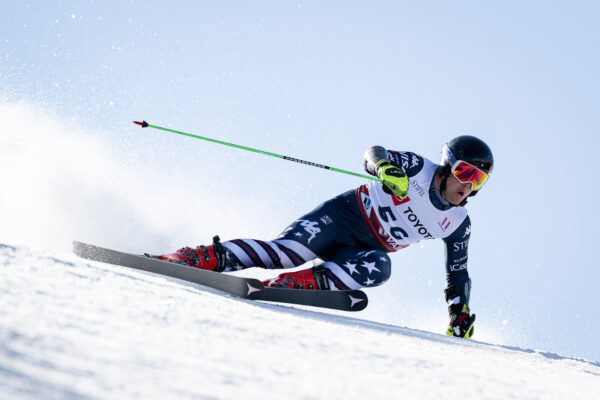
Mattias Wilson has one season remaining as a junior, presenting a unique and exciting opportunity for the 2027 FIS Alpine Junior World Ski Championships. Should he qualify, the event will be held at Whiteface Mountain in New York, offering a rare chance to compete for a world championship title on home snow. Wilson has prior experience performing well at Whiteface, having demonstrated strong form on the lower sections of the course in previous competitions. He views this familiarity as a potential source of confidence, stating, "I think it’ll definitely give me some confidence if I use it that way." However, he also recognizes the need to refine his performance on the upper part of the course, aiming to "clean up the top so I have a chance at doing even better."
The domestic location of the 2027 Junior Worlds also offers a heartwarming prospect for increased family support. While his mother has been a steadfast presence at all his previous Junior World Championships, the accessibility of Whiteface Mountain could allow his father and other relatives residing in the Northeast to attend and witness his performances firsthand, adding an extra layer of motivation and encouragement.
His preseason preparations are extensive, including significant time in South America. The Stifel U.S. Ski Team has scheduled a training block in Ushuaia, Argentina, followed by a month-long stint in Chile. This rigorous schedule incorporates additional training and planned participation in South American Cup races at La Parva and Corralco. Wilson’s immediate competitive goals are ambitious: he aims to contend for the NorAm downhill season title, targeting a top-two finish, and to secure more opportunities to compete in Europe, further deepening his experience on the international stage. He is focused on establishing "a really strong technical base and something I can repeat every single training day and every single race day" by the time the opening NorAms commence.
The Slalom Surprising Twist and Enduring Philosophy
Despite his undeniable success and future trajectory in downhill, there’s a compelling detail that adds a layer of complexity to Mattias Wilson’s identity as a speed specialist: slalom, not downhill, is his favorite discipline. "Slalom is definitely my favorite discipline, even though I have excelled in downhill," Wilson enthusiastically shared. "I tell everyone that." His affection for slalom stems from its inherent variety, the diverse successful styles it accommodates, and the myriad ways athletes can generate speed. This preference underscores a broader aspect of his competitive philosophy: a reluctance to prematurely specialize. Instead, Wilson is committed to a holistic development approach, continually strengthening his technical skiing across all disciplines, relentlessly improving in speed events, and seizing every opportunity the season presents.
His journey, from navigating the challenging contours of Jackson Hole to the structured environment of Sugar Bowl, through Junior Worlds, Europa Cup debuts, and finally to the Stifel U.S. Ski Team, is a testament to perseverance, strategic development, and an unyielding passion for the sport. For younger racers aspiring to follow a similar path, Wilson’s advice is refreshingly simple and profound: "You just have to have fun," he advises. "Ski racing is really hard, and it’s not easy for anyone. You and your teammates need to be able to lift each other up."
Mattias Wilson’s narrative is one of a natural talent meticulously honed by challenging terrain, dedicated mentorship, and a clear vision for advancement. He learned to ski on a mountain that demanded confidence and adaptability, then found a supportive network of coaches and teammates he could trust. As he stands on the cusp of his national team career, his readiness to "let the skis run" when the results mattered most is not just a skill, but a philosophy—a blend of technical mastery, mental fortitude, and an enduring love for the sport that promises a bright future on the global alpine stage.

