
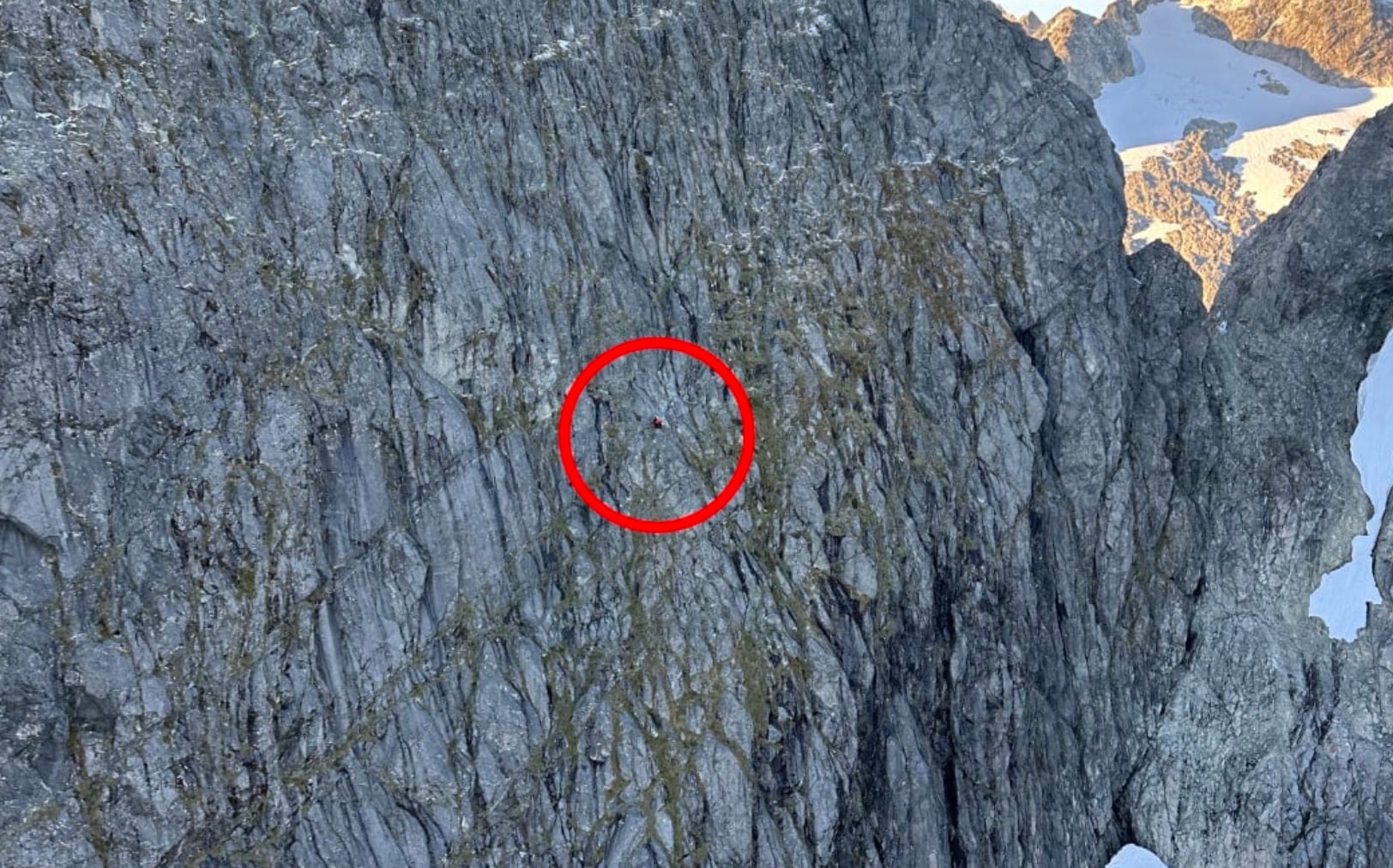
Two climbers have been miraculously rescued from a treacherous mountainside in New Zealand’s Fiordland National Park after a three-day ordeal battling severe weather conditions. The dramatic rescue, executed by Southern Lakes Helicopters, highlights the critical importance of preparedness, reliable technology, and the dedication of emergency services in New Zealand’s unforgiving alpine environments. The climbers, whose identities have not been released, were found sheltering in a bivouac and sleeping bags, having exhausted their food supplies and facing increasingly dire conditions.
A Race Against Time and the Elements
The ordeal began on Wednesday, April 8th, when the two climbers activated a personal locator beacon (PLB) in the vicinity of Sabre Peak. This distress signal immediately alerted authorities to their precarious situation. A Southern Lakes Helicopter was promptly dispatched to the remote location. However, the initial rescue attempt on Wednesday was thwarted by severe weather, characterized by heavy rain and dangerously low cloud cover, which rendered aerial operations impossible. The information regarding the climbers’ distress was then relayed to the New Zealand Police, initiating a coordinated search and rescue operation.
Communication and a Glimmer of Hope
On the morning of Thursday, April 9th, a crucial development emerged when one of the stranded climbers managed to establish contact with his brother via satellite text messages. This lifeline allowed the brother to immediately inform the police of his relatives’ status. The messages confirmed that both climbers were uninjured, a significant piece of information given the duration of their predicament. However, they were unable to move from their exposed position due to the relentless severity of the weather. Despite this update, a second rescue attempt on Thursday also proved unsuccessful, again due to the hazardous meteorological conditions. The window for extraction was rapidly closing, and the climbers’ situation was becoming increasingly desperate.
The Critical Intervention: A Daring Long-Line Extraction
The breakthrough came on Friday, April 10th, at approximately 7:00 AM. As the weather finally abated sufficiently, a window of opportunity opened for the highly skilled rescue team. Southern Lakes Helicopters, with its experienced crew, was able to reach the climbers on the mountainside. The operation involved a complex long-line extraction, a technique that allows rescuers to lower a crew member to retrieve individuals in difficult or inaccessible terrain, and then hoist them to safety. This maneuver, executed in a challenging alpine environment, proved to be the decisive factor in saving the lives of the two individuals. Officials later confirmed that the climbers were in a critical state, having run out of food and with their sleeping bags soaked, making survival for another night highly improbable.
Preparedness and Professionalism: Key to Survival
Upon successfully reaching the helicopter, the rescued climbers were immediately assessed by on-board medical personnel. The fact that they were cleared by doctors underscored the success of the operation and the critical role played by both the climbers’ actions and the rescue team’s expertise. The climbers had made several correct decisions that were instrumental in their survival. The early activation of their PLB provided a crucial starting point for the search, and their decision to remain in place, despite the adversity, prevented them from further endangering themselves in the treacherous conditions.
The professionalism and skill of the Southern Lakes Helicopters crew were paramount. Navigating and operating in the unforgiving alpine terrain of Fiordland, especially under challenging weather conditions, requires a high degree of expertise and specialized equipment. The successful execution of the long-line extraction in such an environment is a testament to their training and dedication.
Analysis of the Event and Broader Implications
This incident serves as a stark reminder of the inherent risks associated with alpine exploration and the vital importance of robust emergency response capabilities. The Fiordland region, known for its dramatic landscapes and challenging mountainous terrain, demands meticulous preparation from all who venture into it.
Timeline of Events:
- Wednesday, April 8th (Afternoon): Two climbers activate a Personal Locator Beacon (PLB) near Sabre Peak.
- Wednesday, April 8th: First helicopter rescue attempt by Southern Lakes Helicopters is aborted due to severe weather (rain and low clouds). Information is passed to Police for SAR operation.
- Thursday, April 9th (Morning): One climber contacts his brother via satellite text message, confirming both are uninjured but stranded. Brother relays information to Police.
- Thursday, April 9th: Second helicopter rescue attempt is again unsuccessful due to adverse weather.
- Friday, April 10th (7:00 AM): Weather conditions improve, allowing for a successful long-line extraction by Southern Lakes Helicopters.
- Friday, April 10th: Rescued climbers are medically assessed and cleared.
Supporting Data and Context:
- Fiordland National Park: Fiordland, located on the southwest coast of New Zealand’s South Island, is characterized by its rugged mountains, deep fiords, and dense rainforest. It is a popular destination for hikers and climbers but is also notorious for its rapidly changing and often extreme weather. Rainfall in the region can be exceptionally high, and alpine areas are subject to sudden storms, high winds, and sub-zero temperatures.
- Personal Locator Beacons (PLBs) and Satellite Communication: PLBs are vital devices that transmit a distress signal via satellite to rescue coordination centers. They are designed to be activated in emergency situations where other forms of communication are unavailable. Satellite communication devices, such as satellite phones or text messengers, provide an additional layer of safety, allowing for two-way communication in remote areas. The activation of the PLB and the subsequent satellite communication were critical in facilitating the rescue effort.
- Long-Line Rescue: This specialized technique is employed when a helicopter cannot land safely near the extraction point. A rescuer is lowered from the helicopter on a cable to reach the stranded individuals. It requires significant skill and precision from the pilot and crew, particularly in challenging wind and terrain conditions.
Official Responses and Analysis:
While specific official statements were not detailed in the original report, it can be inferred that New Zealand Police and emergency services would have expressed relief at the successful outcome. Such incidents typically prompt reviews of rescue protocols and reinforce the importance of public safety advisories. The rescue operation highlights the investment in and capability of New Zealand’s search and rescue infrastructure, which relies on a combination of professional services, volunteer organizations, and advanced technology.
The implications of this rescue extend beyond the immediate individuals involved. It reinforces the importance of responsible adventure tourism and the necessity for individuals to be adequately prepared for the conditions they may encounter. The incident underscores a broader trend in adventure sports where technology plays an increasingly vital role in safety, but it cannot replace fundamental preparedness, good judgment, and respect for the environment. The "doing everything right" aspect, as mentioned, is crucial: the climbers had the right equipment, activated it promptly, and remained in a stable position. This allowed the rescue services to perform their critical role effectively.
In conclusion, the successful rescue of the two climbers from Sabre Peak is a testament to the courage and skill of the Southern Lakes Helicopters team, the effectiveness of modern safety technology, and the resilience of the human spirit. It serves as a potent reminder that even with the best intentions and equipment, the power of nature demands respect and thorough preparation for anyone venturing into New Zealand’s wild and beautiful landscapes.

