
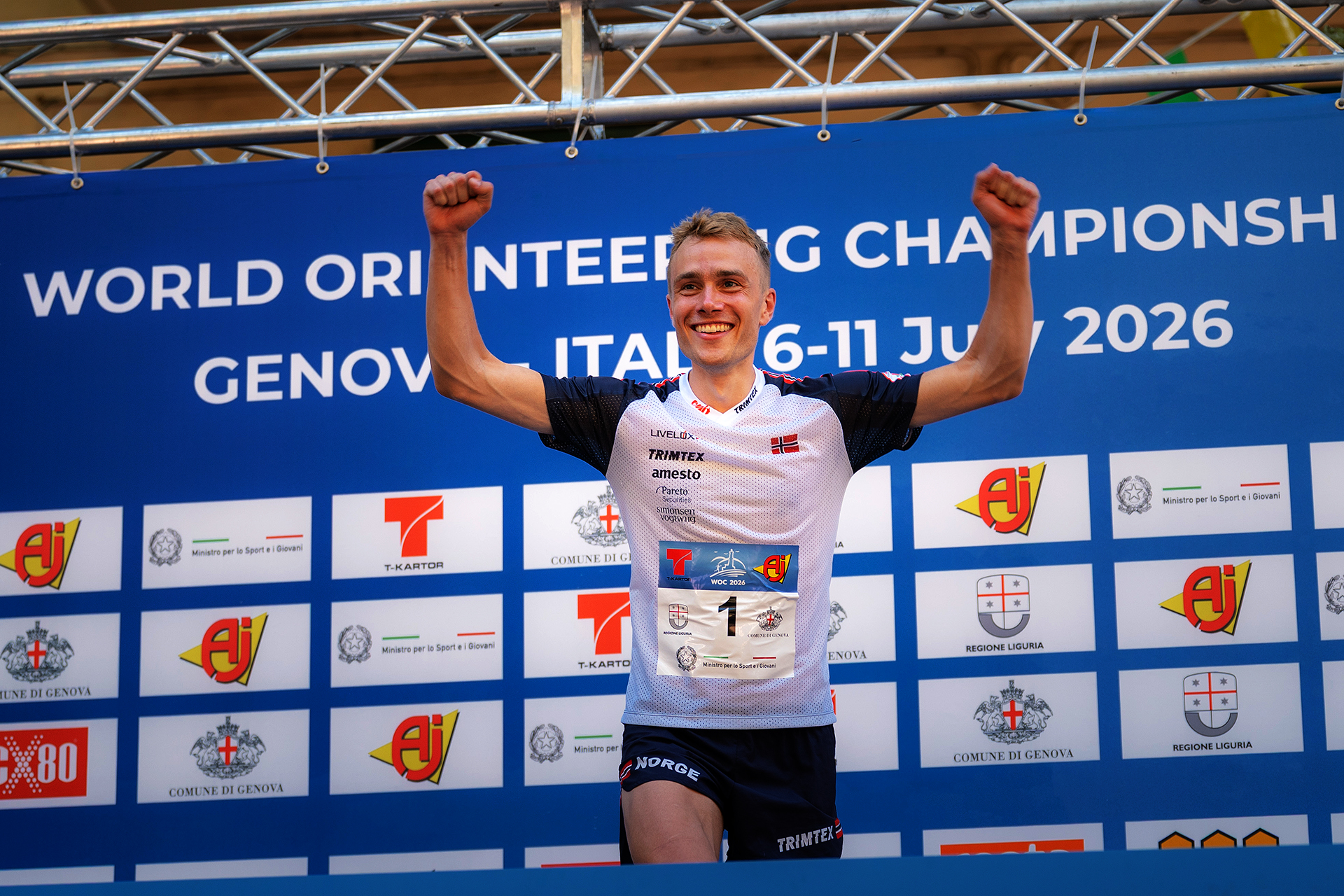
The world of elite orienteering is buzzing with the recent triumphs of Kasper Fosser and Simona Aebersold, who both clinched World Championship gold in the sprint discipline last week. Fosser, hailing from Switzerland, and Aebersold, a Norwegian prodigy, have not only conquered the global stage but have also made a significant personal decision: they have purchased their first shared residence in Oslo, Norway. This move marks a new chapter for the power couple, solidifying their connection to the Norwegian capital and its surrounding natural landscapes.
A New Base in the Norwegian Capital
While Fosser, 27, grew up in the iconic Holmenkollen area of Oslo, the newly crowned sprint world champions have opted for a different, yet nearby, location for their shared home: Frysjaparken, situated in the neighboring district of Nordre Aker. This decision, reported by local outlet nab.no, signifies a deliberate choice for a specific lifestyle and training environment. The couple officially moved into their new abode in December, though their demanding competition schedules often keep them on the road, immersed in the demanding terrains of orienteering events worldwide. Their recent competitive landscape included the urban challenges of Genoa, and they are now gearing up for the resumption of the World Cup in the Czech Republic from August 6th to 9th. Spectators can follow the action live on langrenn.com.
From Gothenburg to Oslo: A Strategic Relocation
For the past several years, Gothenburg, Sweden, has served as a significant hub for both Fosser and Aebersold. Both athletes have proudly represented IFK Gothenburg as their club affiliation, a testament to the club’s strong orienteering program and its ability to attract top international talent. Now, Fosser has returned to his roots, rejoining his home club, Heming Orienteering. Aebersold, while continuing to compete for IFK Gothenburg in Scandinavia, has also been seen representing Heming in select Norwegian races, indicating a growing integration into the Norwegian orienteering scene. Their new home in Frysjaparken will now serve as their primary base of operations, a strategic move that promises to enhance their training and competitive focus.
Prioritizing Proximity to Nature and Training Efficiency
The location of their new apartment was the paramount factor in their decision-making process. "The location was definitely the most important," stated Kasper Fosser in an interview with nab.no. "That we found a good apartment is a bonus." The couple has settled into one of the top-floor units, a choice driven by their specific needs as elite athletes.
"Proximity to the forest was the first priority," Fosser elaborated. "Here, we only need to run a few hundred meters, and then we are out in the forest. We are very satisfied with the purchase." This direct access to natural terrain is crucial for orienteering training, allowing for spontaneous and frequent practice sessions in varied environments.
Beyond the immediate training advantages, Fosser also cited practical considerations regarding the climate and housing market. "It’s a slightly milder climate down here. There is less snow and ice in the winter than there is in Holmenkollen," he explained. This potentially offers a longer and more consistent training season, reducing disruptions caused by adverse weather conditions. Furthermore, he noted the challenges of finding a suitable apartment at a reasonable price in Holmenkollen, suggesting that Frysjaparken presented a more favorable combination of quality and affordability.
For Fosser, who grew up in Holmenkollen, the move back to Oslo was a natural progression. However, for Aebersold, who had previously resided with her parents in Switzerland, this represents her first independent home outside of her native country. The convenience of their new location extends to their individual training facilities as well. Aebersold has access to her training center, Evo, located within the same building as their two-room apartment. Fosser benefits from a short commute to Olympiatoppen at Sognsvann, a renowned national sports training center. Despite now owning a shared residence, the couple’s lifestyle remains predominantly nomadic, dictated by the global orienteering calendar.
The Genesis of a Sporting and Romantic Partnership
The connection between Kasper Fosser and Simona Aebersold, both individually recognized as among the best orienteers in the world, began to blossom around the time of the 2019 World Championships in Østfold, Norway. Their relationship became official in 2021, a development that, according to Fosser, was subtly facilitated by their respective national teams.
"Since I was the best on the Norwegian national team and she was the best on the Swiss national team, and we are approximately the same age, the Norwegian and Swiss national teams tried to pair us up a bit," Fosser revealed with a laugh. "So, it was perhaps in the cards." This inter-team collaboration highlights a growing trend of cross-national support and camaraderie within elite sports, particularly in disciplines where athletes frequently compete against and train alongside each other.
The benefits of their shared passion and parallel career paths are manifold. "It’s incredibly practical," Fosser stated. "In addition to being partners, she is also a partner I can bring along on training camps and travels. When there are two of us who prioritize the same thing and want the same outcome, we can also spend more time together." This mutual understanding and shared commitment to their demanding sport undoubtedly strengthen their bond and optimize their training regimens.
A Love for Norway and the Norwegian Language
The allure of Norway’s natural beauty played a significant role in drawing Simona Aebersold to the country, even for someone accustomed to the majestic Alps and picturesque valleys of Switzerland. Her fondness for the Norwegian landscape has deepened over time, further cementing her decision to establish a home there.
Language has proven to be no barrier to her integration. The sprint world champion on the women’s side speaks fluent Norwegian, in addition to several other languages. "She basically just learned Norwegian for fun," Fosser explained. "Swiss people are generally very good at languages, and many there have some connection to either Finland, Sweden, or Norway." This linguistic aptitude reflects a broader cultural inclination among Swiss citizens towards multilingualism and an appreciation for Scandinavian cultures.
Supporting Data and Broader Implications
The success of Fosser and Aebersold underscores a significant trend in elite orienteering: the increasing professionalization and global reach of the sport. World Championship titles are no longer confined to a few traditional powerhouses, with athletes from diverse backgrounds achieving peak performance. The decision of these two world champions to invest in a shared property in Oslo speaks to the city’s growing reputation as a desirable location for high-performance athletes.
Key Data Points:
- World Championship Success: Both Fosser and Aebersold are reigning World Champions in sprint orienteering, a testament to their current dominance in the sport.
- International Representation: Fosser represents Switzerland, while Aebersold is Norwegian. Their partnership transcends national borders, reflecting the global nature of modern elite sports.
- Club Affiliations: Both athletes have strong ties to IFK Gothenburg, a prominent orienteering club, and are now integrating with Norwegian clubs, particularly Heming Orienteering.
- Training Hubs: Their relocation to Oslo signifies a shift from Gothenburg as their primary base, indicating Oslo’s emergence as a competitive training environment.
- Urban vs. Forest Orienteering: Their recent focus on sprint disciplines, often held in urban or semi-urban settings, contrasts with traditional forest orienteering. However, their chosen residence emphasizes continued access to natural terrains for varied training.
Future Prospects and Training Synergies
The establishment of a shared home in Oslo provides Fosser and Aebersold with a stable foundation from which to launch their future training and competition endeavors. Their ability to train together, share insights, and support each other’s development is a significant advantage. As they continue to compete on the international circuit, their Oslo base will offer a familiar and conducive environment for recovery, strategic planning, and continued athletic growth. The proximity to Olympiatoppen and readily available forest terrain positions them well for sustained success in the demanding world of elite orienteering. Their journey, from international rivals to a united sporting couple setting up home in Norway, is an inspiring narrative of dedication, shared ambition, and the enduring appeal of the natural world for athletic pursuits.

