
The transition from the curated slopes of ski resorts to the raw, untamed beauty of the backcountry marks a significant shift in the season for skiers and snowboarders. This evolution now includes a more adventurous iteration of a beloved end-of-season tradition: the pond skim. Moving beyond the artificial pools found at ski areas, backcountry pond skimming challenges participants to navigate naturally occurring alpine lakes, often under the guise of informal gatherings or organized events. Amidst this rugged landscape, professional skier Tao Kreibich has showcased an extraordinary level of skill, not merely crossing a frozen expanse but executing a spectacular aerial feat over an obstacle.
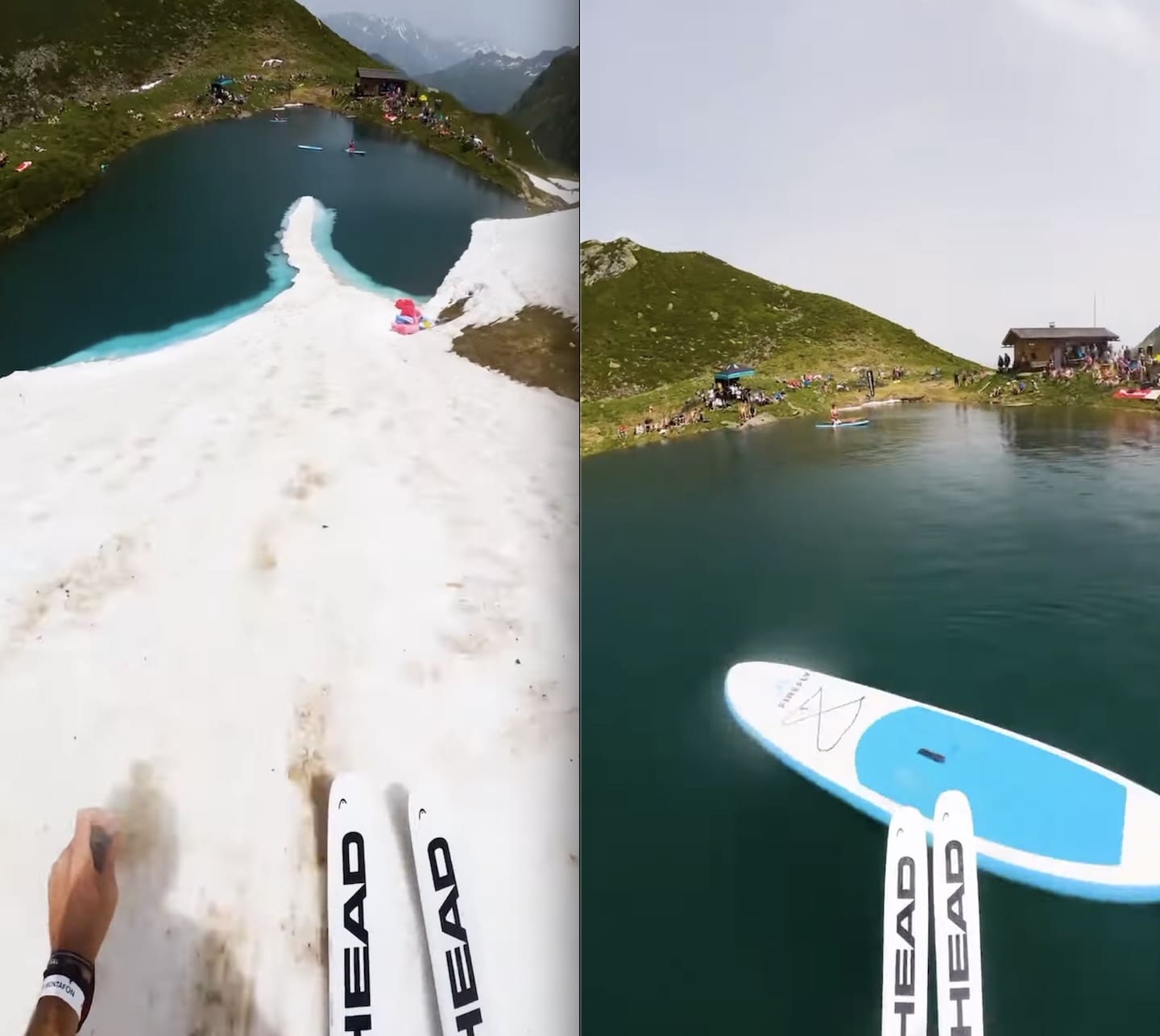
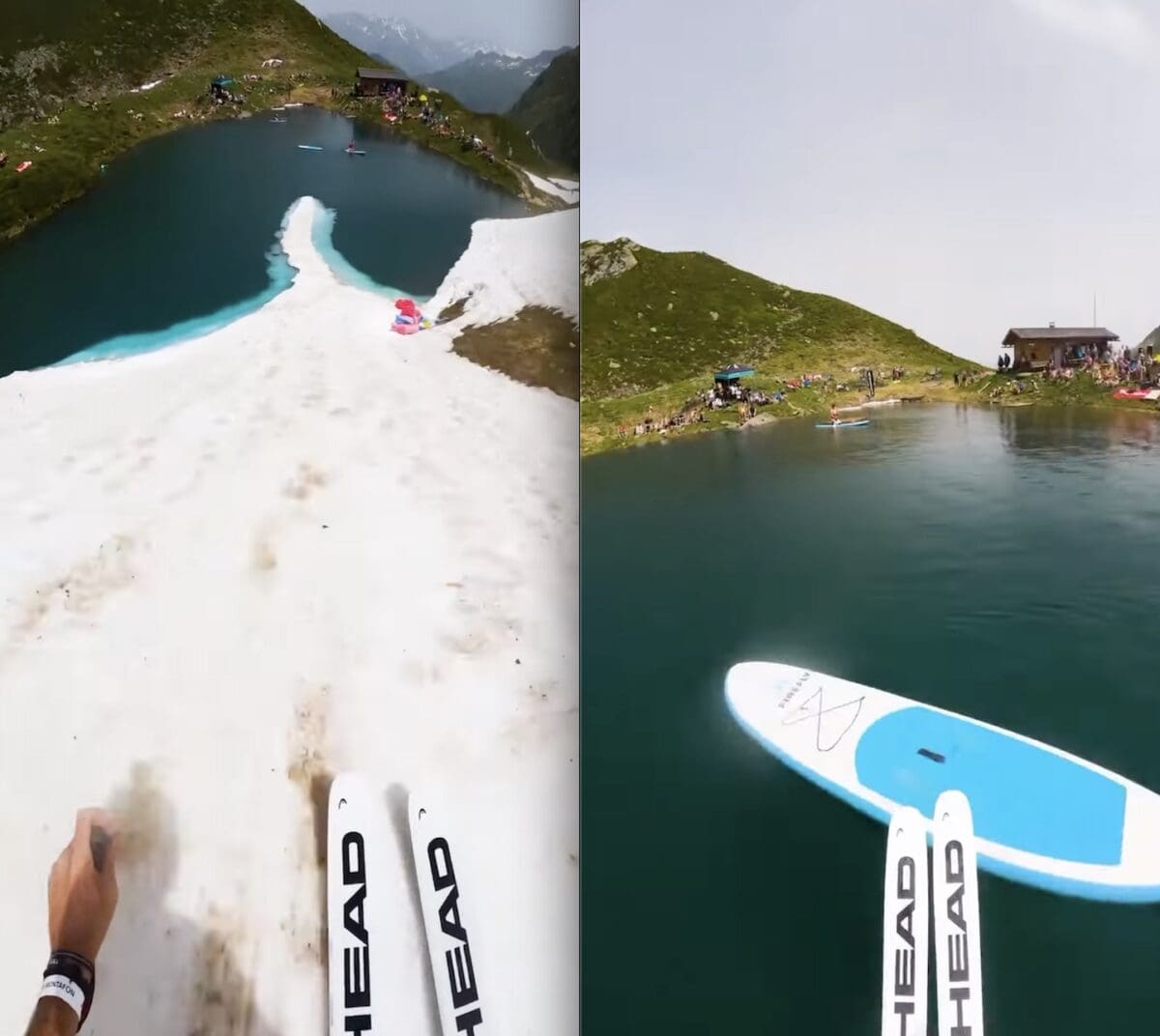
The recent footage capturing Kreibich’s feat highlights a remarkable blend of athleticism, precision, and daring. The image, widely circulated across snow sports media, depicts Kreibich mid-air, having launched himself over a paddleboard positioned on the surface of a backcountry pond. This act transcends the typical pond skim, which usually involves maintaining momentum to glide across the water’s surface. Kreibich’s performance elevates the challenge by incorporating an airborne element, demanding exceptional control and foresight.
The Evolving Tradition of Pond Skimming
Pond skimming originated as a playful, celebratory event at ski resorts, typically occurring as the snow melts and resorts prepare to close for the season. It involves skiers and snowboarders attempting to glide across a pool of water at the bottom of a slope. Success is measured by the distance covered without falling in, and often, creative costumes and daring approaches are encouraged. The tradition has become synonymous with the end of a successful ski season, fostering a sense of community and lighthearted competition.
The migration of this activity into the backcountry represents a natural progression for many enthusiasts who seek more challenging and natural environments. Backcountry pond skims, while sharing the core objective of crossing water, are inherently more complex due to unpredictable terrain, variable ice and snow conditions, and the absence of resort infrastructure. The stakes are higher, and the need for self-sufficiency and environmental awareness is paramount. These events can range from spontaneous excursions among friends to more formally organized gatherings that still retain a grassroots, adventurous spirit. The natural setting amplifies both the visual spectacle and the inherent risks involved.
Tao Kreibich’s Backcountry Triumph
Tao Kreibich, a professional skier with a reputation for pushing boundaries in freeride and backcountry disciplines, has demonstrated an exceptional mastery of this evolved tradition. His recent achievement, captured in compelling imagery and video, illustrates his ability to adapt his advanced skiing skills to a unique and challenging scenario. The act of not only clearing a body of water but also launching over an object placed upon it, such as the paddleboard in this instance, requires a nuanced understanding of speed, trajectory, and balance.
The video evidence accompanying Kreibich’s feat offers a comprehensive view of the maneuver. It typically shows the approach to the pond, the launch ramp or natural incline used to gain speed, the critical moment of flight over the obstacle, and the subsequent landing on the far side. The success of such a jump is contingent on a multitude of factors: the condition of the snow leading up to the pond, the angle of approach, the skier’s ability to generate sufficient speed without becoming unstable, and the precise timing of the jump and landing. Kreibich’s flawless execution suggests a high degree of preparation and an intimate knowledge of his capabilities and the environment.
Context and Chronology of Backcountry Exploits
While specific dates and locations for every backcountry pond skim are rarely publicized to maintain the wild nature of these events, Kreibich’s performance fits within a broader trend of athletes seeking innovative ways to engage with natural environments. The "backcountry pond skim season" typically coincides with late spring and early summer melt cycles in mountainous regions. This period, often referred to as "corn snow" season, offers a unique window where large bodies of snow persist at higher elevations, and glacial lakes or snowmelt pools begin to form.
The chronology of such events often begins with scouting missions where athletes identify suitable locations. This involves assessing snowpack stability, the presence of viable water bodies, and potential approach routes. Following this, a period of planning and preparation occurs, which might include coordinating with a small group of trusted individuals and ensuring all necessary safety equipment is on hand. The actual "skim" then takes place when conditions are deemed optimal, often after a period of warm weather has created the necessary water surface. Kreibich’s demonstrated ability suggests he has likely engaged in numerous similar, perhaps less spectacular, attempts, honing his technique over time.
Supporting Data and Analysis
The physics behind a successful pond skim, and especially an aerial maneuver over an obstacle, involve several key principles:
- Kinetic Energy: The skier must generate sufficient speed (kinetic energy) to carry them across the water. This is achieved through a steep approach and a smooth, uninterrupted run.
- Momentum: Maintaining momentum is crucial. Any loss of speed due to uneven terrain or a poor angle of attack can result in a splashdown.
- Aerodynamics and Trajectory: For an aerial jump, the skier must precisely control their body position to achieve an optimal trajectory over the obstacle. This involves tucking to reduce drag and extending at the apex of the jump for a controlled landing.
- Surface Tension and Water Properties: The surface tension of the water plays a critical role. While often appearing solid, the water’s surface can break under sufficient force. The goal of a pond skim is to skim over this tension rather than break through it.
- Obstacle Clearance: Clearing an object like a paddleboard introduces an additional layer of complexity. The height of the obstacle, combined with the width of the pond, dictates the required launch angle and airtime. Kreibich’s success implies he achieved a sufficient apex and horizontal distance to clear the paddleboard with a margin of safety.
The implications of Kreibich’s feat extend beyond a single impressive act. It serves as an inspiration for other athletes to explore the creative potential of existing ski disciplines within natural settings. It also underscores the growing interest in a more authentic and challenging engagement with the outdoors, moving away from solely resort-based activities. Furthermore, such feats, when captured and shared, contribute to the ongoing narrative and evolution of snow sports culture, showcasing the innovative spirit of its participants.
Inferred Reactions and Broader Impact
While direct statements from Kreibich regarding this specific instance are not provided in the initial content, the professional skiing community typically reacts with admiration and respect to such displays of skill. Fellow athletes and enthusiasts often acknowledge the dedication, practice, and courage required for such endeavors. Social media platforms typically buzz with commentary, praise, and shared awe following the release of compelling content like this.
The broader impact of such performances is significant. They contribute to the aspirational aspect of skiing, inspiring younger generations and recreational skiers to pursue their own adventurous goals. For the backcountry community, it reinforces the idea of respectful and skilled engagement with the environment. It also highlights the potential for natural landscapes to serve as unconventional venues for athletic expression, pushing the perceived limits of what is possible on skis. This type of content often drives interest in adventure sports and encourages individuals to seek out their own unique challenges within the natural world, always with an emphasis on safety and environmental stewardship.
The trend of backcountry pond skimming, exemplified by Tao Kreibich’s remarkable aerial maneuver, signifies a dynamic evolution in snow sports. It demonstrates a growing desire among athletes to connect with nature in more profound and challenging ways, blending traditional celebratory events with the raw beauty and inherent risks of the wilderness. As the season shifts and snow melts, the spirit of innovation and daring continues to thrive in the most unexpected and spectacular of settings.

