
The recent collaboration between Perfect Moment, a luxury French ski brand renowned for its vibrant, stylish, and high-performance alpine apparel, and H&M, the global fast-fashion retail behemoth, has sent ripples across the fashion and outdoor industries. This unexpected partnership, which quickly saw its collection sell out, represents a significant moment in the evolving landscape of accessible luxury and raises pertinent questions about brand identity, consumer demand, and the ongoing debate surrounding sustainability in fashion. The influx of colorful patterns, shimmering silvers, and bold star motifs on ski slopes worldwide confirms the immediate visual impact of Perfect Moment’s aesthetic, now made more widely available through H&M’s extensive reach.
Perfect Moment: From Freeride Roots to Luxury Lifestyle
Perfect Moment’s journey began in 1984 in the alpine heartland of Chamonix, France. Founded by Thierry Donard, a professional skier and filmmaker, the brand initially carved out a niche by designing highly functional gear specifically for freeride athletes. Donard’s vision was rooted in performance, durability, and the demands of extreme mountain sports, making Perfect Moment a respected name among serious skiers and adventurers. Its early ethos was less about high fashion and more about robust, reliable equipment capable of withstanding the rigors of off-piste exploration, aligning it closer to technical brands than traditional luxury labels.
However, a pivotal shift occurred in 2010 when the brand was acquired by European entrepreneurial couple Jane and Max Gottschalk. Under their stewardship, Perfect Moment underwent a strategic repositioning, embracing a more luxurious aesthetic that blended high performance with sophisticated style. This transformation saw the brand evolve from a purely technical outfitter into a purveyor of "après-ski chic," catering to a clientele that valued both functionality on the slopes and impeccable style off them. Today, Perfect Moment is synonymous with aspirational ski fashion, recognized for its distinctive designs, premium materials, and vibrant color palettes. Its signature items, such as puffer jackets (starting around $800), high-waisted flared ski pants ($600), luxurious knit sweaters, and branded goggles, command a significant price point, reflecting their premium positioning and perceived exclusivity. The brand’s commitment to quality and longevity is explicitly stated in its mission: "Perfect Moment believes that using less is better. That’s why we design our apparel with a focus on durability and longevity," also asserting a "responsibility to do so with the smallest impact to nature." This statement underpins its luxury appeal, promising not just style but also enduring quality.
H&M: A Global Retail Juggernaut and Fast Fashion’s Dilemma
In stark contrast to Perfect Moment’s niche luxury positioning, Hennes & Mauritz (H&M) operates on an entirely different scale. Established in 1947 in Sweden, H&M has grown into one of the world’s largest fashion retailers, boasting over 4,000 retail stores across more than 60 countries. Its business model is predicated on "fast fashion"—rapidly translating runway trends into affordable, mass-produced garments, making fashion accessible to a broad global consumer base. This model, while hugely successful commercially, has drawn extensive criticism, particularly concerning its environmental footprint and ethical implications.
H&M is frequently cited as a major fast-fashion offender due to its high volume of production, reliance on synthetic materials, and contributions to textile waste. The company’s rapid trend cycles encourage frequent purchases and disposals, leading to significant environmental impact through resource consumption, carbon emissions, and landfill accumulation. In response to mounting public and regulatory pressure, H&M has made concerted efforts towards sustainability in recent years. Initiatives like its "Conscious" collection, garment recycling programs, and investments in sustainable materials aim to mitigate its environmental impact. However, many critics argue that these efforts, while commendable, are inherently constrained by the fundamental nature of the fast-fashion business model, which prioritizes speed and volume over genuine environmental stewardship. The debate continues whether such efforts constitute meaningful change or a form of "greenwashing," where superficial sustainability claims mask deeper systemic issues.
H&M has a long history of high-profile collaborations with luxury designers, including Karl Lagerfeld, Versace, Balmain, and Stella McCartney. These partnerships have been a cornerstone of H&M’s strategy to inject aspirational design into its mass-market offerings, allowing consumers to own a piece of high fashion at a fraction of the cost. These collaborations consistently generate immense media buzz, drive traffic to stores and online platforms, and often sell out within hours, demonstrating the potent appeal of "accessible luxury."
The Unlikely Alliance: Perfect Moment x H&M
The announcement of the Perfect Moment x H&M collaboration therefore struck many as an intriguing, if somewhat paradoxical, development. The core question for industry observers and consumers alike was: what happens when a brand built on durability, exclusivity, and a nascent commitment to sustainability partners with a giant often criticized for the opposite? The collection’s rapid sell-out upon its release, with H&M not yet announcing plans for a restock, unequivocally confirmed its commercial success and high consumer demand.
For H&M, the motivation was clear: to leverage Perfect Moment’s cachet and design expertise to elevate its own brand image within the burgeoning athleisure and outdoor lifestyle segments. These collaborations typically boost brand perception, attract new customer segments, and generate significant PR. For Perfect Moment, the partnership offered an unprecedented opportunity for global brand exposure, reaching millions of consumers who might not otherwise engage with a luxury ski brand. It allowed Perfect Moment to "democratize" its distinctive aesthetic, making it accessible to a broader audience and potentially converting a percentage of these new customers to its main line in the future. In the press release shared with SKI magazine, H&M’s Creative Advisor and Head of Design, Women’s Wear, succinctly captured the essence of the collaboration, noting that the collection was "unexpected, dynamic, and sure to spark excitement."
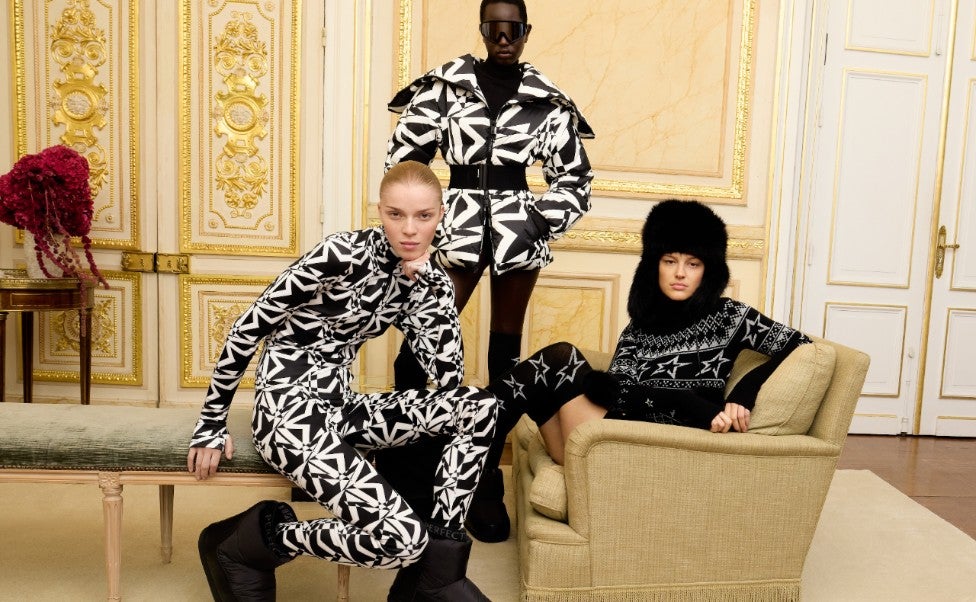
Crucially, the collaboration was explicitly designed with "après-ski" and lifestyle in mind, rather than high-performance technical skiing. This distinction is vital for understanding the product offering and its intended use. The collection included a range of items such as sweaters, bodysuit baselayers, and puffer jackets, all infused with Perfect Moment’s iconic stylistic elements like bold stars and vibrant color blocking.
Performance and Design: A Hands-On Assessment
To evaluate the practical application of this "accessible luxury" collection, a detailed assessment of selected items was conducted. The focus was on two key pieces: a puffer jacket priced at $329 and a baselayer top at $60. These prices, while significantly lower than Perfect Moment’s main line, still represent a premium within H&M’s usual offerings, positioning them as an aspirational purchase for the typical H&M customer.
The baselayer top, while not crafted from Merino wool—a standard for high-performance ski baselayers—proved to be surprisingly effective. Made from a synthetic performance material, it demonstrated commendable sweat-wicking properties, crucial for maintaining comfort during physical activity. Its design featured a flattering zippered mock neck, enhancing its aesthetic appeal for both on-slope and après-ski wear. A minor observation regarding sizing indicated it ran slightly large; for colder conditions, a tighter Merino base layer underneath would allow it to function as an effective pseudo-midlayer. Priced at $60, it offered a reasonable option for skiers seeking a more chic and stylish piece for après-ski events, blending functionality with fashion without a prohibitive cost. The associated pants, however, were found to be too large for a proper functional test, highlighting the common challenge of sizing in mass-market collaborations.

The puffer jacket, priced at $329, immediately presented an oversized aesthetic. From a purely stylistic perspective, this was appreciated, aligning with contemporary fashion trends favoring voluminous silhouettes. However, this design choice inevitably influenced its performance characteristics. The jacket featured a boxy silhouette, with sleeves fitting appropriately but the overall garment hanging loosely. This appeared to be an intentional design decision, engineered to accommodate layering underneath, aligning with the "après-ski" and casual wear brief rather than a snug, performance-oriented fit.
A notable functional drawback, particularly for active skiers, was the pocket configuration. The jacket offered only two external pockets, secured with a magnetic closure system, and a single inner pocket with a top opening. This design is less than ideal for skiers, even those primarily focused on après-ski activities. Magnetic closures, while aesthetically clean, pose a risk of items being lost, especially during dynamic movements or falls on the slopes. The limited number of pockets also restricts practical storage for essentials such as ski passes, phones, and small accessories, which dedicated ski jackets typically provide through multiple zippered, secure compartments.
Despite these functional limitations, the jacket possessed several commendable attributes. Its unique fit was undeniably flattering, contributing to its fashion-forward appeal. A significant practical advantage was the hood’s generous sizing, designed to comfortably fit over a ski helmet—a feature often overlooked in fashion-oriented outerwear. This detail elevates its usability for casual days on the slopes. Provided secure pockets were available elsewhere (e.g., ski pants), the jacket would be a viable option for warmer, more casual ski days. Considering it wasn’t engineered as a high-performance ski jacket, its price point of $329 is fair for a warm, stylish puffer, particularly for consumers prioritizing aesthetics. The most striking aesthetic element, and arguably the collection’s signature, was the large star design prominently displayed on the back. While serving no functional purpose, its strong visual identity perfectly encapsulated the fashion-first ethos of the collaboration.
Market Dynamics and Broader Implications
This collaboration is emblematic of several broader trends shaping the fashion and outdoor industries. The rise of "athleisure" and "gorpcore" (a fashion trend inspired by utilitarian outdoor gear) has blurred the lines between performance wear and everyday fashion. Consumers are increasingly seeking garments that offer both functionality and style, suitable for a range of activities from urban exploration to mountain resorts. The "affordable luxury" phenomenon, driven by a desire for aspirational brands without the prohibitive price tag, fuels the success of such collaborations. Social media and influencer culture further amplify this demand, showcasing stylish activewear as part of a desirable lifestyle.
The implications of the Perfect Moment x H&M collaboration are multifaceted:
- For Perfect Moment: The partnership offers unparalleled brand visibility and exposure to a vast global audience, potentially fostering new customer acquisition. The challenge lies in maintaining its luxury positioning and exclusivity while engaging in a mass-market venture. Careful management of brand perception is crucial to avoid diluting its premium image.
- For H&M: The collaboration successfully injects a dose of high-end design and aspirational appeal into its portfolio, strengthening its position in the competitive fashion market. It demonstrates H&M’s ability to attract and execute partnerships with luxury brands, reinforcing its image as a destination for accessible trends.
- For the Outdoor and Fashion Industries: This collaboration further blurs the boundaries between performance and fashion, influencing design trends and consumer expectations. It highlights the increasing commercial viability of "après-ski" and lifestyle-focused outdoor apparel, catering to a market segment that values style as much as, if not more than, pure technical performance. It also challenges traditional luxury models, demonstrating that aspirational aesthetics can be successfully scaled through strategic partnerships.
- For Consumers and Sustainability: The collaboration reignites the perennial debate about sustainability in fashion. How do consumers reconcile Perfect Moment’s stated commitment to durability and minimal environmental impact with H&M’s reputation as a fast-fashion giant? While H&M has made efforts towards sustainability, the core business model remains volume-driven. This partnership forces consumers to weigh the allure of accessible luxury against potential ethical and environmental considerations. It may also inadvertently encourage more discerning purchasing habits, as consumers might prioritize style over longevity in these "limited edition" drops. The rapid sell-out suggests that for many consumers, the immediate gratification of owning an aspirational item at a lower price point currently outweighs deeper sustainability concerns.
In conclusion, the Perfect Moment x H&M collaboration stands as a compelling case study in modern retail strategy. It successfully tapped into the surging demand for stylish, accessible skiwear, proving that high fashion and mass-market appeal can indeed converge. While not designed for the most demanding skiers, the collection masterfully serves a specific niche: individuals seeking to infuse their alpine wardrobe with a touch of luxury and distinctive style without the substantial investment of Perfect Moment’s main line. It represents a "sweet spot" for those prioritizing fashion and aesthetics, offering a commercially successful model that, while sparking excitement, simultaneously fuels ongoing discussions about brand identity, consumer values, and the future of sustainable fashion.

