
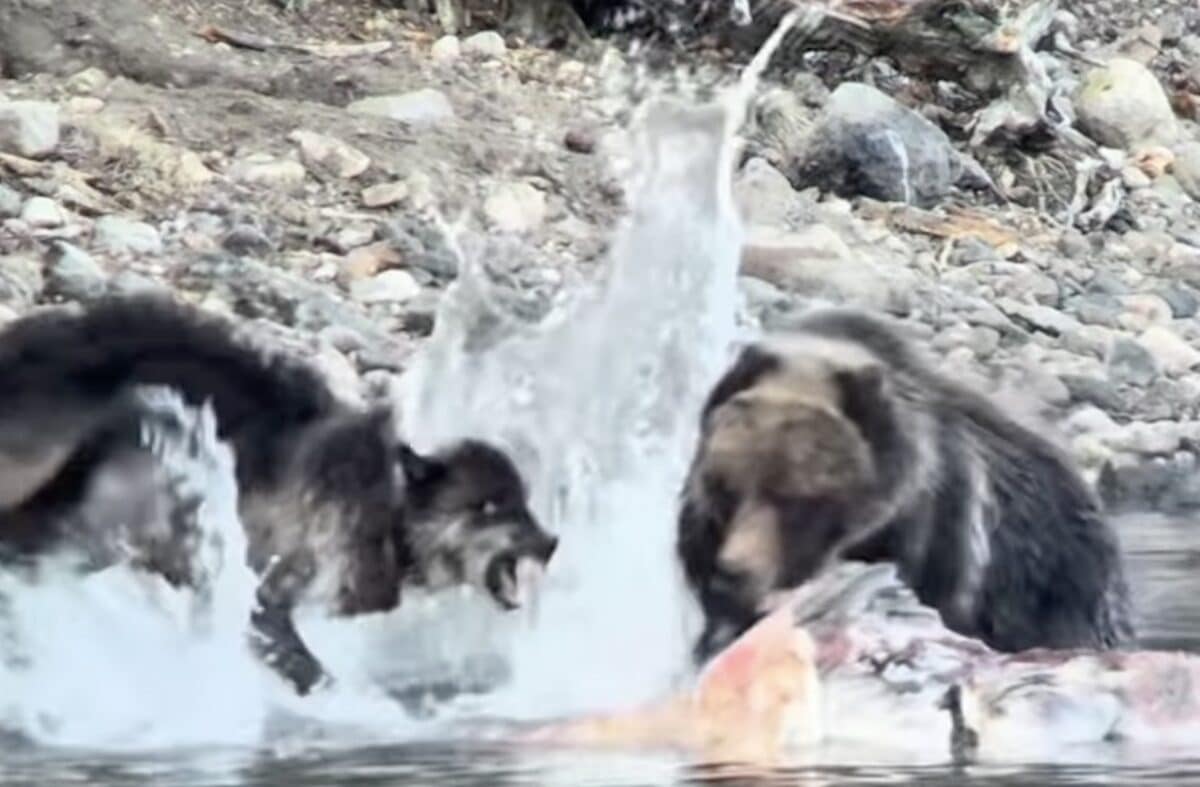
Spectacular footage captured within the vast wilderness of Yellowstone National Park this morning depicts a raw and intense confrontation between a gray wolf and a grizzly bear, locked in a fierce struggle over a partially submerged, decaying bison carcass in the Yellowstone River. This remarkable video offers an unfiltered glimpse into the dynamic power struggles that define the predator-prey relationships and resource competition among North America’s most iconic apex predators in this iconic ecosystem.
The Apex Predator Standoff
The visual evidence from the encounter, shared widely by wildlife photographer and author Julie Argyle, showcases the primal instincts and territorial drives of these magnificent animals. The scene unfolds in the Yellowstone River, where the carcass of a bison, likely fallen victim to natural causes or predation, has become the focal point of an epic natural drama. Both species, renowned for their predatory prowess and ecological significance, vie for control of this vital food source.
Grizzly bears, with their immense size, strength, and formidable jaws, are widely recognized as the dominant force at carcasses within Yellowstone. Their sheer power often intimidates other scavengers, including wolves. However, this particular wolf demonstrated remarkable tenacity, challenging the grizzly’s claim. While the wolf’s efforts were valiant, the ingrained hierarchy of the food chain in Yellowstone often dictates the outcome. As observed in this instance, the grizzly’s superior size and strength ultimately prevailed, reinforcing its status as a primary "king of the carcass."
Understanding the Dynamics of Competition
The interaction highlights the nuanced strategies employed by wolves when confronting larger carnivores like grizzlies. Wolves, while possessing superior speed and agility, typically avoid direct, all-out physical confrontations with adult grizzlies. Such encounters carry a high risk of severe injury or fatality for the wolf. Instead, their primary tactic involves a strategy of harassment and opportunistic scavenging.
In these situations, wolves often engage in a calculated approach: they will circle the larger predator, employ quick, probing nips at the bear’s flanks or heels, and exhibit persistent, almost taunting, behavior. The aim is not to overpower the grizzly but to exploit any moment of frustration or distraction. By annoying the bear and probing for weaknesses, the wolf hopes to create an opportunity, however brief, for the grizzly to momentarily abandon the carcass, leaving behind edible fragments that the wolf can then snatch. This behavioral adaptation underscores the wolf’s intelligence and its ability to thrive in an ecosystem shared with more powerful competitors.

A Rare Glimpse into Wild Yellowstone
The ability of visitors to witness such a dramatic and visceral event is a testament to the success of conservation efforts within Yellowstone National Park and the dedication of individuals like Julie Argyle, who are committed to documenting and sharing the park’s natural wonders. These encounters are not commonplace and require a keen understanding of the park’s geography, wildlife behavior, and often, a significant degree of patience and luck.
Yellowstone National Park, established in 1872, is the world’s first national park and encompasses over 2.2 million acres of diverse habitats, supporting a rich tapestry of wildlife. The park’s predator-prey dynamics, including the complex relationships between wolves, grizzlies, and their prey like bison, are central to its ecological integrity. The reintroduction of wolves in the mid-1990s, after a decades-long absence, has been a cornerstone of ecosystem restoration, significantly impacting the park’s flora and fauna.
The Role of Wildlife Photographers
Wildlife photographers play a crucial role in bringing the realities of the natural world to a broader audience. Julie Argyle, recognized for her work in documenting western ecology, has provided an invaluable record of this significant interaction. Her dedication to capturing these moments not only educates the public but also contributes to scientific understanding and conservation awareness. Her published works, which delve into the intricacies of western ecosystems, offer further insights into the behaviors and ecological roles of animals like wolves and grizzlies.
The ability to observe these apex predators in their natural habitat, engaged in such fundamental activities as competing for food, offers a profound connection to the wild. It underscores the importance of preserving these wild spaces and the intricate ecological processes that unfold within them, unseen by most.
Supporting Data and Ecological Context
The Yellowstone ecosystem is a complex web of interactions. Data from the National Park Service indicates a robust population of both grizzly bears and gray wolves. Grizzly bear populations in the Greater Yellowstone Ecosystem are estimated to be in the hundreds, with estimates fluctuating based on annual monitoring. Wolf populations, following their reintroduction, have also rebounded significantly, with multiple packs operating across the park.
The presence of a decaying bison carcass in the Yellowstone River suggests a natural mortality event. Bison, the largest land mammals in North America, are a primary prey species for wolves and a significant food source for grizzlies, particularly during the spring and summer months when food can be scarce after the winter. The river setting adds another layer of complexity, as carcasses can be moved by currents, potentially making them accessible to a wider range of scavengers or leading to their eventual submersion.
Expert Perspectives and Inferred Reactions
While direct statements from park officials regarding this specific incident were not immediately available, the National Park Service routinely emphasizes the importance of maintaining a safe distance from wildlife and observing animals from afar. Their protocols are designed to protect both the animals and the visitors. The general consensus among wildlife biologists and ecologists is that such interactions, while dramatic to observe, are a natural and integral part of the Yellowstone ecosystem.
It is understood that park rangers and wildlife biologists monitor these interactions to gain insights into population health, resource availability, and the overall dynamics of the ecosystem. The footage serves as valuable anecdotal evidence that can supplement ongoing research efforts.
Broader Impact and Implications
The footage of the wolf-grizzly confrontation serves as a powerful reminder of the wild nature of Yellowstone National Park and the ongoing ecological processes that shape its landscape. It underscores the importance of apex predators in maintaining ecosystem balance. Wolves, for instance, have been shown to influence elk populations, which in turn affects vegetation growth, thereby impacting the entire food web. Grizzlies, as omnivores and opportunistic predators, play a vital role in nutrient cycling and the dispersal of seeds through their consumption of fruits and berries.
The continued presence and successful functioning of these predator populations are crucial indicators of a healthy and resilient ecosystem. Events like the one captured by Julie Argyle highlight the need for continued conservation efforts, responsible visitor behavior, and ongoing scientific research to ensure the long-term survival of these magnificent species and the wild places they inhabit. The raw display of nature’s power and the intricate balance of survival in Yellowstone continues to captivate and educate, reinforcing the park’s status as a global treasure.

