
The consumer market for alpine ski equipment has long operated on an annual cycle of incremental redesigns, but savvy gear buyers are increasingly finding exceptional value in carryover models that feature strictly cosmetic updates. A prime example of this trend is found in the current retail landscape for the Nordica Santa Ana 102, a high-performance all-mountain wide ski that has dominated testing leaderboards since its introduction. Industry analysts and gear reviewers have highlighted that because the current iteration of the Santa Ana 102 incorporates only superficial graphic changes compared to its predecessor, buyers can capitalize on significant retail discounts—ranging up to 60 percent off—for identical on-snow performance.
This convergence of high marks from product testers and substantial end-of-season or carryover inventory pricing provides a unique opportunity for advanced and expert skiers. Rather than paying a premium for the newest top-sheet artwork, consumers are acquiring a proven, medal-caliber resort charger at a fraction of its original retail cost.
Main Facts and Performance Specifications
Engineered specifically for expert women who demand precision, stability, and power, the Nordica Santa Ana 102 is built to handle aggressive skiing across varied resort terrain. The ski measures 130.5 millimeters at the tip, 102 millimeters at the waist, and 120.5 millimeters at the tail, striking a versatile balance that floats in soft snow while maintaining rapid edge-to-edge transitions on hardpack. It is manufactured in five distinct lengths—155, 161, 167, 173, and 179 centimeters—to accommodate a wide range of skier heights and preferred turning radii.
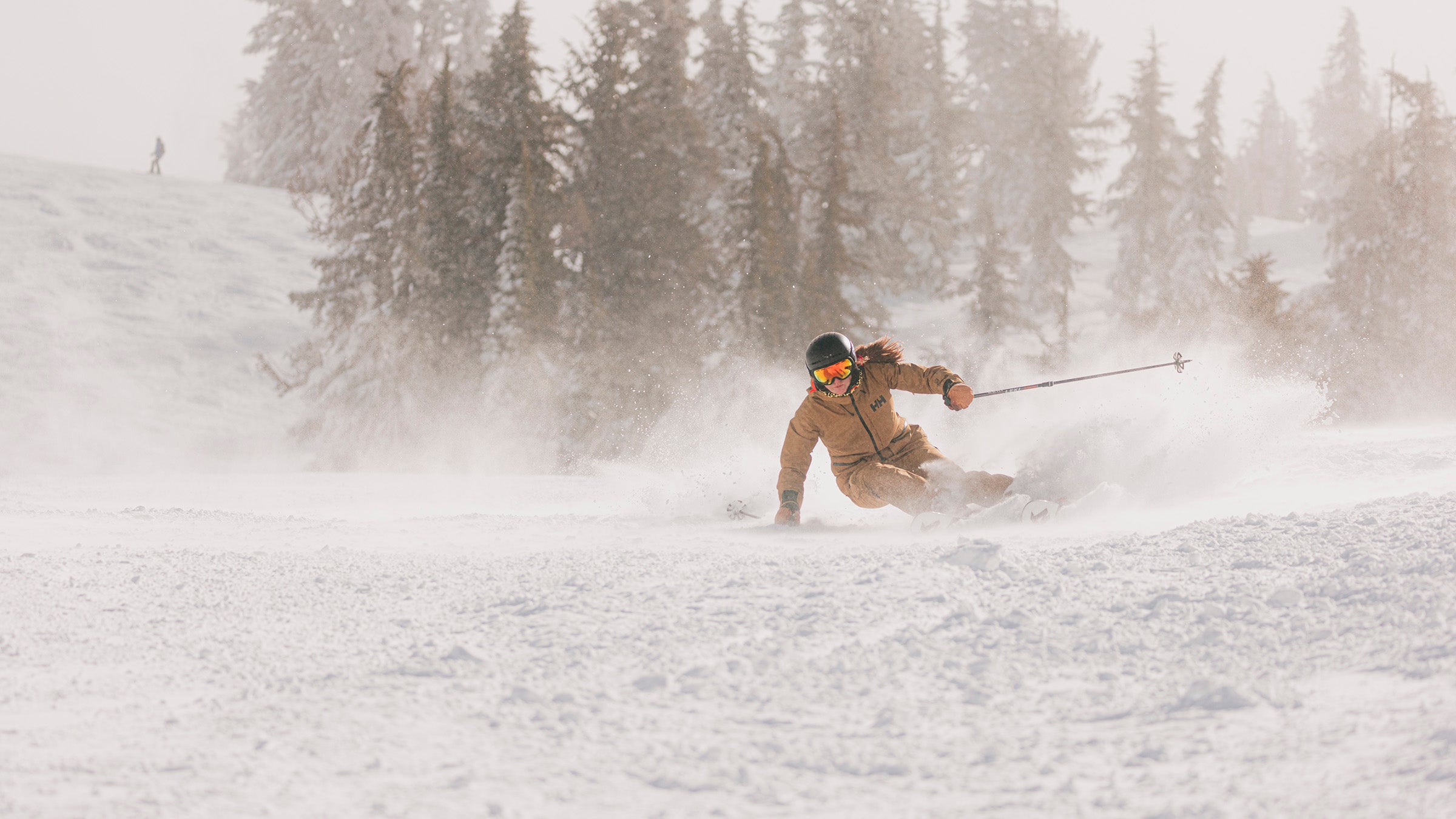
The core construction of the Santa Ana 102 is anchored by dual layers of Titanal paired with a performance-tuned wood core. This heavy-duty metal-laminate architecture provides the torsional rigidity and dampening necessary to eliminate chatter at high speeds. Testers have consistently noted that the ski excels when driven with an aggressive, forward stance. Its primary strengths lie in its exceptional edge hold on firm snow, rock-solid stability at velocity, and a smooth, unyielding ride through variable crud and deep powder.
Conversely, the very attributes that make the Santa Ana 102 a premier expert tool also define its limitations for less experienced skiers. Product evaluators have pointed out that the ski is not forgiving of a backseat stance or tentative inputs. Furthermore, due to its stiff torsional profile and heavy dampening, it can feel demanding and unyielding in tight mogul fields where quick, pivot-style turns are required. It is an uncompromised charger designed for skiers who look at steep, challenging terrain as an invitation rather than an obstacle.
Chronology and Evolution of the Santa Ana Line
The lineage of the Nordica Santa Ana franchise traces back nearly a decade, establishing itself as a benchmark for women’s all-mountain and freeride capability. However, a major engineering pivot occurred ahead of the 2024 season, when Nordica comprehensively redesigned the platform to optimize weight distribution, shape profiles, and flex patterns across the entire collection.
During the 2024 winter gear testing cycles, the newly redesigned Santa Ana 102 immediately captured the attention of professional reviewers, quickly ascending to the top of category leaderboards for wide all-mountain skis. Maintaining this momentum, the ski defended its crown by securing top-tested status in subsequent gear guides, culminating in its recognition as a leading all-mountain wide ski.
By the time manufacturing cycles rolled over into the 2025 and 2026 production runs, Nordica’s product development team elected to leave the internal construction, core materials, sidecut geometry, and rocker profile completely untouched. The rationale behind freezing the mechanical design was rooted in the overwhelmingly positive reception from both consumers and test pilots. The sole modification implemented for the newer production batches involved aesthetic updates to the top-sheet graphics and colorways. Consequently, retailers holding inventory from the initial 2024 and 2025 production runs found themselves positioned to offer consumers the exact same high-performance ski alongside newly minted stock, creating a natural price bifurcation in the marketplace.
Supporting Data and Market Dynamics
The alpine ski retail sector operates within a tightly monitored seasonal framework. Typically, hardgoods manufacturers introduce new equipment lines at major trade shows every winter, with products hitting retail floors by the subsequent autumn. When a manufacturer executes a "graphics-only" update—industry parlance for a product where the internal molds and materials remain identical to the prior year—previous-generation inventory immediately becomes a primary target for markdown strategies by brick-and-mortar shops and online e-commerce platforms looking to clear warehouse space.
Market data compiled across major outdoor gear retailers indicates that high-performance skis featuring dual-metal laminates, such as the Santa Ana 102, retain high residual value due to their durable construction and targeted appeal to affluent, dedicated skiers. However, as the seasonal window transitions, remaining stock from prior production years routinely experiences aggressive discounting, with markdowns frequently reaching between 40 and 60 percent.
For consumers, this creates an optimal purchasing window. Economists tracking the outdoor recreation sector note that inflation and rising raw material costs—particularly for aluminum, fiberglass, and specialized resins used in ski manufacturing—have driven baseline retail prices for new flagship skis steadily upward over the past five years. Finding a top-tier model like the Santa Ana 102 at a steep discount effectively bypasses these macroeconomic pressures, allowing skiers to acquire professional-grade equipment at historical price points.
Official Responses and Industry Perspectives
While equipment manufacturers traditionally focus marketing efforts on promoting the newest technological advancements, industry observers and brand representatives acknowledge the consumer appeal of carryover gear. Representatives from specialty ski shops have emphasized that educated consumers are increasingly asking staff whether a new season’s model features structural changes or merely cosmetic refreshes.
"When a ski hits the sweet spot of performance like the Santa Ana 102 has, changing the core construction simply for the sake of change is a risk brands prefer to avoid," notes an independent retail equipment buyer based in the Rocky Mountain region. "For our customers who are expert skiers, knowing that last year’s discounted model skis identically to the current year’s version makes the purchasing decision straightforward. It represents the best value-to-performance ratio currently available in the women’s wider all-mountain category."
Ski testers who have logged thousands of vertical feet on the platform reiterate that the mechanical integrity of the ski remains its defining characteristic. Professional bootfitters and instructors frequently recommend the Santa Ana series to clients who have plateaued on intermediate gear and need a platform that demands structural engagement to unlock its full potential. The consensus among technical reviewers is that the ski does not tolerate passive technique, a factor that industry insiders view as a badge of honor for a dedicated charger.
Broader Impact and Implications for Ski Consumers
The widespread availability of discounted, high-performance carryover equipment points to a broader shift in consumer purchasing habits within the outdoor sports industry. As digital gear reviews, community forums, and independent testing publications provide skiers with unprecedented transparency regarding equipment specifications, buyers are becoming less susceptible to the allure of annual cosmetic redesigns.
This trend forces retailers and manufacturers to carefully manage inventory forecasting. Overestimating demand for a newly branded top-sheet can leave shops with excess stock that must be heavily discounted to prevent capital from remaining tied up in stagnant hardgoods. For the end consumer, this competitive retail environment is decidedly advantageous.
Ultimately, the persistent market dominance and subsequent discounting of the Nordica Santa Ana 102 underscore a fundamental truth of alpine equipment: superior engineering outlasts seasonal marketing cycles. For expert women seeking a reliable, high-velocity charger capable of dominating crud, carving clean arcs on groomers, and maintaining composure at terminal velocity, the current market availability of this proven platform offers an exceptional window for gear acquisition. As winter resorts prepare for upcoming operating schedules, savvy skiers equipped with last season’s discounted hardware will find themselves just as well-equipped to conquer the mountain as those paying top dollar for the latest color palette.

