
The consumer gear market for high-performance winter sports equipment is currently experiencing a rare convergence of top-tier performance and significant retail discounting, highlighted by the latest assessment of the Nordica Santa Ana 102. Recognized consistently by gear testers since its market introduction in 2024, the Santa Ana 102 has secured its position as a leading all-mountain wide ski. For the upcoming season, Nordica has limited updates to purely aesthetic modifications, leaving the core structural architecture of the ski identical to its predecessor. Consequently, retail analysts and gear experts have noted an unusual market opportunity: consumers can purchase the previous season’s model—which possesses the exact same technical specifications, dimensions, and materials as the current iteration—at discounts reaching up to 60 percent off the standard manufacturer’s suggested retail price.
This development offers a compelling value proposition for advanced and expert-level skiers who prioritize equipment performance over current-year graphic design. As winter sports enthusiasts and retail outlets prepare for the upcoming snow season, understanding the technical merits, performance profile, and broader economic implications of this gear cycle provides valuable insight into the modern ski equipment industry.
Technical Specifications and Performance Profile
Designed specifically for expert women who demand high-speed stability and uncompromising power, the Nordica Santa Ana 102 features a distinct geometry and a robust construction profile. The ski is built with dimensions measuring 130.5 millimeters at the tip, 102 millimeters underfoot, and 120.5 millimeters at the tail. It is manufactured in a comprehensive range of lengths, including 155, 161, 167, 173, and 179 centimeters, accommodating a wide spectrum of physical statures and skiing styles.
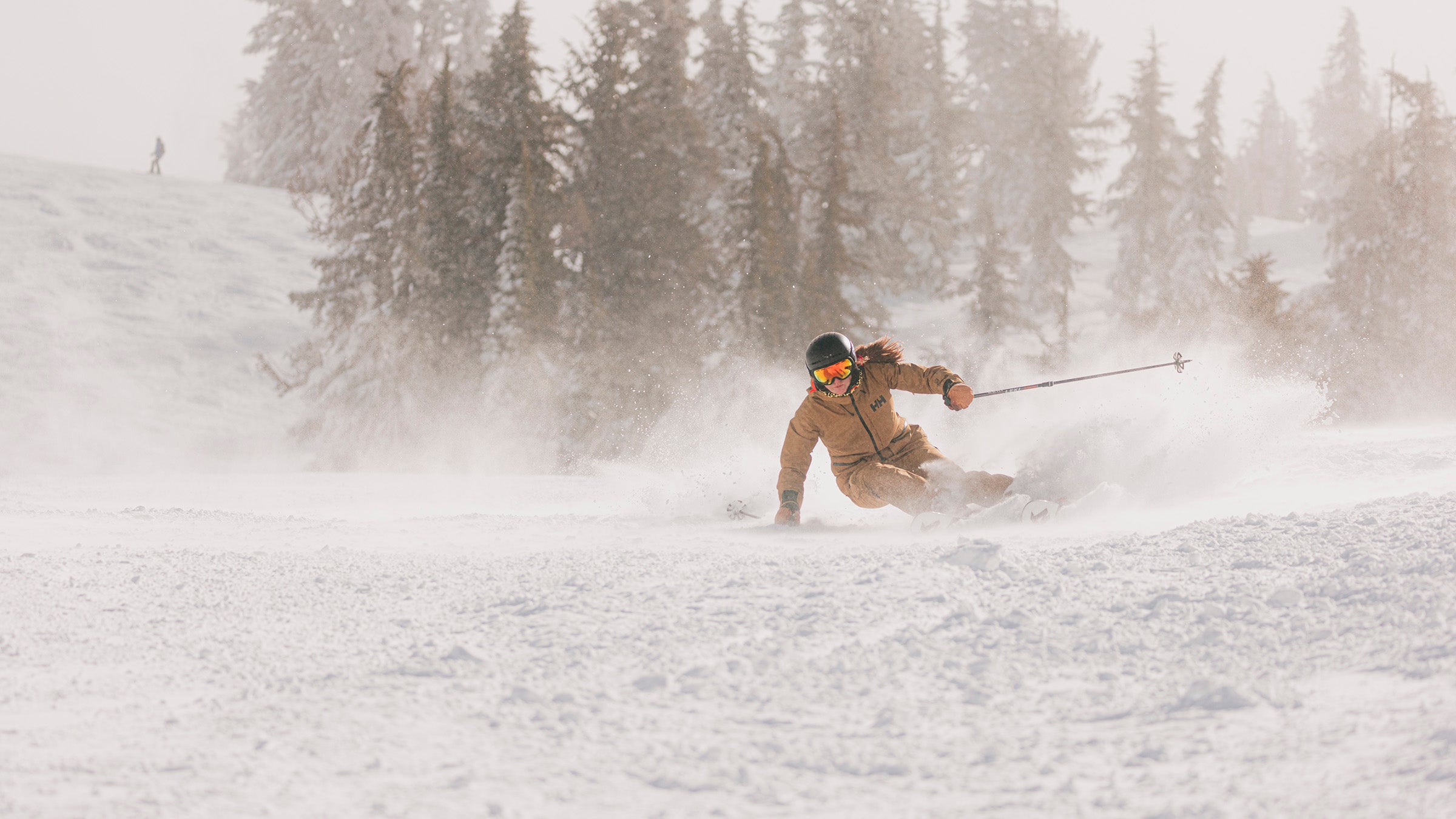
Field testing conducted by professional gear reviewers highlights several key performance characteristics. The ski excels when driven aggressively, offering an ultra-dependable ride that instills confidence at elevated speeds and across varied terrain conditions. Dual layers of Titanal integrated into the core provide structural dampening and torsional rigidity, ensuring firm edge grip on hardpack and smooth tracking through wind-scoured crud or deep powder.
However, professional evaluations also outline specific operational limitations. Testers noted that the Santa Ana 102 is not designed for intermediate skiers or those seeking a forgiving, highly maneuverable ride at slower speeds. The stiffness required to maintain high-speed stability translates to a stiffer feel in tight mogul fields, requiring significant physical input and technical precision from the pilot. It is engineered explicitly as a high-performance tool for strong skiers who prefer to drive the front of the boot and push their personal speed boundaries.
Chronology and Evolution of the Santa Ana Line
The lineage of the Nordica Santa Ana series represents a significant evolution in women-specific freeride and all-mountain ski design. Over the past decade, ski manufacturers have increasingly recognized that female experts require high-performance equipment tailored to their biomechanics, rather than merely scaled-down versions of men’s skis.
In 2024, Nordica launched a major redesign of the Santa Ana franchise, introducing the 102 millimeter platform that combined a versatile waist width with a heavier, more charger-oriented construction. This redesign immediately captured the attention of industry testers, earning top accolades across major ski publication gear tests. The engineering focus centered on balancing weight and dampening, utilizing carbon chassis technology alongside metal laminates to reduce swing weight without sacrificing stability.
By 2025 and heading into the 2026 gear cycle, the Santa Ana 102 maintained its foundational geometry and material composition. Industry observers noted that Nordica’s decision to implement only cosmetic updates for the current production run speaks to the success of the 2024 engineering overhaul. When a product achieves near-universal acclaim in its category, manufacturers frequently elect to preserve the internal construction, focusing marketing efforts on fresh top-sheet aesthetics while allowing retailers to manage inventory clearance on prior productions.
Market Dynamics and the Economics of Gear Clearance
The phenomenon of securing high-end ski equipment at discounts of up to 60 percent relies heavily on the retail calendar of the winter sports industry. Ski manufacturers typically unveil new equipment lines annually, prompting retailers to clear warehouse inventory during the late summer and early autumn months to make room for incoming shipments.
When a manufacturer introduces a new model year featuring exclusively cosmetic changes—such as the transition from the previous Santa Ana 102 to the current iteration—an economic disparity is created in the secondary and retail markets. Consumers possessing technical knowledge of equipment specifications can leverage this cycle. By identifying skis that are identical in performance and construction to the newest models, buyers can bypass the premium associated with the latest aesthetic release.
Industry analysts point out that this dynamic benefits both retailers and advanced consumers. Retailers successfully liquidate capital-tied inventory, while expert skiers gain access to elite-tier equipment at mid-tier pricing points. For specialized gear like the Santa Ana 102—which represents a significant financial investment at full retail price—a 60 percent reduction substantially lowers the barrier to entry for high-performance all-mountain skiing.
Industry Perspectives and Expert Consensus
While direct corporate statements from individual retailers vary based on regional inventory levels, standard industry practices within specialty ski shops emphasize the importance of matching skier ability to equipment capability. Specialty boot-fitters and shop technicians frequently advise consumers to look past top-sheet graphics when evaluating gear value.
Gear testing organizations, including prominent ski media outlets, have consistently emphasized that equipment choices should be dictated by terrain preferences and skill level rather than marketing cycles. In the case of the Santa Ana 102, the consensus among professional testers is clear: the ski does not tolerate passive skiing. It demands an assertive stance, active balance, and a willingness to embrace speed.
Coaches and high-level instructors often recommend skis of this caliber to advanced students who have plateaued on more forgiving, flexible equipment. By stepping onto a stiffer, metal-laminates-reinforced ski like the Santa Ana 102, skiers are forced to engage proper edging mechanics and pressure distribution. The availability of these skis at discounted clearance rates accelerates this accessibility for dedicated athletes looking to upgrade their quiver without paying full MSRP.
Broader Implications for All-Mountain Equipment Trends
The enduring popularity and steady engineering of the Nordica Santa Ana 102 reflect broader trends in the modern ski market. The 100-to-105 millimeter waist category has solidified its position as the ultimate one-ski quiver for regions with diverse snow conditions, bridging the gap between narrow frontside carvers and dedicated powder boards.
Furthermore, the emphasis on high-performance construction in women-specific lines indicates a permanent shift in how manufacturers view their demographic markets. The days of softer, lighter, compromise-laden skis designed exclusively for lightweight female skiers have largely been superseded by engineering that respects the aggressive skiing styles of modern female athletes. Skis like the Santa Ana 102 prove that high performance requires uncompromised materials, regardless of gender classification.
As consumers evaluate their equipment needs for the upcoming winter season, the intersection of proven design longevity and aggressive retail discounting serves as a practical reminder. For gear designed to withstand the rigorous demands of all-mountain charging, prioritizing structural integrity and field-tested performance over annual aesthetic updates remains one of the most effective strategies for maximizing value in winter sports equipment procurement.

