
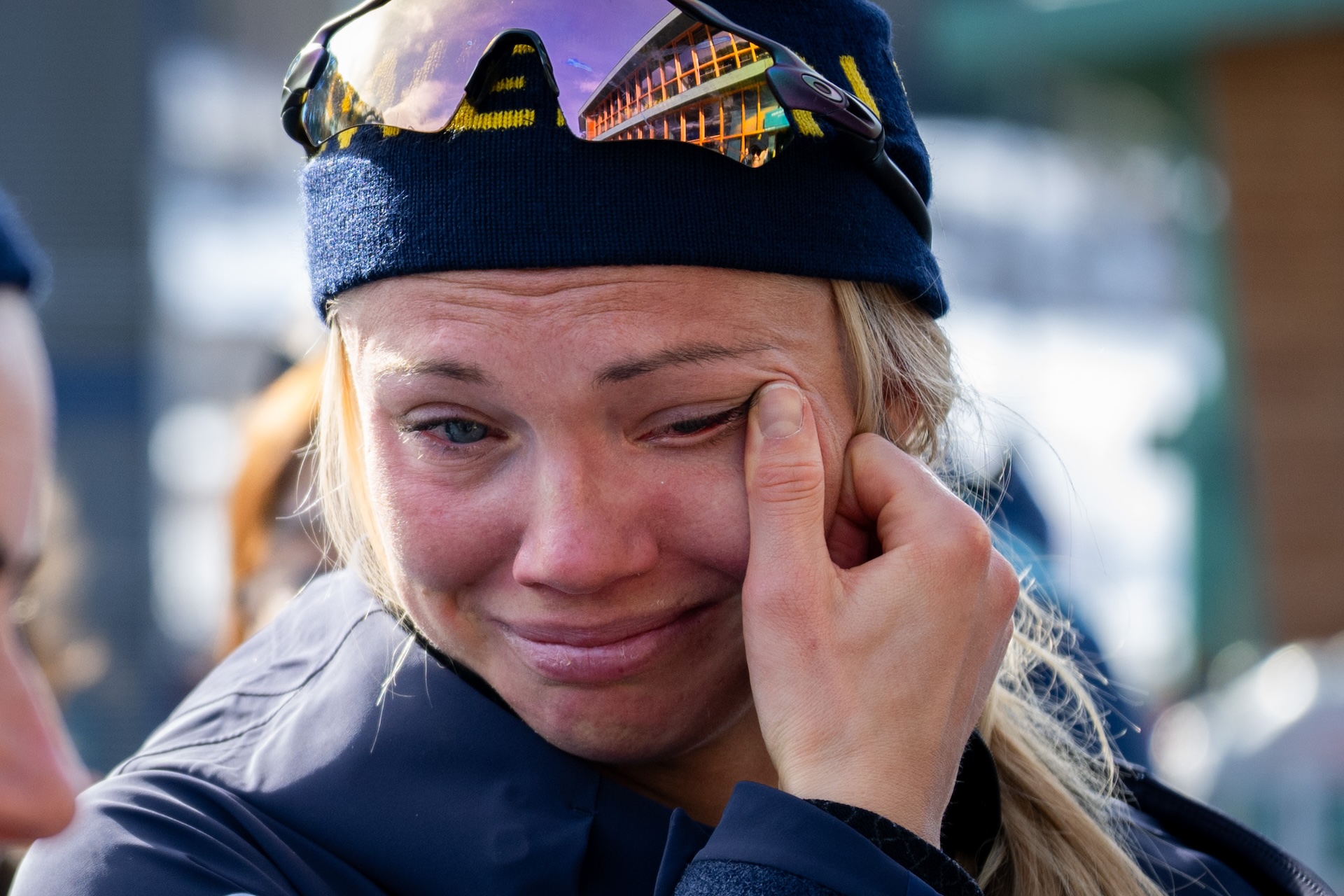
The life of an elite athlete is often defined by the intersection of peak performance and psychological resilience. For Swedish cross-country skiing star Emma Ribom, the winter of 2025 became a defining crucible that nearly brought a celebrated career to an abrupt end. Following a period of intense scrutiny and personal disappointment, the 28-year-old from Kalix has emerged from a summer of introspection, revealing the gravity of the emotional crisis she faced after being excluded from her primary event at the Olympic Games.
The decision to bypass Ribom for the sprint competition at the Winter Olympics in Italy served as a catalyst for a profound existential crisis. Ribom, a specialist whose career trajectory had been meticulously calibrated toward that specific race, found herself facing a reality that felt, in her own words, surreal. The subsequent impact on her professional outlook was immediate, leading her to openly question the sustainability of a career built on such precarious selection processes.
A Chronology of Disillusionment
The events leading to Ribom’s contemplation of retirement were not isolated but rather the culmination of a series of setbacks. To understand the depth of her frustration, one must look at the timeline of the 2024-2025 season:
- Early Season Disruption: The season began with a high-profile disqualification in the opening rounds, which immediately placed Ribom on the defensive regarding her standing within the Swedish national team.
- The Tour de Ski Setback: Mid-season illness during the prestigious Tour de Ski further hampered her ability to accumulate the necessary points and performances to secure a guaranteed spot on the Olympic sprint team.
- The Selection Announcement: The defining moment arrived when team management opted for Johanna Hagström to fill the final sprint vacancy, effectively ending Ribom’s decade-long pursuit of an Olympic sprint medal.
- The Olympic Competition: Ribom was relegated to the 10-kilometer freestyle and the 50-kilometer mass start. While she finished tenth in the latter, the physical exertion and emotional exhaustion were visible as she struggled to reconcile her personal ambitions with her team-mandated role.
The Psychological Burden of High-Performance Selection
In elite sports, the "what-if" scenario is a common, albeit damaging, mental trap. Ribom’s candid reflections in recent media appearances highlight the isolation felt by athletes when their professional fate is tethered to subjective selection criteria. The sport of cross-country skiing is notoriously unforgiving; minor errors, such as a disqualification or a bout of flu, can effectively erase months of intensive physical preparation.
For Ribom, the heartbreak was compounded by the fact that the Olympic sprint in Italy was the centerpiece of her career planning. When that objective was removed, the motivation to continue the daily grind of interval training, altitude camps, and tactical analysis plummeted. The transition from being a medal contender to a support athlete in less favorable events created a cognitive dissonance that required professional support and a complete reassessment of her relationship with the sport.
Rebuilding the Foundation: A Summer of Change
Following the conclusion of the Olympic cycle, Ribom opted for a radical change in her training environment. She spent six weeks in the United States, training alongside American national team member and long-time partner, JC Schoonmaker. This period included three weeks in the challenging terrain of Alaska and three weeks at altitude in Utah.
This autonomy allowed Ribom to return to the basics of her craft, removing the external pressure of national team camps and allowing her to integrate her father, a seasoned trainer, into her support structure for a ten-day intensive block. This period of independence appears to have provided the necessary perspective to move beyond the trauma of the previous winter. By training on her own terms, Ribom has begun to reclaim her agency, shifting the narrative from a victim of selection to an architect of her own training methodology.
The Broader Context of Swedish Dominance
The internal pressure Ribom felt is intrinsically linked to the unprecedented depth of the Swedish women’s cross-country team. Sweden has maintained a near-hegemonic grip on international sprint events for several years. While this depth ensures that the Swedish flag is frequently at the top of the podium, it creates a "pressure cooker" environment for the athletes involved.
The intense competition for limited roster spots at major championships like the World Championships in Trondheim and the Olympics often leads to internal friction. Ribom admitted that during the darkest moments of the winter, she briefly considered the possibility of representing a different nation to escape the cutthroat nature of the Swedish internal selection process. However, she has since retracted those sentiments, acknowledging that the competitive environment provided by her teammates is, ironically, the very reason for her high level of performance.
Strategic Implications and Future Outlook
The upcoming season represents a critical juncture for the Swedish team. Because the Swedish women swept the gold medals during the 2025 World Championships in Trondheim, the nation has earned a specific administrative advantage: they are permitted to enter five athletes in every event for the upcoming World Championships in Falun, rather than the standard four.
This expansion of the quota offers a glimmer of hope for athletes like Ribom. The increase in available slots reduces the probability of a "star-studded" athlete being excluded based on minor fluctuations in form. As the World Cup season prepares to kick off in Ruka on November 27, the focus for all athletes—including Ribom—will be the pursuit of those coveted spots for the Falun World Championships in February.
Analysis: The Future of Athlete Well-being
The openness with which Ribom has discussed her desire to quit serves as a poignant reminder of the mental health challenges prevalent in professional sports. The "win-at-all-costs" mentality often ignores the human cost of selection decisions. From a management perspective, the challenge remains in balancing the need for the strongest possible team with the duty of care toward the athletes who devote their lives to these programs.
Observers note that transparency in selection criteria and better communication between coaching staff and athletes are essential to preventing the kind of alienation Ribom experienced. The fact that she was able to navigate this crisis and find renewed motivation is a testament to her character, but it also raises questions about whether the current system is sustainable for the long-term mental health of all elite skiers.
As Ribom looks toward the next phase of her career, the focus is firmly on the present. By letting go of the bitterness surrounding the Olympic selection, she has freed up the mental energy required to compete at the highest level. Whether this shift in mindset will translate into a return to the podium in Falun remains to be seen, but for now, the 28-year-old appears to have successfully navigated the most difficult period of her professional life. The sport now watches to see if her newfound independence and renewed motivation will be enough to propel her back to the top of the international standings.

