
When the alpine ski racing community faced the sudden dissolution of two of its most critical independent pillars—Global Racing and the World Racing Academy—in the spring of 2026, the pathway to elite competition narrowed significantly for a cohort of international athletes. For skiers operating outside the rigid, often exclusionary structures of national teams, these organizations were more than training bases; they were the primary vehicles for securing World Cup qualification and maintaining technical form. The closure of these programs left seven athletes at a crossroads: adapt to a fragmented landscape or face involuntary retirement.
The response to this crisis was the formation of Spyder Redline Alpine, an athlete-led, coach-supported collective that aims to redefine the independent team model. Within two months of the initial announcement of the program’s concept, the group successfully secured funding, established a base in the Austrian Tyrol, and finalized a roster of seven athletes representing four nations.
The Genesis of the Collective
The impetus for Spyder Redline began in March 2026, shortly after Global Racing announced its cessation of operations. Tim Gavett, a technical specialist who had shown significant promise with four slalom podiums at Burke Mountain and Waterville Valley, found himself confronting the reality of a career plateau. Despite his results, an ACL injury and the lack of a supported independent environment threatened to stifle his momentum.
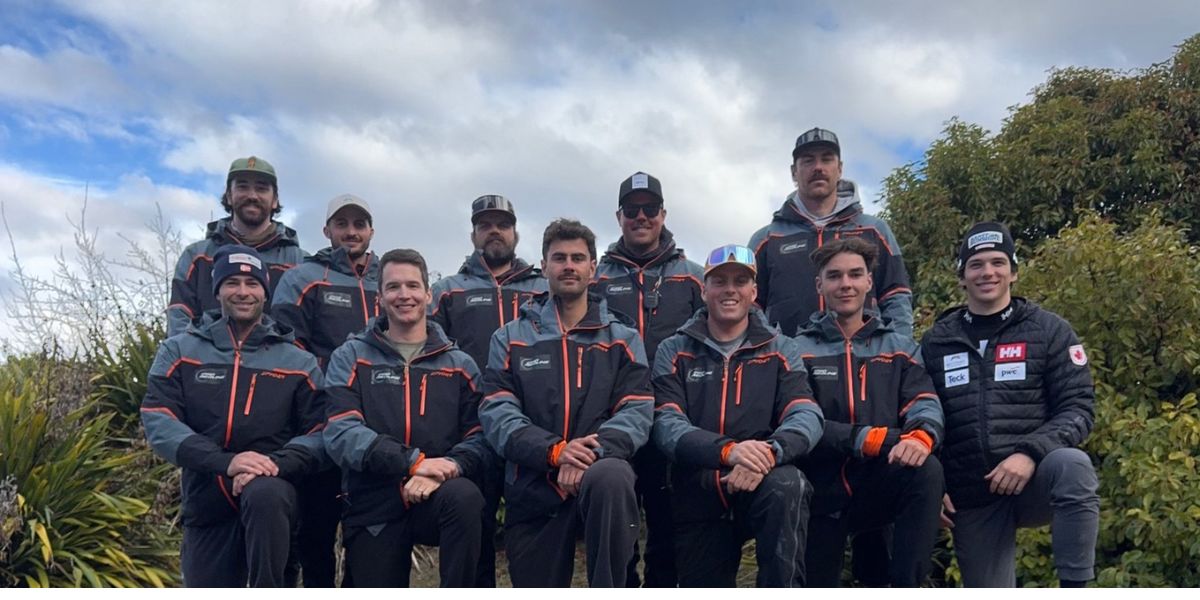
Gavett initiated discussions with his father, veteran coach Dave Gavett, and former teammate Jimmy Krupka. The initial skepticism surrounding the logistical complexity of building a new team from scratch was quickly overridden by the urgency of the situation. They were joined by Christian Borgnaes, another former Global Racing athlete, and ultimately, a coalition of coaches including Dave Gavett, Traudl Hächer-Gavett, Ryan Wilson, Ian Hanbury, and Scott Houser.
By late spring 2026, the program structure was codified. Unlike traditional private academies, Spyder Redline operates as a non-profit collective where athletes, staff, and sponsors share the burden of operations. This model minimizes the incentive to over-enroll for revenue, focusing instead on maintaining a high coach-to-athlete ratio—a necessary component for those navigating the technical demands of NorAm and World Cup circuits.
The Economic and Competitive Void
The collapse of Global Racing and the World Racing Academy followed a period of shifting priorities in international skiing. Global Racing, founded by Paul Epstein, had served for years as a vital bridge for NCAA athletes and racers from smaller nations. When Epstein accepted a position as the head coach of the Stifel U.S. Ski Team’s men’s technical squad, the operational leadership of the program became untenable. Simultaneously, the World Racing Academy, steered for over a decade by the Fahrner family, ended its elite operations, leaving a vacuum in the Europa Cup and World Cup support system.
The void is not merely logistical; it is financial. In alpine racing, the cost of specialized coaching, service personnel, and European base-camp logistics can easily exceed $50,000 to $100,000 per athlete annually. For nations like Brazil or Denmark, which lack the deep-pocketed infrastructure of the Austrian or Swiss federations, the absence of an independent team is often synonymous with the end of a career.
The Redline Roster: A Strategic Blend of Talent
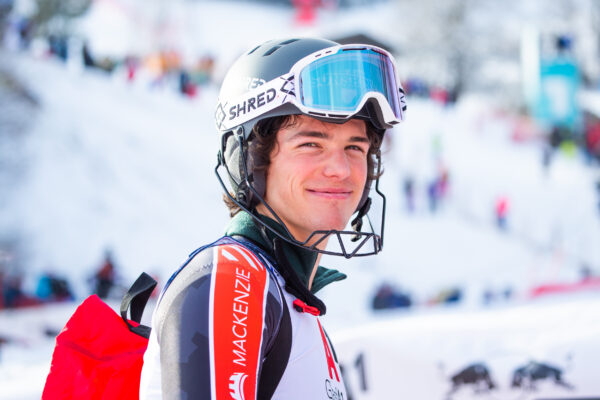
The team’s seven-man roster is designed to balance seasoned World Cup experience with developmental potential. The athletes include:
Erik Read (Canada): A veteran of the circuit, Read has consistently scored World Cup points in slalom and giant slalom for over a decade. His presence provides the group with a benchmark of professionalism and serves as a mentor for the younger athletes.
Liam Wallace (Canada): As a current member of the Canadian Alpine Ski Team, Wallace represents a novel partnership model. Alpine Canada has opted to contract his training and management to Spyder Redline, effectively using the collective as a specialized performance center.
Etienne Mazellier (Canada): A product of the University of Colorado, Mazellier brings high-level NCAA experience and a focus on the technical disciplines that aligns with the team’s core objectives.
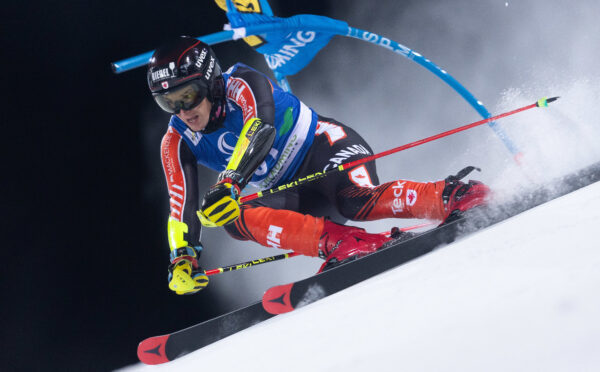
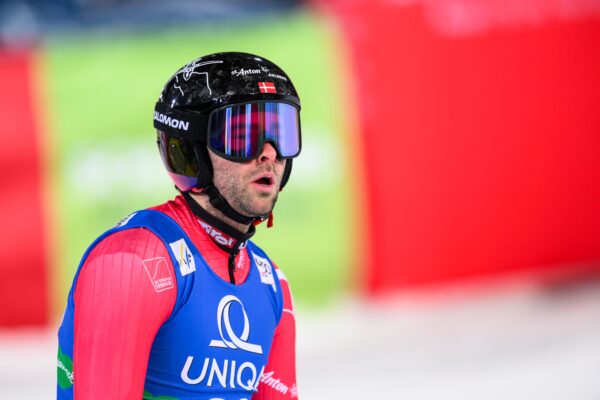
Christian Borgnaes (Denmark): With top-40 rankings in World Cup giant slalom and experience at the 2026 Olympic Winter Games, Borgnaes provides immediate, high-level results capability.
Christian Oliveira Søvik (Brazil): A dual citizen and University of Denver alumnus, Søvik’s transition from the Norwegian Europa Cup system to the Brazilian team highlights the global, inclusive mission of the Redline program.
Jimmy Krupka (United States): A former U.S. Ski Team member, Krupka’s return to the circuit via Redline is a calculated move to regain the world-ranking positions he held prior to a career-interrupting injury.
Tim Gavett (United States): Currently in rehabilitation, Gavett is the structural heart of the team, working to ensure the program provides the longevity and stability he was personally missing.
The Role of Corporate Partnerships
The stability of the program is bolstered by key partnerships with industry leaders Spyder and TOKO. Spyder’s involvement, spearheaded by former U.S. downhill star Steven Nyman, transcends traditional sponsorship. By integrating the athletes into the research and development process for their "Speed Freaks" racing line, Spyder creates a symbiotic relationship: the athletes receive funding and equipment, while the company gains critical field data from world-class competitors.
Nyman, who personally experienced the difficulties of competing without full federation support, has framed this investment as a commitment to the "trenches" of the sport. TOKO, serving as the wax-and-tool partner, provides the technical precision required for the marginal gains that define success at the World Cup level.
Operational Philosophy and Future Outlook
The team’s headquarters in Oberperfuss, Austria, is central to its strategy. By establishing a permanent home near Innsbruck, the athletes avoid the transient, nomadic existence that often leads to burnout. This, combined with the presence of professional physiotherapists like Pietro Martinuzzi, reflects an emphasis on athlete welfare that is frequently overlooked in high-pressure environments.
The team has already completed extensive conditioning and training blocks in France, Germany, and New Zealand. Despite minor setbacks—such as Mazellier’s wrist injury and the usual variability of weather—the program has maintained a consistent training density.
Looking toward the 2026-27 season, the metrics for success are clear but multifaceted. While the immediate goal is the accumulation of World Cup points and NorAm podiums, the long-term objective is the creation of a self-sustaining ecosystem. The partnership with Alpine Canada regarding Liam Wallace offers a blueprint for future collaborations between national federations and independent entities.
The rise of Spyder Redline Alpine suggests that the traditional model of top-down, state-sponsored skiing is evolving. By prioritizing character-driven recruitment and a collective management structure, the program is demonstrating that elite performance does not have to be sacrificed in the absence of a national team. Whether this model can withstand the financial pressures of multi-year operations remains the ultimate test, but for the seven athletes who were staring at retirement, the path is no longer shrinking—it has been successfully rebuilt.

