
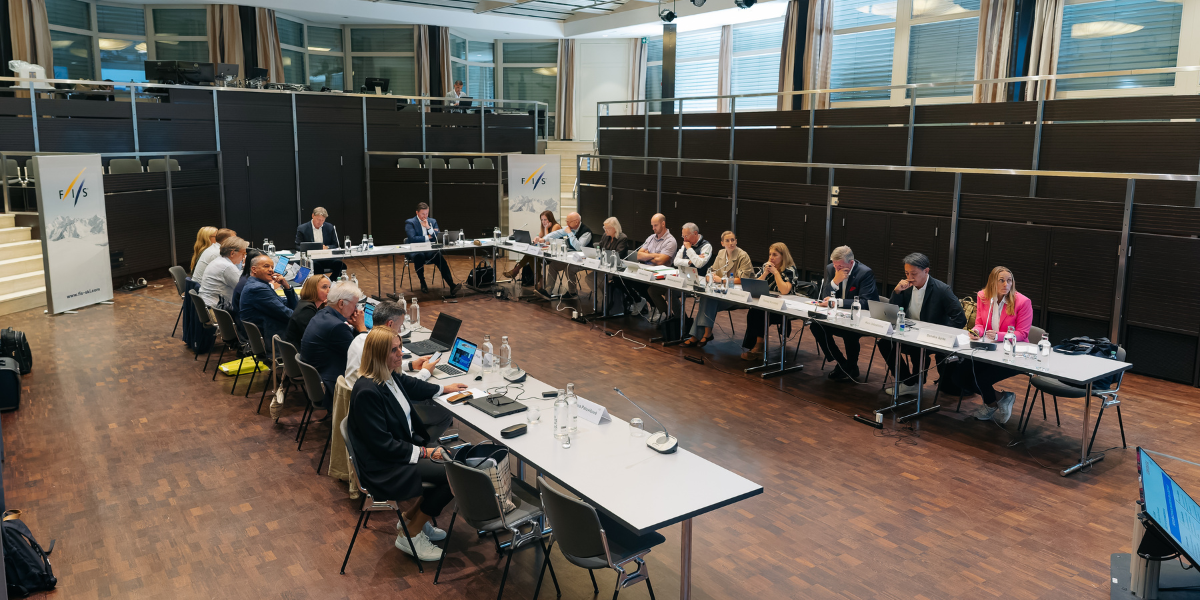
The International Ski and Snowboard Federation (FIS) has formally initiated a series of comprehensive structural reforms that promise to redefine the landscape of professional snow sports. During a high-stakes, two-day meeting held in Thun, Switzerland, the FIS Council deliberated on foundational changes ranging from the frequency of World Championships and long-term calendar optimization to the establishment of standardized wild-card criteria. Perhaps most controversially, the federation also charted a definitive pathway for the return of Russian and Belarusian athletes to international competition under strict neutral conditions for the 2026–27 season. These decisions, while currently conceptual, signal a significant shift in how the federation manages its commercial, athletic, and political interests in an increasingly complex global sporting environment.
The summit in Thun serves as the primary strategic clearinghouse for the federation, where the executive leadership assesses the sport’s trajectory. Historically, the FIS has maintained a biennial World Championship schedule, alternating with the Olympic Winter Games. However, as the commercial value of broadcast rights and the demand for high-stakes, marquee events grow, the pressure to expand the calendar has become a primary topic of discussion. The proposals discussed in Switzerland are not merely administrative adjustments; they represent a fundamental rethinking of the sport’s economic model and the athlete experience.
A New Cadence: The Expansion of World Championships
The most significant proposal discussed by the Council is the potential to transition to a more frequent World Championship cycle. Currently, the Alpine World Ski Championships are held every two years in odd-numbered years. The proposed model, which could see implementation as early as 2032—with exploratory discussions for 2028—would introduce championships in even-numbered, non-Olympic years.
The rationale behind this shift is rooted in market saturation and visibility. For the FIS, an annual major championship—whether Olympic or World Championship—provides a consistent, high-value asset for media partners and global sponsors. Preliminary feasibility studies have highlighted the potential for increased commercial revenue, greater host-city engagement, and elevated media interest. However, the proposal faces a complex set of operational challenges.
From the perspective of national teams, the impact is two-fold. On one hand, more frequent championships provide athletes with additional opportunities to achieve peak performance and gain career-defining accolades. On the other, the physical and financial strain on teams is immense. Preparation for a World Championship requires massive investment in logistics, specialized training, and medical support. Increasing the frequency of these events effectively raises the baseline cost of being a competitive national program. Furthermore, the sport must contend with the "dilution effect." Experts in sports management often warn that by increasing the frequency of prestige events, the inherent scarcity that makes a "World Champion" title special may diminish, potentially causing audience fatigue.
Optimizing the Global Footprint: The Long-Term Calendar
The Council also moved to formalize a "long-term World Cup calendar" framework, a development intended to move away from the current year-to-year scheduling volatility. Central to this is the concept of "regional clustering," which seeks to minimize the carbon footprint and financial cost of the sport by grouping races geographically.
Currently, the World Cup circuit often forces teams and equipment to crisscross the globe, resulting in significant logistical waste and athlete exhaustion. By grouping venues—for instance, creating a sustained North American swing followed by a cohesive European block—FIS aims to increase operational efficiency. The introduction of a "Calendar Impact Score" is the mechanism through which this will be managed. While the exact metrics of this score have not been fully disclosed, it is expected to weigh financial viability, broadcast reach, venue sustainability, and the quality of the competition terrain.
This shift marks a departure from a system that has long relied on historical precedent and the availability of legacy venues. Traditional resorts that have hosted events for decades may find themselves in direct competition with emerging markets. While this opens the door for the sport to grow in new regions, it also threatens to displace long-standing venues that lack the commercial capacity to meet new, stricter FIS criteria.
Standardizing Access: The Wild-Card Framework
For years, the use of "wild cards" in alpine racing has been a subject of debate. These entries—often granted to high-profile athletes or those from developing nations—can drastically change the dynamics of a race. The Council has now agreed to develop a universal framework that will govern these entries across all disciplines.
The goal is to move from ad-hoc decisions to a data-driven, transparent process. The proposed framework will focus on objective benchmarks:
- Performance Thresholds: A minimum level of competence to ensure safety and competitive integrity.
- Anti-Doping Compliance: Stringent verification of the athlete’s testing history.
- Quota Management: Clear guidelines on how wild-card entries affect the established national quotas for each country.
By standardizing these rules by the spring of 2027, FIS hopes to mitigate the perception of favoritism and ensure that the integrity of the World Cup remains the priority. The technical committees are currently tasked with drafting the specific performance metrics that will dictate these entries.
The Return of Neutral Athletes: Policy and Geopolitics
Perhaps the most sensitive outcome of the Thun meeting was the approval of a pathway for Russian and Belarusian athletes to compete as neutrals. This decision, scheduled to take effect for the 2026–27 season, follows the broader trend set by the International Olympic Committee (IOC) regarding the reintegration of these athletes following their exclusion due to the ongoing conflict in Ukraine.
The FIS policy is explicit regarding the conditions for eligibility:
- Individual Participation Only: No team-based representation or relay events.
- Strict Neutrality: No national flags, anthems, colors, or identifying symbols are permitted in any capacity.
- Declaration of Neutrality: Athletes must sign a formal commitment to the neutral status, and any breach of this agreement will result in immediate disqualification and potential sanctions.
- Compliance Monitoring: Continued oversight by the federation to ensure no links to state-sponsored support networks remain.
This decision is likely to trigger significant discourse within the international sporting community. While some argue that sports should remain an apolitical arena for individual achievement, others emphasize the moral implications of allowing athletes from nations currently engaged in prohibited military actions to compete under any banner. FIS officials have maintained that this policy is designed to uphold the principle of individual non-discrimination while acknowledging the complex political reality of the situation.
Future Implications and Strategic Outlook
As the FIS looks toward the next cycle of meetings, the primary challenge remains the execution of these ambitious reforms. The gap between the conceptual approval granted in Thun and the actual implementation of these policies is wide.
The "Calendar Impact Score," for example, remains a "black box" until the methodology is released. Similarly, the economic feasibility of holding biennial World Championships in a way that does not cannibalize the existing World Cup schedule requires a level of coordination that has historically proven difficult.
Furthermore, the integration of neutral athletes will require a robust enforcement mechanism. The federation’s ability to monitor these athletes for potential violations will be under intense scrutiny from global media and participating national governments.
The decisions made in Switzerland represent a decisive turn toward modernization and commercial expansion. By creating a more rigid, performance-based structure and a more reliable, clustered schedule, the FIS is positioning itself to compete in a crowded sports entertainment market. Whether these changes succeed in elevating the sport or inadvertently create new, insurmountable administrative hurdles will be determined in the coming months as the Technical Committees turn these concepts into binding regulations.
For the athletes, coaches, and sponsors involved, the period between now and the 2026–27 season will be one of transition. As the details of the calendar, the wild-card system, and the neutral athlete policy are finalized, the international skiing community will be watching closely to see if the federation can balance its commercial ambitions with the fundamental values of fair play and competitive integrity. The Thun meeting was not just a summary of the past, but a blueprint for a future that will look drastically different from the skiing landscape of the last decade.

