
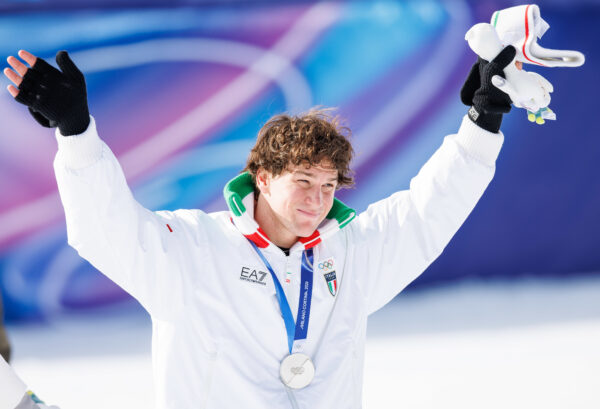
The 2025/26 alpine ski season will be etched into the annals of the sport not merely for its electrifying competitions, but for the emergence of a new superstar whose journey captivated the global audience: Giovanni Franzoni. The Italian phenom, whose name now resonates with victories in Wengen and Kitzbühel and an Olympic silver medal, transcended conventional athletic narratives. His breakthrough was a compelling blend of raw talent, unwavering dedication, and an deeply emotional human story, solidifying his status as one of the most inspiring figures in contemporary ski racing. Franzoni’s ascent, characterized by solid skiing and remarkable composure under pressure, was profoundly shaped by the tragic loss of his teammate and friend, Matteo Franzoso, an event that irrevocably altered his perspective on life and sport.
A Season Forged in Triumph and Tragedy: Wengen, Kitzbühel, and Olympic Glory
Franzoni’s 2025/26 campaign was a cascade of "firsts" that signaled his arrival at the sport’s pinnacle. He secured his inaugural World Cup podium, followed by his first World Cup victory, made his debut at the Olympic Games, and claimed his first Olympic medal. These achievements were not instantaneous flashes of brilliance but the culmination of years of relentless effort and a deep-seated passion for skiing. "I was pretty fanatical [about] skiing when I was a child. I was in my room all the time watching videos, sports videos of the best athletes of the world. It was just my passion," Franzoni shared with Ski Racing Media during the 2026 World Cup Finals. He emphasized that his success was not an overnight sensation: "Setting goals every year, higher and higher. But I couldn’t expect this switch this year. Maybe all the hard work that I did during the last seven to eight years worked out and this year is the revelation. It wasn’t just this year, I made a long journey and I’m pretty proud of it."
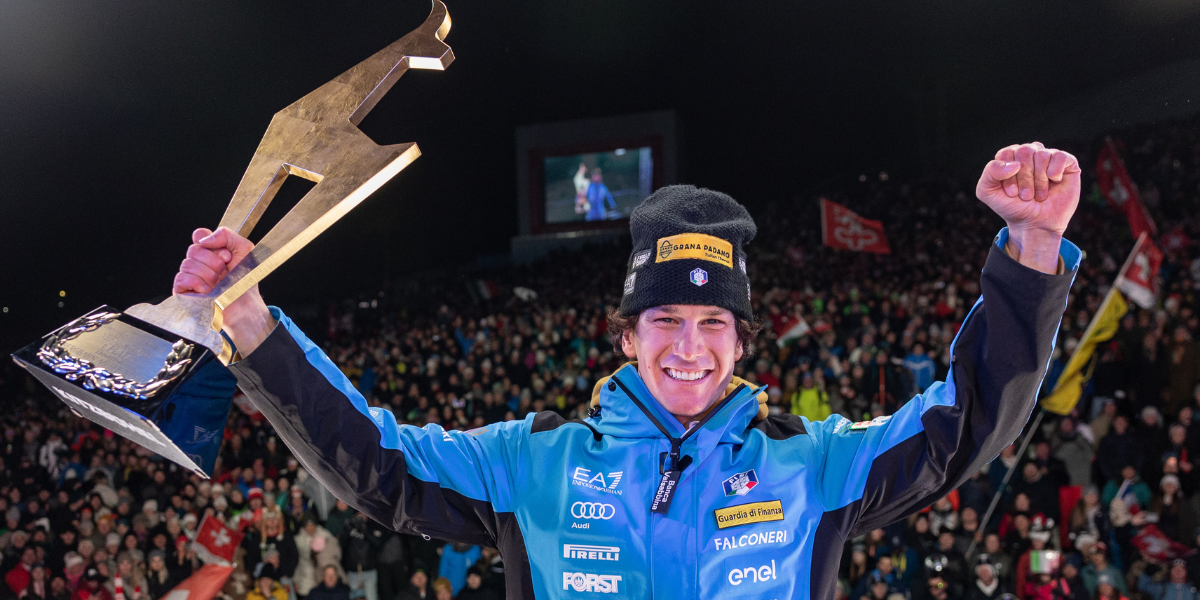
His rapid progression was evident across the speed disciplines. In December 2025, Franzoni earned his first World Cup podium with a third-place finish in the Val Gardena-Gröden Super-G. This initial success was quickly followed by a maiden World Cup victory in the Wengen Super-G in January 2026, a prestigious triumph on the legendary Lauberhorn course. The following day, he added another podium finish with a third place in the Wengen downhill, demonstrating his versatility and consistency. Just a week later, he delivered arguably the most emotionally charged victory of his career in Kitzbühel.
The Unforgettable Hahnenkamm Victory: A Tribute to Matteo Franzoso
For Franzoni, the victory at the Kitzbühel Hahnenkamm downhill was more than just a race; it was a profound tribute. The Hahnenkamm, with its notorious Streif downhill, is often described as the Everest of ski racing—a brutal test of courage, skill, and nerve. Winning here places a skier among an elite pantheon of legends. Franzoni articulated its unique significance: "Maybe the win in Kitzbühel—yeah, absolutely! The Olympics were incredible, but what I felt in Kitzbühel was something special and magical and I will not, I think, feel these emotions again in another race."
The previous year, Franzoni had shared a room with Matteo Franzoso during his first Hahnenkamm experience. These memories were palpable as he returned to the iconic venue. This season, every race was dedicated to his late friend. After his Kitzbühel triumph, Franzoni, smiling through tears during an FIS interview, expressed the depth of his feelings: "I won this race, and it’s the max that I can do for him. I thought he’s watching right now from the heaven, so it’s unbelievable." He also extended his gratitude to his family, acknowledging their sacrifices: "Today, I take the win, and I am so happy, also for my parents. They worked a lot to give me this possibility to race here."
Navigating Loss: Franzoni’s Transformed Outlook on Life and Sport
The ski racing world was rocked in September 2025 by the devastating news of Matteo Franzoso’s death at age 25, following a training accident in Chile. This tragedy, coming less than a year after the fatal training crash of 19-year-old Matilde Lorenzi, ignited a poignant conversation within the ski community regarding athlete safety, mental health, and the profound risks inherent in high-speed alpine disciplines. For Franzoni, Franzoso’s passing was a personal cataclysm that reshaped his entire worldview.
Speaking about its impact, Franzoni revealed to Ski Racing Media: "I think that’s a really good question, because after that, I changed something in my mind, not just something in my skiing, but my vision about life. The year before, I was always thinking about the results and the performance. But this year, I could find a new perspective on life; that I really have to enjoy every day, whether it’s bad or good, and really enjoy the day of skiing, the day that I rest, the day that I train. Because not everyone can do it, so it’s good to not waste time and do all this 100%, every day." This profound shift translated into his performances, where he skied not just for victory, but with an added layer of meaning. After his Val Gardena podium, he declared, "I will ski for him all my life. So, we will do this together. I think the most important thing is the result, as a team, because we struggled a lot this summer because of our loss of our teammate, Matteo."
Laying the Groundwork: Decades of Dedication and Parental Guidance
Giovanni and his twin brother, Alessandro, born March 30, 2001, began their athletic journey around 25 years ago in Manerba del Garda, on the Brescia shore of Lake Garda. Their parents, seeking to channel the boys’ abundant energy, introduced them to a diverse range of sports. "I think we tried all the sports and when she [mother] asked us what we preferred, we said alpine skiing," Franzoni recounted. This choice, however, necessitated significant family sacrifice, as the family had to travel to the mountains to ski. "We started skiing near Madonna di Campiglio. Then we moved there for the winter season when I was eight years old, and I lived there for the winters for like 10 years."
The Italian Model: Balancing Academia and Alpine Ambition
Education was a non-negotiable cornerstone of the Franzoni family’s philosophy. The twins pursued a demanding science curriculum in high school, which notably included Latin. According to a February 9, 2026, interview with La Gazzetta dello Sport, Franzoni’s mother viewed the study of Latin as instilling a "sense of sacrifice" and the rigorous science courses as a means to cultivate a strong work ethic. Good grades were not merely encouraged; they were a prerequisite for skiing. "The most important thing was school and then skiing. So, if you are good at school, you could go skiing. This was our ‘law’ in the family. It was a pretty good rule, so I’m happy with that," Franzoni told Ski Racing Media.
Initially, the twins attended high school in Brescia, a two-hour commute from their ski training grounds in Madonna di Campiglio. This demanding daily routine, involving meals and homework during long drives, tested their resolve. "It was pretty hard," Franzoni admitted, "But I think it was pretty good for our character and personality." This rigorous academic foundation, unusual for many elite athletes, fostered a disciplined approach that would prove invaluable on the World Cup circuit. "Also, my brother had the possibility to go to the university [after high school], so that was a pretty good idea from our parents." After a year of this challenging schedule, Giovanni and Alessandro transferred to Ski College Veneto in Falcade, in the Dolomites, a specialized institution designed to integrate high-level ski training with a full science education.
A Legacy Beyond the Slopes: Franzoni as an Educational Advocate
At Ski College Veneto-Falcade, Franzoni left an indelible positive impression. Eddy Gaspari, an academic tutor during Franzoni’s school years, described him as "a calm and well-organized student. Always on the ball, both in school and in sports. In terms of manners and respect, I’d say A+," as reported by Sciare Magazine in March 2020. Michele Costa, the current principal, echoed this praise, highlighting Franzoni as "a model student in school. This is a significant detail for those who choose this path, which, from the outside, may seem fun, even easy, but in reality, presents quite a few challenges." Costa emphasized Franzoni’s inspirational role for current students: "We are truly proud of him. The kids, at school and on the slopes in training, feel close to him, because until very recently he was one of them, and today he is competing in the Olympics: a great and beautiful example. We hope he can be a role model for our young athletes and students, both for his passion and for the commitment he puts into everything he does—always with a smile and a positive attitude," he told ilNordEst on February 7, 2026.

Franzoni recognizes the importance of creating pathways for young athletes to combine education with elite sport, an approach less common in Italy than in other nations. "It’s important to grow up with the healthy values and all the responsibilities," he asserted. His family’s successful integration of academics and high-level sports has drawn national attention, with Orizzonte Scuola, an Italian digital newspaper focusing on education, highlighting their journey. In a February 10, 2026, article, Orizzonte Scuola stated: "Giovanni Franzoni’s journey exemplifies a potential integration between school and high-level sport, in which the student-athlete maintains a strong scholastic identity. The story opens a space for reflection for educational institutions." Franzoni views this recognition as inspiring: "Pretty good! I think it’s inspiring. We didn’t do magical stuff, but with some commitment we could do school and skiing together. It is not so easy. But leaving this story behind to the next generation, I think it’s important to give them confidence to do both." This humble perspective, consistently observed by his mentors, underscores his character.
The Bonds of Brotherhood: A Twin’s Unwavering Support
Giovanni Franzoni’s journey was not a solitary one; his twin brother, Alessandro, has been a constant presence and a vital source of support. "It was a pretty good journey, always with my twin brother. That’s very special," Franzoni reflected, highlighting their shared experiences growing up as skiers and attending ski college together. Today, Alessandro is Giovanni’s "biggest fan," a testament to their enduring bond. "It’s incredible that I could reach these results, and this is also for him." Alessandro now works with their father at the family winery, which has been passed down through generations, and also serves as a ski instructor during the winter months. His deep understanding of skiing makes him a valuable resource: "He knows skiing really well, and sometimes I send him videos to analyze and hear tips from my brother," Franzoni shared with a smile.
Junior Dominance and Emerging Rivalries: The Path to the World Stage
Franzoni’s entry into the Italian national team in 2020 followed a steady, rather than meteoric, progression. His talent was evident early on, particularly in his junior career. In 2022, he captured both the European Cup overall title and the Super-G discipline title, signaling his readiness for the World Cup circuit. He competed in three FIS Junior World Ski Championships from 2020-22, amassing an impressive haul of three gold medals, one silver, and one bronze across four disciplines: downhill, Super-G, Giant Slalom, and Alpine Combined.
At the 2022 Junior World Championships, he frequently shared the podium with Franjo von Allmen, who is four months his junior. In the downhill, Franzoni clinched gold by a margin of 0.24 seconds over von Allmen. This margin eerily mirrored the 0.20-second gap that separated them on the Olympic downhill podium this winter, albeit with their positions reversed, as von Allmen claimed his first of three Olympic gold medals in 2026. This burgeoning rivalry, built on mutual respect, continued to define their careers. After finishing sixth in the Olympic Super-G, where von Allmen secured his third Olympic gold in five days, Franzoni commended his competitor: "Chapeau to Franjo, what an amazing week, such a great guy, such an amazing skier. I need to take him as an inspiration, to learn about the gliding part and to be a more competitive athlete." Reflecting on his own performance, Franzoni encapsulated the essence of elite sport: "This is ski racing; sometimes you win, sometimes you learn."
Assessing a Breakthrough: Discipline Shifts and Future Aspirations
Franzoni’s self-assessment of his breakthrough 2025/26 season was one of genuine surprise and immense satisfaction. "Amazing, incredible. At the start of the season, I couldn’t expect these results, especially in downhill. It was not my top discipline," he told Ski Racing Media at the World Cup Finals. Having made his World Cup debut in the Alta Badia Giant Slalom in December 2020, his initial expectations had been higher for Super-G. "This year, I could switch something in my mind and, with some more training in the speed disciplines, I could bring these incredible results. So, I’m really happy. I’m proud of myself."
His progress in the 2025/26 World Cup standings was remarkable. He finished fourth in the Super-G standings, fifth in downhill, and tenth overall, a significant leap from his previous season’s rankings of 13th, 32nd, and 49th, respectively. This substantial improvement across the board underscored his successful pivot towards speed disciplines.
Looking ahead to the 2026/27 season, Franzoni’s focus includes maintaining his presence in Giant Slalom. He qualified to start in all disciplines at the World Cup Finals, finishing 21st in the final Giant Slalom. "It’s a discipline I want to keep up, but it’s a long journey. I started with Giant Slalom in the World Cup, and it was my first discipline. Right now, I moved to the speed disciplines, and I feel more comfortable there." He acknowledged the challenge of balancing Giant Slalom training with the demands of speed events. "During the year, it’s so difficult to train GS, training in general, because of all the [speed] training runs and races. But I really want to do Giant Slalom also next year." He outlined a strategic approach for the initial races: "Maybe I will try the first three. In Sölden, maybe like this year, it will be the one I can prepare [for] more and be ready. Then, Copper Mountain and Beaver Creek, [because] I am there for the speed races. And then we will see, during the season, how it has gone in the first Giant Slaloms." Franzoni understands that building proficiency in Giant Slalom is a long-term project: "It’s not a journey from one year to another. It’s always hard being the last in the races, because I’m not [skiing] full Giant Slalom right now, but I really want to build up this discipline year by year and become stronger. I think the base from the Giant Slalom is important also for the speed disciplines."
Chasing the Crystal Globe: Long-Term Vision in an Odermatt Era
The ultimate prize in alpine skiing, the overall World Cup title, is a long-term aspiration for Franzoni. When asked about challenging for the overall title, he responded with a wry humor, acknowledging the current dominant force in men’s alpine skiing: "Yes, it would be great. Maybe when Marco will be tired of winning that, it would be a chance," Franzoni said with a laugh. "Because he wins in three disciplines, it’s so hard right now. But, in the long term, never say never. We will see."
Marco Odermatt’s current reign, marked by his unparalleled dominance across multiple disciplines, sets a formidable benchmark. His ability to consistently win in Giant Slalom, Super-G, and Downhill has redefined the criteria for overall World Cup success, requiring challengers like Franzoni to diversify their skill sets significantly. Yet, Franzoni’s breakthrough season serves as a powerful reminder of how quickly careers can transform. Only a year ago, few would have predicted his World Cup victories in Wengen and Kitzbühel, an Olympic silver medal, and his rapid ascent among the sport’s rising stars.
Conclusion: A New Chapter for Ski Racing’s Inspirational Star
Giovanni Franzoni now enters the next phase of his career equipped not only with Olympic silver and the confidence of belonging among the world’s elite, but also with a profound, new perspective on life. His journey from a passionate child watching ski videos to an inspirational Olympian is a testament to perseverance, familial support, and the enduring power of the human spirit to find purpose amidst adversity. As he continues to evolve as an athlete and a role model, Franzoni’s story promises to be a compelling narrative for the future of alpine skiing, inspiring a new generation to pursue their dreams with both heart and intellect.

