
The landscape of Norwegian cross-country skiing has undergone a significant transformation in recent years, characterized by a shifting dynamic between the traditional national team structure and the rise of independent, private professional teams. At the center of this evolution is Karoline Simpson-Larsen, a 29-year-old athlete whose meteoric rise to prominence has brought the complexities of these dual allegiances into sharp focus. After a career-defining season that saw her secure both maiden World Cup victories and an Olympic gold medal, Simpson-Larsen found herself in a protracted negotiation with the Norwegian Ski Federation regarding her professional affiliation.
The Evolution of a Champion
Simpson-Larsen’s ascent was not typical. Joining the Lillehammer-based Team Anlegg Øst Entreprenør ahead of the previous season, she experienced an immediate breakthrough. The synergy between her performance and the training philosophy of coach Emil Hosøy propelled her to the top of the international podium. This success culminated in a historic relay performance at the 2026 Olympic Games, where she, alongside teammates Heidi Weng, Astrid Øyre Slind, and Kristin Austgulen Fosnæs, claimed gold.
Following this period of dominance, the assumption among industry observers was that Simpson-Larsen would maintain her exclusive training arrangement with Team Anlegg Øst. However, the requirement for national team participation—a staple of the Norwegian system—forced a complex confrontation. Both Simpson-Larsen and her teammate, Karoline Grøtting, sought exemptions from the national team’s mandatory training requirements, a process that proved to be both emotionally and professionally taxing for all parties involved.
Chronology of the Dispute and Resolution
The tension between the athlete and the Federation reached a peak in the spring of 2026. Following the conclusion of the season in March, Simpson-Larsen requested a formal exemption from national team requirements to continue her collaboration with Hosøy. The Federation, citing the importance of maintaining a unified national squad, initially rejected this request.
- March 2026: Conclusion of the World Cup season; initial plans for continued independent training are formalized.
- April 2026: Formal applications for exemption from national team training obligations are submitted.
- May 2026: Negotiations conclude, resulting in a hybrid agreement where both Simpson-Larsen and Grøtting officially join the national team while retaining their private training structure.
- Summer 2026: The implementation phase of the compromise, involving a limited number of national team camps.
Despite the initial resistance, a resolution was reached that allowed for a pragmatic compromise. Since May, Simpson-Larsen has been a formal member of the Norwegian national team, yet she remains embedded within the Team Anlegg Øst framework.
The Anatomy of the Hybrid Deal
The agreement, which Simpson-Larsen characterizes as a "dream deal," offers a blueprint for how elite athletes might navigate the rigid structures of national sports federations while maintaining the personalized support systems that fueled their success.
Under the terms of this arrangement, Simpson-Larsen is required to participate in three specific training camps organized by the national team within Norway. This includes the high-altitude sessions at Sognefjellet, a summer gathering in Sandefjord, and an upcoming October camp at Mosetertoppen. Beyond these obligations, she is granted significant autonomy to pursue her training program under the supervision of Emil Hosøy.
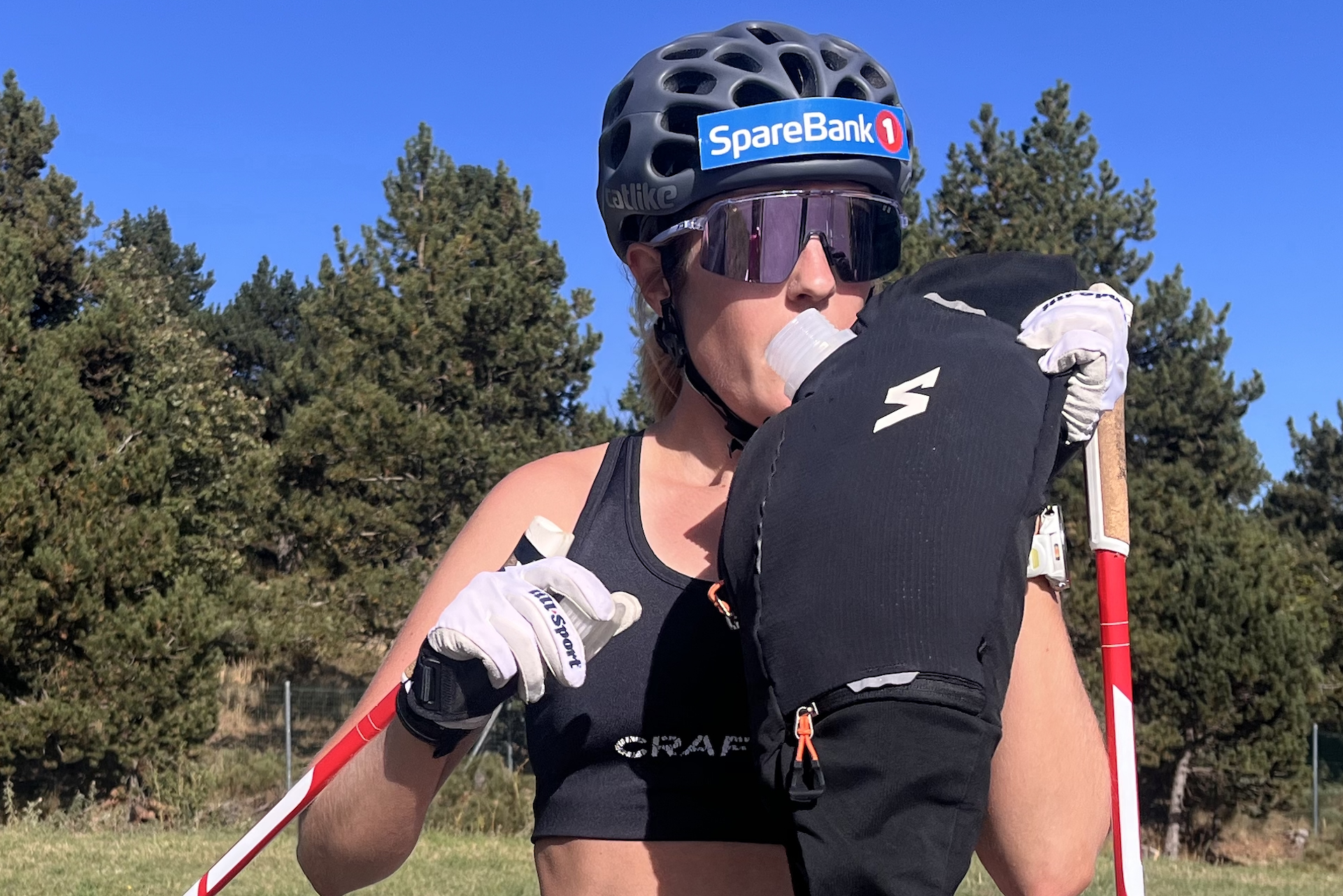
"I have been granted exactly what I wanted," Simpson-Larsen stated during a recent high-altitude camp in Font Romeu, France. "I am deeply grateful for the freedom to train according to the methods I believe in, while simultaneously gaining access to the resources and support services provided by the Federation."
The "Anlegg Øst" Advantage: A Scientific Approach
The core of the dispute was never a lack of commitment to the national cause, but rather a profound confidence in the methodology of Team Anlegg Øst. The team’s success has been attributed to a high-frequency feedback loop that allows for real-time adjustments to training loads.
Coach Emil Hosøy, recently honored as "Coach of the Year" by the Norwegian Ski Federation’s coaches’ club, has built a program centered on meticulous monitoring. "We have a system that ensures we see progress at every stage," Simpson-Larsen explained. "If performance begins to trend in the wrong direction, we are able to intervene immediately. It is a robust, fail-safe system."
The distinction between the national team model and the private team model lies in the consistency of contact. While the national team gathers athletes for intense, periodic training blocks, the private team model allows for daily interaction. "There is a massive difference between seeing your coach five days a week and seeing them five days a month," she noted. "Being with Emil daily provides a sense of security and continuity that is hard to replicate in larger, more intermittent groups."
Broader Implications for Norwegian Skiing
The case of Simpson-Larsen signals a shifting paradigm within the Norwegian sporting establishment. Historically, the national team has served as the sole gateway to international success. However, the rise of independent entities like Team Anlegg Øst proves that top-tier results can be achieved outside the traditional hierarchy.
The Federation’s decision to accommodate this hybrid arrangement suggests a pragmatic shift toward flexibility. By integrating high-performing athletes who possess specialized support systems, the Federation minimizes the risk of losing talent to independent pursuits while maintaining a cohesive national identity for major events like the World Cup and the Olympics.
However, this also creates a logistical challenge. Balancing the brand requirements of the national team with the individual sponsorships and training methodologies of private teams requires constant negotiation. The fact that the national team and Team Anlegg Øst have occasionally held training camps at the same locations, such as in Font Romeu, illustrates the delicate balance of these two worlds coexisting in the same physical space.
Looking Toward the Future
As the 2026/2027 season approaches, the success of this hybrid model will be put to the test. Critics of the arrangement point to the potential for fragmentation, suggesting that a lack of full integration could dilute the "team culture" that has long been the hallmark of Norwegian cross-country success. Conversely, proponents argue that the individualization of training is the necessary next step in the professionalization of the sport.
Simpson-Larsen remains optimistic. Her ability to navigate the complex administrative landscape of the sport has not distracted from her primary objective: performance. "I feel that I have the best of both worlds," she concluded. "I am part of the national team, which I enjoy, and I have the stability of my private team, which I rely on. The focus remains, as always, on the snow and the clock."
With the upcoming season shaping up to be as competitive as ever, the spotlight will undoubtedly remain on whether this compromise can produce the same level of excellence that defined her previous year. For the Norwegian Ski Federation, the experiment is a critical one; if successful, it could provide the template for how to retain elite talent in an increasingly decentralized and competitive sporting world. The success of athletes like Simpson-Larsen is no longer just measured by the medals they win, but by how they redefine the structures that support them.

