
The landscape of the Austrian Alps is undergoing a profound and irreversible transformation, as new data confirms the complete disappearance of 95 glaciers. This stark revelation, published in early October 2026, serves as the latest indicator of an accelerating climate crisis that threatens to strip some of the world’s most iconic mountain ranges of their glacial ice entirely within the coming decades. The study, a collaborative effort involving the Austrian Academy of Sciences, the University of Innsbruck, the University of Salzburg, and the University of Graz, provides a grim diagnostic of a cryosphere in terminal decline. By utilizing high-resolution aerial imagery and advanced mapping technologies, researchers have documented a scale of loss that exceeds previous scientific projections, signaling that the structural integrity of these ancient ice masses is failing at an unprecedented rate.
The Anatomy of a Disappearing Landscape
Lea Hartl, lead author of the study and a researcher at the Institute for Interdisciplinary Mountain Research at the Austrian Academy of Sciences, noted that the rate of attrition observed in recent years has shifted from a steady decline to a state of extreme, rapid collapse. The study does not merely count lost glaciers; it evaluates the health of the remaining ice, finding that even high-altitude regions—once considered stable "cool zones"—are now succumbing to thermal stress.
This sentiment is echoed by Andreas Kellerer-Pirklbauer, co-head of the Glacier Measurement Service of the Austrian Alpine Club (ÖAV). Following the record-breaking heat of the 2026 summer, Kellerer-Pirklbauer reported that the alpine environment is witnessing "unprecedented" losses. According to his observations, the glaciers are no longer simply receding in length; they are entering a phase of total structural disintegration. The traditional image of a flowing, frozen river of ice is being replaced by a fragmented, chaotic terrain characterized by exposed rock ledges, calving ice blocks, and the collapse of glacier tongues.
Case Study: The Pasterze Glacier in Peril
The Pasterze glacier in Carinthia, Austria’s largest, has become the primary bellwether for the country’s glacial health. Recent measurements taken by the Austrian Alpine Club reveal the severity of the thinning process. At an altitude of 3,000 meters, the glacier recorded a vertical ice loss of approximately four meters. Descending to 2,500 meters, the situation becomes even more dire, with losses reaching 10 meters.
The Alpine Club’s report suggests that the Pasterze is reaching a breaking point. The glacier’s tongue, which has acted as the ice mass’s primary extension for centuries, is now so thin and unstable that it is highly likely to break off in the near term. This would effectively split the glacier into two distinct segments, accelerating the rate at which the remaining ice is exposed to solar radiation and warmer ambient temperatures. This "fragmentation effect" creates a feedback loop: as the surface area increases and the mass decreases, the glacier loses its ability to reflect solar energy, thereby absorbing more heat and further hastening its demise.
A Chronology of Alpine Decline
The 2026 findings are the culmination of a multi-decadal trend that has accelerated significantly since the turn of the millennium. The chronology of this decline is well-documented by the ÖAV, which has been tracking glacier fronts since the late 19th century.
- 1990–2010: Glaciers showed consistent, observable retreat, but the rate remained within historical norms of climate variability.
- 2015–2020: A marked shift occurred as a series of intense heatwaves, particularly in late summer, began to strip away the "firn" (old snow) layer that protects the underlying glacier ice, leading to significantly negative mass balances.
- 2022: A catastrophic year for European glaciers, characterized by a lack of winter snow cover followed by a brutal summer, which saw record-breaking melt rates across the Alps.
- 2024–2025: A period of persistent warming saw the "structural disintegration" phase described by Kellerer-Pirklbauer, where ice stability fell below critical thresholds.
- 2026: The confirmation of the loss of 95 glaciers, marking a definitive shift toward a landscape where many smaller, lower-altitude ice bodies have ceased to exist as active glaciers.
Broader Implications: Beyond the Alps
The implications of this loss extend far beyond the aesthetic and recreational concerns of the skiing industry. Glaciers act as natural "water towers" for the European continent. They store water during the winter as snow and ice and release it gradually during the dry summer months, providing a vital, steady supply of freshwater to the lowlands.
As these reservoirs vanish, the hydrology of the alpine region will change fundamentally. This will likely result in a "peak water" scenario, where, in the short term, the increased melting creates higher runoff and potential flooding. However, once the glaciers have significantly retreated or vanished, the long-term outlook is one of chronic water scarcity. This will impact agriculture, hydroelectric power generation, and the biodiversity of high-altitude ecosystems that rely on glacial meltwater for survival.
Furthermore, the loss of permafrost—which is often tethered to the presence of glacial ice—poses a major infrastructure risk. As the frozen "glue" holding mountain slopes together thaws, the risk of landslides, rockfalls, and debris flows increases, threatening mountain villages, transport tunnels, and alpine infrastructure.
The Future of Alpine Winter Sports
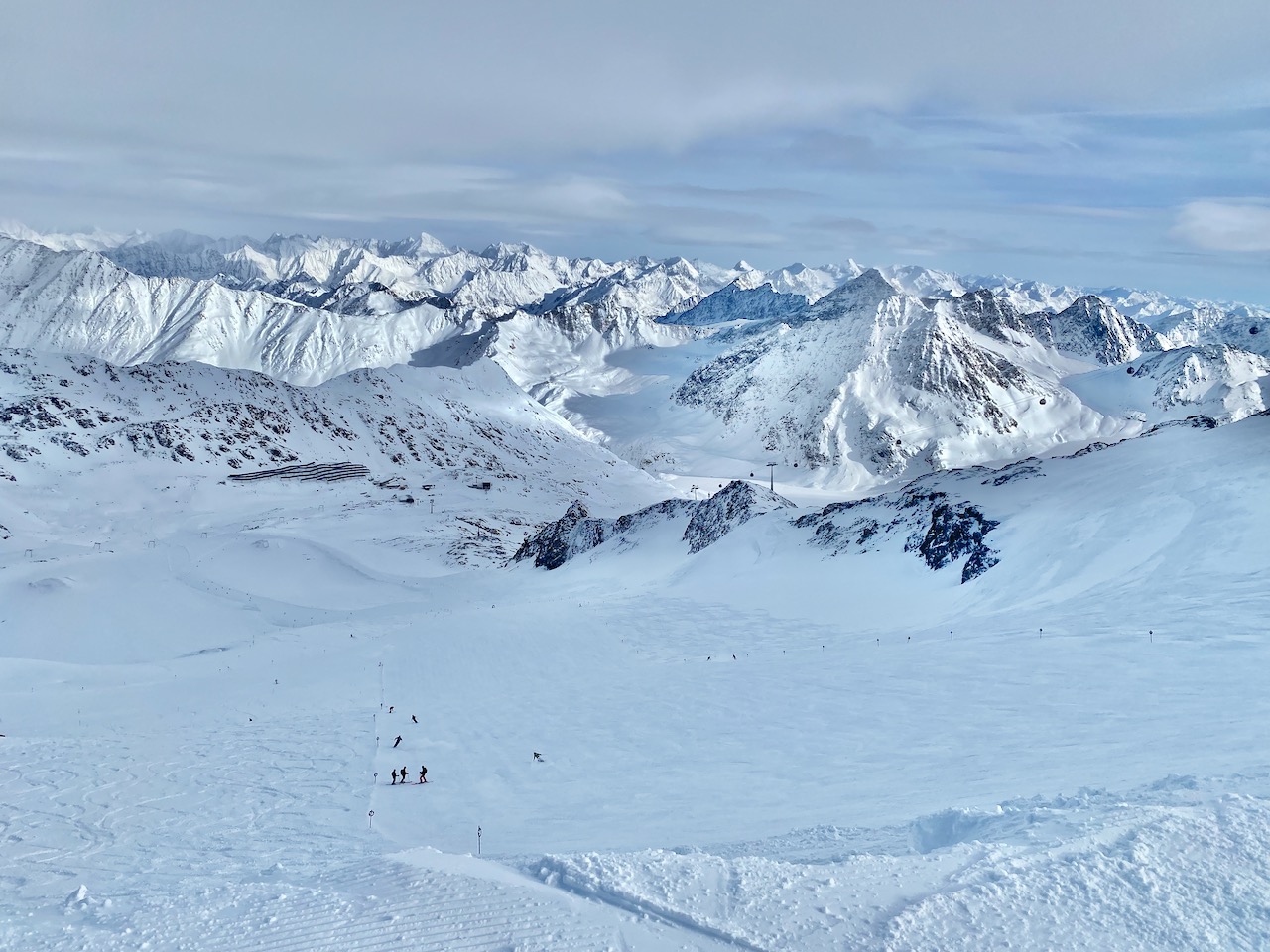
In the context of the ski industry, the news is a grim reality check. While skiing remains underway on a handful of Austrian glacier ski areas as of October 2026, the long-term viability of these operations is increasingly in doubt. Glacier skiing has long been the insurance policy for the winter sports industry, providing a reliable product in the shoulder seasons.
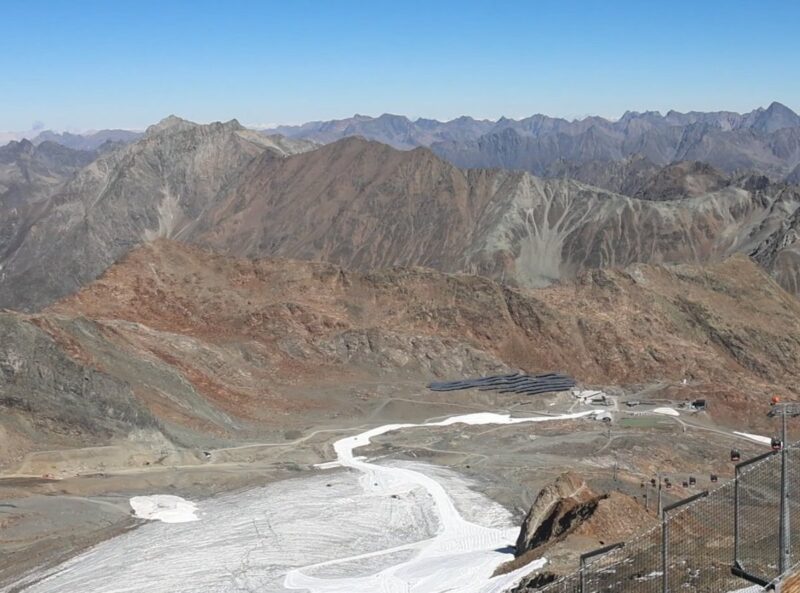
However, as the glaciers retreat, the cost of maintaining these ski areas—through expensive measures such as covering ice with white geotextile blankets to reflect sunlight or artificial snow production—is becoming economically and environmentally difficult to justify. Many resorts are now being forced to pivot toward year-round tourism models that do not rely exclusively on the availability of ice, acknowledging that the "eternal snow" is no longer a permanent fixture of the Austrian landscape.
Scientific Consensus and Future Projections
The consensus among climatologists at the University of Innsbruck and the Austrian Academy of Sciences is that the current rate of retreat is almost entirely attributable to anthropogenic climate change. The increased concentration of greenhouse gases in the atmosphere has pushed regional temperatures in the Alps to rise at a rate roughly double the global average.
For the researchers involved, the mapping project is not merely an academic exercise; it is a vital archival effort. By documenting the exact moment these 95 glaciers crossed the threshold from active ice bodies to dead, non-moving rock-covered ice patches, they are providing the necessary data for policymakers to prepare for a "post-glacial" Austria. The scientific community is now shifting its focus to predictive modeling: identifying which glaciers are next in line for disappearance and assessing how mountain communities can adapt to a landscape that will look radically different by the mid-21st century.
As the data from the 2026 study continues to be analyzed, it serves as a sobering reminder that the climate crisis is not a distant, theoretical threat. In the high altitudes of the Austrian Alps, the change is visible, measurable, and occurring at a speed that has left even the most seasoned experts concerned for the future of the mountain environment. The disappearance of these 95 glaciers is not the end of the process, but rather a milestone in a rapid, cascading decline that will redefine the natural and economic geography of Central Europe for generations to come.

