
Every great adventure begins with meticulous training and preparation, a principle that applies as much to the political arena as it does to scaling a technical peak or training for an ultra-marathon. For the outdoor community—a demographic encompassing millions of skiers, climbers, hikers, paddlers, and anglers—preparation is the hallmark of success. As the 2026 midterm election cycle approaches, advocacy groups such as Protect Our Winters (POW) are drawing direct parallels between the high-stakes environment of mountain sports and the urgent necessity of civic engagement to protect public lands and climate policy.
The Legislative Landscape and Public Lands
The past eighteen months have marked a significant shift in federal environmental policy. Legislative and administrative actions have resulted in a series of rollbacks concerning public land protections, mineral leasing, and climate mitigation strategies. These policy adjustments have ignited concern among conservationists who argue that the current trajectory threatens the long-term ecological health of regions used for outdoor recreation.
Historically, the management of federal lands has been a point of contention between industrial development interests and conservation advocates. Recent federal directives have accelerated oil and gas leasing processes, reduced the scope of the National Environmental Policy Act (NEPA) reviews, and challenged the boundaries of various national monuments. These changes are viewed by many experts as a fundamental shift in the stewardship of American wilderness, potentially altering the landscape for future recreational use.
A Chronology of Environmental Policy Shifts
The timeline of environmental governance over the last two years reveals a consistent pattern of deregulation that has galvanized the outdoor community:
- Early 2024: Federal agencies initiated streamlined permitting processes for infrastructure projects, which critics argue curtailed opportunities for public comment on projects located on or adjacent to public lands.
- Mid-2024: A series of executive and legislative maneuvers led to the expansion of mineral extraction rights, specifically targeting areas previously under consideration for conservation status.
- Late 2024–Early 2025: Ongoing debates regarding the protection of water rights and air quality standards reached a crescendo, as legislative bodies prioritized energy independence metrics over conservation-focused environmental benchmarks.
- 2026 Outlook: With the midterm elections looming, the legislative focus has shifted toward the potential for a "policy reset," where the outcomes of congressional races will determine the fate of current environmental regulations and future climate-related investments.
The Statistical Power of the Outdoor Voter
The "Outdoor State" represents a massive, yet frequently underestimated, voting bloc. According to data from the Outdoor Industry Association (OIA), the outdoor recreation economy accounts for approximately 2.2% of the U.S. GDP, generating over $1.1 trillion in annual economic output and supporting millions of jobs. Despite this economic significance, the political participation of this demographic has historically been inconsistent.
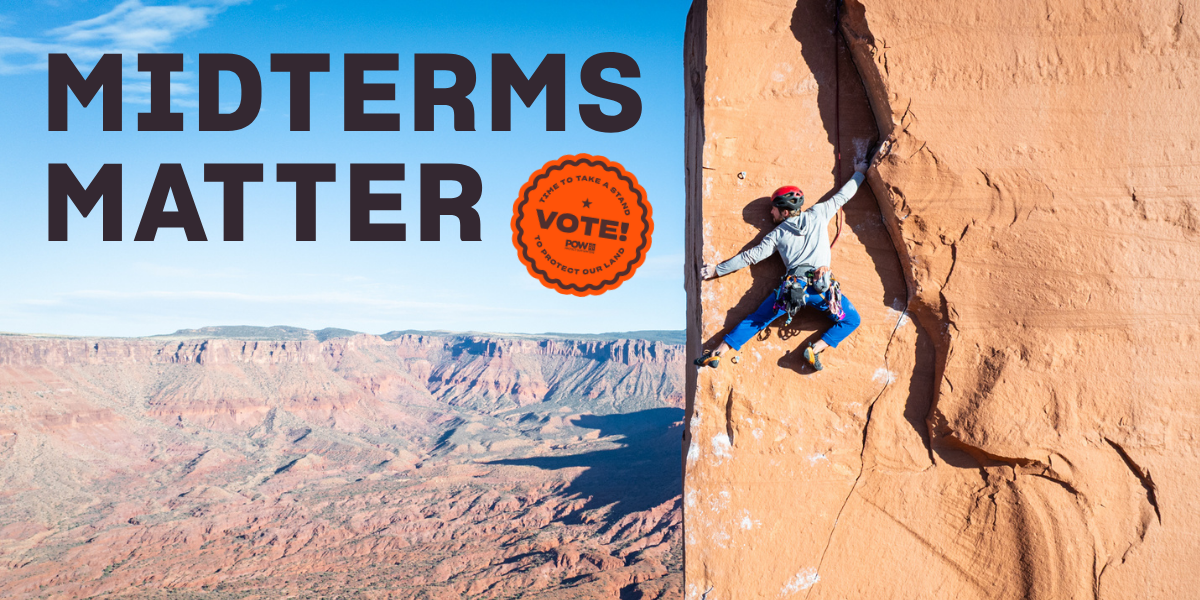
In the 2022 midterm elections, the United States saw a voter turnout of approximately 52% of the voting-age population. While this was historically high for a midterm cycle, advocates argue that a significant portion of the outdoor-recreation demographic remains disengaged. By targeting the 45 million eligible voters who identify with outdoor activities, organizations like POW aim to convert this economic influence into political leverage.
Fact-based analysis suggests that in many districts, the margin of victory in congressional races is less than 5%. In these competitive environments, a concerted effort by a specific interest group—such as outdoor enthusiasts—can effectively swing the outcome of an election, thereby "shifting who decides" on critical environmental policy.
Official Responses and Advocacy Strategy
Protect Our Winters and similar environmental advocacy groups have adopted a strategy that emphasizes education and accessibility. By positioning themselves as "backcountry guides" to the electoral process, these organizations are providing resources such as voter registration status updates, polling place locators, and candidate scorecards based on environmental voting records.
"Climate policy does not become a federal priority through hope alone," stated a representative from a climate advocacy group. "It becomes a priority when the electorate demonstrates that environmental stewardship is a non-negotiable issue at the ballot box."
From a political science perspective, this mobilization strategy is a classic example of interest-group lobbying through electoral pressure. By creating a direct link between a voter’s lifestyle—such as the ability to recreate on healthy, protected lands—and their vote, these groups are attempting to make climate change and land management "wedge issues" that lawmakers cannot ignore without risking their seats.
Economic and Environmental Implications
The implications of the 2026 midterm elections extend far beyond individual recreational access. They touch upon the core of the U.S. climate strategy. If the current trend of deregulation continues, the cumulative impact could be the permanent loss of biodiversity in sensitive regions, increased water scarcity, and the degradation of air quality in rural areas where the outdoor economy is most concentrated.

Conversely, a shift in legislative priority could lead to increased funding for public land maintenance, a transition toward renewable energy infrastructure, and stronger federal oversight of corporate impacts on the environment. The economic stability of mountain towns and coastal communities, which rely heavily on sustainable tourism, is inextricably linked to these legislative outcomes.
Bridging the Gap: From Apathy to Action
The disconnect between the outdoor community’s passion for nature and their participation in the political process has been a structural challenge for years. However, the current political climate is forcing a change in perspective. The realization that the "margins" of policy are as thin as the margins of safety in extreme sports has prompted a shift in how advocates communicate.
"Your vote is not a drop in the bucket," advocates emphasize. "It is the equivalent of the precise technical movement required to complete a difficult climb." This framing serves to demystify the political process and combat voter apathy. By treating the election cycle as a project with measurable goals and actionable steps, the movement hopes to increase participation rates among younger, outdoor-focused voters.
Looking Toward November 2026
As the 2026 midterms approach, the focus remains on logistical preparedness. Voter registration deadlines vary by state, and the complexity of local ballot initiatives requires a level of engagement that goes beyond the presidential or congressional headlines. Advocacy groups are currently engaged in a widespread digital and grassroots campaign to ensure that members of the Outdoor State are not only registered but informed on the nuances of local environmental candidates.
The goal is to create a culture of civic endurance. Just as a long-distance hiker prepares for the terrain ahead, the electorate must prepare for the legislative cycle by researching the long-term records of their representatives. The cumulative power of 45 million voters, if mobilized effectively, would represent one of the most potent political forces in the country.
The stakes for the upcoming elections are clear: they will define the regulatory framework for American public lands for the remainder of the decade. For the outdoor community, the choice is between passive observation of systemic change or active participation in the democratic process to influence those changes. As the date approaches, the emphasis on "shifting who decides" serves as both a rallying cry and a pragmatic roadmap for those who wish to ensure that the landscapes they inhabit remain protected for generations to come. The preparation has begun; the question remains whether the Outdoor State will show up to the polls in the numbers necessary to make their voices heard.

