
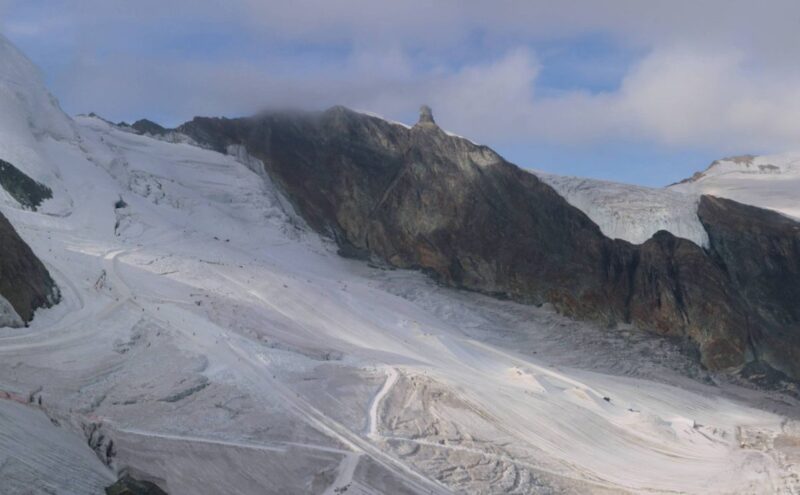
The Zermatt/Cervinia glacier ski area, a cornerstone of high-altitude European winter sports, is officially scheduled to reopen to the public on Wednesday, October 14, 2026. This resumption of operations marks a significant milestone for the region, which was forced to suspend all skiing activities on July 31, 2026, due to the unprecedented toll exacted by intense summer heatwaves. The closure, which lasted over two months, underscored the increasing vulnerability of high-altitude glaciers to volatile climate patterns. The return of winter sports to the Theodul glacier, facilitated by a recent drop in ambient temperatures and a welcome layer of fresh snowfall, brings the total number of operational glacier ski areas across the Alps to nine.
A Chronology of the 2026 Summer Crisis and Recovery
The decision to close the Zermatt/Cervinia area in late July was not taken lightly, as the resort typically aims for year-round operation. However, the sustained high temperatures throughout July created hazardous surface conditions and compromised the structural integrity of the glacier ice, forcing management to prioritize guest safety and long-term glacial preservation.
For the past ten weeks, the slopes have remained silent while maintenance crews focused on rigorous infrastructure assessments. The recent shift in meteorological patterns, characterized by an early October cold front, has provided the necessary conditions to stabilize the snowpack. Following extensive preparation and safety inspections, Zermatt Bergbahnen announced that the Plateau Rosa 1 and 2 ski lifts are now ready to resume service. Additionally, the Matterhorn Glacier Ride II, which connects the Klein Matterhorn to Testa Grigia, will return to its standard operating schedule, restoring a vital link for international skiers and sightseers alike.
Operational Scope and Future Expansion
While the initial reopening phase focuses on the primary glacier terrain, Zermatt Bergbahnen has outlined a phased expansion strategy. Preparations are currently underway to bring the Plateau Rosa 3 lift online. If snow conditions remain consistent with current trends, this expansion will allow for the establishment of a dedicated beginners’ area and the introduction of a limited features set within the resort’s snowpark.
Management has maintained a cautious outlook, emphasizing that the total extent of the skiing offer remains subject to the fluid nature of mountain weather. "The safety of our guests and employees remains our top priority," a spokesperson for the lift company stated. "The operational scope will be dictated by prevailing snow, weather, and glacial stability conditions." Visitors are encouraged to monitor the Matterhorn Paradise website for real-time updates regarding slope closures and lift availability.

The Broader Alpine Context
The reopening of Zermatt arrives at a critical juncture for the European ski industry. As of mid-October, eight other glacier ski areas are currently operational, reflecting a varied start to the 2026/27 winter season. Among these, the Kitzsteinhorn glacier in Austria serves as a primary hub for early-season enthusiasts, having resumed operations last Saturday.
Meteorologists note that while the current week in the Alps is expected to be more settled with a moderate rise in temperatures, the lack of significant new precipitation means that resorts are relying heavily on existing snow cover and base-layer preservation techniques. The disparity in snow accumulation across different latitudes and altitudes continues to influence the viability of early-season openings, forcing resorts to adapt their management strategies to shorter, more intense windows of optimal snow quality.
Global Perspectives on Early Season Readiness
The challenges faced by the Alps are echoed in the northern latitudes and across the Atlantic. In Scandinavia, the strategy for early-season skiing has shifted toward resourcefulness and technological intervention. Both Levi and Ruka in Finland are currently open to the public, relying exclusively on "snow farming"—the practice of storing, insulating, and reusing snow from the previous winter. Similarly, Klappen in Sweden has successfully opened its snowpark by utilizing snow reserves from the 2025/26 season. In Norway, the Galdhøpiggen Glacier remains open, though it is currently restricted to professional race teams, illustrating a trend toward prioritizing training facilities during the transition months.
Meanwhile, North America is witnessing the first tangible signs of winter in the high-altitude regions of Canada. Recent weekend snowfalls across Alberta have dusted the slopes of Sunshine Village, Lake Louise, and Marmot Basin. In the United States, the focus remains on technical readiness. Killington Resort in Vermont, known for its aggressive snowmaking capabilities, recently conducted its first major tests of the season, deploying six machines across three strategic locations. While the resort has not yet set an official opening date for the 2026/27 season, the proactive testing signifies a competitive drive to capture the earliest possible market share in the Eastern United States.
Implications of Changing Climate Patterns on Resort Management
The necessity for such varied opening strategies—from Zermatt’s reliance on glacial stability to Killington’s reliance on advanced snowmaking—highlights the evolving economic landscape of the ski industry. Resorts are increasingly forced to invest in infrastructure that mitigates the risks of late-starting winters and early-ending springs.
The "summer closure" phenomenon, once a rarity, is becoming a recognized operational risk for high-altitude resorts. The impact of such closures extends beyond immediate revenue loss; it affects local supply chains, seasonal employment, and the broader tourism ecosystem that relies on consistent year-round footfall. The resilience shown by Zermatt Bergbahnen in their maintenance of the Theodul glacier is part of a larger trend of adaptive management. By integrating scientific monitoring with flexible infrastructure deployment, these organizations are attempting to preserve the viability of the sport in an era of climatic uncertainty.
Looking Ahead to the 2026/27 Season
As the global ski community transitions from the off-season to the winter calendar, the data collected from these early openings will be vital. Industry analysts are closely watching the "New for 2026/27" developments, as many resorts are introducing upgraded lift technology and enhanced snow-management systems to ensure that they can operate even when nature provides a suboptimal starting point.
The coming months will serve as a bellwether for the industry. While the technical ability to produce and preserve snow has never been higher, the reliance on nature remains absolute. The coordinated reopening of major glacier resorts, including Zermatt, signifies that despite the environmental pressures of the previous summer, the foundational appetite for winter sports remains robust.
For travelers and enthusiasts, the message is clear: the 2026/27 season is arriving, albeit with a heightened requirement for flexibility. Whether in the high-altitude reaches of the Swiss Alps or the snow-farmed slopes of the Nordic regions, the infrastructure is in place. As resorts move toward their primary operating dates, the focus will shift from "readiness" to "capacity," with the hope that the mid-autumn weather patterns will provide the stability needed to carry the season through to a successful, uninterrupted winter.
For real-time updates and detailed technical data regarding current operations, enthusiasts are encouraged to follow official channels and industry-standard reporting platforms, which continue to track the daily shifts in global snow conditions as the winter season officially begins its ascent.

