
The tranquil setting of Shoshone Lodge and Guest Ranch, a historic family-owned establishment nestled near the eastern entrance of Yellowstone National Park, recently played host to an unexpected and somewhat comical wildlife encounter. Videos shared by the ranch, located just three miles from the park’s boundary in the Shoshone National Forest, reveal a curious grizzly bear exhibiting an unusual fascination with a newly installed archery backstop. This incident, marking a first in the ranch’s 102-year operational history, highlights the ongoing interplay between human activities and the wild inhabitants of this iconic American landscape.
The grizzly’s unusual behavior was captured in a series of videos that have since gained traction online. In one clip, the bear is seen vigorously investigating the archery backstop, which is filled with hay bales. The animal appears to be nudging, pawing, and even attempting to burrow into the structure, seemingly captivated by its texture or perhaps mistaking it for an unusual food source or scratching post. The sheer size and power of the grizzly are evident as it interacts with the man-made target, showcasing the raw force of nature in an unexpected context.
A Curious Encounter in a Historic Setting
Shoshone Lodge and Guest Ranch, a fourth-generation family operation, has a deep-rooted history in the Cody, Wyoming, area. Founded in 1924 by Henry and Bertha Dahlem, the lodge has been a cornerstone of the local tourism industry, offering guests a glimpse into the rugged beauty of the West. Henry Dahlem, the first sheriff of Park County, personally oversaw the milling of timber for the lodge and its initial cabins, establishing a legacy of hard work and connection to the land. Over the decades, the ranch has evolved, with subsequent generations adapting to changing times, including the operation of a ski area and the expansion of guest accommodations. The current stewards, Mike and Betsy, are continuing this multi-generational commitment, preserving the heritage established by their predecessors.
The ranch’s proximity to Yellowstone National Park means that encounters with wildlife, including grizzly bears, are not uncommon. However, the specific nature of this interaction—a grizzly fixated on an archery range—presents a novel scenario. The ranch had recently completed the installation of a new archery backstop, a crucial piece of equipment for guests engaging in the sport. It appears this sturdy, hay-filled structure became the focal point of the bear’s attention. While the exact motivation behind the grizzly’s actions remains speculative, the videos offer a unique glimpse into the exploratory nature of these apex predators.
The Bear’s Investigation and Subsequent Tumble
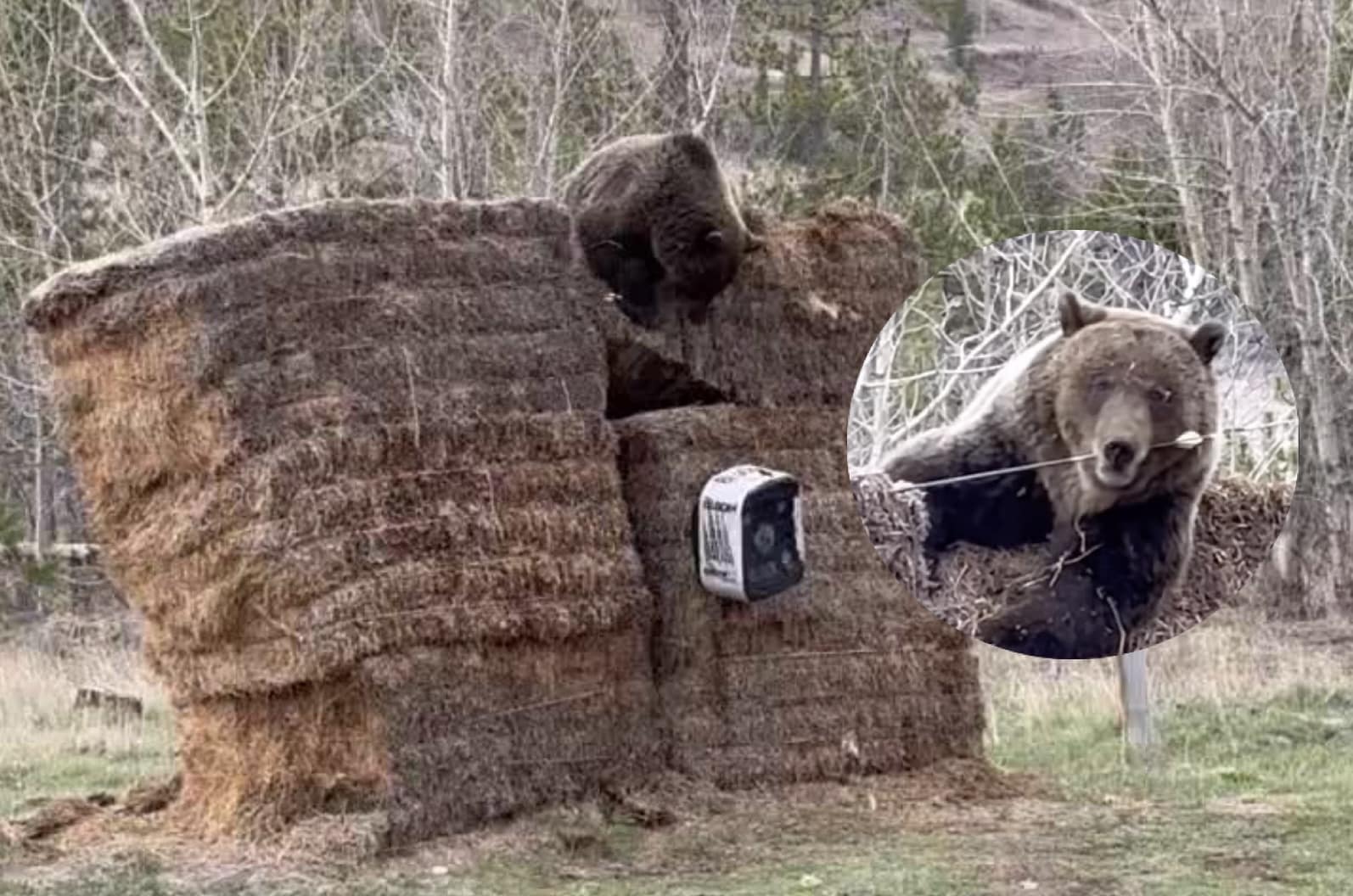
The videos depict the grizzly’s persistent efforts to investigate the archery backstop. The animal’s powerful build and determined actions suggest a strong curiosity. At one point, the bear’s vigorous burrowing into the hay bales leads to a comical, albeit potentially startling, tumble. The grizzly, seemingly caught off guard by the shifting mass of hay, loses its footing and rolls down. Despite the fall, the footage suggests the bear emerged from the incident largely unfazed, likely only experiencing a momentary disruption to its investigation and perhaps a slightly bruised ego. This resilience is characteristic of grizzly bears, known for their robust physical capabilities and ability to withstand significant impacts.
The Shoshone National Forest, where the ranch is situated, is home to a significant population of grizzly bears, underscoring the importance of understanding and respecting their behavior. The U.S. Forest Service and the National Park Service work collaboratively to manage wildlife populations and educate the public on safe coexistence. Incidents like this, while unusual, serve as a reminder of the wild nature of the ecosystem and the need for vigilance and appropriate precautions when venturing into bear country.
Expert Perspectives and Wildlife Management
While the Shoshone Lodge incident appears to be a lighthearted interaction, wildlife biologists often emphasize the importance of understanding bear behavior to prevent conflicts. Grizzlies are opportunistic feeders, and their diet can include a wide variety of plants, berries, insects, and carrion. Their curiosity can lead them to investigate novel objects and scents, which can sometimes bring them into close proximity with human developments.
According to the Interagency Grizzly Bear Committee (IGBC), a federal body tasked with coordinating grizzly bear recovery efforts, bears often approach human-dominated areas in search of food. This can include garbage, pet food, or even unsecured food sources left by campers and hikers. In the case of the Shoshone Lodge, it is unlikely the archery backstop itself offered nutritional value. Instead, the texture of the hay, the novel scent, or simply the bear’s inquisitive nature likely drove its interaction.
The IGBC also highlights that bears that become habituated to human food sources or exhibit overly bold behavior can pose a management challenge. Such animals may be relocated or, in extreme cases, euthanized to protect human safety. However, the interaction at Shoshone Lodge appears to be a one-off exploratory event rather than a pattern of habituation or aggression. The ranch’s proactive approach in sharing the videos likely aims to educate and entertain, rather than to sensationalize a potentially dangerous situation.
Broader Implications and Coexistence Strategies

The incident at Shoshone Lodge serves as a microcosm of the broader challenges and rewards of living in proximity to apex predators like grizzly bears. The presence of these magnificent animals is a testament to successful conservation efforts and the ecological integrity of the Greater Yellowstone Ecosystem. However, it also necessitates a commitment to coexistence strategies.
For businesses like dude ranches that operate within or adjacent to critical wildlife habitats, implementing bear-aware practices is paramount. This includes proper food storage, waste management, and educating guests about wildlife safety. The Shoshone Lodge, by its very nature and long history, demonstrates a deep respect for its natural surroundings. Their decision to share the grizzly encounter on social media, while amusing, also implicitly reinforces the wildness of the area and the importance of respecting wildlife boundaries.
The fact that the grizzly eventually tumbled from the hay bales and seemingly moved on without further incident suggests that it was not actively seeking to cause damage but rather to explore. This distinction is crucial in wildlife management. Most bears prefer to avoid humans and human activity when possible.
The long-term implications of such encounters revolve around maintaining a balance between human use of the landscape and the needs of wildlife. As tourism continues to draw visitors to the Yellowstone region, the potential for human-wildlife interactions will persist. Educational initiatives, robust management plans, and a collective commitment to responsible behavior are essential for ensuring that both humans and grizzly bears can thrive in this iconic wilderness.
A Glimpse into the Wild West
The story of the Shoshone Lodge grizzly and its archery range escapade offers a unique and memorable anecdote from one of America’s most treasured natural landscapes. It underscores the unpredictable and often surprising nature of wildlife encounters, reminding us that even in well-established human spaces, the wild often finds a way to make its presence known. The resilience of the grizzly, its curious investigation, and the eventual humorous tumble all contribute to a narrative that is both entertaining and informative, highlighting the ongoing dynamic relationship between people and the powerful, untamed creatures that call Yellowstone home. For those interested in experiencing the charm and history of Shoshone Lodge and Guest Ranch, further information is available through their official website. The ranch’s commitment to preserving its four-generation legacy, while navigating the realities of its wild neighbors, makes it a compelling destination for those seeking an authentic Western experience.

