
Nepal – Even seasoned mountaineers can find Mount Everest an unforgiving adversary, a truth starkly illustrated by the recent expedition of YouTube content creator Ryan Mitchell. Mitchell, known for his detailed videography of climbing adventures, was forced to abandon his ambitious goal of summiting the world’s highest peak without supplemental oxygen in 2026 due to a life-threatening bout of High Altitude Pulmonary Edema (HAPE). The incident, documented on his YouTube channel, serves as a potent reminder of the inherent risks associated with high-altitude mountaineering, even for those with extensive experience and preparation.
Mitchell, who has cultivated a significant following through his online content showcasing his climbing endeavors, had previously achieved notable ascents, including Mount Rainier and Ama Dablam. His initial journey to Everest was undertaken with a Sherpa guide, an experience that led him to appreciate the critical role of local expertise and the importance of building his own physical resilience. This realization spurred a dedication to enhancing his stamina, leading to subsequent successful summits of challenging peaks. The 2026 season was earmarked for a particularly audacious feat: conquering both K2 and Mount Everest without the aid of bottled oxygen, a feat reserved for an elite few in the mountaineering community.
However, the unforgiving nature of extreme altitude presented an insurmountable obstacle. During his Everest attempt, Mitchell experienced a severe deterioration in his health, necessitating an emergency airlift from Base Camp. The diagnosis of HAPE, a dangerous condition where fluid accumulates in the lungs at high altitudes, brought his expedition to an abrupt and perilous halt.
A Challenging Ascent and a Sudden Turn
Mitchell’s journey to Everest began with a strategic acclimatization period, involving several weeks spent at elevated altitudes to prepare his body for the extreme demands of the climb. This meticulous preparation, however, was met with unforeseen delays. The Everest route, a critical pathway to the summit, remained inaccessible due to the instability of a serac, a large block of glacial ice, which needed to collapse before the route could be safely opened.
In an effort to manage the waiting period and maintain acclimatization, Mitchell and his companion descended to Kathmandu, the capital of Nepal. It is during this period that Mitchell speculates he may have ingested contaminated food, a potential contributing factor to his subsequent illness. The pair then ascended back to Gorak Shep, a village situated at an exceptionally high altitude of 5,164 meters (16,942 feet), a transition that poses significant physiological challenges even for the most experienced climbers.
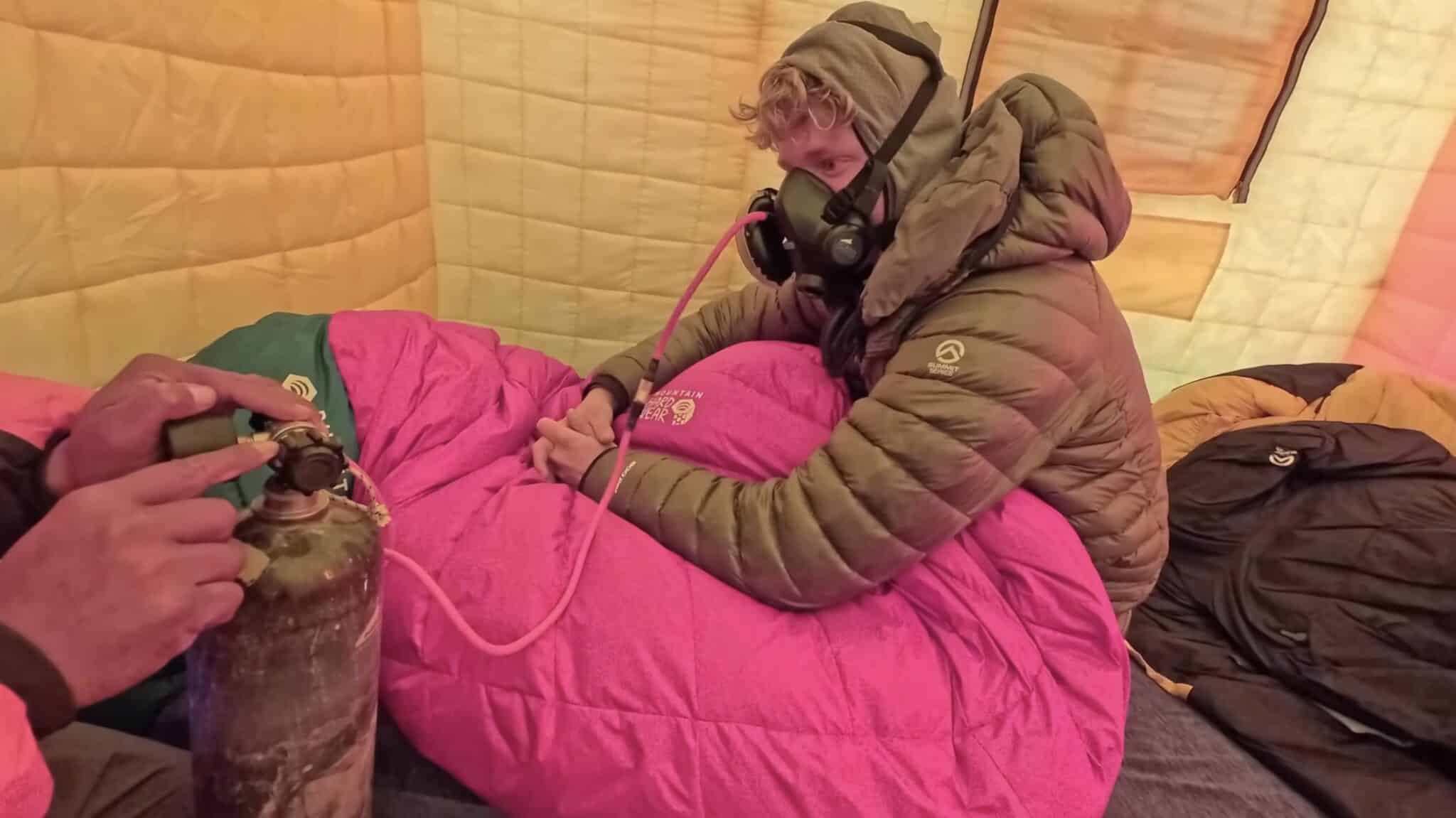
Upon reaching Everest Base Camp, Mitchell began to exhibit a range of alarming symptoms. These included severe coughing, persistent vomiting, diarrhea, an inability to retain fluids, and, in his own candid description, involuntary bowel movements. These signs pointed towards a severe physiological distress, characteristic of acute mountain sickness escalating into a more critical condition.
Medical Intervention and a Difficult Decision
After several days of deteriorating health at Everest Base Camp, Mitchell sought medical attention. The severity of his condition mandated immediate evacuation, and he was airlifted to a hospital for urgent care. The medical assessment revealed the extent of his HAPE, a condition that can rapidly become fatal if left untreated.
The risks associated with returning to the extreme altitudes of Everest, particularly after such a severe health episode, were deemed too high. Consequently, Mitchell made the difficult but necessary decision to terminate his expedition. This conclusion, while undoubtedly disappointing given his extensive preparation and ambitious goals, prioritized his long-term health and safety.
Understanding High Altitude Pulmonary Edema (HAPE)
High Altitude Pulmonary Edema (HAPE) is a serious form of altitude sickness that affects the lungs. It occurs when a person ascends too quickly to high altitudes, causing fluid to leak from the small blood vessels in the lungs into the air sacs. This fluid buildup impairs the lungs’ ability to transfer oxygen to the bloodstream, leading to symptoms such as severe shortness of breath, coughing (often with frothy or pink sputum), chest tightness, extreme fatigue, and confusion.
The condition is more likely to affect individuals who ascend rapidly, have a history of HAPE, or are engaging in strenuous physical activity at altitude. Factors such as cold temperatures, dehydration, and underlying respiratory or cardiac conditions can also increase the risk. Prompt recognition of symptoms and immediate descent to a lower altitude are crucial for managing HAPE. In severe cases, supplemental oxygen and medical treatment are required.
According to the Wilderness Medical Society, the incidence of HAPE can vary depending on the altitude and the speed of ascent. For expeditions reaching altitudes above 8,000 meters, like Everest, the risk is significantly elevated, even for well-acclimatized climbers. Mitchell’s decision to attempt Everest without supplemental oxygen, while a testament to his ambition, inherently increased his physiological vulnerability to altitude-related illnesses.

The Broader Implications for High-Altitude Mountaineering
Ryan Mitchell’s experience highlights the persistent and unpredictable nature of high-altitude mountaineering. Despite advancements in gear, forecasting, and medical understanding, the human body remains susceptible to the extreme physiological stresses imposed by environments like Mount Everest. The allure of conquering these peaks, particularly without supplemental oxygen, draws many experienced climbers. However, these ambitious goals necessitate an unwavering respect for the mountain’s power and the body’s limitations.
The incident also underscores the critical importance of comprehensive acclimatization protocols and the need for climbers to remain vigilant for any signs of altitude sickness. The decision to descend or seek medical attention, even when close to a summit, is often the most challenging but ultimately the most responsible course of action.
While Mitchell’s immediate goal of summiting Everest in 2026 was thwarted, his experience provides valuable insights for other climbers and enthusiasts. His candid documentation of the event on YouTube offers a realistic portrayal of the risks involved, emphasizing that preparation and ambition must always be tempered with caution and a deep understanding of physiological responses to extreme environments.
Looking Ahead: Resilience and Future Endeavors
Despite the setback, Mitchell expressed a commitment to returning to Everest in the future. His experience, though harrowing, has undoubtedly provided him with invaluable lessons in resilience and a more profound understanding of the challenges inherent in high-altitude mountaineering. He anticipates returning better informed, with potentially even greater physical conditioning, and a renewed respect for the delicate balance between human endeavor and the formidable forces of nature.
The Everest season is a complex logistical and environmental undertaking. The collaboration between climbers, Sherpa guides, expedition companies, and medical professionals is paramount to ensuring safety. Mitchell’s narrative serves as a stark reminder that even with the best planning and support, the mountain itself dictates the ultimate outcome. His journey, while not culminating in a summit this time, is a significant chapter in his mountaineering narrative, one that emphasizes courage, vulnerability, and the enduring spirit of exploration in the face of adversity. The lessons learned from this near-fatal encounter will undoubtedly shape his future expeditions and contribute to the collective knowledge base of the mountaineering community.

