
The U.S. Forest Service has taken a pivotal step towards approving a substantial expansion of Grand Targhee Resort’s Special Use Permit, signaling a significant, albeit not final, victory for the Wyoming-based ski area. This decision follows years of intricate planning, extensive public discourse, and rigorous environmental review, marking a critical juncture in the resort’s long-term development strategy. The preliminary approval, outlined in the U.S. Forest Service’s final Environmental Impact Statement (EIS) and draft Record of Decision, encompasses a 694-acre increase in the resort’s permitted operational area. While this falls short of Grand Targhee’s initial request of 866 acres, it represents a substantial gain that is expected to facilitate key infrastructure improvements and the development of new ski terrain.
A Long Road to Preliminary Approval: Tracing the Expansion’s Journey
The path to this preliminary approval has been a protracted and often contentious one, characterized by extensive engagement between Grand Targhee Resort, the U.S. Forest Service, local communities, and environmental advocacy groups. The initial proposals for expansion, particularly in the South Bowl area, were met with significant public scrutiny and environmental concerns, prompting several revisions.
The resort first submitted its Master Development Plan and subsequent amendments, aiming to enhance the visitor experience and increase operational capacity. These plans often involved expanding into previously undeveloped National Forest Service lands, which are managed by the Caribou-Targhee National Forest. The environmental review process, mandated by the National Environmental Policy Act (NEPA), is designed to assess the potential impacts of such projects on the natural environment, including wildlife, water resources, vegetation, and cultural sites.
Key milestones in this process included:
- Initial Proposal and Scrutiny: Grand Targhee’s ambitious initial plans, particularly for the South Bowl, were met with resistance due to their scale and potential environmental footprint.
- Public Scoping and Comment Periods: The U.S. Forest Service conducted multiple public scoping meetings and comment periods, allowing stakeholders to voice their concerns and provide input. This feedback directly influenced the subsequent iterations of the resort’s proposals.
- Environmental Impact Statement (EIS) Development: The Forest Service undertook a comprehensive EIS process, analyzing various alternatives and their potential environmental consequences. This document serves as the cornerstone of the decision-making process.
- Draft Record of Decision: The release of the draft Record of Decision signifies the Forest Service’s preliminary decision based on the findings of the EIS.
The current approval reflects a scaled-back approach compared to the resort’s most expansive visions, a testament to the collaborative and sometimes challenging nature of land-use planning on public lands. The reduction in acreage from the requested 866 to the approved 694 indicates a careful balancing act between the resort’s development goals and the conservation objectives of the U.S. Forest Service and other stakeholders.
Details of the Approved Expansion: New Terrain and Enhanced Infrastructure
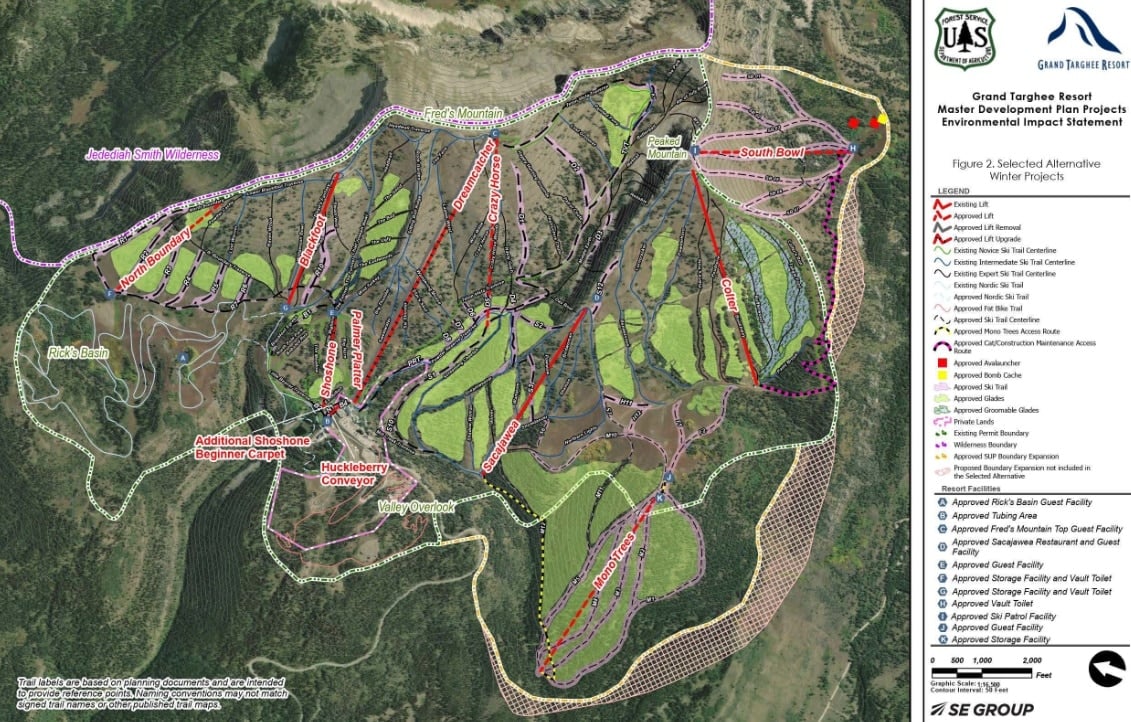
The preliminary approval allows for the expansion of Grand Targhee’s Special Use Permit by 694 acres, a figure that will underpin several key developments. The approved plan focuses on two primary areas: the South Bowl and Mono Trees, alongside significant upgrades to the resort’s lift infrastructure and amenities.
South Bowl Expansion: Advanced Terrain and New Lift
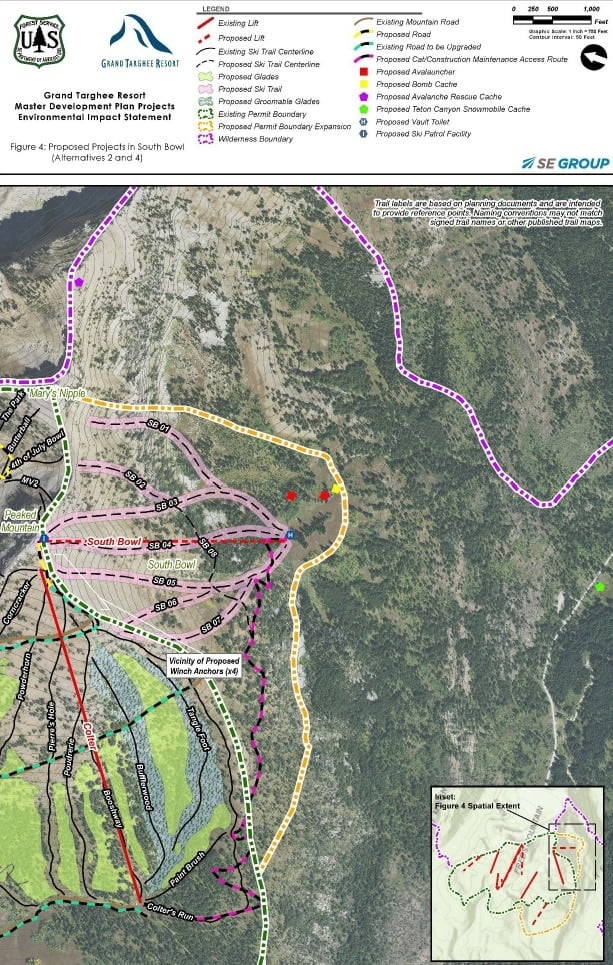
The South Bowl area, a focal point of contention, has seen its proposed expansion significantly refined. The original ambitious plan for three new lifts and extensive terrain pods has been scaled back. The approved plan permits a 235-acre expansion in this zone, a reduction from an earlier revised proposal of 266 acres. Approximately 60 acres within this expansion will be developed for ski trails, catering to advanced skiers seeking challenging bowl skiing.
To access this new terrain, a new fixed-grip triple chairlift is planned. This lift will measure approximately 3,211 feet in length and is projected to have a capacity of around 1,800 passengers per hour. This represents a more focused development of the South Bowl, prioritizing quality advanced terrain over sheer acreage.
Mono Trees Expansion: Intermediate and Advanced Opportunities
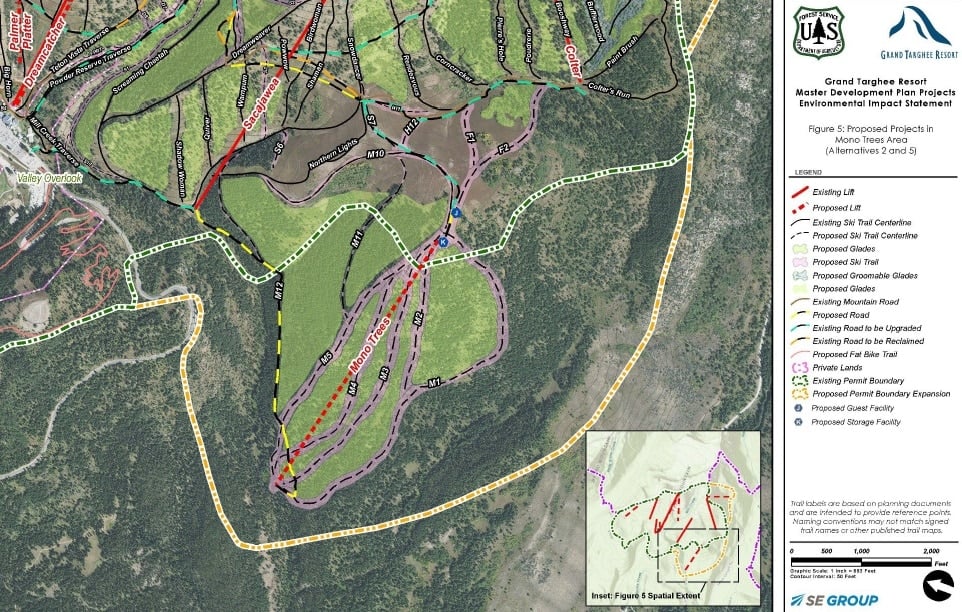
The Mono Trees expansion, situated between the existing Sacagawea and Colter terrain pods, will also see a reduction in its scope. The acreage for this expansion has been reduced from an initial 600 acres to 455 acres. Within this area, approximately 97 acres will be developed to offer intermediate and advanced-intermediate skiable terrain.
This new terrain will be served by a chairlift measuring 4,222 feet in length, with a capacity of 1,800 passengers per hour. This phased approach to development aims to integrate new terrain seamlessly into the existing resort infrastructure while providing a wider range of options for skiers and snowboarders.
Modernizing the Lift Fleet and Enhancing Amenities
Beyond new terrain, the expansion plan includes substantial upgrades to the resort’s lift system and on-mountain facilities, aiming to improve circulation, efficiency, and the overall guest experience.
- North Boundary Lift: A new fixed-grip triple chairlift is proposed near the North Boundary. This lift will provide access to several new trails and extensions within the current skiable boundary, making it easier for guests to lap this popular area.
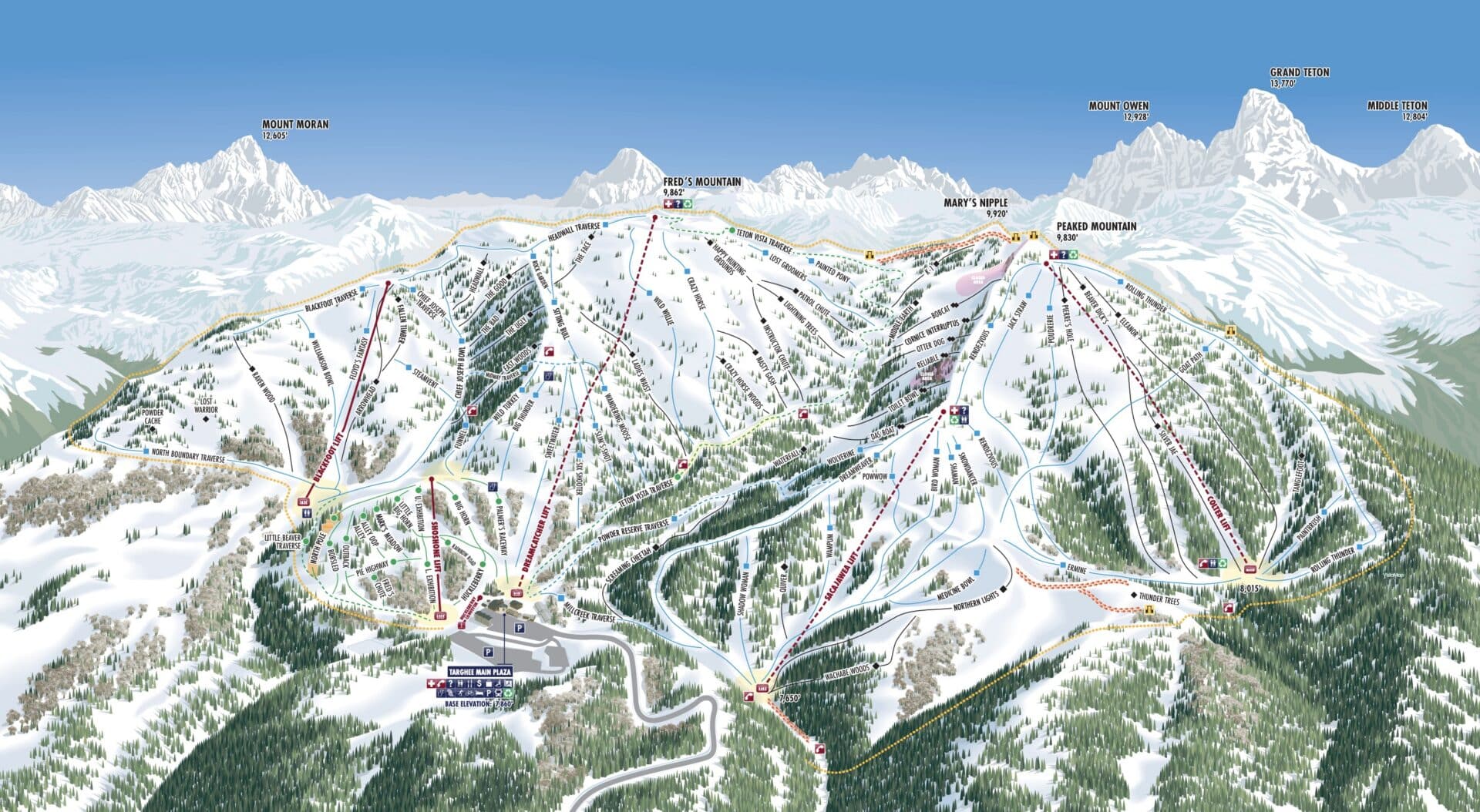
- Dreamcatcher Replacement: The existing Dreamcatcher high-speed quad chairlift is slated for replacement with a "chondola" – a hybrid lift system featuring both traditional chairs and enclosed gondola cabins. This upgrade aims to enhance comfort and accessibility for a wider range of guests.
- Crazy Horse Lift: A new detachable chairlift, named Crazy Horse, is planned for Fred’s Mountain. This lift is intended to improve access to the upper mountain, allowing for more efficient laps.
- Shoshone Quad Replacement: The Shoshone Quad lift in the beginner area will be replaced with a modern detachable chairlift, improving flow and accessibility for novice skiers and riders.
- Palmer’s Raceway Enhancement: To support athlete training and provide more opportunities for high-volume laps, a platter pull lift and lighting will be added to the Palmer’s Raceway trail.
- Beginner Area Magic Carpet: A new magic carpet is planned for the beginner area, further enhancing the learning experience for new skiers and snowboarders.
In addition to lift improvements, the comprehensive plan includes:
- New Ski Trails: Development of new ski trails across the existing terrain network.
- Snowmaking Expansion: A 57-acre expansion of the resort’s snowmaking capabilities to ensure consistent snow conditions.
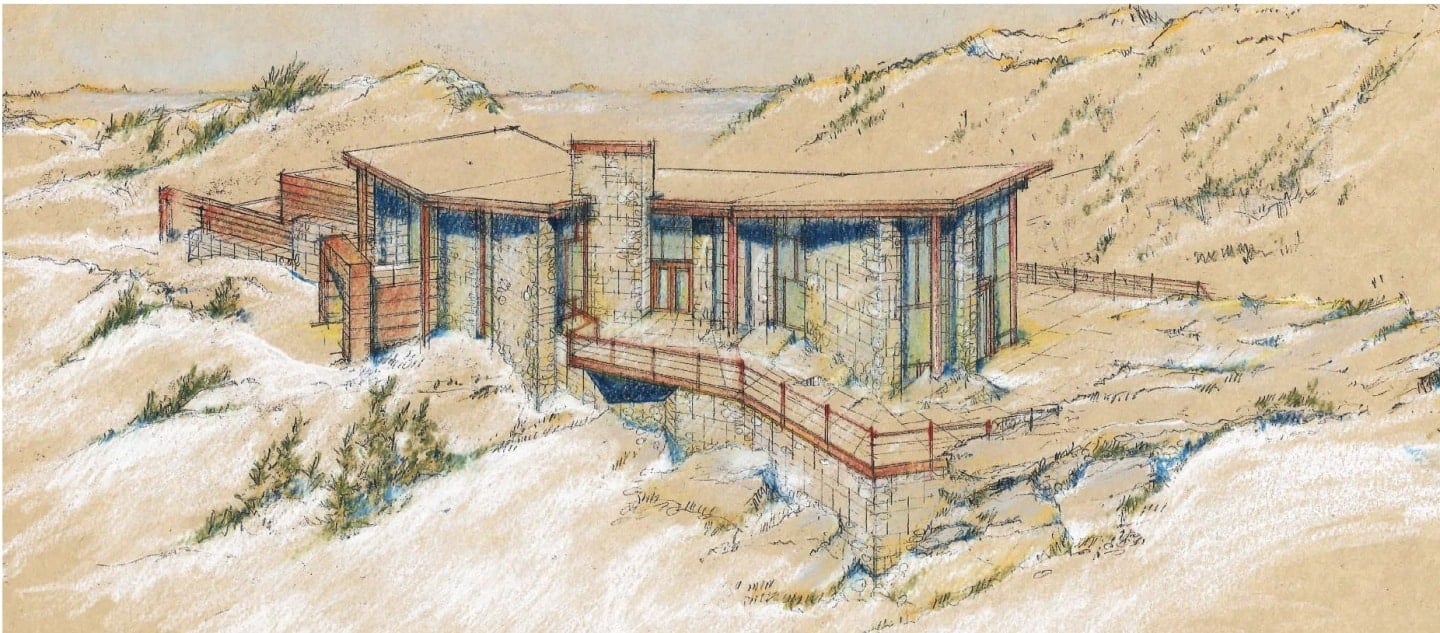
- On-Mountain Lodges: Construction of two new on-mountain lodges to provide additional dining and resting facilities.
- Support Facilities: New buildings for essential services such as restrooms and ski patrol operations.
- Summer and Nordic Offerings: Expansion of Nordic and snowshoeing trail networks, the addition of fat biking routes, the development of a snow tubing park, and the introduction of new summer attractions.
A particularly notable proposed amenity is a new restaurant near the summit of Fred’s Mountain, which is expected to offer panoramic views and enhanced dining options for guests at higher elevations.
Continued Deliberation and Public Engagement
Despite the preliminary approval from the U.S. Forest Service, the expansion process is far from concluded. The decision triggers two public comment objection periods for various components of the plan. This phase allows for further public input and provides an opportunity for stakeholders to formally raise objections or concerns before a final decision is rendered.
The environmental review process itself has been a significant undertaking, involving detailed studies of:
- Wildlife and Habitat: Assessing potential impacts on sensitive species and their habitats, including elk, deer, and various bird species that inhabit the Teton Range.
- Water Resources: Evaluating the potential effects on streams, wetlands, and groundwater, particularly concerning construction activities and increased human presence.
- Vegetation and Soils: Analyzing the impact on native plant communities and soil stability.
- Recreational Use: Considering how the expansion will affect existing recreational opportunities and user conflicts.
- Cultural and Historical Resources: Ensuring that no significant historical or cultural sites are disturbed.
The U.S. Forest Service will carefully consider all comments received during the objection periods before issuing a final Record of Decision. This final decision will either affirm, modify, or reject the proposed expansion.
Reactions and Broader Implications
The preliminary approval has been met with a mix of reactions. Grand Targhee Resort has expressed optimism about moving forward with its long-term vision, highlighting the potential benefits for the local economy and the ski experience.
However, opposition remains vocal. Groups such as the Jackson Hole Conservation Alliance and No Grand Targhee Expansion continue to raise concerns about the environmental impacts of expanding ski operations into sensitive alpine areas. Their arguments often center on the preservation of wilderness character, the protection of biodiversity, and the potential for increased human activity to disrupt fragile ecosystems.
Furthermore, Teton County, Idaho, through which visitors must pass to reach Grand Targhee, has expressed concerns about not receiving a proportional share of the economic benefits generated by the resort. Currently, taxes generated by Grand Targhee primarily accrue to Teton County, Wyoming. This has led to discussions about potential revenue-sharing models or other forms of local economic partnership.
The implications of this expansion extend beyond the immediate ski area. A more developed Grand Targhee could lead to increased visitor numbers, impacting local infrastructure, traffic, and the overall character of the surrounding communities in both Wyoming and Idaho. The economic benefits, such as job creation and increased tourism revenue, are often weighed against potential environmental costs and impacts on local quality of life.
The final decision on Grand Targhee’s expansion will represent a significant moment for the resort and the broader region, shaping its future as a premier mountain destination while navigating the complex interplay of economic development, environmental stewardship, and community interests. The ongoing dialogue and the thoroughness of the review process underscore the importance of public lands and the careful consideration required for their utilization.

