
Kodiak Island, a sprawling expanse of wilderness separated from mainland Alaska by the formidable Shelikof Strait, is renowned for its untamed beauty and its formidable inhabitants: the Kodiak brown bear. Spanning an impressive 3,670 square miles, this island is the second-largest in the United States and is largely encompassed by the Kodiak National Wildlife Refuge. This protected area serves as a vital sanctuary for an estimated 3,500 Kodiak brown bears, a subspecies recognized as the largest and most powerful grizzly bears on Earth. For the residents of Kodiak, coexisting with these magnificent apex predators is not an abstract concept but a daily reality, often leading to unique and sometimes humorous reactions to encounters that would instill sheer terror in those from less wild locales.
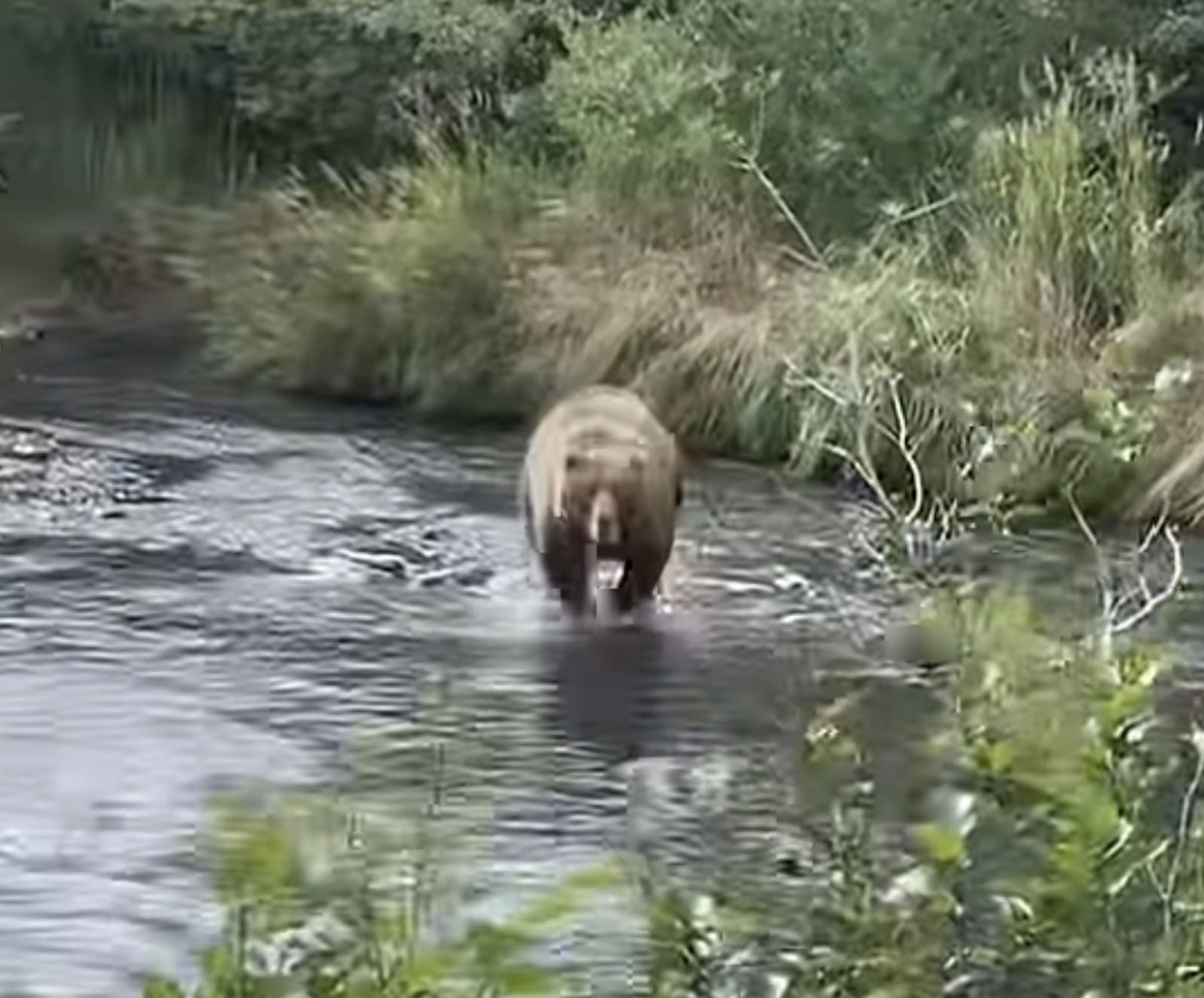
One such striking example of this local adaptation to bear country unfolded recently near the Russian River. A man, engaged in filming a group of Kodiak brown bears in their natural habitat, found himself the unexpected focus of a particularly assertive individual from the ursine population. As the bear detected the man’s presence, it initiated a startling charge. Fortunately, the man’s reflexes were sharp. He swiftly retreated to the perceived safety of his truck parked nearby. Upon realizing the charge was a bluff – a common behavior exhibited by bears to assess perceived threats without intent to harm – and that the bear had no intention of escalating the encounter, a wave of relief washed over him, punctuated by an audible giggle as he crouched behind his truck bed. This reaction, captured on video, underscores the unique relationship between humans and wildlife on Kodiak Island, where a healthy respect is tempered by a certain familiarity born of necessity and proximity.
The Majestic Kodiak Brown Bear: An Ecological Icon
The Kodiak brown bear ( Ursus arctos middendorffi ) is a subspecies of the brown bear endemic to the Kodiak Archipelago. These bears are distinguished by their immense size, with adult males often weighing between 800 and 1,400 pounds, and sometimes exceeding 1,500 pounds. Females are considerably smaller, typically ranging from 400 to 700 pounds. Their diet is diverse, consisting primarily of berries, grasses, roots, and most notably, salmon, which are crucial to their nutritional needs, particularly during the summer months when they congregate in rivers to feed. This dietary dependence on salmon is a key factor in their seasonal movements and population distribution.
The Kodiak National Wildlife Refuge, established in 1941, plays a pivotal role in the conservation of this iconic species. The refuge encompasses approximately 1.9 million acres, providing critical habitat for the bears and managing the delicate balance of the ecosystem. The population of 3,500 bears represents a significant portion of the world’s brown bear population, making Kodiak Island a globally important site for brown bear research and conservation. The successful management of this population is a testament to decades of scientific study and dedicated conservation efforts, aiming to ensure the long-term survival of these magnificent animals.
The Encounter: A Moment of Adrenaline and Relief
The incident, as depicted in the viral video footage, occurred along the Russian River, a popular area for both bear viewing and fishing. The man, whose identity has not been publicly disclosed, was reportedly documenting the bears from a safe distance when one of the larger individuals, possibly an adult male or a protective mother with cubs, perceived him as a potential disturbance. The bear’s charge, while visually dramatic, is often a defensive or investigative behavior. Such charges are typically characterized by the bear running a portion of the distance before stopping, often accompanied by vocalizations like huffing or woofing, and visual cues such as ear positioning and head movements.

The man’s immediate reaction to seek refuge in his truck demonstrates an understanding of basic bear safety protocols. The subsequent giggle, however, speaks volumes about his emotional state. It reflects a release of pent-up adrenaline, a realization that the immediate danger had passed, and perhaps a touch of bewildered amusement at the sheer intensity of the experience. This reaction, while seemingly lighthearted, highlights the psychological impact of close encounters with such powerful wild animals.
Bear Safety in Kodiak: A Culture of Respect and Vigilance
Living on Kodiak Island necessitates a profound respect for its wild inhabitants. Local authorities and wildlife agencies consistently emphasize the importance of vigilance and adherence to safety guidelines. The US Fish & Wildlife Service provides comprehensive resources on bear safety, educating residents and visitors on how to minimize the risk of negative encounters. Key recommendations include:
- Making Noise: Bears often avoid humans, and making noise, such as talking or singing, can alert them to your presence and prevent surprise encounters.
- Traveling in Groups: Larger groups are generally perceived as less threatening and can deter bears.
- Carrying Bear Spray: Bear spray is a highly effective deterrent when used properly and is considered essential for anyone venturing into bear country.
- Proper Food Storage: Securing food and garbage is paramount to prevent attracting bears to human settlements.
- Maintaining Distance: Observing bears from a safe distance is crucial. Never approach bears, especially mothers with cubs or bears that are feeding.
- Recognizing Bluff Charges: Understanding bear behavior, including the distinction between a bluff charge and an actual attack, can help individuals react appropriately.
The encounter on the Russian River, while resolved without incident, serves as a potent reminder of the inherent wildness of Kodiak Island and the constant need for awareness. The man’s reaction, though perhaps unconventional, underscores the complex emotions that arise when confronted by nature’s raw power.

Broader Implications: Human-Wildlife Coexistence in a Changing World
Incidents like the one captured on the Russian River offer valuable insights into human-wildlife coexistence, particularly in areas where large carnivores are abundant. As human populations expand and recreational activities in wilderness areas increase, the potential for human-bear interactions grows. The ability of individuals to remain relatively calm and react with a degree of situational awareness, even after a startling event, is a positive indicator.
The widespread sharing of such videos also contributes to public education, albeit sometimes in an informal capacity. While sensationalism can be a concern, these real-world encounters can foster a greater appreciation for wildlife and reinforce the importance of conservation efforts. For the residents of Kodiak, these encounters are a part of life, a constant negotiation of boundaries and a testament to their ability to live in harmony with some of the planet’s most impressive wildlife.
The long-term implications of these interactions extend beyond individual experiences. They inform wildlife management strategies, contribute to research on bear behavior, and shape public perception of conservation. The continued success of Kodiak brown bear populations hinges on maintaining a healthy ecosystem and fostering a culture of respect and understanding between humans and bears. The giggle heard after the charge on the Russian River, while momentarily amusing, is a small echo of a much larger story: the ongoing saga of coexistence between humanity and the wild, played out on the dramatic stage of Alaska.

