
Annika Johansson, one of the newest and most compelling additions to the Stifel U.S. Ski Team, embodies a distinctly unconventional path to elite alpine racing, a journey that eschews the traditional American development pipeline in favor of a profound immersion in European ski culture and competition. When Ski Racing Media recently connected with Johansson, her location was not the familiar slopes of Aspen, Colorado, where she spent significant formative years, nor the Italian Alps, which have served as her primary training ground for half a decade. Instead, she was found in Stockholm, Sweden, engaged in an intensive prep season conditioning regimen under the tutelage of Andreas Ågren, a renowned Swedish trainer whose client roster boasts NHL stalwarts and a cadre of elite alpine skiers. This transatlantic training underscored a central theme of Johansson’s career: almost every facet of her development has diverged from the customary trajectory pursued by most American ski racers.
Typically, aspiring American alpine athletes navigate a well-established progression, commencing with regional competitions, advancing through the NorAm Cup circuit, and eventually seeking opportunities on the Europa Cup. This structured pathway is designed to provide consistent competition, gradually increasing in intensity and technical demand, while allowing athletes to remain within the domestic support system for much of their early careers. Annika Johansson, however, charted a course far less conventional, one defined by audacious independence and a relentless pursuit of the sport’s deepest competitive fields.
At the remarkably tender age of 14, Johansson made the pivotal decision to relocate to Europe. This move initiated a comprehensive developmental period spent almost entirely overseas, where she became deeply embedded in the vibrant, demanding culture and competitive landscape of Northern Italy. Her ambition was clear: to test her mettle against the most formidable international talent available. After years of relentless racing abroad, navigating the complexities of cultural adaptation, overcoming devastating injuries that would derail many careers, and earning her place through a far narrower, more challenging pathway than her American peers, Johansson has now arrived at what is widely regarded as one of the strongest women’s alpine programs in the world: the Stifel U.S. Ski Team.
“It feels great,” Johansson articulated, her voice resonating with a blend of satisfaction and quiet determination. “I’m really looking forward to having their support in the next year and trying to… I’m going to keep doing what I always do.” This statement, brief yet potent, encapsulates her pragmatic approach and unwavering commitment to the principles that have guided her extraordinary journey thus far.
A Transcontinental Foundation: From Vermont to the Dolomites
Johansson’s foundational skiing roots were firmly established long before Europe entered the narrative. Born into a family steeped in ski racing tradition, her earliest memories of sliding on snow trace back to Vermont, during her childhood years spent in Connecticut. The family’s relocation to Aspen, Colorado, when Annika was eight, further solidified her connection to the sport. Her heritage is distinctly international; her father, Per Johansson, is Swedish, while her American mother grew up in London. This dual background would later prove instrumental in facilitating her audacious move across the Atlantic.
“My father had me on skis when I was 20 months old,” Johansson recounted, highlighting the early immersion. “I was always with the family chasing after my sisters.” While many young American racers of her generation idolized luminaries like Mikaela Shiffrin, Lindsey Vonn, Ted Ligety, or Bode Miller, Johansson’s most profound inspirations were found closer to home. “My skiing heroes and my skiing inspirations were my sisters,” she affirmed. Older sisters Isabella and Stella Johansson played a pivotal role, even introducing her to her earliest skiing lessons through what they affectionately dubbed “butt turns.” “They said when you want to turn, you just have to put your butt in the opposite direction and your skis will automatically go,” Johansson recalled with a laugh, a testament to the playful yet formative influence of her siblings.
The family’s initial move to Europe was primarily orchestrated around Stella’s burgeoning Europa Cup career. The original blueprint was straightforward: a single year overseas to support Stella’s competitive aspirations, followed by a return to the United States. However, this plan swiftly evolved. Near the conclusion of that inaugural season abroad, Johansson’s parents presented her with a choice: return home or remain in Europe. Her decision to stay marked the definitive turning point in her development, setting her on a trajectory unique among American alpine racers.
Embracing the European Crucible: Culture, Language, and Discipline
Johansson’s pivotal decision to remain in Europe was shaped by a confluence of factors extending far beyond the immediate allure of ski racing. The cultural immersion she experienced was profound and multifaceted. Initially, she enrolled in a small, local school nestled within Italy’s Dolomite region. This educational environment was a microcosm of the region’s rich linguistic tapestry, with students conversing in Italian, German, and Ladin—an ancient Rhaeto-Romance language still spoken in a handful of valleys across the Dolomites.
“I was kind of plopped into the school there speaking only English and Swedish,” Johansson explained, underscoring the immediate linguistic challenge. “It was really tough, but because it was so tough, I grew so much in that one year.” This period of intense cultural and linguistic assimilation proved to be a powerful accelerant for her personal and athletic growth. “I believe that it made me such a stronger skier, such a stronger person,” she reflected, acknowledging the crucible effect of her European experience.
The cultural adjustment was not confined to academic settings; it permeated every aspect of her daily life, including the rigorous discipline inherent in European ski training. She vividly recalled one of her initial training camps in Val Senales. Arriving a mere three minutes late for dinner, she was met with a humorous yet firm response from her coaches, who, in a display of team-building and disciplinary enforcement, tasked the group with determining an appropriate consequence for the newcomer. The verdict: 30 push-ups for every minute of tardiness. Johansson, embracing the moment with a smile, promptly dropped to the dining room floor and completed all 90 push-ups, much to the amusement and eventual cheering of her new teammates. “After that, I was never late again,” she quipped, highlighting the immediate and lasting impact of the experience.
Remarkably, Johansson speaks of these challenging experiences with genuine appreciation, devoid of any resentment. She readily embraced the strict discipline, the formidable language barriers, and the nuanced cultural differences that accompanied living full-time in Europe. “I really did enjoy my time there,” Johansson affirmed. “Despite all of our differences, I think we learned a lot from each other.” This open-mindedness and adaptability were crucial ingredients in her success, allowing her to thrive in an environment that might have overwhelmed others.

A Distinctive Competitive Blueprint: Deep Fields and Europa Cup Focus
Johansson’s unwavering commitment to Europe fundamentally reshaped her competitive trajectory as an American athlete. Rather than prioritizing the NorAm racing circuit and the conventional domestic route, her focus shifted almost entirely to European FIS races and, subsequently, Europa Cup opportunities. This strategy meant regularly competing in exceedingly robust international fields, a stark contrast to the typically shallower fields found in many domestic competitions.
For Johansson, this strategic decision was rooted in a clear developmental philosophy. “A large reason why I went to Europe and why I decided to stay in Europe is because the competition is much deeper in Europe,” she explained. “That’s what pushed me a lot.” She held a firm conviction that the Europa Cup represented the strongest continental cup competition globally, offering unparalleled opportunities for improvement by consistently challenging herself against a vast pool of highly skilled athletes from diverse nations. “That was the best way to grow as a skier,” Johansson asserted, “to go against the greatest depth of competition.” The Europa Cup, a critical stepping stone to the World Cup, draws competitors from dozens of nations, many of whom are already established World Cup athletes or rising stars, making it an intensely competitive proving ground.
It is important to note that Johansson was careful not to frame her decision as a critique of American skiing or the U.S. development system. On the contrary, she repeatedly emphasized the distinct value both experiences offered to her overall growth. “I got the best of both worlds,” Johansson stated. “I got to ski in the U.S. and race against the girls in the U.S., and then I got to go to Europe and race against the rest of the world there.” This dual exposure, she believes, provided a uniquely comprehensive development.
Nonetheless, her choice undeniably narrowed her pathway toward major U.S. team opportunities. Without the regular participation in NorAm racing and the direct domestic comparisons these events provide, Johansson largely had to rely on her European results to validate her performance level and meet U.S. Ski Team selection criteria. This approach reduced her margin for error and rendered consistency in her European performances absolutely critical in her pursuit of team criteria. Ultimately, her impressive results and sustained development within this demanding environment earned her a coveted spot on the Stifel U.S. Ski Team.
The Crucible of Catastrophe: Injury and Redefined Purpose
Johansson’s promising career faced its most profound threat at the age of 16. While training giant slalom in Val Senales, she suffered a catastrophic crash that resulted in a comprehensive knee injury, a common yet devastating occurrence in alpine skiing. She tore both anterior cruciate ligaments (ACLs), along with her lateral collateral ligaments (LCLs) and medial collateral ligaments (MCLs), and posterior cruciate ligaments (PCLs). In addition to the extensive ligament damage, she also tore one meniscus and sustained severe fractures in both tibial plateaus, injuries that required an arduous 18 months to fully heal. “I basically did the whole thing,” Johansson stated with a hint of understatement, referring to the laundry list of injuries.

The severity of the trauma necessitated bilateral knee surgery on the same day, an uncommon procedure reflecting the simultaneous damage to both joints. Her subsequent recovery involved a period confined to a wheelchair, a stark contrast to the dynamic freedom of the ski slopes. Statistically, ACL injuries are among the most common and career-threatening in alpine skiing, with recovery often taking 9-12 months for a single knee, and the mental fortitude required for rehabilitation often underestimated. Johansson’s experience, involving multiple ligaments and bone fractures in both knees, presented an even more daunting challenge.
Paradoxically, Johansson asserts that this devastating injury, rather than any prior success, served to clarify and deepen her love for the sport. “All I wanted to do was just get back on skis,” she revealed. “That’s really the moment when I decided, ‘Okay, this is what I want to do.’” The arduous rehabilitation process became a period of introspection and solidified her commitment. This profound experience fundamentally reshaped her perspective, instilling a newfound appreciation for the simple act of skiing. “It made me appreciate skiing,” Johansson said. “You’re able to get up every day and your office is outside in nature and you’re able to do these crazy things with your body.” This perspective, forged in the crucible of adversity, now serves as a powerful wellspring of motivation.
Resilience Tested: Setbacks, Concussions, and a Pozza di Fassa Triumph
Johansson’s remarkable resilience was put to yet another significant test during the most recent competitive season. Following a challenging stretch of races, she experienced another severe crash during a giant slalom event in Austria. This incident resulted in a concussion, a fractured cheekbone, a perforated sinus, and a dislocated jaw – a cascade of injuries that would sideline most athletes. The physical toll was compounded by an emotional blow shortly thereafter: she received news that she would not be selected for the U.S. World Junior Championships team, a significant disappointment for any aspiring young racer. “It was a bit of a beat down after a beat down,” Johansson candidly admitted, reflecting on the cumulative impact of these setbacks.
Despite these compounding challenges, Johansson steadfastly refused to allow her season to unravel. Her inner resolve shone through, articulated in a simple yet powerful declaration: “I haven’t given up before, so why would I give up now?” Her response to adversity was consistent: keep pushing forward, maintain focus, and trust the process.
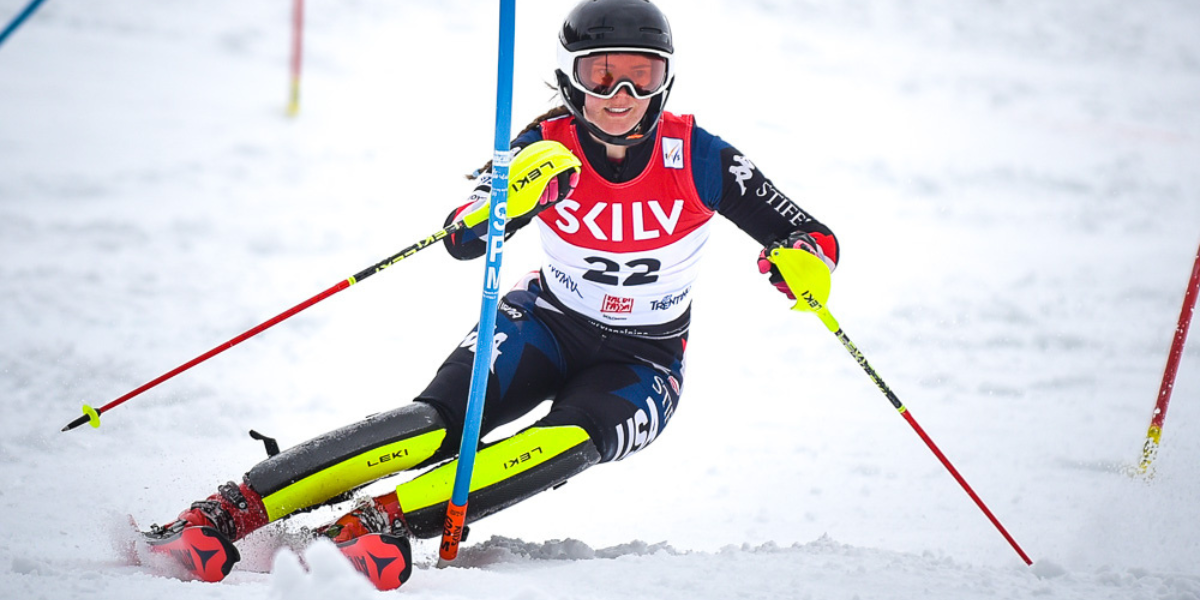
This unwavering determination culminated in a stunning breakthrough at the season’s end. Johansson arrived at the national championships in Pozza di Fassa, Italy, facing an exceptionally competitive field that included seasoned World Cup athletes and top Europa Cup contenders. Starting from the 22nd position in the slalom race, her odds of securing a victory seemed minimal. “I thought, ‘I don’t have a chance to win this race,’” Johansson recalled. “So all I’m going to do is try my best.” This mindset, devoid of pressure and focused purely on execution, proved to be her secret weapon. Against all expectations, she delivered an electrifying performance and won the race. “There was no better feeling in the world,” Johansson exclaimed, encapsulating the euphoria of her hard-earned triumph. This victory, coming after a period of intense physical and emotional setbacks, was not merely a race win; it was a profound testament to her indomitable spirit and unwavering belief in her abilities.
A Constellation of Mentors: Stella, Kunc, and Dragsic
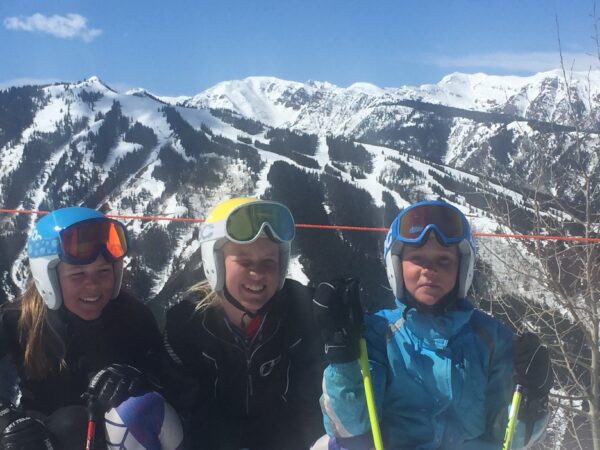
Throughout her unique journey, Annika Johansson has benefited from a robust network of support and mentorship, particularly from those intimately familiar with the demands of elite ski racing. Her older sister, Stella Johansson, has exerted a profound influence on Annika’s skiing career. While injuries and their age difference meant the sisters rarely trained extensively together, Stella has consistently remained one of Annika’s most trusted advisors and confidantes. “She’s like my coach away from coaching,” Johansson affectionately described, highlighting Stella’s invaluable role in providing guidance and perspective from a sister’s and a fellow racer’s viewpoint.
This past season, Johansson also had the distinct privilege of working closely with two highly respected figures from the Slovenian alpine skiing community: former World Cup star Mitja Kunc and ski technician Mitja Dragsic. Mitja Kunc, a World Cup slalom winner and a six-time World Cup podium finisher in both slalom and giant slalom, brought an unparalleled depth of competitive experience and technical insight. His ability to dissect courses, analyze technique, and impart strategic wisdom proved invaluable. Alongside Kunc, ski technician Mitja Dragsic, who himself recorded eight World Cup top-10 slalom finishes during his racing career, including two impressive fourth-place results, provided crucial expertise in equipment setup and preparation. In alpine racing, the relationship between an athlete and their ski technician is paramount, with meticulous ski tuning often making the difference of hundredths of a second.
Together, Kunc and Dragsic formed a formidable support team that helped Johansson continue to refine her skills and thrive within the demanding European competitive environment she had so bravely embraced. “They really pushed me to a higher level,” Johansson affirmed, acknowledging the significant impact of her dedicated support staff. Her long-standing relationship with Atomic, a brand she has represented since her early teenage years after following Stella onto the brand, further underscores the stability and continuity in her equipment support. As she transitions to the Stifel U.S. Ski Team, Johansson will now integrate into Miha Kurner’s group, preparing for her inaugural official camp in Ushuaia, Argentina, later this summer, marking the next exciting chapter in her career.
The Broader Implications: A New Paradigm for U.S. Ski Development?
Annika Johansson arrives on the Stifel U.S. Ski Team carrying an unusually broad and mature perspective for a 19-year-old American skier. Her experiences encompass living in multiple countries, mastering new languages, adapting to unfamiliar and often challenging cultures, meticulously rebuilding her body and spirit after devastating injuries, and consciously pursuing one of the most unconventional development paths of any American athlete entering the program. Her journey offers a compelling case study that could hold significant implications for the future development strategies within U.S. Ski & Snowboard.
While the traditional NorAm-centric pathway has successfully produced numerous World Cup and Olympic medalists, Johansson’s success highlights the potential value of alternative, individualized routes. Her story suggests that a direct, early immersion into the highly competitive European circuit, coupled with exceptional personal resilience and adaptability, can be a potent formula for accelerated development, particularly in technical disciplines. This might encourage U.S. Ski & Snowboard to consider more flexible or hybrid development models, acknowledging that a one-size-fits-all approach may not optimize every athlete’s potential. It also underscores the importance of supporting athletes who choose to pursue international opportunities independently, recognizing that diverse experiences can lead to well-rounded, mentally tough competitors.
Through all the geographical shifts, cultural adjustments, and physical setbacks, Johansson’s core motivation remains remarkably pure and simple. “I really am just in love with the process of it all,” Johansson articulated, her voice conveying a deep, intrinsic passion. “Having something that I can go to every single day and put all of my effort into.” For Johansson, this profound dedication to the process has already propelled her from the nascent slopes of Vermont to the competitive arenas of Aspen, from the structured training environments of Stockholm to the rugged, iconic peaks of the Dolomites, and now, triumphantly, onto the Stifel U.S. Ski Team. It was never the conventional route, devoid of detours or predictable milestones. But, unequivocally, it was hers – a testament to individuality, resilience, and an unyielding passion for alpine racing. Her ascent promises not only exciting performances on the global stage but also a potentially inspiring blueprint for future generations of American skiers.

