
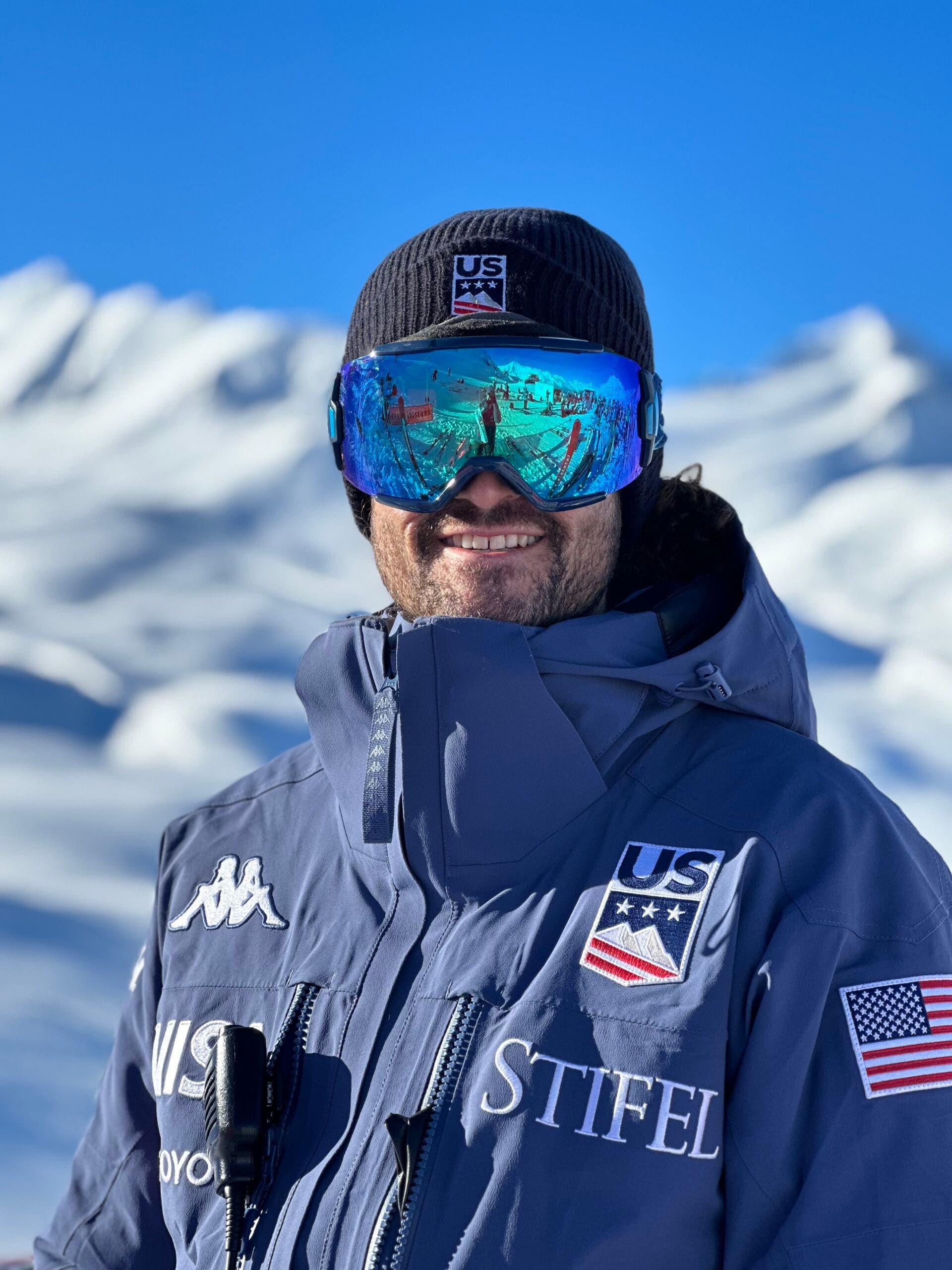
Dr. Greg Lichtman, an orthopedic surgeon based in Auburn, California, is navigating a professional paradox: while he possesses the specialized skills to reconstruct the human knee, his primary career objective is to ensure that skiers never require his intervention in the operating room. As a specialist located near the world-class terrain of North Lake Tahoe and a pool physician for the U.S. Women’s Ski Team, Lichtman has dedicated his career to understanding the physiological and environmental catalysts of anterior cruciate ligament (ACL) injuries. His approach combines the rigorous data-driven environment of elite sports medicine with the practical, boots-on-the-ground experience of a lifelong skier.
From Vail to the World Cup: A Career Defined by Prevention
Lichtman’s trajectory into the upper echelons of sports medicine began not in a clinic, but on the slopes of Vail, Colorado. During a transformative gap year, while many of his peers were working as lift operators or instructors, Lichtman served at the Steadman Philippon Research Institute (SPRI). The institute is globally recognized for its pioneering work in orthopedic surgery and rehabilitation, often serving as the primary recovery hub for Olympic-level athletes.
During his tenure at SPRI, Lichtman worked directly with U.S. Ski Team athletes, observing the grueling reality of post-surgical recovery. This experience provided a foundational understanding of the "mechanisms of injury"—the specific physical sequences that lead to catastrophic ligament failure. Following his time in Vail, Lichtman completed a sports medicine fellowship at the University of Massachusetts. It was there, amidst the icy, high-traffic slopes of the East Coast, that he noticed a significant disparity in medical literature: while land-based sports like soccer and basketball had robust, data-backed injury prevention protocols, the skiing industry lacked a standardized, validated equivalent.
Today, Lichtman’s role as a pool physician for the U.S. Women’s Ski Team takes him to international hubs of alpine racing, including Portillo, Chile, and Val d’Isère, France. These travels provide him with a front-row seat to the highest stresses the human knee can endure, further fueling his research into how recreational skiers can adopt the safety mindsets of professionals.
The 60-Millisecond Window: Understanding the Slip-Catch Mechanism
The ACL is a critical stabilizer of the knee joint, preventing the tibia (shin bone) from sliding in front of the femur (thigh bone) and providing rotational stability. In the context of alpine skiing, Lichtman identifies the "backseat" position—where a skier’s center of gravity is too far behind their boots—as the primary danger zone. When a skier is in a deeply flexed position at the hips and knees, they lose the ability to use their skeletal structure and musculature to absorb force.
One of the most common and devastating sequences is the "Slip-catch" mechanism. This occurs when a skier’s downhill ski loses contact with the snow or "slips" during a turn. As the skier attempts to compensate, the leg abruptly straightens and then flexes violently when the ski regains its edge or "catches" the snow. This sequence causes the lower leg to rotate internally or go into a valgus (knock-kneed) position.
According to Lichtman, the actual tearing of the ACL occurs within a 60-millisecond window. This timeframe is significant because it is faster than the human nervous system’s ability to react. By the time a skier realizes they are falling, the ligament has already failed. This underscores Lichtman’s argument that prevention must happen before the skier even clicks into their bindings, through conditioning and situational awareness.
The Phantom Foot and the Lever Effect
Another major contributor to knee injuries is the "Phantom Foot" mechanism, a term used to describe how the rear of the ski acts as an extension of the foot to create lethal leverage. This typically occurs when a skier falls backward and attempts to "save" the run by standing back up while still in motion.
In this scenario, the skier is off-balance in the backseat with their uphill arm trailing behind them. When the weight is thrust onto the inside edge of the downhill ski, the length of the ski behind the boot acts as a lever. This "phantom foot" creates a twisting force that is directed straight into the knee joint. Because modern ski boots are rigid and designed to transfer energy directly to the ski, the knee becomes the weakest link in the chain. Lichtman notes that many of these injuries occur before the ski’s binding has a chance to release, as the rotational force is applied too quickly for traditional mechanical releases to engage.
Environmental Risk Factors: From Sierra Cement to Flat Light
Lichtman’s clinical observations in Auburn, California, have highlighted how regional snow conditions dictate injury patterns. In the Sierra Nevada, skiers often encounter "Sierra Cement"—heavy, wet snow that requires significant physical strength to navigate. This type of snow can easily "grab" a ski, throwing a skier off balance and into the backseat.
Conversely, on the East Coast, the prevalence of hardpack and ice leads to more "Slip-catch" incidents, where the ski fails to find purchase on the turn. Beyond snow consistency, Lichtman identifies "flat light" as a major environmental hazard. When visibility is poor, skiers lose their ability to anticipate changes in terrain, leading to sudden, jarring movements that can trigger a ligament tear.
Statistical data supports Lichtman’s observations regarding timing. There is a documented influx of ACL injuries in December, which Lichtman attributes to a combination of early-season lack of conditioning and the "fatigue factor." As muscles tire toward the end of a ski day or the end of a holiday week, skiers are more likely to lose their athletic stance and retreat into the dangerous backseat position.
Reimagining Pre-Season Conditioning
To combat these risks, Lichtman advocates for a shift in how skiers approach off-season training. The traditional "two-minute wall sit" is insufficient for the multi-directional stresses of skiing. While quads and hamstrings are vital, Lichtman emphasizes two often-neglected areas: the core and the gluteus medius.
- The Core (Obliques and Abdominals): A strong core allows a skier to maintain a stable upper body, which is essential for staying "over the skis" rather than falling into the backseat.
- The Gluteus Medius: This muscle is responsible for hip abduction and internal/external rotation. Strengthening the gluteus medius is instrumental in keeping the knee aligned directly over the toes. When this muscle is weak, the knee is more likely to collapse inward into a valgus position during a turn or a jump landing—the exact position that leads to ACL failure.
Lichtman points to land-based sports like soccer, where standardized ACL prevention programs—such as the FIFA 11+—have resulted in a 40% to 60% reduction in ligament injuries. He argues that the skiing community must develop and validate similar sport-specific protocols to address the high rate of injuries on the slopes.
The Role of Equipment and Future Research
While physical conditioning is the first line of defense, Lichtman also stresses the importance of equipment maintenance. A common misconception among recreational skiers is that high-tension DIN settings are a sign of skill. However, Lichtman warns that unless a skier is performing at the level of World Cup athletes like Breezy Johnson, "cranking up" bindings only increases the risk of the equipment failing to release during a slow-speed twisting fall.
Looking forward, Lichtman sees a significant opportunity for technological innovation in ski bindings. While current multidirectional release systems, such as those produced by Look, offer improved safety, he believes the next frontier is the development of "smart" bindings. These future systems could theoretically use sensors to detect the specific 60-millisecond internal rotation signature of an ACL tear and release the boot before the ligament reaches its breaking point.
Broader Implications for the Ski Industry
The impact of an ACL tear extends far beyond the individual skier. With surgery and rehabilitation costs often ranging from $20,000 to $50,000, and a recovery timeline that typically spans nine to twelve months, these injuries represent a significant economic and personal burden. For the ski industry, high injury rates can deter participation and increase insurance costs.
Dr. Lichtman’s work serves as a bridge between high-level sports science and the everyday enthusiast. By shifting the focus from "the fall" to the "mechanism," he provides skiers with the intellectual tools to recognize danger before it manifests as a physical injury. His message remains consistent: while modern medicine can repair a knee, the best "cure" is a combination of strength, situational awareness, and the humility to leave the hill when fatigue sets in. Through continued research and the implementation of validated prevention programs, Lichtman aims to see a future where the thrill of the descent is no longer overshadowed by the risk of the operating room.

