
The landscape of international snowsports underwent a seismic shift on June 11, 2026, as the 57th International Ski & Snowboard Federation (FIS) Congress in Belgrade, Serbia, concluded with the narrowest of margins and a change in leadership. Johan Eliasch, the Swedish-British billionaire who has served as the federation’s president since 2021, was ousted from his position in a vote that reflected a deeply fractured organization. In a 65-to-64 decision, the delegates elected Alexander Ospelt, a lawyer and former head of the Liechtenstein Ski Federation, to lead the governing body into a new era.
The election results signal the end of a tumultuous five-year period characterized by ambitious but controversial reforms. Eliasch, who entered the role with a mandate to modernize the sport’s commercial appeal, frequently found himself at odds with the "Big Nations"—the traditional powerhouses of winter sports. The transition to Ospelt represents a pivot back toward a consensus-based governance model, favored by the major national associations that orchestrated the challenge to Eliasch’s presidency.
A Narrow Victory Amidst Institutional Mistrust
The atmosphere at the Belgrade Congress was reportedly tense from the outset. Early procedural votes provided a clear indication of the brewing rebellion against the incumbent. In a significant move, 88% of the delegates voted to amend the agenda, bringing the presidential election forward as the first item of business. This maneuver was widely interpreted as an attempt by the opposition to prevent the administration from influencing the proceedings through later agenda items.
Further evidence of institutional friction emerged when 60% of the congress voted to utilize traditional paper ballots rather than the standard electronic voting system. Sources within the federation suggested that this shift reflected a profound lack of trust in the FIS administration’s digital infrastructure and a desire for an unassailable, physical audit trail of the vote.
The election, which began as a five-way race, narrowed significantly in the days leading up to the congress. Candidates Anna Harboe Falkenberg, Dexter Paine, and Victoria Gosling all withdrew their bids, effectively consolidating the opposition vote behind Ospelt. This turned the contest into a binary choice between Eliasch’s centralized reformist agenda and Ospelt’s promise of collaborative restoration.
The Rise of Alexander Ospelt and the "Big Nation" Coalition
Alexander Ospelt is no stranger to the inner workings of FIS. A lawyer by profession and a member of the FIS Council, Ospelt previously led the Liechtenstein Ski Federation. His candidacy was bolstered by an unprecedented coalition of the world’s most influential ski nations, including Switzerland, Austria, Germany, Italy, Sweden, the USA, Canada, France, and Norway.

In his victory speech, Ospelt acknowledged the razor-thin margin of his win and the challenges of leading a divided house. "There’s been some great dialogue in the build-up to this Congress, and it’s been very interesting to talk to representatives from all different countries, but the result shows we’re still divided," Ospelt stated. "I see this division as a chance, rather than a problem. My first task will be bringing unity and a common ambition to drive FIS forward together."
Ospelt’s platform focuses on repairing the relationship between the central presidency and the National Ski Associations (NSAs). He has pledged to implement a "solidarity" model where larger, more affluent nations assist in the development of smaller ones. This approach is a direct response to the friction caused by Eliasch’s attempts to centralize media and marketing rights—a move that many major federations viewed as an infringement on their financial autonomy and historical rights.
The Eliasch Legacy and Allegations of Interference
Johan Eliasch’s departure was marked by a defiant concession speech in which he leveled serious allegations against the International Olympic Committee (IOC). Eliasch claimed that the Olympic body had attempted to sway the outcome of the vote, though he provided no specific evidence during his remarks. "The IOC tried to influence the outcome of today’s vote. Against this, we must stay firm," Eliasch told the delegates.
Under Eliasch’s leadership, FIS had frequently clashed with the IOC over the scheduling of events and the inclusion of new disciplines. His ousting also carries personal consequences; as he is no longer the president of an International Federation, Eliasch loses his membership within the IOC.
Reflecting on his tenure, Eliasch maintained that his reforms were necessary for the sport’s survival. He warned the congress against abandoning the commercial and structural foundations laid during his presidency. "It would be a great shame to give that up. It is very important that everyone works together and aims high," he said. Despite the bitter nature of the election, Eliasch noted that he could now "get my life back," concluding that "either way, I am very happy."
The IOC issued a brief statement following the result, congratulating Ospelt while offering a standard acknowledgement of the outgoing president. "We thank Mr. Johan Eliasch for his work as FIS president and IOC member," the statement read, notably ignoring the allegations of interference.
Athlete Discontent and Financial Transparency
The push for change was not limited to administrative halls; it was also driven by some of the sport’s most prominent athletes. Marco Odermatt, the overall World Cup winner, and Mikaela Shiffrin, arguably the greatest alpine skier of all time, had both voiced significant concerns regarding the federation’s direction under Eliasch.

Odermatt pointed toward a stagnation in the sport’s growth and cited insider reports of financial instability. "We have to say that not much has gone forward in recent years," Odermatt remarked. "I have also learned from insiders that the FIS has developed anything but positively in terms of finances. And that’s why there’s not much left but to make a change at the top."
Shiffrin echoed these sentiments, highlighting a perceived "significant lack of transparency" within the leadership. These criticisms were underscored by the recent resignation of FIS CEO Urs Lehmann, who stepped down just a week prior to the congress, citing deep-seated concerns over the organization’s financial management.
Strategic Priorities: Asia, Media, and Olympic Disciplines
In his first post-election press conference, Ospelt outlined a strategic vision that combines traditional events with modern commercial strategies. He emphasized the need to enhance the "star power" of athletes and improve the television product to attract a broader audience.
One of Ospelt’s primary goals is the strategic expansion into the Chinese and broader Asian markets. Unlike the previous administration’s broad-brush approach, Ospelt intends to focus on specific disciplines that already have a foothold in the region. "Taking China as an example, it makes most sense to take Freestyle and Snowboard Alpine events there, as the great athletes they have can enable us to put on showpiece events," he explained.
Ospelt also addressed the precarious position of certain disciplines within the Olympic program. He stated that his first priority would be fighting to ensure that Snowboard Alpine and Nordic Combined remain in the Winter Olympics before advocating for the inclusion of new disciplines like Freeride.
Furthermore, the new president proposed innovative ways to boost event attendance and sponsor interest by combining mass-participation events with elite competition. He cited the Engadina ski marathon as a potential template, suggesting that pairing such events with World Cup Cross-Country races would create a more attractive package for stakeholders.
Historical Milestone for British Snowsports
While the presidential election dominated the headlines, the congress also marked a historic milestone for British snowsports. Victoria Gosling OBE, the Chief Executive of GB Snowsport, was elected to the FIS Council. This marks the first time a British representative has held an elected seat on the federation’s top governing body.
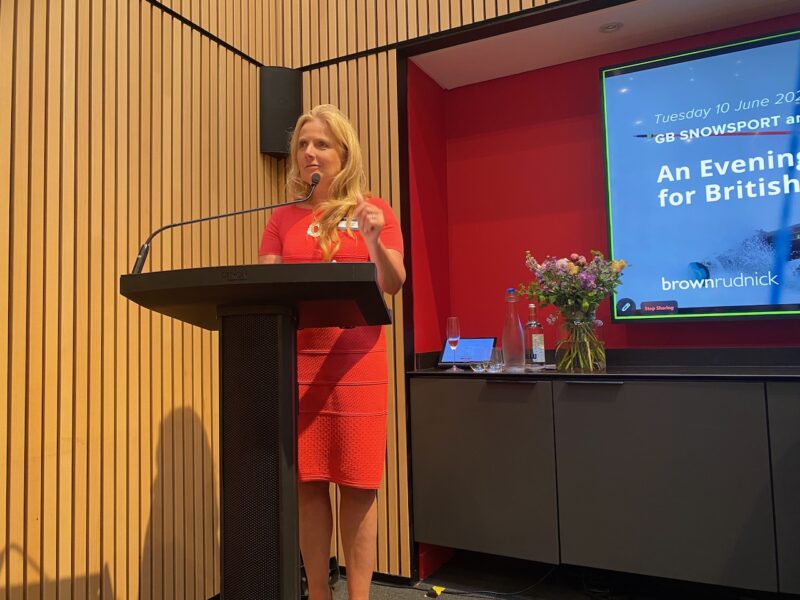
Gosling, who had earlier withdrawn from the presidential race to support the broader coalition for change, expressed her commitment to the sport’s long-term health. "To become the first British representative nominated to Council in FIS history is humbling," she said. "The FIS family has shown that it is unafraid to have the robust and necessary conversations that we need to have… I am committed to putting the interests of our sport first."
Analysis: A Mandate for Reconciliation
The election of Alexander Ospelt is less a mandate for a specific new policy and more a mandate for reconciliation. The 65-64 vote indicates that nearly half of the federation—largely comprised of smaller nations who benefited from Eliasch’s financial redistribution policies—remains skeptical of the "Big Nation" coalition.
Ospelt’s primary challenge will be to prove that his "solidarity" model can provide the same level of financial support to smaller associations that Eliasch promised through centralized commercialization. If he fails to bridge this gap, the division seen in Belgrade could harden into a permanent schism.
For now, the international ski and snowboard community appears to have chosen a path of stability and traditional diplomacy. As the federation looks toward the next Winter Olympic cycle, the focus will shift from the boardroom battles of Belgrade to the slopes, where the success of Ospelt’s presidency will ultimately be measured by the financial health of the NSAs and the satisfaction of the athletes who represent them.

