
Braunwald, a car-free mountain village located in the canton of Glarus, has officially announced the cessation of its traditional ski operations following an extensive strategic review. The decision, driven primarily by the increasingly erratic snowfall patterns and rising temperatures associated with global climate change, marks a significant turning point for the mid-altitude resort. According to the operational review released on June 22, 2026, the resort will phase out its downhill skiing infrastructure at the conclusion of the 2025/26 season, with the 2026/27 winter season serving as the inaugural year of a new, diversified tourism model.
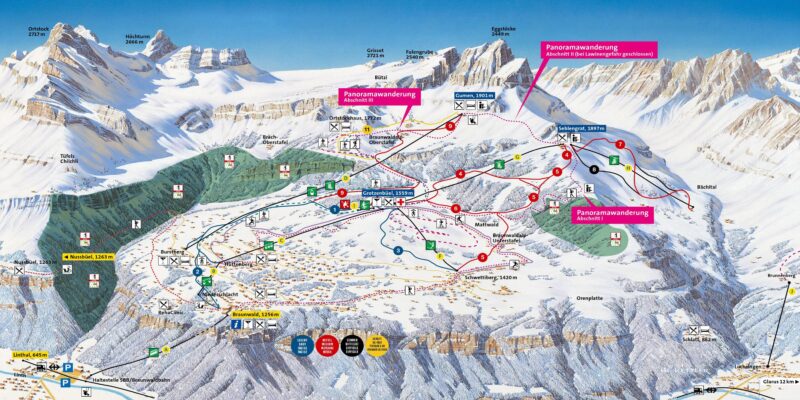
The decision reflects a growing reality for Alpine destinations situated at lower and medium altitudes. Braunwald sits at a base elevation of 1,256 meters, with its highest skiing point reaching 1,901 meters. For decades, this elevation was sufficient to guarantee a reliable winter season, but the last ten years have seen a marked decline in snow reliability. The review concluded that maintaining the status quo is no longer economically or environmentally viable. As the costs of artificial snow production rise and the windows of cold weather necessary for such production shrink, the financial risk of maintaining 26 kilometers of slopes and 10 ski lifts has become unsustainable.
The Climate Catalyst: A Shift in Alpine Reality
The primary factor cited in the operational review is the undeniable impact of climate change. Switzerland has experienced a temperature increase that is roughly double the global average, a trend that has disproportionately affected the Alps. For a resort like Braunwald, which relied heavily on natural snowfall to complement its 26 kilometers of runs, the shortening of the winter season has been drastic. In recent years, the resort has struggled to open its full range of slopes during the critical Christmas and New Year periods, which typically account for a significant portion of annual revenue.
Data from MeteoSwiss indicates that the zero-degree isotherm in the Alps has been steadily rising, frequently pushing the rain-snow line above 1,500 meters during mid-winter. For Braunwald, where much of the skiing occurs between 1,300 and 1,800 meters, this has resulted in rain events during peak season, which degrade existing snowpacks and prevent the accumulation of new layers. The operational review noted that the "predictability of the winter business" has vanished, making long-term capital investment in ski-specific infrastructure, such as new chairlifts or advanced snowmaking systems, an unjustifiable expense.
Infrastructure and Historical Context
Braunwald has long been a cherished destination for Swiss locals, particularly those from the Zurich and Glarus regions. As one of Switzerland’s few car-free resorts, accessible only by a funicular from Linthal, it offered a unique, family-friendly atmosphere that stood in contrast to the larger, more commercialized international hubs like St. Moritz or Zermatt. The resort’s 10 lifts served a variety of terrain that was particularly well-suited for beginners and intermediate skiers.
However, the very charm that made Braunwald a local favorite also contributed to its vulnerability. Unlike high-altitude "glacier resorts" that can guarantee skiing into late spring, Braunwald’s geography is characterized by sunny, south-facing terraces. While ideal for summer hiking, these slopes are highly susceptible to solar radiation, which accelerates snowmelt. The infrastructure, much of which dates back several decades, is nearing the end of its operational lifecycle. Replacing these lifts would require tens of millions of francs in investment—a sum that the review determined could not be recouped through lift ticket sales in a warming climate.
The Financial and Political Framework for Transition
The transition away from traditional skiing is not a retreat from tourism, but rather a strategic pivot. The Canton of Glarus has pledged its full support for Braunwald’s evolution. This support is expected to manifest through various funding schemes designed to stabilize the local economy during the transition period. Central to this financial strategy is the "New Regional Policy" (NRP), a federal and cantonal initiative aimed at enhancing the competitiveness of Switzerland’s rural and mountain regions.
By tapping into NRP funds, Braunwald aims to diversify its offerings. The goal is to move away from a "mono-culture" of winter sports and toward a year-round "multi-activity" model. The process of developing this master plan is expected to take approximately six months, involving stakeholders from the hotel industry, local commerce, and environmental organizations. The funding will likely be directed toward infrastructure that supports summer tourism—such as mountain biking trails, via ferrata routes, and themed hiking paths—as well as "soft" winter activities that do not require heavy snow cover, such as winter hiking, snowshoeing, and wellness tourism.
A Timeline for Transformation
The timeline for Braunwald’s transformation is structured to provide clarity to local businesses and regular visitors.
- June 2026: Official announcement of the cessation of traditional ski operations following the operational review.
- July – December 2026: A six-month intensive planning phase to finalize the "Post-Ski" master plan. This will include public consultations and environmental impact assessments.
- Winter 2026/27: The first winter season without traditional downhill skiing. Focus shifts to sledding, winter hiking, and existing gastronomy.
- Spring 2027 onwards: Implementation of new infrastructure projects funded by the New Regional Policy and cantonal grants.
This transition period is critical for the local hospitality sector. Braunwald’s hotels and holiday apartments have historically seen their highest occupancy during the ski season. The challenge for the planning committee will be to create winter attractions that can command similar occupancy rates without the draw of the ski lifts.
Reactions and Economic Implications
While the news has been met with a sense of nostalgia and loss by the local community, there is also a pragmatic recognition of the necessity of the move. Local business owners have expressed a mix of concern and cautious optimism. "We have seen the writing on the wall for several years," said one local hotelier, who requested anonymity. "The winters are getting shorter, and the costs of trying to fight nature with snow cannons are killing our margins. A clear decision allows us to stop investing in the past and start investing in a future that actually exists."
Economically, the move is a gamble, but perhaps the only one available. By being among the first mid-altitude resorts to proactively end ski operations, Braunwald can position itself as a pioneer in "sustainable Alpine tourism." This branding could attract a new demographic of eco-conscious travelers who are looking for mountain experiences that do not rely on energy-intensive snowmaking or heavy industrial infrastructure.
Broader Implications for the Alpine Industry
Braunwald is not an isolated case. Its decision is being closely watched by dozens of other resorts across the Alps that operate at similar altitudes. From the Jura Mountains to the Pre-Alps, hundreds of small to medium-sized resorts are facing the same existential threat. The "Braunwald Model"—if successful—could provide a blueprint for how these communities can survive the loss of their primary winter industry.
The shift also signals a change in the Swiss government’s approach to mountain subsidies. There is an increasing reluctance to provide "emergency" funding for snowmaking at low-altitude resorts, with officials instead favoring long-term structural changes. The New Regional Policy is increasingly being used as a tool for "climate adaptation" rather than just "regional development."
The Future of Braunwald: Beyond the Piste
The future of Braunwald will likely focus on its strengths: its car-free status, its clean air, and its spectacular natural scenery. The resort is already home to the popular "Zwerg-Bartli" themed trails, which draw thousands of families during the summer months. Expanding these types of offerings—focused on family adventures, mountain sports, and relaxation—will be the cornerstone of the new strategy.
In winter, the focus will shift to "slow tourism." This includes maintaining groomed trails for winter walking, expanding the resort’s famous sledding runs (which require less snow than skiing), and promoting the village as a "winter retreat" for those looking to escape the fog and congestion of the Swiss Plateau.
While the sound of ski boots on the funicular may soon become a memory, the village of Braunwald is betting that its commitment to a sustainable, snow-independent future will ensure its survival for generations to come. The end of the ski era in Glarus is not an end to the mountain’s story, but the beginning of a new chapter defined by adaptation and resilience in the face of a changing global climate.

