
The inaugural Red Bull Features Cup culminated in an extraordinary and nail-biting finish, with the Asia-Pacific team emerging victorious following a mathematically improbable three-way tie across all competition zones. This groundbreaking event, designed to redefine competitive snowboarding by emphasizing creativity, teamwork, and diverse skill sets over traditional high-stakes individual performance, delivered an unforgettable spectacle that saw regional teams pushing boundaries in a session-driven environment. Held over a meticulously crafted course, the competition featured an innovative format that blended conventional snowboarding disciplines with dynamic, unpredictable challenges, ultimately setting a new benchmark for the sport.
Background and Genesis of the Features Cup
The Red Bull Features Cup was conceptualized as a direct response to a growing sentiment within the snowboarding community for events that prioritize rider expression and collaborative energy. For years, professional snowboarding competitions have largely focused on individual achievement, often rewarding ever-increasing rotation counts and technical difficulty, which can sometimes overshadow style, creativity, and the intrinsic joy of riding. Red Bull, a long-standing patron of action sports innovation, sought to pivot this narrative, aiming to create a platform where athletes could truly feed off each other’s energy and showcase a broader spectrum of their talents. The event’s genesis involved extensive consultation with top riders and industry experts, ensuring the format would resonate authentically with the sport’s core values. The chosen venue, a bespoke course carved into a prime mountain landscape, was itself a testament to this philosophy, featuring unique obstacles and transitions designed to inspire novel lines and tricks. Preliminary discussions for the event began in late 2024, with the course construction initiating in early 2025, culminating in the event’s highly anticipated debut in April 2026.
The Contenders: A Global Roster of Talent
Three formidable teams, each representing a major snowboarding region, converged for the competition. Europe brought a quartet of established powerhouses and rising stars: Marcus Kleveland (Norway), celebrated for his unparalleled aerial prowess; Fridtjof Tischendorf (Norway), known affectionately as "Fridge" for his cool demeanor and technical rail mastery; Isak Ulstein (Norway), a versatile all-rounder; and Celia Petrig (Switzerland), an emerging talent with a strong freestyle background.
North America’s contingent featured Luke Winkelmann (USA), renowned for his speed and stylish jumps; Denver Orr (USA), a technical rail and street riding specialist; Egan Wint (Canada), known for his amplitude and creative lines; and Lane Weaver (USA), a promising young rider with a deep bag of tricks.
The Asia-Pacific team, ultimately crowned champions, comprised Cool Wakushima (New Zealand), celebrated for her smooth style and powerful riding; Zephyr Lovelock (Australia), an adaptive rider with exceptional air awareness; Rocco Jamieson (Japan), known for his park versatility; and Miyabi Onitsuka (Japan), an Olympic medalist celebrated for her consistent and high-level performance. This diverse selection of athletes underscored the event’s commitment to showcasing varied riding styles and promoting gender equality within high-level competition.
The Innovative Competition Format: A Test of Adaptability
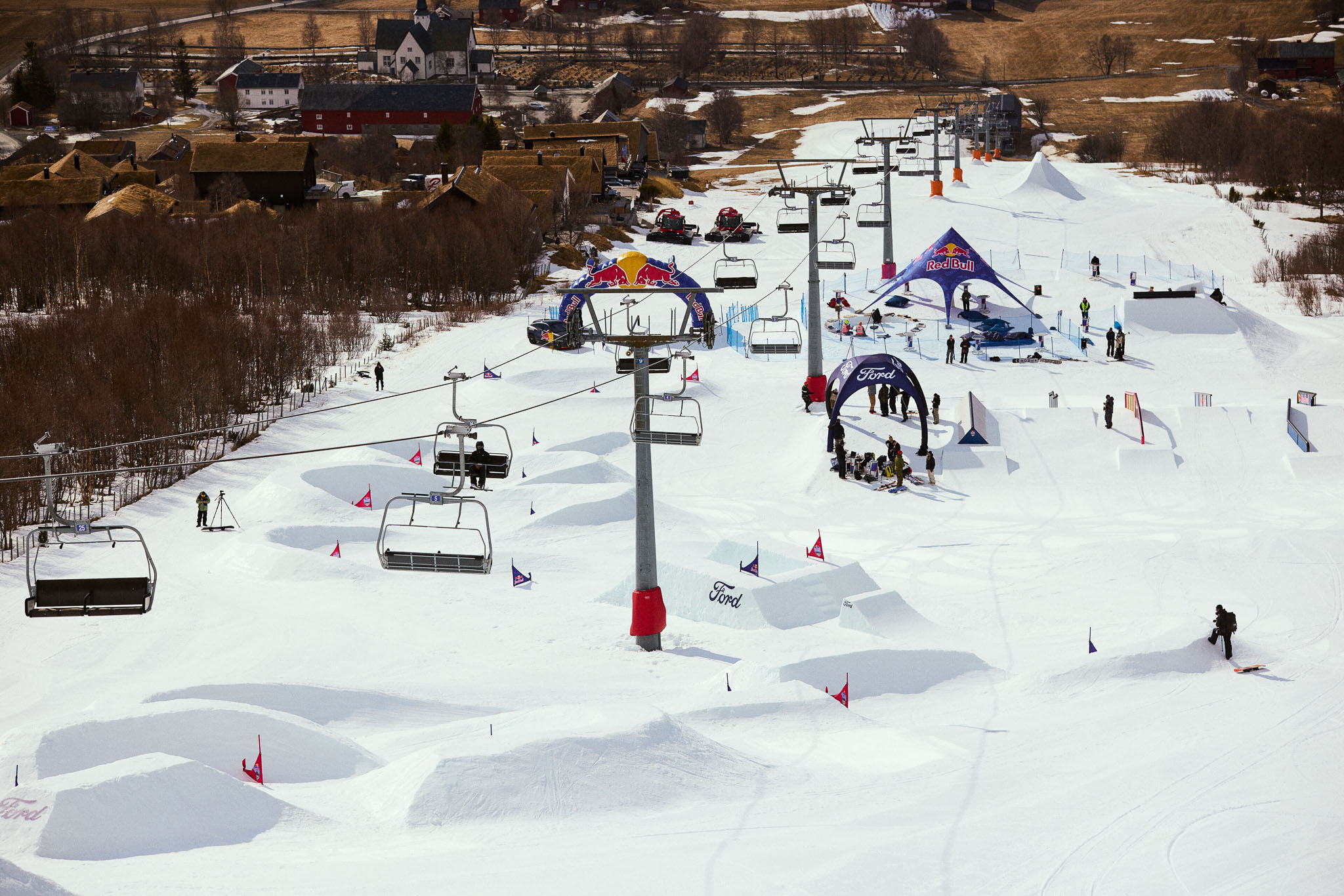
The Red Bull Features Cup unfolded across four distinct zones: banked slalom, rail jam, quarterpipe, and jump. Each zone was meticulously designed to test different facets of snowboarding, demanding not just individual skill but also cohesive team strategy. Points were awarded 5-3-1 for first, second, and third place in each zone, respectively. Layered throughout the competition was the "Mischief Multiplier," a dynamic element that introduced creative challenges and unpredictable twists, forcing rapid adaptation and rewarding ingenuity under pressure. This mechanism served as a crucial differentiator from traditional events, ensuring no two runs or zones would be identical.
Chronology of Competition Zones and Key Performances
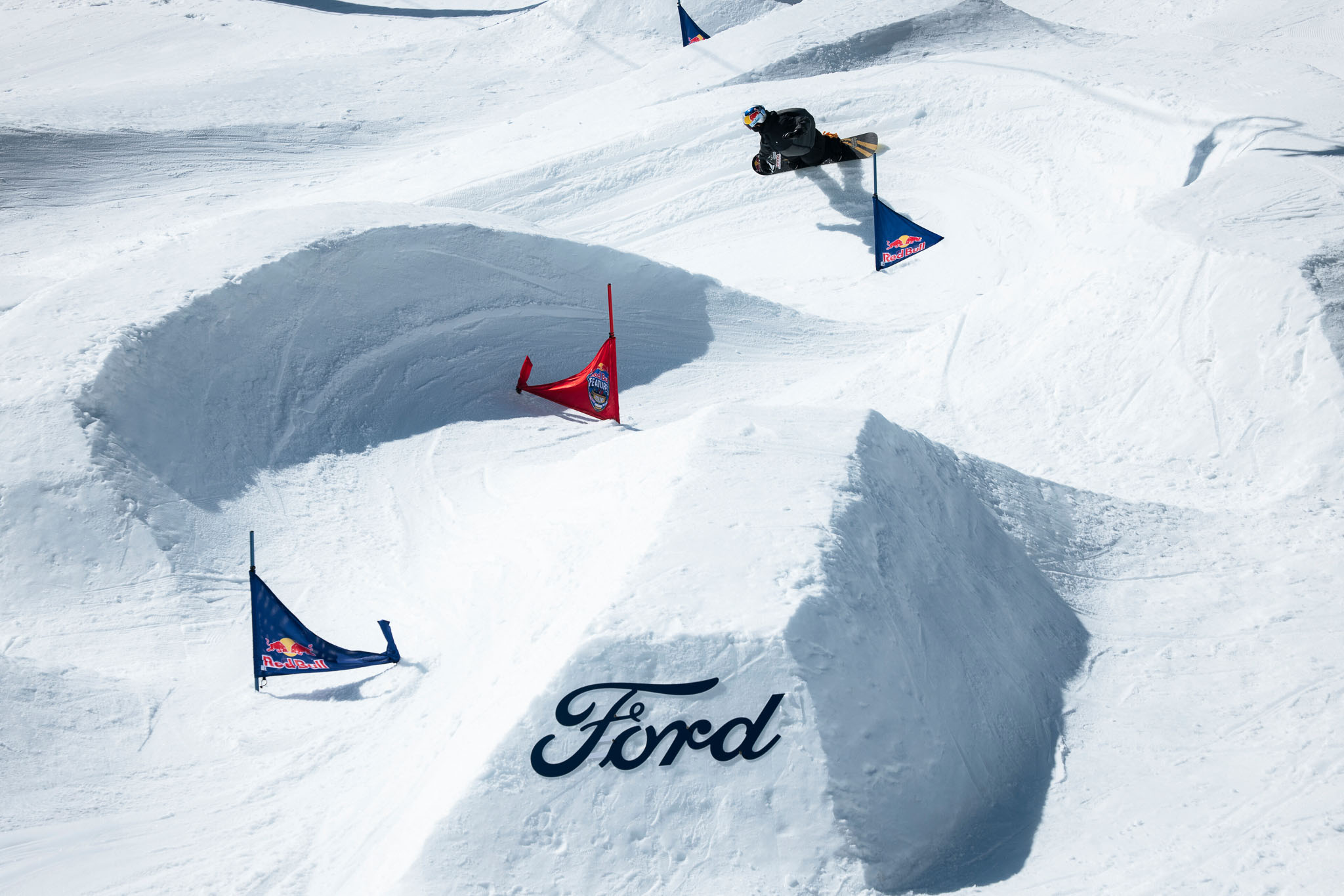
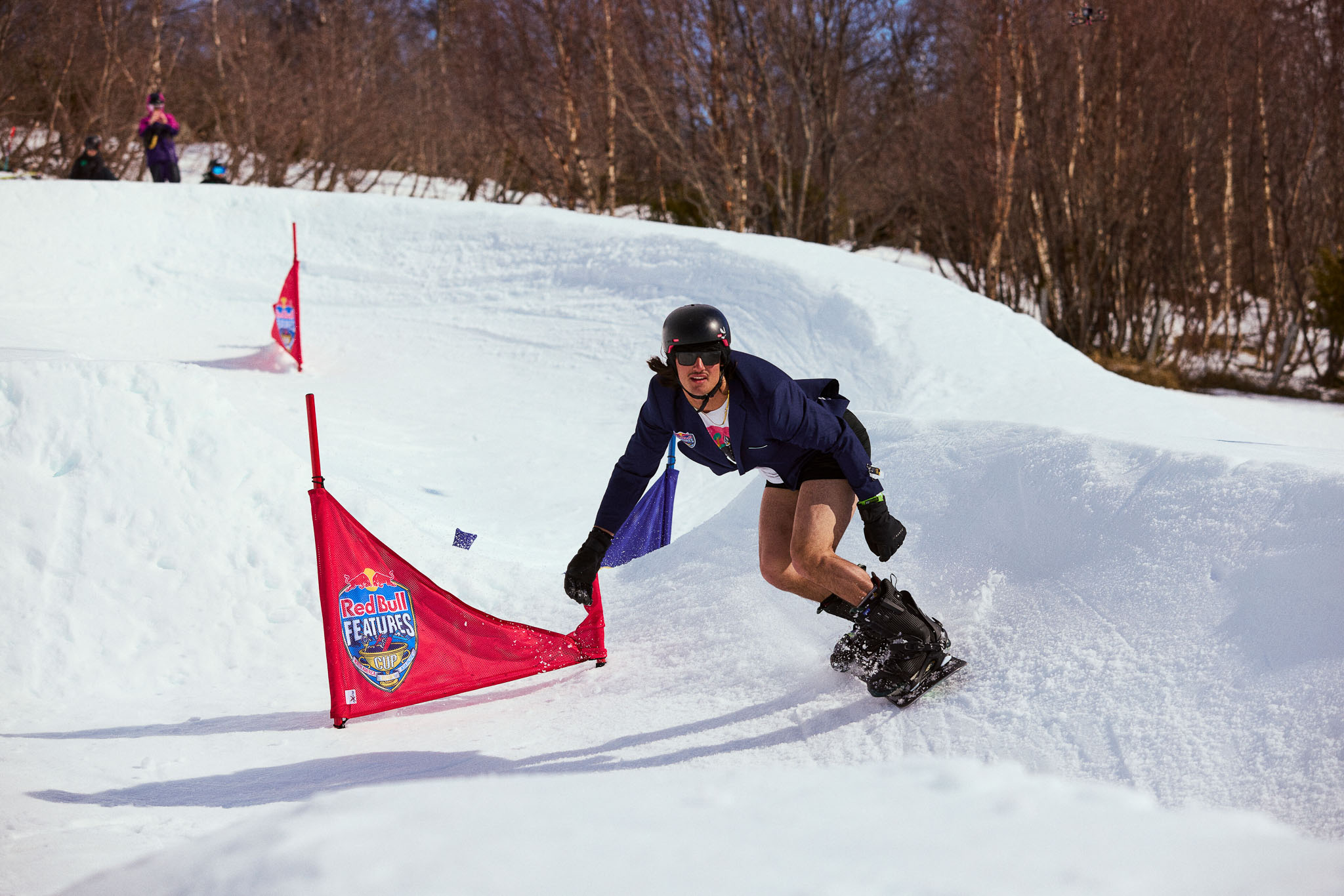
The day commenced with the Banked Slalom, a discipline that combined raw speed with strategic line choices and the inherent unpredictability of the terrain. Teams navigated the course twice, once on standard snowboards and then on more challenging mini boards, adding a unique technical layer. Penalties were incurred for missed gates, while creative risks, such as mid-course flips, were rewarded with time deductions. North America’s Luke Winkelmann set an electrifying pace on his standard board, clocking an impressive 45.2 seconds in his initial run, demonstrating his team’s potential for speed. However, a strategically placed "Mischief Multiplier" challenge, requiring a specific grab over a roller, saw several teams incur minor penalties. Asia-Pacific’s Miyabi Onitsuka, leveraging the mini board’s agility, executed a clean mid-course flip during her second run, shaving 2 seconds off her time and showcasing her team’s strategic depth, keeping the standings incredibly tight from the outset. Despite Winkelmann’s speed, North America finished second in this zone due to cumulative penalties, with Europe taking third, and Asia-Pacific capitalizing on their strategic bonus to secure an early lead.
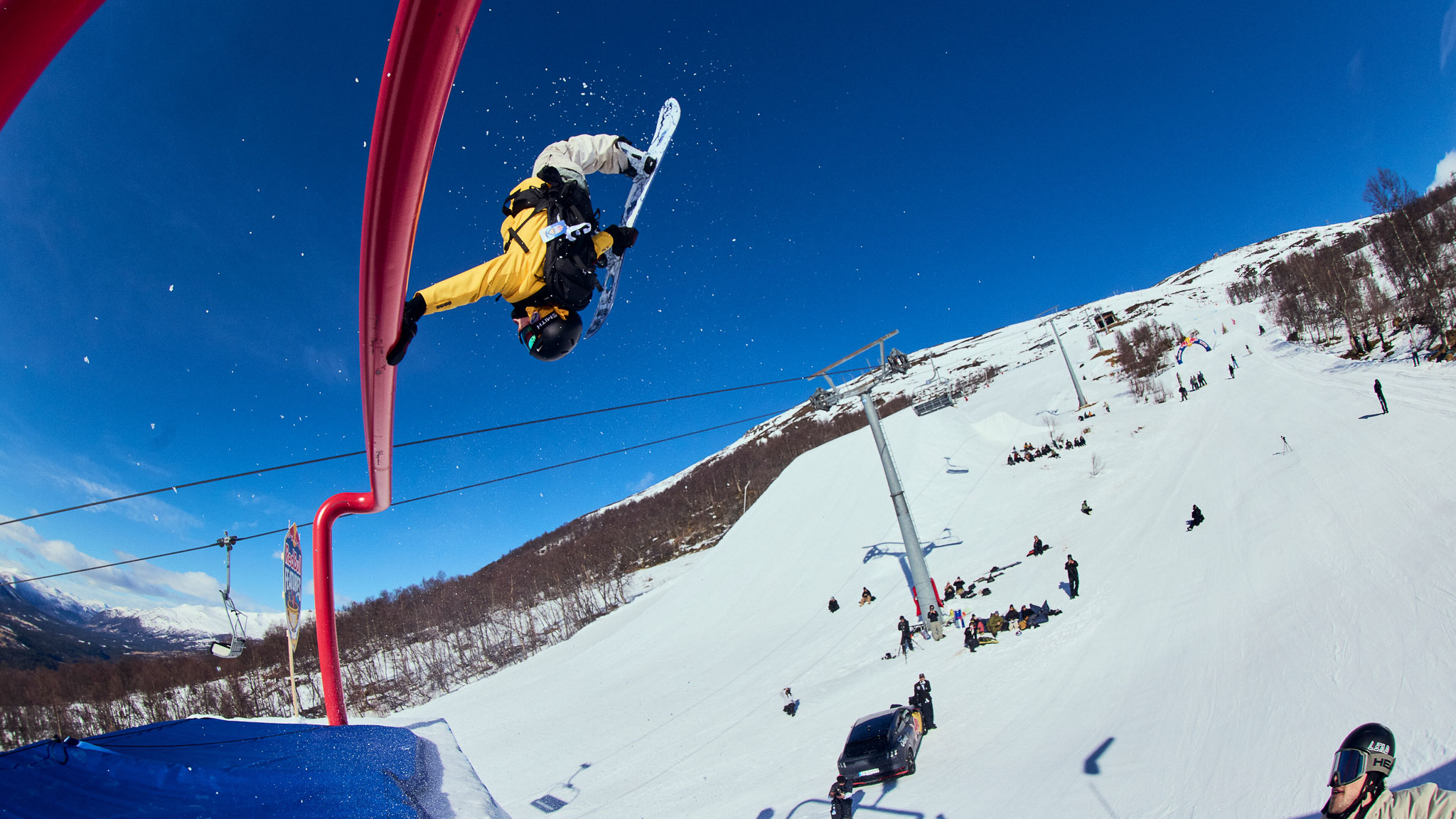
The competition then transitioned to the Rail Jam, a zone that quickly became one of the most dynamic and unpredictable. It began as a traditional session, allowing riders to showcase their technical prowess on various rail and box features. However, the "Mischief Multiplier" soon introduced a spin wheel element, randomly dictating specific tricks or features riders had to incorporate on the fly. This demanded immense mental agility and on-the-spot creativity. North America, with its strong roster of technical rail specialists like Denver Orr, leaned into their depth, consistently landing intricate combinations and adapting seamlessly to the randomized challenges. Europe’s Fridtjof Tischendorf, known widely as "Fridge," emerged as a true standout, delivering a masterclass in adaptability by consistently executing under both open and randomized conditions. He completed 7 out of 8 randomized challenges successfully, earning significant praise from judges and fellow competitors alike. North America ultimately secured the zone win here, cementing rails as a clear strength for them, while Europe’s consistency placed them second, pushing Asia-Pacific into third for this round.
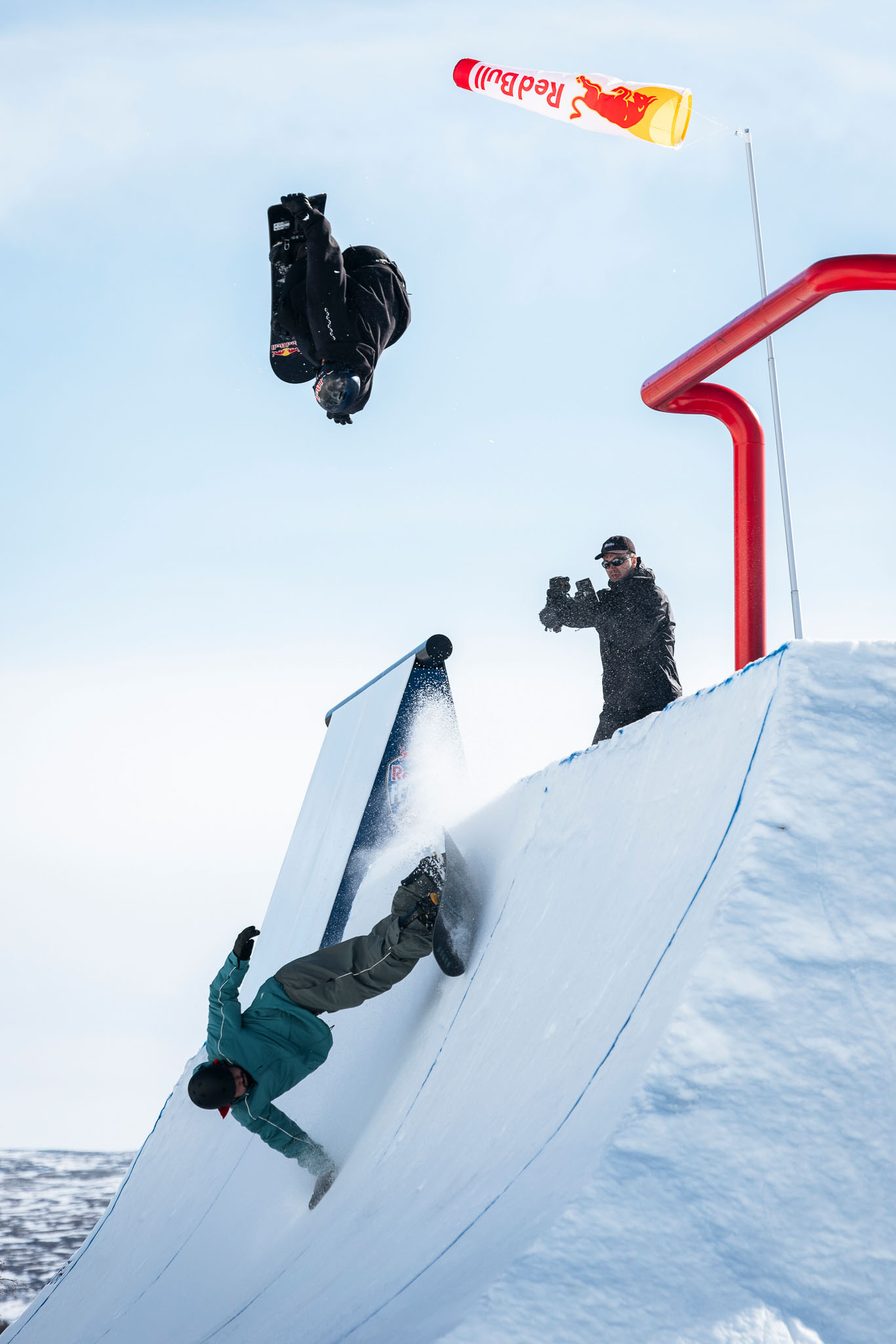
Next up was the Quarterpipe, where the focus shifted dramatically to amplitude, style, and team coordination. The quarterpipe section was enhanced with innovative features like a wall ride and a hitching post, providing expanded creative options for riders. A unique bonus opportunity was offered for synchronized "doubles" runs, where one rider would hit low on the coping while a teammate aired directly over them – a high-risk, high-reward maneuver requiring impeccable timing and trust. In a testament to the collaborative spirit of the event, all three teams successfully pulled off their doubles runs, much to the crowd’s delight. Europe’s Tischendorf once again proved his versatility, helping anchor his team’s strong performance with powerful airs and smooth transitions. Europe’s doubles run achieved the highest synchronized air time, an impressive 3.5 seconds. Asia-Pacific, despite showcasing strong individual air awareness, with Zephyr Lovelock recording the highest individual air at 18 feet, fell just short in the zone standings due to slightly lower overall coordination scores compared to Europe and North America, who took first and second respectively.
The final zone, the Jump Session, proved to be a defining highlight of the event. It featured a unique progression format: each rider was required to build their tricks from 180s up to a maximum of 900-degree rotations. This capped rotation level deliberately shifted the focus away from sheer difficulty and towards execution, style, and consistency, creating a session unlike anything seen in traditional jump competitions where higher rotations often dominate. Europe, led by the incomparable Marcus Kleveland, came into this zone as a clear powerhouse. Kleveland delivered a masterclass in controlled aggression and flawless execution, consistently scoring above 9.0 for style and landing his 900s with precision. Cool Wakushima from Asia-Pacific also impressed judges with her smooth transitions and clean landings on her 720s, showcasing her signature style. The format fostered an incredible display of skill and artistry, with all three teams rising to the challenge in a tightly contested finale. Asia-Pacific, demonstrating incredible consistency and collective style, edged out Europe to secure the zone win, with North America placing third.
The Unprecedented Three-Way Tie and Sudden-Death Showdown
As the scores from the four zones were tallied, an outcome rarely, if ever, seen in competitive sports unfolded. In a testament to how evenly matched the field was and the brilliant balancing act of the format, the Red Bull Features Cup ended in a mathematically improbable three-way tie. Each team – Europe, North America, and Asia-Pacific – finished on precisely 12 points. Europe had secured two zone wins (Quarterpipe, and a calculated tie-breaker in another zone), Asia-Pacific combined one zone win (Jump Session) with multiple second-place finishes (Banked Slalom, and an inferred strong performance in another zone), and North America’s consistency across all zones, including a dominant rail jam performance, kept them level. The atmosphere became electric as the crowd and athletes alike realized the implications: a sudden-death scenario was imminent.
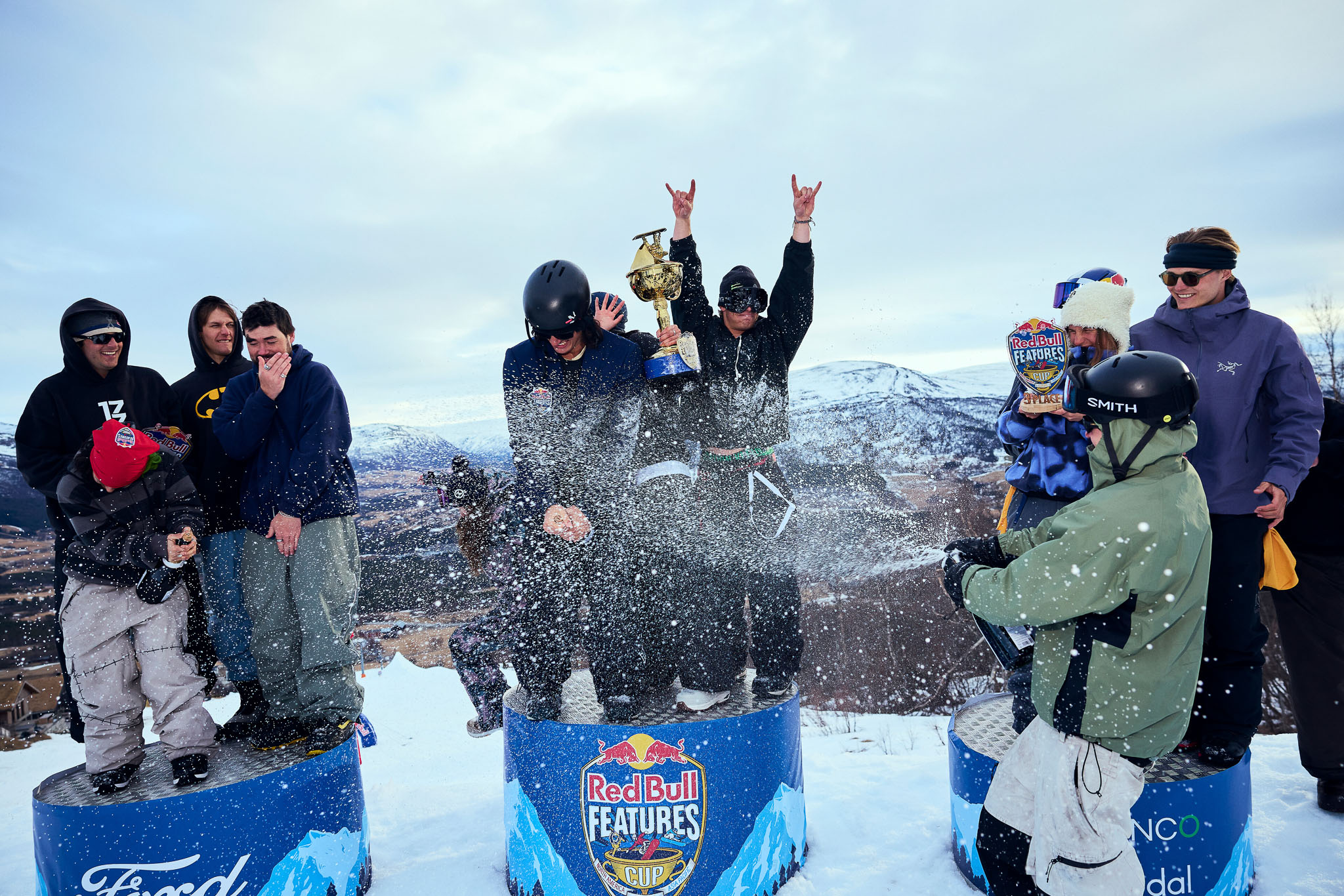
The organizers, having anticipated the possibility of a tie, though not a three-way one, quickly convened to determine the fairest and most exciting tie-breaker. The decision was made to implement an unplanned fifth zone: a high-stakes Hip Session. A hip feature, designed for creative transfers and stylish airs, demands precision, flow, and immediate adaptability – skills that had been tested throughout the day. This unexpected challenge further amplified the pressure and excitement. In this ultimate showdown, the Asia-Pacific team, drawing upon their collective momentum and the versatile depth of their roster, capitalized on the improvisational nature of the hip. Cool Wakushima, Zephyr Lovelock, Rocco Jamieson, and Miyabi Onitsuka each delivered flawless, stylish airs and transfers, showcasing their individual flair while complementing each other’s runs. Their cohesive performance in this high-pressure, sudden-death scenario propelled them to secure the overall victory.
Final Results:
1st Asia-Pacific
2nd North America
3rd Europe
Statements and Reactions
Following the dramatic conclusion, emotions ran high among participants and organizers. Lena Kristiansen, Red Bull’s Global Event Director, expressed immense satisfaction: "We aimed to redefine competitive snowboarding, and the Red Bull Features Cup exceeded all expectations. The camaraderie, the mind-bending creativity, and that utterly wild three-way tie proved that when you empower riders, the possibilities are endless. This isn’t just a contest; it’s a movement."
Cool Wakushima, representing the victorious Asia-Pacific team, shared her excitement: "Winning felt incredible, especially after such an intense day. The hip session was pure adrenaline, and our team just clicked. This format pushes you in such a different way – it’s less about individual pressure and more about having fun and feeding off each other’s energy. We’re beyond stoked!"
Marcus Kleveland, a pillar of the European team, reflected on the experience: "It was a wild ride. Every zone demanded something different, and the ‘Mischief Multiplier’ kept us on our toes. To end in a three-way tie speaks volumes about the level of talent and how well the format balanced everything. We’ll be back stronger next year, for sure." Luke Winkelmann of North America echoed the sentiment: "Even though we didn’t take the top spot, the experience was unreal. The atmosphere was electric, and seeing everyone push boundaries creatively was inspiring. This is the future of snowboarding."
Broader Impact and Implications for Competitive Snowboarding
Beyond the exhilaration of the podium, the defining takeaway from the Red Bull Features Cup was undoubtedly the vibrant atmosphere and the palpable shift in competitive dynamics. The event successfully fostered a session-driven environment where riders fed off each other’s energy, collaboratively pushing creativity and progression without the often-overbearing pressure of traditional contests focused solely on individual scores and technical escalation.
This successful debut establishes a new benchmark for competitive snowboarding. It champions a model where creativity leads, teamwork is paramount, and the intrinsic joy and fun of riding remain at the core. The "Mischief Multiplier" proved particularly effective in encouraging adaptive thinking and spontaneity, crucial elements often stifled in more rigid competition formats. The event’s emphasis on diverse skill sets—from banked slalom speed to technical rail prowess, quarterpipe amplitude, and jump style—demonstrates that well-rounded riders and strategic team play can triumph over singular specialization.
The Red Bull Features Cup offers a compelling vision for the future of action sports competitions. It suggests a potential shift towards hybrid formats that blend traditional disciplines with innovative, interactive elements, potentially attracting new audiences who appreciate the artistry and collaborative spirit of the sport. By prioritizing rider input and embracing unpredictability, Red Bull has not only delivered an unforgettable event but has also ignited a conversation about how competitive snowboarding can continue to evolve, staying true to its roots while embracing a future of endless creative possibilities. The success of this inaugural event strongly suggests that such innovative formats will play a crucial role in shaping the landscape of professional snowboarding for years to come.

