
Whitelines Magazine, a pivotal voice in the global snowboarding community, commemorates three decades since its inception, marking a remarkable journey from a "debaucherously British snowboarding fanzine" to a digital media powerhouse. Born in 1995, amidst the nascent yet rapidly expanding snowboarding scene, Whitelines carved a unique niche with its irreverent tone, authentic coverage, and unwavering commitment to the sport’s core spirit. Its evolution mirrors the broader trajectory of extreme sports and media consumption, enduring print’s golden age, navigating the digital revolution, and emerging as a resilient and influential entity in the modern landscape.
The Primordial Ooze: Snowboarding’s 1990s Renaissance
The mid-1990s represented a pivotal era for snowboarding. Having shed its counter-culture, outsider image, the sport was rapidly gaining mainstream traction, evolving from a niche pursuit into a burgeoning industry. Professional circuits were forming, sponsorships were growing, and the sport was on the cusp of Olympic inclusion, which would eventually arrive at the Nagano Games in 1998. This period saw an explosion of interest, but also a burgeoning commercialization that threatened to sanitize its rebellious roots. It was into this vibrant, often chaotic, environment that Jim Peskett and Tudor "Chod" Thomas, both veterans of Snowboard World Magazine, launched Whitelines. Their vision was distinct: to create a publication that held a "mirror up to the burgeoning 1990s snowboard scene," as former editor Chris Moran aptly described, but one that inadvertently reflected their own "stupidity" and unadulterated passion back at the industry. This self-deprecating humor and raw authenticity would become the magazine’s enduring hallmark.
The publishing landscape of the 1990s was ripe for new voices. Niche magazines flourished, catering to every subculture and interest. For snowboarding, this meant a crowded field of publications vying for attention. Whitelines, however, differentiated itself not through polish or corporate backing, but through a deliberate embrace of its imperfections. "I think the fact that we had no budget, no real understanding of how to make a magazine, and no idea of things like spelling, storytelling or basic decency. Those concepts definitely worked really well in our favour," Chris Moran recollected, highlighting the magazine’s unconventional foundation. This lack of formal constraints fostered an environment of creative freedom, allowing the editorial team to be at the heart of the scene, documenting it with an unfiltered lens that resonated deeply with its target audience.
The Early Days: A Fanzine Forged in Chaos
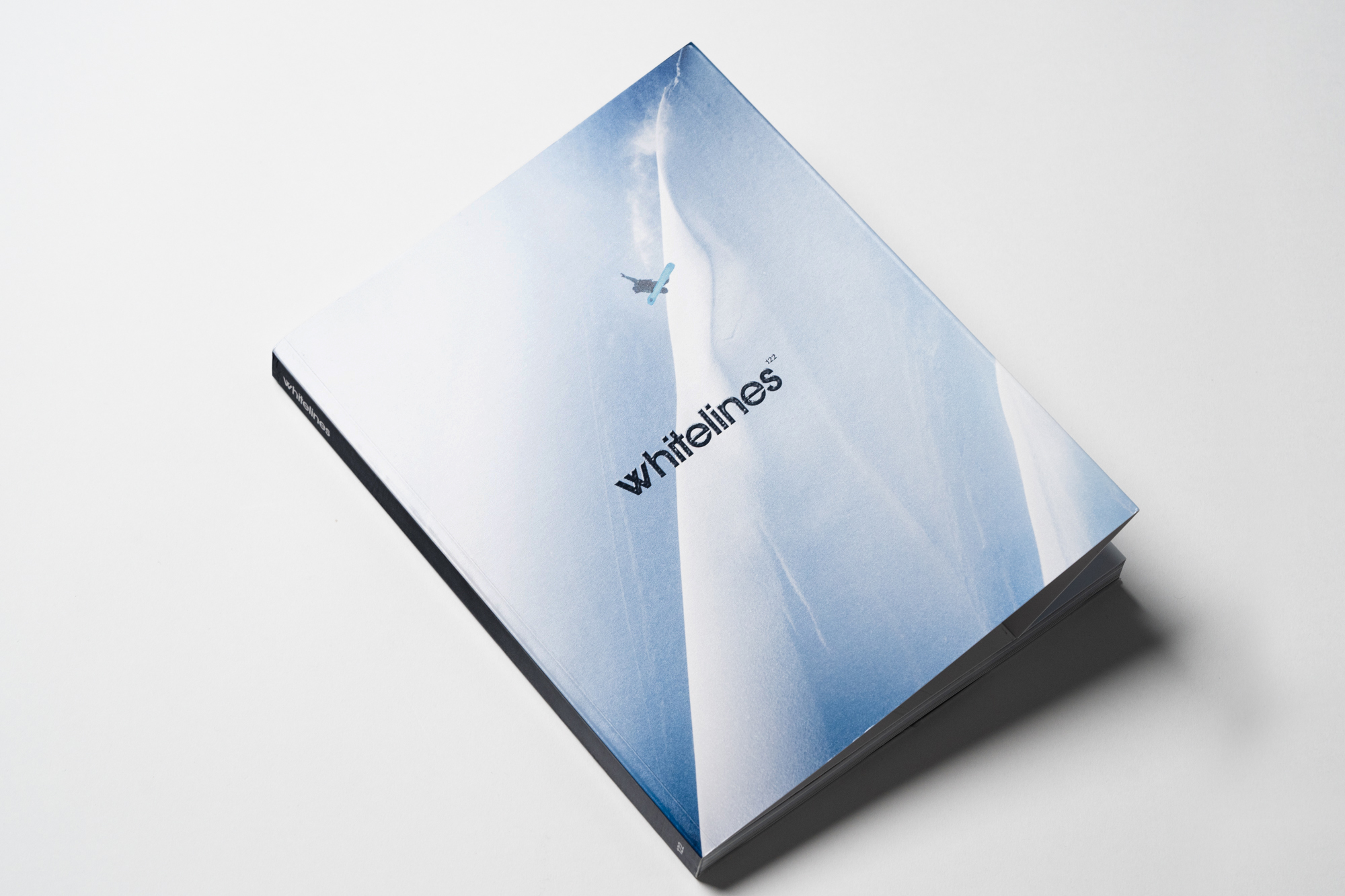
In its formative years, Whitelines operated on a shoestring budget, relying on unconventional methods that would be unthinkable in today’s hyper-connected world. The advent of email was still nascent for many, and early articles were often dictated over prepaid phone cards from remote locations, typed out by the company secretary, Milly. This ad-hoc process led to charmingly human errors, such as "Tignes" appearing as "teens" in print, which only added to the magazine’s endearing, homegrown appeal. Crucially, the pre-social media era meant a limited feedback loop from readers. "Pre-social media, we were all just screaming at the moon. Who knew what others thought of what we did? I mean, face-to-face feedback was always good, and as long as we annoyed our publisher Jim, we just thought things were going well!" Moran recounted. This insular creative process, free from immediate public scrutiny, allowed Whitelines to develop a truly unique voice, unburdened by commercial pressures or the need to cater to a broad demographic.
Whitelines’ editorial philosophy was refreshingly straightforward: "showcasing cool people doing cool shit strapped onto planks of wood and letting gravity do the heavy lifting." The magazine embodied the inherently unserious nature of snowboarding, celebrating its fun-loving, rebellious spirit. This was perhaps best exemplified by the magazine’s iconic spine titles, which often bore no relation to snowboarding whatsoever. Instead, they offered whimsical, often absurd, alternative titles such such as "Dwarf Throwing Monthly," "Working With Endangered Animals Weekly," or Moran’s personal favorite, "Neck Brace Monthly: The Skyscraper Issue." These playful subversions were a signature touch from designer-in-chief Tudor "Chod" Thomas, serving as an inside joke for dedicated readers and a clear declaration that Whitelines refused to take itself, or the industry, too seriously. These eccentricities fostered a strong sense of community and loyalty among its readership, who appreciated the magazine’s ability to mirror their own irreverent attitudes.
Chaos Reigns Supreme: The Antics and the Publisher’s Plight
The "conquistadors of chaos" moniker was not merely a catchy phrase; it was a lived reality for the Whitelines team. Their travel adventures and escapades became legendary, often blurring the lines between professional assignment and outright mischief. Stories of forgotten passports leading to staff members being stashed in board bags on roof racks were not isolated incidents but emblematic of their devil-may-care approach. One particularly memorable anecdote involved an Austrian hotel filled with taxidermy. After a night of revelry, an accordion was stolen and hidden, leading to a late-night tug-of-war. More notoriously, Russ Ward meticulously shaved a stuffed marmot, leaving it with a "mad Lemmy-style goatee," much to the hotel owner’s dismay. These incidents, while undoubtedly causing headaches for their publishers and potentially risking international incidents, cemented Whitelines’ reputation as the wild, untamed voice of snowboarding.
Publisher Jim Peskett often bore the brunt of the team’s antics, particularly concerning their irreverent approach to reader engagement. Whitelines would frequently devise contests and competitions featuring deliberately absurd mailing addresses. Moran recalled, "Things like ‘send your entries to ‘the crack in the arse cheeks of Jim Peskett, 1 Stert Street, Abingdon’ etc…" These outlandish instructions led to numerous complaints from the UK postal service, threatening Peskett with blacklisting and jeopardizing the entire publishing business. While Peskett "would literally plead with us not to do that shit anymore," these defiant acts underscored the magazine’s commitment to pushing boundaries and challenging authority, even if that authority was their own financial backer. Furthermore, their response to a mother’s letter banning her son from reading the magazine – gifting the son a lifetime subscription and declaring her letter "letter of the month" – perfectly encapsulated their rebellious spirit and loyalty to their core readership. This blend of authentic reporting, daring photography, and mischievous humor made Whitelines a distinct and cherished entity within action sports media.
The Digital Revolution: A Necessary Pivot

By the mid-2010s, the media landscape was undergoing a seismic shift. The rise of the internet, broadband penetration, and eventually social media platforms fundamentally altered how consumers accessed information and entertainment. Print media, particularly niche publications, found itself increasingly challenged. Advertising revenues migrated online, production and distribution costs for physical magazines became harder to justify, and the demand for instant gratification grew exponentially. Shelves once brimming with glossy magazines began to empty, signaling the twilight of print’s dominance. This global trend did not spare the snowboarding industry, which saw many once-proud print titles struggle and eventually fold.
Whitelines, like many publications, faced this existential crisis. In 2015, after publishing 120 issues, the decision was made to cease print editions. The final issue, WL120, marked the end of an era. Ed Blomfield, the editor at the time, issued a candid statement online (ironically, highlighting the very shift occurring): "Factory Media’s proposal to sacrifice print frees up the editorial staff to channel all that passion and energy into their websites, including this one. As a team, we’re obviously gutted to see the end of a paper publication into which we poured heart and soul over two decades. But with the good ship WL celebrating its 20th anniversary this year, we’re also excited to see where – with a renewed focus and a healthy budget – we can take it next."
This strategic pivot was not merely a surrender to technological inevitability but a calculated move to adapt and thrive. The digital platform offered unparalleled opportunities for reach, immediacy, and diverse content formats that print could not match. With resources no longer divided between print and online, Whitelines "went full hog into the digital revolution," focusing on a "slicker website delivering more unique video, more gear reviews, more how-tos, more travel… more of all the things you enjoy." The magazine had already established a strong reputation for its in-depth gear guides, notably "The Whitelines 100," which served as a crucial resource for consumers. The digital transition allowed these flagship offerings to expand and reach a global audience, transforming Whitelines from a predominantly UK-focused publication into a worldwide favorite. The shift enabled them to engage with their audience 24/7, providing a constant "buffet" of snowboarding content.
The Comeback Kid: Resilience and Reinvention
The media industry is notoriously volatile, with publications rising and falling with economic tides, technological shifts, and changing consumer tastes. Whitelines has, on multiple occasions, been "read its last rites," yet has consistently defied predictions of its demise. Its enduring survival is a testament to the unwavering passion of its custodians. As one poignant reflection noted, "like the cockroach that refuses to die, the chewing gum stuck to the sole of snowboarding’s gaffa-taped boot, Whitelines cannot be killed." This resilience stems from a deep-seated commitment to snowboarding itself, with staff members willing to undertake "experimental emergency surgery with no anaesthesia during a power cut" to keep the magazine’s heart beating. The journey has been characterized by limited budgets, a constant state of "shoestring and a dream," and even the necessity of "eBaying pretty much every bit of product that anyone ever sent in" to stay afloat in the early days. These struggles, far from breaking the spirit of Whitelines, forged a gritty determination that became part of its legend.
In a surprising, albeit brief, return to its roots, Whitelines ventured back into print in 2019 with "The Whitelines Annual." This format provided three high-quality, coffee table-style magazines, totaling over 600 pages of exclusive interviews, stunning photography, and in-depth written content from leading voices in the sport. While this second foray into print, with Ed Blomfield once again at the helm, was short-lived, it demonstrated a continued appreciation for the tactile experience of a physical magazine and served as a powerful reminder of Whitelines’ print legacy. It also highlighted the stark realities of print economics in the modern age, where even a premium offering struggled to compete with the instant accessibility and vast reach of digital platforms.

30 Years Later: A Digital-First Future
As of 2026, Whitelines has fully embraced its identity as a purely digital entity. Its current operational model is highly specialized and globally oriented. The focus is on "curating and cultivating a crack team of proper snowboarders across three continents" to deliver unparalleled content. This includes putting "all the latest innovations through their paces to create premium gear reviews," conducting "in-depth interviews" to "lift the curtain" on the industry, providing "relevant culture hits" through "eyes on day-to-day goings on," and offering "boots-on-the-ground event coverage that showcases the beating heart of the sport."
The sheer scale and reach of digital platforms cannot be overstated. This past season alone, Whitelines’ website attracted over 2 million unique visitors, while its social media channels boast a collective following of over 750,000. The brand’s content is now ubiquitous, appearing across various digital ecosystems, including AI snippets. These figures underscore the vast chasm between print circulation numbers – where 20,000 copies of a physical magazine would be considered a significant achievement – and the exponential reach of digital content.
Despite this quantitative expansion, Whitelines remains steadfast in its core tenet: every piece of content must be "engaging, informative or amusing – and ideally all three at once." This commitment to quality and relevance, regardless of the medium, is what has sustained the brand for three decades. While the team openly admits to "waxing poetic about the joys of print, run the numbers and scrawl hasty business models on the back of napkins every time we’re three pints deep," acknowledging the nostalgic pull of physical media, the strategic imperative remains clear. The "Goonies never say die" spirit, a metaphor for enduring against all odds, continues to define Whitelines’ approach to the future. And, in a nod to their enduring irreverence, they can confirm that, as of yet, no mail has been addressed to "the crack in the arse cheeks of anyone."
Whitelines Magazine’s 30-year journey is a compelling narrative of adaptation, resilience, and unwavering passion. From its anarchic origins as a print fanzine to its current status as a sophisticated digital media platform, it has consistently reflected and shaped the culture of snowboarding. Its story is not just about a magazine but about the evolution of a sport and the dynamic nature of media itself, proving that authenticity, humor, and a deep understanding of one’s audience are the true ingredients for lasting success.

