
Even experienced skiers can miss one of the most important details in bootfitting; for decades, I did. This admission is not made lightly, especially given my professional life deeply embedded within the ski industry. As the Executive Editor of SKI magazine, a publication dedicated to the nuances and advancements of the sport, and having cultivated three accomplished skiers within my family, my life has been inextricably linked to the mountains. Yet, a recent discovery unveiled a fundamental flaw in my understanding of arguably the most crucial piece of ski equipment: I had been wearing ski boots of the incorrect volume for an astonishing number of years. This realization, while humbling, underscores a pervasive challenge even for the most seasoned enthusiasts—the subtle yet profound impact of proper boot volume on performance and comfort.
The Unseen Dimension: Understanding Ski Boot Volume
The journey to an optimal ski boot fit is often perceived as a quest for the correct shell size (length) and flex (stiffness), but the internal volume of the boot, encompassing the forefoot width, instep height, and heel pocket, remains a frequently overlooked metric. Unlike the relatively straightforward measurement of foot length for street shoes, ski boots demand a precise three-dimensional match to the skier’s foot. A boot can be the correct length and have an appropriate flex rating, yet still be fundamentally ill-fitting if its internal volume does not correspond to the foot’s contours.
For decades, my boots felt "snug," adhering to the conventional wisdom of a "firm handshake" fit often cited by bootfitters. There were no obvious hot spots, no significant gaps between my foot and the liner that screamed "ill-fit." My skiing was not overtly hindered; I navigated steep terrain and reveled in powder days without apparent discomfort or control issues that would compel an immediate change. However, there was always a subtle barrier, an elusive "next level" of performance and connection to my skis that remained just out of reach. This perpetual plateau, I now understand, was a direct consequence of a fundamental mismatch in boot volume. The industry offers boots typically categorized by last width (e.g., 98mm for narrow, 100mm for average, 102mm for wide), which primarily addresses forefoot width. However, true volume encompasses more, including instep height and heel width, which are critical for a truly locked-in feel. Industry reports and surveys, such as those conducted by SnowSports Industries America (SIA), indicate that a significant portion of recreational skiers, estimated to be between 60% and 70%, may be using boots that are not optimally fitted. Volume mismatch is a leading contributor to issues ranging from minor discomfort and cold feet to significant fatigue and reduced performance, ultimately diminishing the overall skiing experience and potentially increasing the risk of injury.
A Historical Glimpse into Ski Boot Evolution and Fitting
The evolution of ski boots parallels the sport itself, transforming from rudimentary leather lace-ups in the early 20th century to the sophisticated, multi-component plastic shells of today. Early boots offered minimal support and comfort, leading to widespread foot pain and limited control over skis. Skiers often resorted to custom leatherwork or rudimentary padding to improve fit. The advent of plastic boots in the 1960s, pioneered by companies like Lange, marked a revolutionary shift, offering significantly improved power transmission and protection. However, these early plastic boots were notoriously uncomfortable, often requiring extensive modifications, or "boot punching," to alleviate pressure points and hot spots.
The 1970s and 80s saw a burgeoning interest in custom boot fitting as skiers sought to extract maximum performance and comfort from their gear. This era witnessed the rise of specialized bootfitters who employed various techniques, from heat molding liners to shell grinding, to adapt mass-produced boots to individual feet. It was against this backdrop of persistent fitting challenges that companies like Surefoot emerged, driven by the belief that truly personalized solutions were essential. Their pioneering work laid the foundation for the modern custom bootfitting industry, moving beyond mere adjustments to truly bespoke solutions. This historical context underscores that while boot technology has advanced dramatically, the human foot remains incredibly diverse, necessitating a tailored approach that standard sizing often cannot provide. The introduction of foam injection liners, initially developed for racing, further democratized custom fitting, making it accessible to a broader range of skiers seeking superior comfort and performance.
The Executive Editor’s Decades-Long Blind Spot: A Personal Case Study
My personal journey reflects a common narrative among many dedicated skiers. Despite my professional immersion in ski gear reviews, discussions with boot experts, and editing countless boot-fitting guides for SKI’s annual Gear Guides, the critical importance of boot volume remained an unaddressed blind spot. I had assimilated the general principles: boots should be snug, heel retention is paramount, and toe room should allow for slight wiggling. My own boots seemed to meet these criteria, or so I believed. The absence of acute pain or glaring discomfort often masked the subtle inefficiencies caused by excessive internal volume.
The sensation was akin to driving a high-performance car with slightly loose steering; functional, yes, but lacking the precise, immediate response required for peak performance. I could carve, I could handle moguls, but I couldn’t command the skis with the subtle, instantaneous input that truly advanced skiing demands. This disconnect prevented me from fully "leveling up" my technique, particularly in demanding conditions where minute adjustments dictate success. The inherent tightness of ski boots, a necessity for control, can paradoxically make it difficult to discern whether a boot is genuinely form-fitting or merely restricting. For someone accustomed to the relaxed fit of everyday footwear like Birkenstocks or Uggs, even a technically oversized ski boot can feel uncomfortably tight, further obscuring the true issue. This psychological bias makes self-diagnosis incredibly challenging, reinforcing the need for expert evaluation.
The catalyst for my revelation arrived in November 2025 with the acquisition of a new pair of ski boots featuring a BOA closure system. I anticipated that the BOA’s precise, uniform tightening mechanism would finally resolve any residual heel lift and provide the elusive control I sought. However, during their maiden turns at Vail in December 2025, despite the reassuringly firm fit, the desired level of ski command remained just out of reach. This persistent lack of connection, even with cutting-edge closure technology, prompted me to seek expert intervention. I took the boots to a Surefoot store in the village, hoping that a custom footbed or liner would finally be the missing piece of the puzzle. This decision, made out of a persistent dissatisfaction, proved to be a pivotal moment in my understanding of ski boot dynamics.
Surefoot: A Legacy of Customization and Precision
Surefoot’s genesis is rooted in a similar quest for comfort and performance, albeit nearly four decades ago. Founded in 1982 by brothers Bob and Russ Shay in Park City, Utah, Surefoot was born out of their firsthand experiences with the pervasive problem of painful, ill-fitting ski boots. As lifelong skiers and competitive racers, the Shays intimately understood the limitations imposed by conventional footwear and envisioned a paradigm shift towards customized solutions. They pioneered the technology for custom ski boot fitting, moving beyond rudimentary adjustments to a scientific, individualized approach. Today, Surefoot operates over 30 stores across North America and Europe, establishing itself as a global leader in bespoke boot fitting solutions.
The Surefoot process is a meticulously engineered three-step methodology designed to achieve an unparalleled fit:
-
Digital Scan and Foot Evaluation: The initial and arguably most critical step involves a sophisticated 3D digital scan of each foot. This process captures over 500,000 data points, creating a precise topographical map of the foot’s unique architecture. The scan measures not just length and width, but also arch height, instep volume, heel width, and any subtle asymmetries between the feet. This data is then analyzed by a trained Surefoot technician, who combines the objective measurements with a physical evaluation of the skier’s gait, stance, and biomechanics. This comprehensive assessment provides a deep understanding of the foot’s specific requirements, laying the groundwork for selecting the appropriate shell and addressing any unique challenges like bunions, bone spurs, or narrow heels. This technological approach offers a level of precision that traditional manual measurements, while still valuable, cannot consistently achieve, significantly reducing the guesswork in boot selection.
-
Custom Insole Creation: Based on the digital scan data, a custom insole is precisely milled to support the foot’s unique arch structure. Unlike generic insoles, which offer generalized support, Surefoot’s custom insoles neutralize the foot within the boot, preventing excessive pronation or supination and stabilizing the foot’s position. This stability is paramount for efficient power transmission, as it minimizes internal foot movement, allowing for more direct communication between the skier and the ski. The insoles are crafted from high-density, shock-absorbing materials, providing both support and comfort, and are designed to be removable, allowing them to be transferred to other performance footwear. This bespoke support not only enhances control but also significantly reduces foot fatigue, a common complaint among skiers.
-
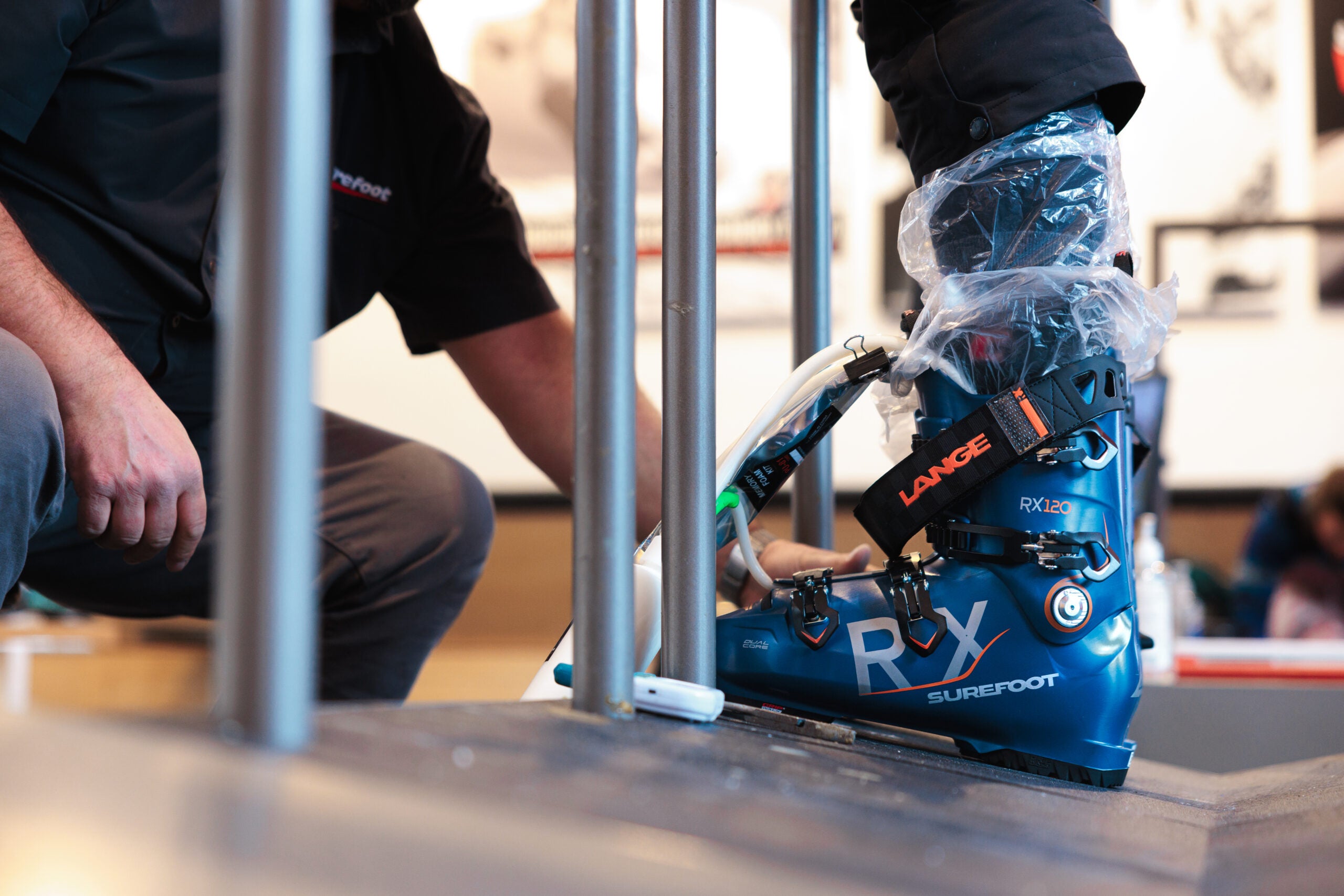
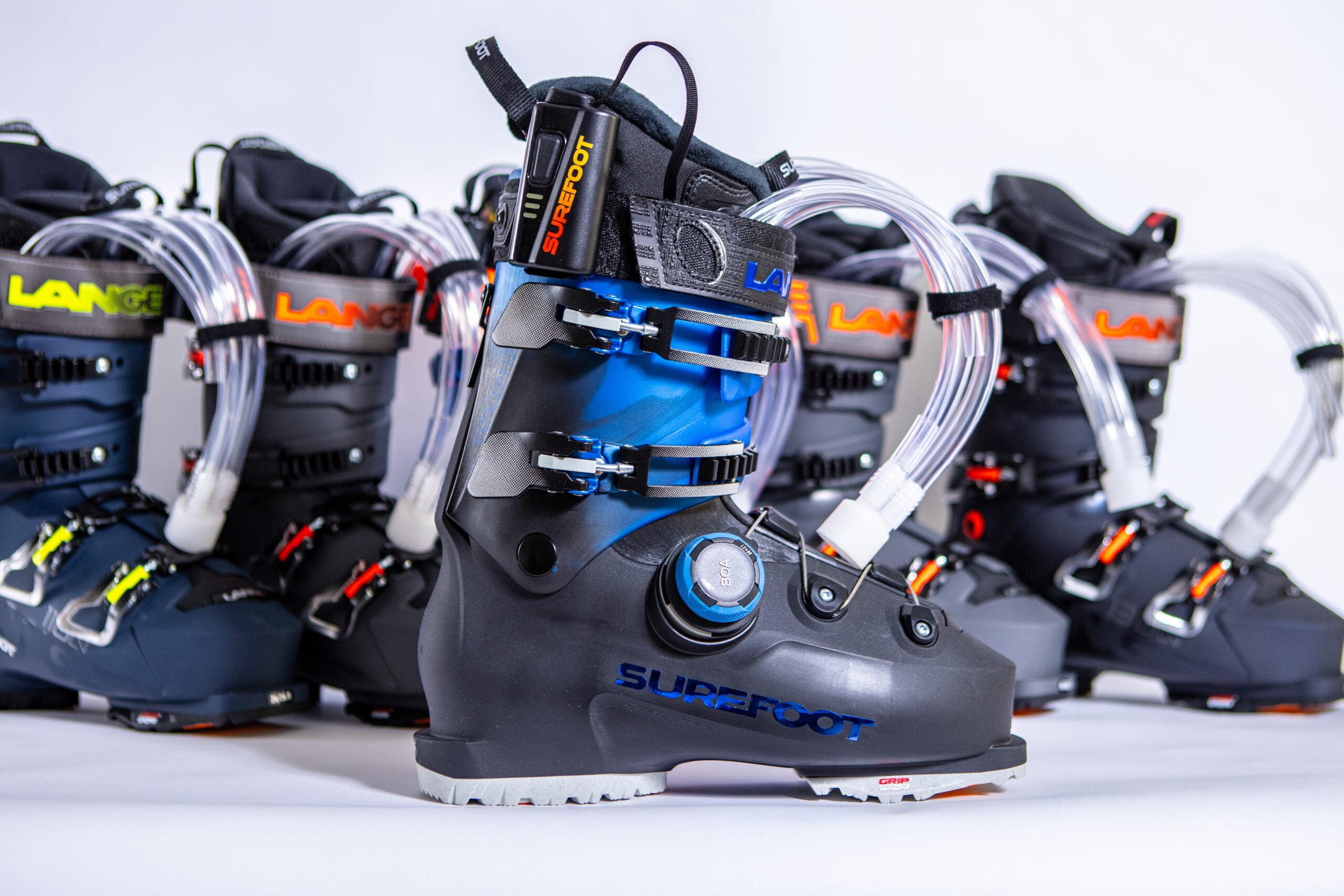
Liner Molding with Chemical Foam: The final and most distinctive step is the molding of the boot liner. After the custom insole is placed into the chosen boot shell, the skier’s foot is inserted. A specialized, self-expanding chemical foam is then injected into the liner, which meticulously molds around the foot and lower leg. This foam fills every void and contour within the shell, creating a truly bespoke "negative" impression of the foot. Unlike heat-moldable liners that adapt to general foot shape, Surefoot’s foam injection process ensures a zero-dead-space fit, eliminating pressure points while maximizing surface contact for unparalleled control and comfort. This precise molding ensures that the foot is cradled perfectly, distributing pressure evenly and preventing the micro-movements that can lead to fatigue, blistering, and reduced performance. The process takes about 20-30 minutes, during which the foam cures to a semi-rigid state, creating a permanent, customized liner that becomes an integral part of the boot’s fit system.
The Revelation: Unmasking the Low-Volume Foot
It was during the initial 3D scan and evaluation at Surefoot that my decades-long misconception was finally shattered. The technician, reviewing the digital readout, asked a pivotal question: "Have you ever been fitted in a low-volume boot?" My unequivocal "Never" was met with a knowing smile. "Oh yeah," he affirmed, "That’s going to make a big difference." The scan clearly indicated low-volume feet with distinctively narrow heels—a profile that had been consistently mismatched with higher-volume boots throughout my skiing career.
This revelation was transformative. For years, I had inadvertently compensated for the excessive internal space in my boots by over-tightening buckles, leading to restricted circulation and localized pressure points, without ever achieving true foot stability. A low-volume boot, designed with a narrower last width, a lower instep, and a more tapered heel pocket, would inherently provide a more intimate fit for my foot type. The technician explained that while my previous boots might have felt "tight" due to the overall compression, they lacked the precision contouring necessary to truly lock my foot in place and eliminate subtle slop. This subtle slop, though not causing overt pain, translated into a delayed and less efficient transfer of energy to the skis, particularly during quick edge changes or aggressive turns. This diagnostic moment provided a clear, data-driven answer to a problem I had intuitively sensed but could never pinpoint.
The entire Surefoot process, from the initial scan to the final foam injection and curing, took approximately an hour. I walked out with my first pair of low-volume boots—Tecnica Mach1 LVs—equipped with a perfectly molded custom liner and the versatile, removable insole. An added, much-appreciated bonus: all Surefoot boots and liners come with integrated boot heaters, a significant advantage for my perpetually cold toes, enhancing both comfort and blood circulation on frigid days, which is particularly beneficial on long ski days or in extreme cold.
The Tangible Impact: Performance, Confidence, and Longevity
The transition to the Tecnica Mach1 LVs with my custom Surefoot liners and insoles brought about a change that, while subtle in immediate sensation, was profoundly noticeable in performance. The initial feel was one of seamless integration; my feet and lower legs felt truly connected to the boots, a sensation I hadn’t fully experienced before. The micro-movements of my feet within the boot, previously imperceptible but performance-draining, were now eliminated.

I skied the remainder of the 2025-2026 season in my new setup, tackling a variety of conditions and terrains. The difference was most pronounced in challenging situations—steep pitches, variable snow, and icy patches—where precise edge control and instantaneous response are paramount. My ability to initiate turns, hold an edge, and recover from unexpected terrain changes was markedly improved. There was a newfound directness in the power transfer from my body to the skis, allowing for a level of control and agility that had previously eluded me. Even a persistent, albeit minor, issue of heel lift, a common bane for those with narrow heels, was significantly mitigated. A subsequent visit to a Surefoot technician for a complimentary adjustment saw the issue further addressed with strategically placed wedges to narrow the heel pocket, showcasing the ongoing support and fine-tuning Surefoot offers to ensure a lasting perfect fit.
This enhanced control translated directly into increased confidence. No longer was I battling against subtle inefficiencies in my equipment; instead, my focus shifted entirely to technique and line choice. The feeling of having the "right tools" to finally "level up" my skiing was empowering. This experience has not only refined my immediate performance but has also profoundly impacted my long-term aspirations. I intend to continue skiing for another 25 years, and with the knowledge and equipment that provides truly optimal fit, this goal now feels not just viable, but excitingly achievable. While these specific boots may eventually be replaced, the fundamental understanding of my foot’s requirements and the critical role of boot volume will guide all future gear choices, ensuring continued comfort and performance on the slopes.
Broader Implications for the Ski Industry and Skiers
My experience serves as a powerful testament to the often-underestimated importance of proper ski boot fitting, particularly the nuance of volume. For the broader ski community, the implications are significant:
For Skiers: The primary takeaway is clear: do not underestimate

