
Published June 30, 2026 11:51AM
Just four years ago, a bold declaration was made: "Four-Buckle Boots Are About to Become a Relic of the Past." While that prediction, made in 2022, largely missed the mark – traditional buckle boots remain a strong presence on ski shop walls – the intervening years have witnessed an undeniable transformation within the ski industry. The catalyst? The widespread adoption of BOA dials in alpine ski boots, which first hit the market during the 2023-24 season. This seemingly minor alteration to a boot’s closure system has profoundly reshaped how manufacturers conceive, engineer, market, and sell ski boots, moving beyond mere novelty to become a fundamental component of product development and consumer choice.
The advent of BOA technology in ski boots has prompted a crucial period of introspection across the industry. Has the technology reached its zenith of adoption, or is there still significant growth potential? How do skiers perceive and prioritize closure systems in their purchasing decisions? And now that the initial hype has subsided, do skiers genuinely embrace the precision and convenience offered by these innovative dials? Taking stock of these questions reveals a landscape far more intricate and nuanced than initially foreseen, even just a single World Cup season ago. The journey of BOA in ski boots, while still in its early chapters, has already demonstrated a remarkable capacity to disrupt and innovate.
The Pre-BOA Landscape: A Legacy of Buckles
For decades, the ski boot industry operated on well-established principles, primarily centered around a multi-buckle closure system. The dominant designs were either overlap boots, offering progressive forward flex and powerful energy transfer, or cabrio boots, known for a more forgiving flex and easier entry/exit, famously pioneered by Raichle Flexon (later Full Tilt, now K2 Fl3x). These designs, while effective, often presented inherent trade-offs. Traditional buckles, typically four per boot, allowed for macro-adjustments but struggled with micro-precision. Skiers frequently contended with pressure points, uneven tension across the foot and shin, and the arduous task of achieving a consistently comfortable yet performance-oriented fit. The "last" – the internal shape of the boot shell – and the liner were paramount, with fitting often involving extensive heat molding, grinding, and punching to accommodate the myriad shapes of human feet. The idea of a "multi-last boot" capable of supporting multiple foot volumes with a single standard heel pocket was, for many purists, almost heretical.
BOA Technology, founded in 2001, had already revolutionized closure systems in numerous other industries before its foray into alpine skiing. From snowboard boots and cycling shoes to medical braces and industrial workwear, BOA’s patented system of steel lace, nylon guides, and a mechanical reel offered unparalleled precision, durability, and micro-adjustability. This track record of success in demanding applications outside of alpine skiing provided a strong foundation for its eventual entry, promising a level of fit customization previously unattainable with traditional buckles.
The Genesis of a Revolution: BOA’s Debut in 2023-24
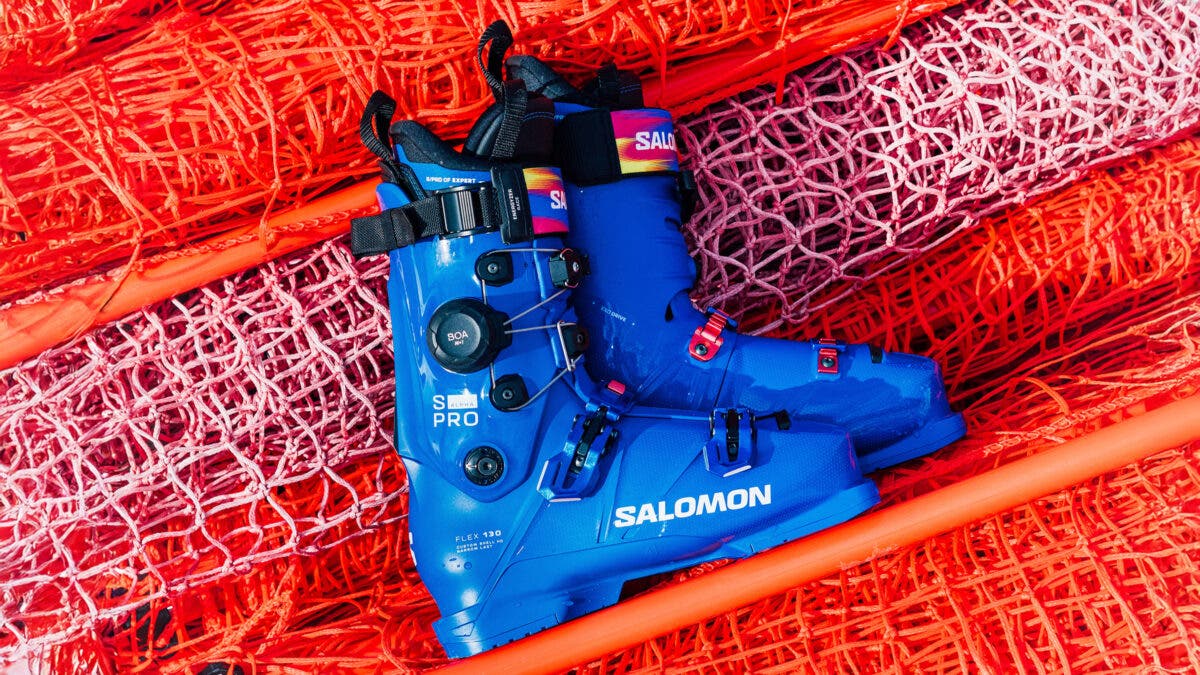
The 2023-24 ski season marked a pivotal moment with the coordinated launch of new boot models featuring BOA H+i1 dials on their lower cuffs by industry giants Salomon, Atomic, K2, and Fischer. This concerted effort was met with a mix of enthusiastic fanfare and cautious skepticism. The innovation was quickly hailed by some as the most significant leap in boot technology since the cabrio design of the Raichle Flexon. However, the deeply ingrained conservatism of the skiing community meant that many experienced skiers, particularly those focused on performance, questioned the efficacy of a dial-based system replacing traditional buckle power. The concept of a "multi-last boot," purporting to support various foot volumes with a standardized heel pocket, raised eyebrows among those who meticulously sought a precise, custom fit.
Central to BOA’s argument for its new system was a compelling study claiming that the H+i1 dials dramatically increased power transfer compared to a traditional four-buckle boot, albeit through a non-traditional mechanism. Dan Feeney, VP of innovation and development at BOA, elaborated on this, stating, "What we found is that when you apply BOA dials, that wrapping allows you to have more precision to how you apply that power. People just say, ‘Cuff equals power,’ whereas we’re saying, ‘Hey, you’re taking all that power and you’re applying it really well.’" This research aimed to debunk the long-held theory that the lower cuff played a minimal role in power transfer, asserting that the BOA lower closure provided not only enhanced comfort but also superior power transmission. This redefinition of power application was a bold challenge to conventional boot design wisdom.
Accelerated Innovation and Diversification: The BOA Timeline
Once the technology hit the slopes, the race to innovate was on. The initial success spurred other brands to partner with BOA, leading to rapid evolution in closure system integration.
- 2023-24 Season: The Single Lower Dial: The inaugural season saw BOA H+i1 dials predominantly applied to the lower shell of boots, replacing the two forefoot buckles. This offered precise instep and forefoot wrap, addressing common pressure points and enhancing comfort.
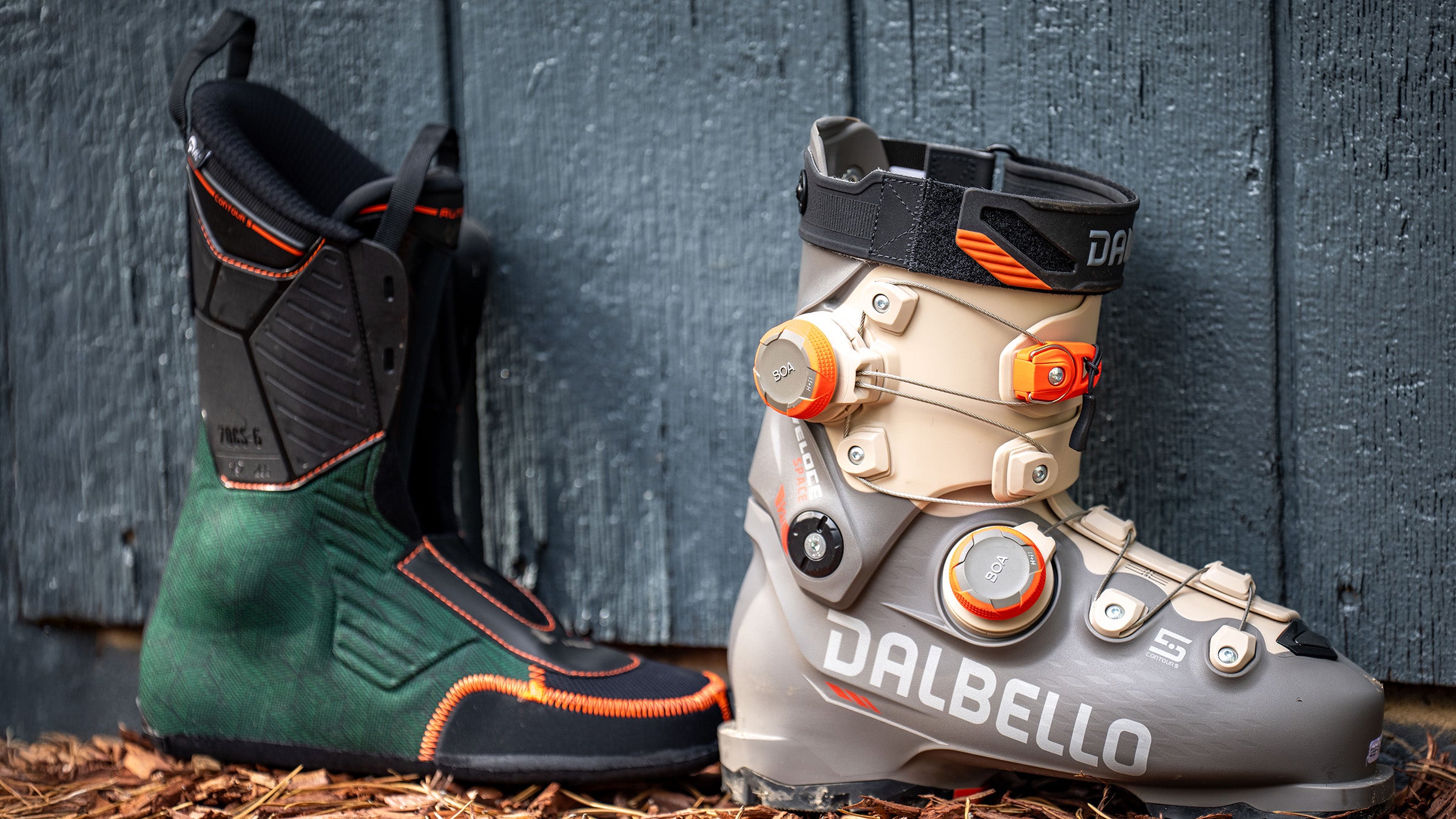
- 2024-25 Season: The Rise of Dual BOA: Building on the success, brands like K2 (with its Cortex series), Dalbello, and Head began introducing boots with dual BOA dials. This allowed for independent, micro-adjustable tensioning of both the forefoot/instep and the lower shin/cuff, providing even greater customization and zonal fit. This advancement further demonstrated BOA’s versatility and the industry’s commitment to exploring its full potential.
- 2025-26 Season: Hybrid Approaches and "Mullet BOA": The industry saw a diversification of BOA integration strategies. Nordica notably launched the Speedmachine 130S, a high-performance boot featuring a BOA dial on the upper cuff for precise shin wrap, while retaining traditional buckles on the lower shell. This innovative hybrid approach, affectionately and sometimes derisively dubbed "Mullet BOA," aimed to combine the powerful, familiar lock-down of traditional buckles where skiers often demand maximum security, with the refined adjustability of a BOA dial for cuff comfort and performance. This underscored a growing understanding that BOA wasn’t necessarily an "all or nothing" proposition but could be strategically integrated.
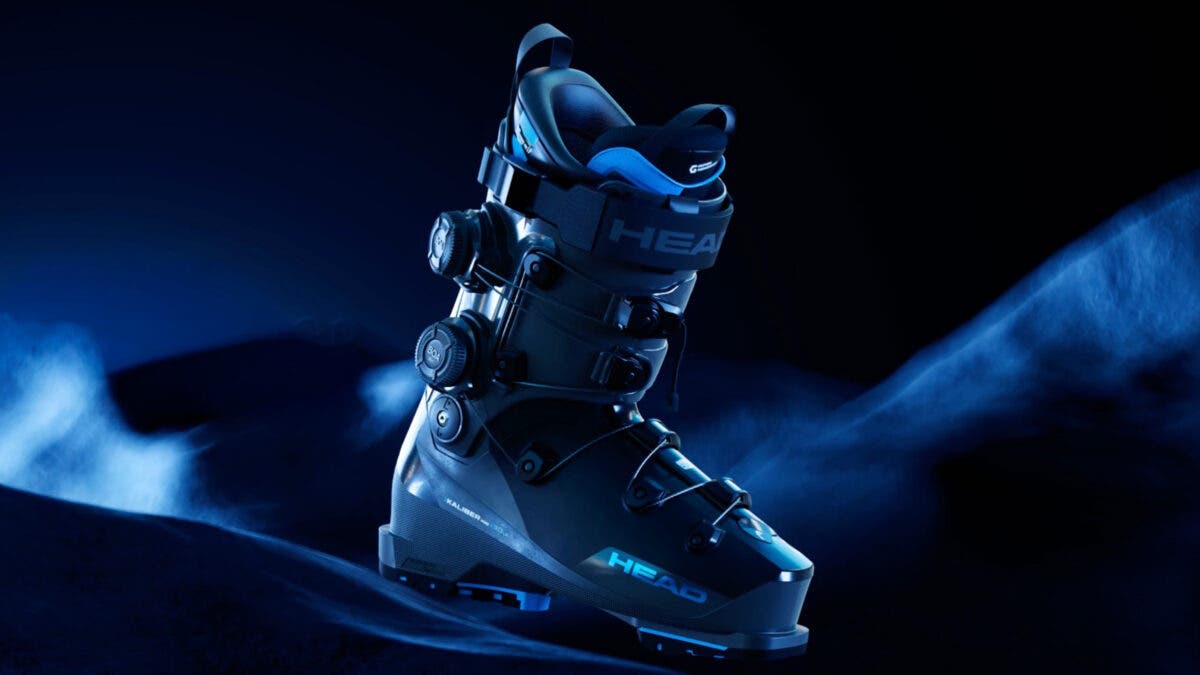
- 2026-27 Season Previews: Specialized Placement: For the upcoming 2027 season, Head unveiled its Kaliber Pro 130 LV series, which showcases a novel placement of the lower BOA dial. Instead of the conventional position on the instep, Head engineers moved it to the upper cuff. This strategic repositioning aims to mitigate a potential issue for aggressive skiers: the risk of the lower dial "booting out" or dragging on the snow during extreme edge angles. This move is widely interpreted as a direct response to feedback from performance skiers and a potential precursor to integrating BOA into elite racing boots, where every millimeter and every degree of edge angle counts.
Market Dynamics: A Qualified Success in a Competitive Landscape
Despite the rapid adoption and innovation, a stroll through ski boot sections of retail shops across the United States in mid-2026 reveals that BOA-adorned boots, while prominent, do not yet "dominate" the market. Traditional buckle boots not only persist but continue to thrive, particularly in segments where familiarity, proven performance, and cost-effectiveness remain key drivers. This scenario mirrors a correction observed in the ski industry two decades prior with the introduction of rocker technology: initial excitement led to a proliferation of radical designs, followed by a more tempered realization that a balanced, conservative approach often serves the broader skiing populace more effectively.
Andrew Couperthwait, VP of U.S. winter sports at Head, articulated this sentiment: "At the moment we’re starting to work into that more conservative approach." He noted that after the initial fervor, manufacturers are strategically evaluating where BOA dials best fit within their product lines and how they can differentiate themselves in an increasingly competitive market. Couperthwait observed that "the adoption of BOA has homogenized a lot of the meat of the market, where the boots tend to look quite a bit alike," highlighting the challenge for brands to stand out when a core innovation is shared.
The financial implications of integrating BOA technology are significant. Developing a new mold for a ski boot shell can cost upwards of a million dollars. To produce both traditional buckle and BOA-equipped versions on the same last effectively requires a double investment in tooling. This substantial capital outlay necessitates a meticulous and strategic approach to where BOA is applied across a brand’s offerings, ensuring that the investment yields tangible returns in performance, market share, and sales.
When queried about the overall success of the BOA "experiment," both Feeney and Couperthwait offered what could best be described as a "qualified yes." Feeney expressed considerable optimism regarding the uptake from both manufacturers and consumers, emphasizing the technology’s relative youth in the alpine market. "It’s kind of crazy that it’s only launched here three years ago," he remarked, suggesting "there’s still a lot of space to grow," particularly looking towards greater adoption in elite competitive circuits. Couperthwait echoed this positive sentiment, acknowledging BOA’s role in propelling industry innovation. "Overall it has been a success. We’re an industry that can get stuck in our ways a little bit, and to bring outside technology in is always beneficial." He further pointed to BOA’s resilience in the face of challenging environmental factors, specifically the uncertain snow seasons experienced in the past few years, particularly in the Western U.S. Couperthwait contended that the lingering excitement around new boot technology, largely driven by BOA, contributed to the boot market’s relative resilience against these shocks. Industry analysts estimate that BOA-integrated models captured an estimated 20-25% of new alpine boot sales in its third year on the market, contributing to an overall 5-10% year-over-year growth in the performance boot segment. This suggests that "no one can say that BOA, over the last three years, hasn’t helped boot sales."
The Ultimate Test: World Cup and Freeride World Tour
Despite its strong presence in the consumer market, BOA-clad boots have yet to make a formal debut on the World Cup racing circuit. While occasional photos surface of high-ranked athletes experimenting with BOA boots in training sessions or lower-level races, the ultimate proving ground of a proper World Cup event remains elusive. The reasons are multifaceted and deeply rooted in the culture of elite competition.
World Cup racers are, in essence, "immovable objects" when it comes to equipment changes. Their careers, sponsorships, and livelihoods hinge on fractional gains in speed and performance. To commit to a significant equipment alteration like a new closure system, they demand irrefutable evidence of a measurable advantage – literally, seconds shaved off the clock. The stakes are too high, and the margins too thin, for experimentation that might jeopardize precious points or standings.
Beyond raw speed, racers harbor concerns about the durability and reliability of the BOA system under the extreme forces and angles inherent in gate racing. The repeated impact with gates, the immense torsional forces, and the abrasive nature of aggressive skiing raise questions about the long-term integrity of cables and dials compared to robust metal buckles. Head’s introduction of the Kaliber series, with its upper-cuff BOA placement, is a strategic maneuver to address these concerns, allowing racers to achieve deeper edge angles without the risk of the dial interfering or being damaged. This design choice is a clear signal that manufacturers are actively engineering solutions to meet the unique demands of elite competition.
Couperthwait underscored the challenge by referencing Head’s long-standing "traction control technology" used in their speed skis, a system that has remained unchanged for over 25 years because "it works. And it wins races. As long as it’s winning races, it’s not going to go away, and that’s the hurdle BOA is going to have to overcome." The bar for entry into World Cup racing is exceptionally high, demanding not just marginal improvements but absolute, unquestionable superiority.
Despite these hurdles, both BOA as a company and its brand partners remain steadfast in their pursuit of World Cup validation. Feeney expressed genuine excitement, noting, "I think we’ve seen a ton of real meaningful improvement for the athletes, and the athletes have seen it. I’m starting to get pretty excited that in the next pretty short amount of time we should see athletes racing on BOA." Furthermore, the Freeride World Tour (FWT), with its emphasis on versatility, comfort, and quick adjustments in variable terrain, could represent an earlier pathway for BOA’s elite adoption, as the performance metrics and demands differ slightly from pure alpine racing.
The Enduring Impact: A Shift in Industry Paradigm
Has the BOA revolution lived up to its initial, perhaps overzealous, billing? The honest answer, echoing the sentiments of those at the forefront of boot development, remains a qualified "yes." BOA did not render traditional buckles obsolete, nor has it yet conquered the World Cup podium. However, its true success lies not in these specific achievements, but in its broader, transformative impact on the ski boot industry.
The introduction of BOA dials forced brands across the spectrum to fundamentally rethink their entire product lines, prompting an era of accelerated innovation in boot design. It provided consumers with a genuinely compelling alternative at the boot wall, emphasizing precision fit, comfort, and ease of use in ways that traditional buckles often struggled to match. Moreover, as Couperthwait highlighted, BOA technology played a crucial role in maintaining boot sales resilience during seasons marked by unpredictable snow conditions, injecting new excitement into a mature market.
Crucially, the industry has maintained a clear perspective on the hierarchy of boot fit. As Couperthwait emphatically stated, "BOA is not the end all be all of boot technology. The last is still probably the most important thing, combined with the last of a liner, and how that liner integrates into the last of the shell. In our opinion, that is still 100 percent the most important aspect to a boot fit." This underscores that BOA is an enhancement, a sophisticated tool to optimize an already well-designed boot, rather than a magic bullet that negates the foundational principles of boot fitting.
Regardless of when BOA dials finally grace a World Cup podium, the more significant and enduring shift has already occurred: closure systems are no longer a mere afterthought in ski boot design; they have evolved into a primary selling point, a key differentiator, and a central focus of engineering innovation. This re-evaluation of closure mechanisms represents a different kind of victory than simply replacing all buckles, but it is a profound and lasting win for innovation, for consumer choice, and for the continued evolution of the sport. The journey of BOA in ski boots, three years in, confirms that even seemingly small technological advancements can reverberate throughout an entire industry, forever altering its trajectory.

