
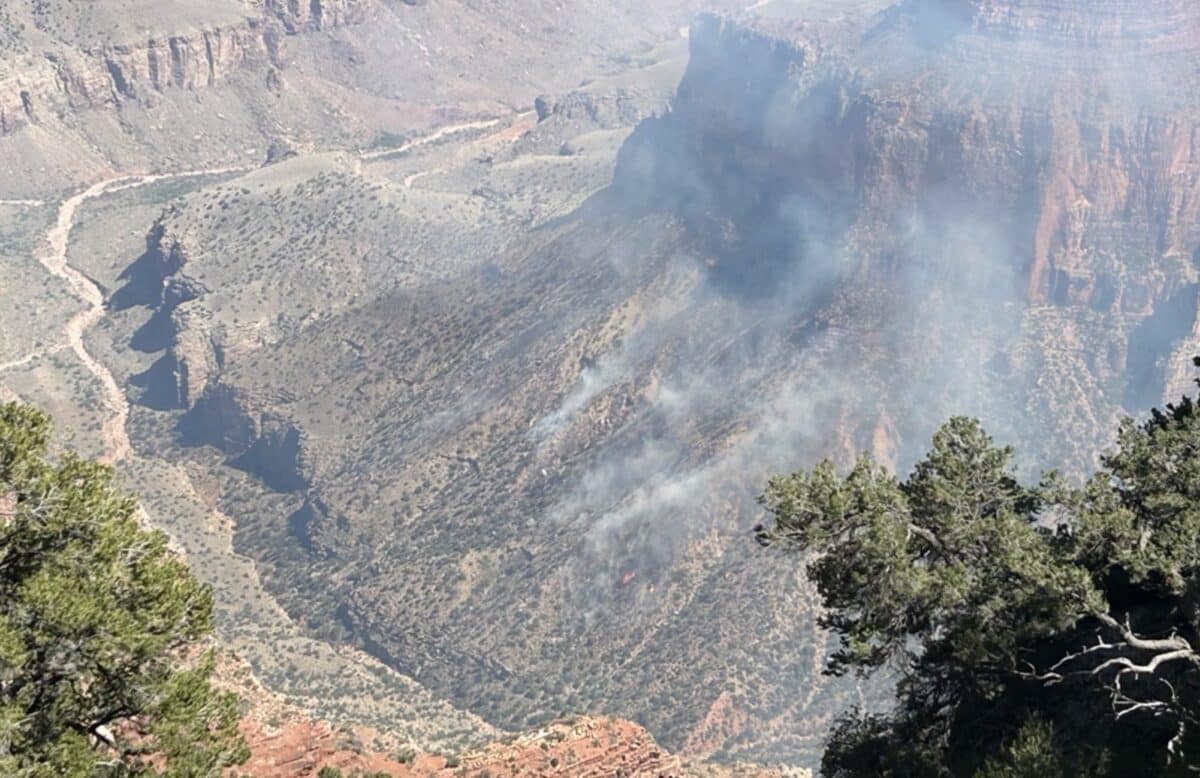
A powerful lightning strike has ignited a wildfire in the remote backcountry below the North Rim of Grand Canyon National Park, prompting an immediate response from the U.S. Wildland Fire Service and park officials. The blaze, officially named the Cliff Spring Fire, is currently estimated to span approximately 171 acres and is burning through a challenging mix of grass, brush, pinyon pine, and juniper. As of the latest reports, the wildfire remains at zero percent containment, underscoring the dynamic and evolving nature of the situation.
While the immediate impact on park visitors has been minimal, with no trails or developed areas currently closed, park authorities have taken a precautionary measure by temporarily suspending the issuance of permits for backcountry trips into the Walhalla Plateau area. This decision allows fire managers to conduct a thorough assessment of current conditions and potential risks, ensuring the safety of both the public and the firefighting personnel engaged in suppression efforts. The Grand Canyon’s vast and often inaccessible terrain presents unique challenges for wildfire management, requiring a strategic and safety-conscious approach.
The remote location of the Cliff Spring Fire, situated below the North Rim, means that direct access for ground crews is severely limited due to the steep and rugged topography. This has necessitated a specialized firefighting strategy, heavily relying on aerial resources. Currently, suppression efforts are being primarily conducted through helicopter bucket drops, delivering water directly to the fire’s perimeter. Firefighters are working from established, safer vantage points to strategically contain the spread of the blaze, prioritizing the reduction of unnecessary risks to personnel while still actively engaging the fire.
Resources deployed to combat the Cliff Spring Fire include one U.S. Wildland Fire Service engine, one cooperating engine from a partner agency, and a USWFS helicopter. The coordination of these assets is crucial in managing a wildfire in such a challenging environment. The ongoing efforts are a testament to the dedication and expertise of the wildland firefighters who operate under difficult and often dangerous conditions.
Background and Chronology of the Cliff Spring Fire
The wildfire was reportedly sparked by a lightning strike, a common natural ignition source in arid and mountainous regions, particularly during monsoon season. While the exact date and time of the lightning strike and subsequent ignition are not precisely detailed in initial reports, the wildfire’s discovery and the commencement of suppression efforts indicate a swift response from relevant authorities.
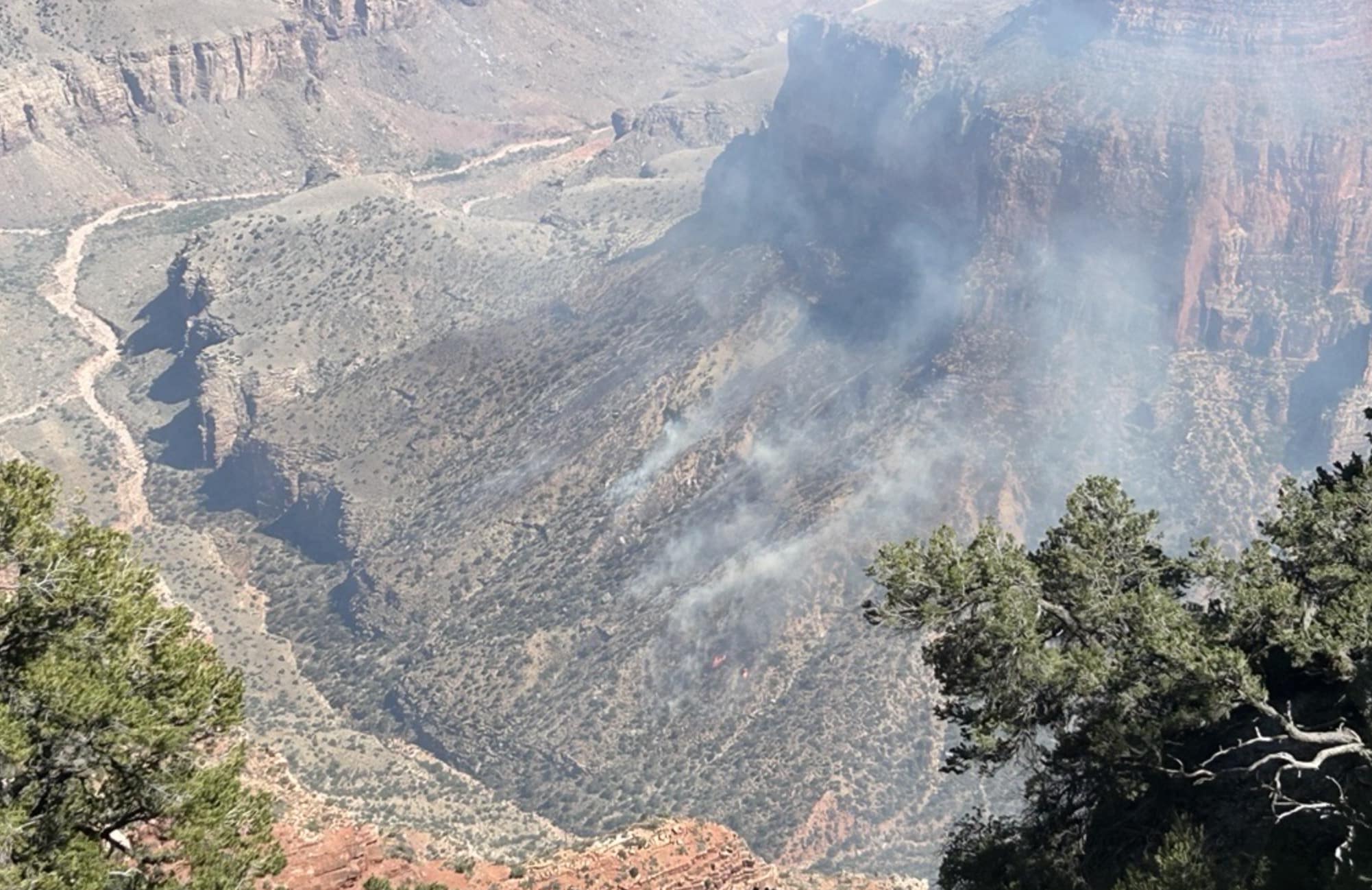
The U.S. Wildland Fire Service, in collaboration with Grand Canyon National Park, has been actively monitoring the situation since the fire’s detection. The initial assessment of the acreage and the composition of the fuel types burning – grass, brush, pinyon pine, and juniper – are critical for developing an effective containment strategy. These fuel types are known to burn intensely, especially under dry and windy conditions.
The decision to pause permit issuance for the Walhalla Plateau area signals a proactive approach to visitor safety and resource management. The Walhalla Plateau is a significant feature of the North Rim, offering spectacular views and access to various hiking trails. By temporarily restricting access, park officials aim to prevent any potential conflicts between recreational activities and active firefighting operations, and to ensure that emergency responders have unimpeded access to the area if needed.
Supporting Data and Environmental Context
Grand Canyon National Park, like much of the Southwestern United States, experiences a pronounced dry season followed by a monsoon season, which can bring intense thunderstorms capable of igniting wildfires. The park’s diverse ecosystems, ranging from desert scrub to forested plateaus, present a varied fuel load that can contribute to wildfire behavior. Pinyon pine and juniper ecosystems, common in the region, can be highly flammable, especially when dry.
Wildfires are a natural part of many ecosystems, playing a role in forest health by clearing out undergrowth and promoting new growth. However, human-caused ignitions and increasingly dry conditions due to climate change can lead to larger, more intense, and more destructive fires. While the Cliff Spring Fire was naturally ignited, its progression and the challenges in suppressing it are influenced by the prevailing environmental conditions.
Data from the National Interagency Fire Center (NIFC) often highlights the significant impact of wildfires across the United States, with millions of acres burned annually. The Southwest region, in particular, is prone to significant fire activity during certain times of the year. Understanding these broader trends provides context for the current situation at Grand Canyon National Park.
Official Responses and Public Information
Park officials have emphasized that visitors may observe smoke plumes in the area as suppression efforts continue. They are advising visitors to remain aware of changing conditions, as fire activity, weather patterns, and operational needs can shift rapidly. This advisory serves to prepare the public for potential impacts and to encourage a cautious approach when visiting the park.
The National Park Service and the U.S. Wildland Fire Service are committed to providing timely updates as more information becomes available. This commitment to transparency is vital for public safety and for managing expectations regarding the wildfire’s progression and the duration of any associated restrictions. The collaborative effort between these agencies underscores the coordinated approach to wildfire management in federally protected areas.
Broader Impact and Implications
The Cliff Spring Fire, while currently contained to a specific area below the North Rim, serves as a reminder of the ongoing threat of wildfires in the region. The long-term implications of such fires can include impacts on air quality, erosion control, and the health of the park’s unique ecosystems.
The use of aerial suppression tactics, while effective in inaccessible terrain, also carries its own set of considerations, including cost and potential environmental impacts. The strategic decision-making involved in deploying these resources is a complex process that weighs the benefits of containment against these factors.
Furthermore, the temporary suspension of permits for the Walhalla Plateau area highlights the delicate balance between preserving natural landscapes for public enjoyment and ensuring their protection from the destructive forces of fire. As climate change continues to influence weather patterns and increase the likelihood of extreme fire behavior, the management of wildfires in national parks and other protected areas will remain a critical challenge. The Cliff Spring Fire, though a specific incident, is emblematic of broader issues facing land managers across the Western United States. The focus remains on a coordinated and safety-driven response to protect this iconic natural wonder.

