
The concept of an "upside-down ski area" might initially evoke a sense of the surreal, but this unique design offers a practical and visually rewarding experience for skiers and snowboarders. The fundamental characteristic of these resorts is that the primary parking and lodge facilities are situated at the summit of the mountain, rather than the base. This arrangement means that guests begin their skiing journey by descending from the parking lot, often providing an immediate sense of accomplishment and stunning panoramic views. The journey then culminates in reaching the base area, where they can access lifts to ascend for subsequent runs. This inverted approach to resort layout has become a distinctive feature of several ski areas across the Rocky Mountain region, offering a novel perspective on the traditional mountain experience.
This unconventional design is not merely an aesthetic choice; it often stems from the specific topography and geological formations of the mountains where these resorts are located. Building at higher elevations can sometimes be more feasible, or offer superior access to the most desirable skiable terrain. The resulting experience is one where the initial descent from the parking area serves as a natural warm-up, setting the tone for the day’s adventures with an immediate immersion into the mountain’s grandeur. This article will explore four prominent "upside-down" ski areas in the Rocky Mountains, highlighting their unique features, operational philosophies, and the distinct experiences they offer to winter sports enthusiasts.

Blacktail Mountain Ski Area, Montana: Overlooking the Pristine Flathead Lake
Nestled in Lakeside, Montana, Blacktail Mountain Ski Area presents a compelling example of the upside-down ski area model, offering unparalleled vistas of Flathead Lake. Its strategic positioning along Highway 93 South places the main lodge and primary parking facilities directly at the mountain’s apex. This arrangement ensures that every visitor, regardless of their skiing or snowboarding proficiency, is immediately greeted by breathtaking scenery. The resort itself encompasses 1,000 acres of terrain within the Flathead National Forest, boasting a vertical drop of 1,440 feet. The lift infrastructure includes three chairlifts and a surface lift, providing access to a diverse range of slopes designed to accommodate all skill levels.
The operational philosophy at Blacktail Mountain emphasizes accessibility and a connection with the natural environment. The proximity of the lodge to the highest points of the skiable area means that the initial runs are often the most visually spectacular, allowing guests to acclimate to the conditions while taking in the expansive views. This design choice not only enhances the aesthetic appeal but also streamlines the guest experience, reducing the need for long walks or shuttle services to reach the main ski runs. The resort’s commitment to operating within a national forest underscores a dedication to preserving the natural beauty of the region, with trail grooming and snow management practices designed to minimize environmental impact.
The history of Blacktail Mountain reflects a gradual development aimed at enhancing the skiing experience. Initially conceived as a smaller operation, it has expanded over the years to become a significant recreational hub for the surrounding communities and a destination for visitors seeking a less commercialized mountain experience. The resort’s relatively modest scale compared to larger, more corporate ski destinations contributes to its intimate atmosphere, fostering a sense of community among its patrons. This focus on a genuine mountain experience, coupled with its striking location, solidifies Blacktail Mountain’s status as a noteworthy upside-down ski area.

Echo Mountain, Colorado: Proximity and Panoramic Views Near Denver
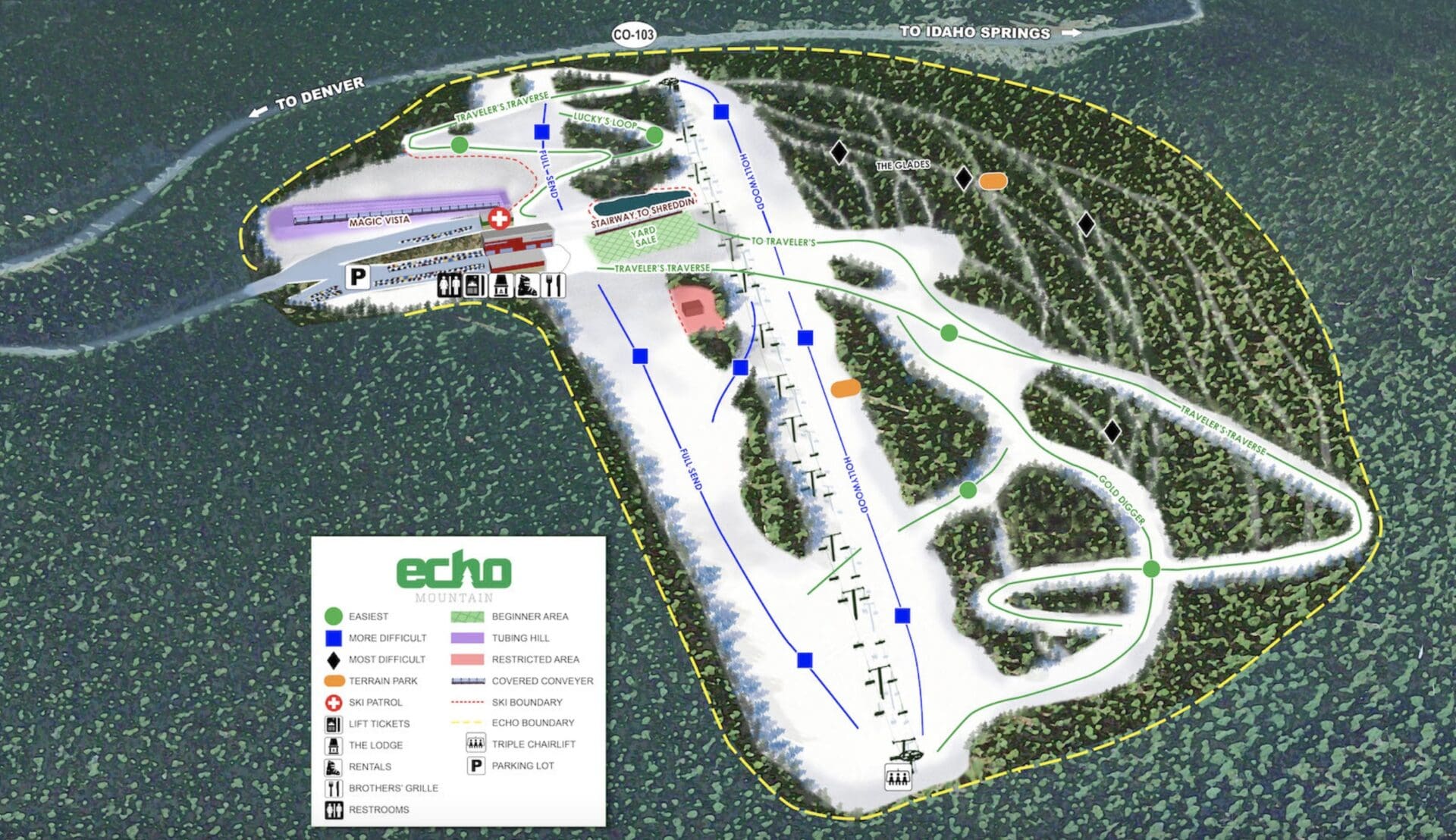
Echo Mountain stands out as a compelling option for those seeking an "upside-down" skiing experience in close proximity to a major metropolitan area. Located just a short drive from Denver, Colorado, this resort cleverly integrates its facilities to maximize the visual and practical benefits of its unique layout. The parking area and lodge are situated at the summit, allowing skiers and snowboarders to immediately embark on their descent. A dedicated beginner area, complete with a magic carpet and a separate sledding zone serviced by a surface lift, is accessible directly from the upper facilities. Crucially, the primary chairlift begins its ascent from a point below the lodge and parking area, meaning that all trails ultimately lead back towards this elevated vantage point.
The strategic placement of the main ski lift below the lodge is a key element of Echo Mountain’s design. This configuration ensures that guests are always ascending towards the summit, where the most impressive views are found. The panoramic vistas from the top of Echo Mountain are indeed a significant draw, offering skiers and snowboarders a sweeping perspective of the surrounding Colorado landscape. This design also minimizes the need for extensive snowmaking or grooming on the upper sections of the mountain, as the natural terrain and snow accumulation at higher altitudes are often more favorable.
Echo Mountain’s history is marked by periods of closure and revitalization, highlighting the challenges and opportunities inherent in operating a ski resort in a competitive market. Its recent resurgence has focused on leveraging its unique upside-down model and its advantageous location to attract both local skiers and tourists. The resort’s efforts to provide an accessible and enjoyable experience, particularly for families and beginner skiers, have been a cornerstone of its strategy. The fact that the main lift unloads at the summit, allowing immediate access to the best views before descending, is a testament to their understanding of what makes an upside-down resort appealing.

Hogadon Basin Ski Area, Wyoming: Affordable Mountain Access in Casper
Hogadon Basin Ski Area, owned and operated by the City of Casper, Wyoming, offers an exceptionally accessible and affordable upside-down skiing and snowboarding experience. The resort’s design mirrors the core principle of its counterparts: the parking lot and lodge are situated at the mountain’s peak, allowing patrons to ski downwards to begin their day. This configuration provides immediate access to the slopes and a rewarding initial descent. Hogadon Basin features two lifts that service a variety of runs, categorized as green, blue, and black diamonds, along with a dedicated terrain park. The resort offers 31 named trails in total, providing ample terrain for skiers and riders of all abilities.
A key differentiator for Hogadon Basin is its commitment to providing low-cost winter recreation. The city’s ownership allows for competitive pricing on lift tickets, making it an attractive option for local families and budget-conscious visitors. The availability of both full-day and half-day tickets further enhances its appeal, offering flexibility for those who may not wish to spend an entire day on the slopes. The upside-down design here is particularly beneficial, as it allows for a quick transition from vehicle to ski run, maximizing valuable time on the mountain.
The history of Hogadon Basin is intrinsically linked to the development of Casper as a community hub. As a municipally owned facility, its primary mission extends beyond profit generation to encompass the provision of recreational opportunities for its residents. This focus on community service is reflected in its pricing structure and its role as a vital winter recreation destination for the region. The operational model ensures that the most desirable terrain and the most scenic overlooks are readily accessible from the summit parking area, reinforcing the upside-down concept’s inherent advantages in terms of both convenience and visual appeal.
Powder Mountain, Utah: An Expansive Playground at the Summit
Powder Mountain in Utah stands as a colossal example of the upside-down ski area, distinguishing itself through its sheer scale and ambitious operational model. This resort boasts an immense 5,000 acres of skiable terrain, making it one of the largest in North America. With 163 meticulously mapped trails, serviced by a combination of five public lifts and three resident lifts, Powder Mountain offers an unparalleled experience for those who crave vast, open spaces and diverse terrain. The upside-down design is prominently featured, with multiple parking areas situated at the summit, providing immediate access to breathtaking views of the surrounding Utah mountains.
The experience at Powder Mountain is characterized by its vastness and the opportunity for exploration. From the summit parking lots, skiers and snowboarders can access an incredible spectrum of terrain, ranging from gentle green runs perfect for beginners to challenging double-black diamond slopes that will test the mettle of even the most experienced riders. The resort’s philosophy emphasizes a more natural and less crowded skiing experience, often achieved through its limited daily ticket sales and its extensive backcountry access. This approach ensures that even with its large acreage, the resort maintains a feeling of remoteness and pristine snow conditions.
The history of Powder Mountain is one of gradual expansion and a commitment to preserving its unique character. While its size is impressive, its management has often prioritized a quality over quantity approach, aiming to offer an authentic mountain experience rather than the hyper-commercialized atmosphere found at some other resorts. The upside-down layout at Powder Mountain is not just a design feature; it’s integral to its operational strategy, allowing for efficient access to its extensive terrain while maintaining the spectacular summit-level views that define the resort. This strategic design choice contributes significantly to its reputation as a premier destination for powder enthusiasts and those seeking an expansive, less congested mountain adventure.

The Broader Impact of the Upside-Down Model
The prevalence of upside-down ski areas across the Rocky Mountains, while seemingly a niche design, reflects an innovative approach to maximizing both the aesthetic and practical benefits of a ski resort. This model, by placing the primary access points at the summit, fundamentally alters the guest experience, offering immediate immersion into panoramic vistas and a unique starting point for their descent. This design choice is often dictated by the specific geological characteristics of the mountain, but it has proven to be a successful strategy for enhancing guest satisfaction and optimizing operational flow.
The implications of this design extend beyond mere convenience. For resorts like Echo Mountain, the upside-down layout facilitates easier access from major urban centers, making day trips more appealing. For areas such as Hogadon Basin, it allows for a more cost-effective operation, translating into more affordable lift tickets for the community. In the case of Powder Mountain, its sheer scale at the summit creates an unparalleled sense of exploration and exclusivity. Blacktail Mountain, with its stunning lake views, leverages the elevated position to provide a truly memorable visual experience.
In essence, the upside-down ski area represents a thoughtful adaptation to the mountain environment, offering a distinct and often superior skiing and snowboarding experience. It challenges the conventional notion of resort design, proving that by inverting the traditional model, significant advantages in terms of views, accessibility, and overall enjoyment can be achieved, making these four resorts truly stand out in the competitive landscape of winter recreation.

