
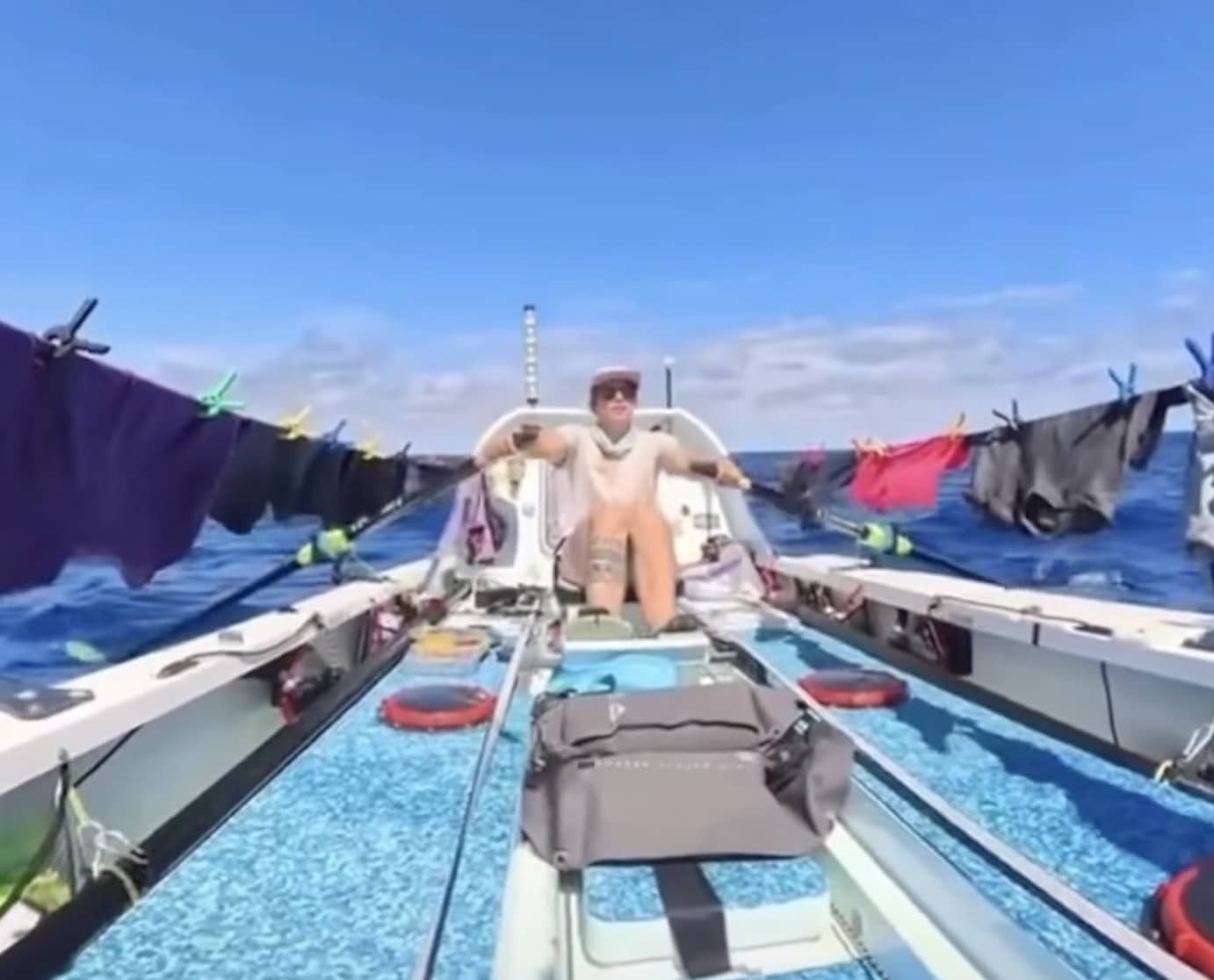
HONOLULU – Kelsey Pfendler, a seasoned Grand Canyon river-rafting guide, has achieved a monumental feat, shattering multiple world records by successfully completing a solo rowing expedition across the mid-Pacific Ocean from California to Hawaii. This extraordinary accomplishment marks her as the first American woman to conquer this challenging route, further solidifying her place in the annals of extreme endurance sports. Pfendler arrived at a Honolulu harbor on Friday night aboard her 21-foot rowboat, named Lily, after an arduous 44-day journey spanning approximately 2,400 miles (3,900 km). Her arrival was met with a jubilant crowd of hundreds of supporters who had gathered at the docks to celebrate her historic achievement.
A Journey Forged in Experience and Determination
Pfendler’s background as a professional raft guide, a career she embarked upon at the age of 18, provided her with an unparalleled understanding of navigating challenging waterways. For the past eight years, she has expertly guided expeditions along the mighty Colorado River within the Grand Canyon, a demanding environment that undoubtedly honed her resilience, decision-making skills, and physical prowess. It is this deep well of experience that she drew upon for her ambitious Pacific crossing.
The journey commenced from Monterey, California, in May, with Pfendler setting a clear and ambitious objective: to become the first American woman, the youngest woman, and the fastest woman to row solo across the mid-Pacific. This multifaceted goal underscores the magnitude of her undertaking, pushing the boundaries of what was previously considered achievable for a solo female ocean rower.
Shattering Speed Records on the Open Ocean
According to preliminary logs from the Ocean Rowing Society International, an organization that meticulously adjudicates ocean-rowing achievements for potential inclusion in Guinness World Records, Pfendler completed the demanding crossing in an astonishing time of just under 44 days. This remarkable finish time not only met but significantly surpassed existing solo speed records for this particular route.
The Ocean Rowing Society International has indicated that while her accomplishment is pending official certification, it is expected to be formally recognized in the coming days, provided all verification processes are successfully completed. Pfendler’s speed is a testament to her exceptional physical conditioning, strategic navigation, and unwavering mental fortitude throughout the prolonged period of isolation and intense effort. The previous records, for both men and women, for solo speed on this route have been comfortably eclipsed by her performance, setting a new benchmark for future ocean rowers.
The Chronology of a Historic Voyage
Pfendler’s expedition was not just a physical challenge but also a digital one. Throughout her nearly month-and-a-half at sea, she maintained a consistent presence on social media, posting regular updates from her isolated existence in the middle of the vast Pacific Ocean. This allowed a global audience to follow her progress, offering glimpses into the daily realities of her voyage, the challenges she faced, and the triumphs she experienced. Her Instagram, in particular, became a window into her remarkable journey, fostering a sense of connection and inspiring a legion of followers.
The timeline of her voyage can be broadly outlined as follows:
- Departure: Pfendler set sail from Monterey, California, in May. The precise date of departure is crucial for official record verification.
- Mid-Voyage: Throughout May and June, she navigated the open ocean, contending with weather patterns, currents, and the physical and mental demands of solo rowing. Her social media posts during this period likely documented critical moments, including navigating storms, encountering marine life, and maintaining her vessel.
- Arrival: Pfendler’s successful landfall in Honolulu occurred on Friday night, marking the conclusion of her 2,400-mile odyssey. The exact date of arrival will be a key data point for official record-keeping.
Her ability to maintain such a demanding schedule while also managing the logistical and technical aspects of ocean rowing is a testament to her comprehensive skill set.
The Lily: A Vessel of Resilience
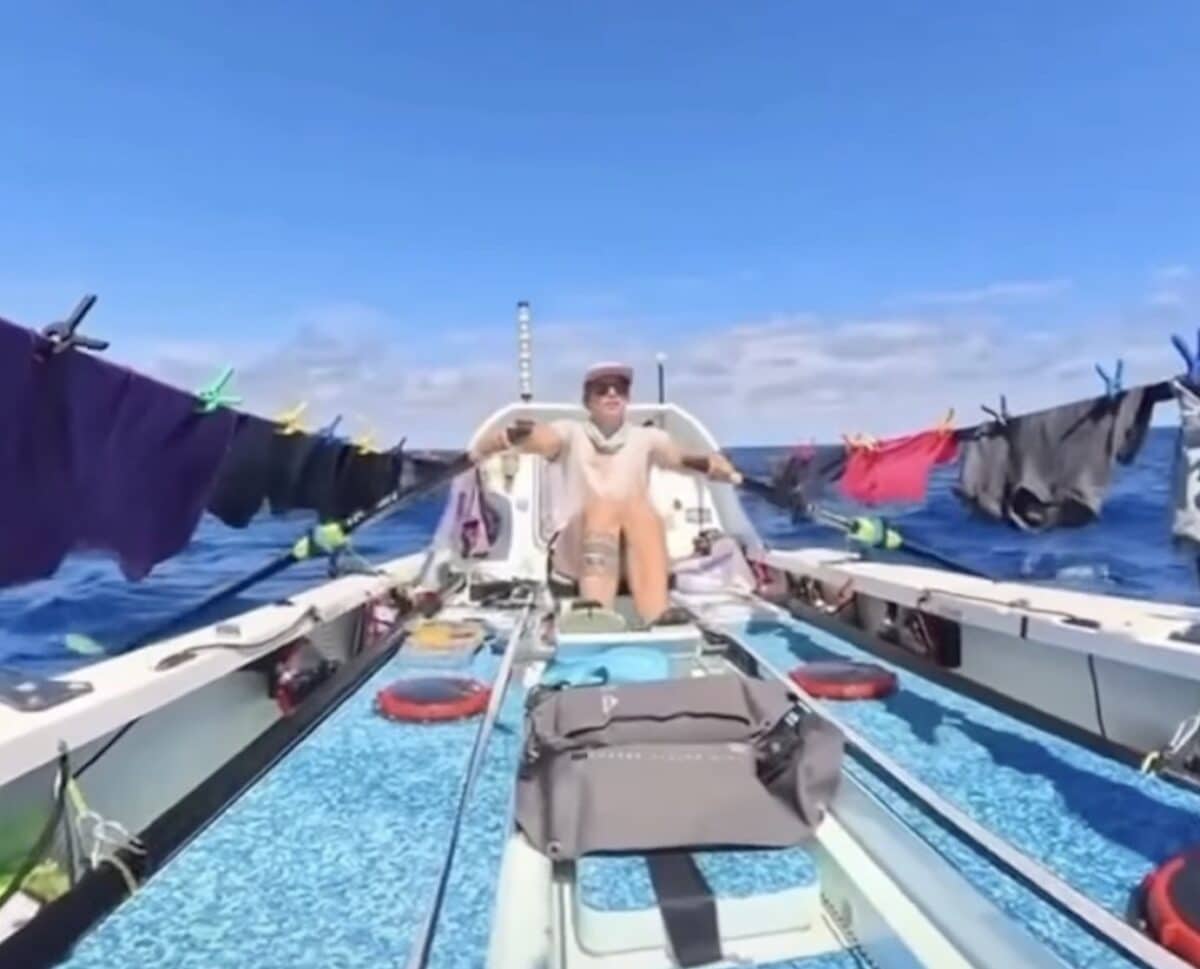
The vessel itself, the 21-foot rowboat Lily, played a crucial role in the success of the expedition. Ocean rowing boats are specifically designed for the extreme conditions of open-water crossings, featuring robust construction, safety equipment, and provisions for sustenance and shelter. The fact that Lily not only completed the journey but did so with remarkable efficiency speaks to its design and Pfendler’s meticulous maintenance and handling of the craft. The choice of a 21-foot vessel suggests a balance between maneuverability and capacity for supplies, a critical consideration for such a long voyage.
Context of Ocean Rowing Records
The Pacific Ocean, particularly the mid-Pacific route between California and Hawaii, is one of the most challenging and respected challenges in the world of ocean rowing. The sheer distance, combined with the unpredictable nature of the ocean, requires exceptional physical and mental endurance. Records for this route are highly sought after due to the difficulty involved.
- Distance: The 2,400-mile (3,900 km) distance is equivalent to rowing across the entire continental United States on land, but with the added complexities of marine currents, weather systems, and the isolation of being at sea.
- Solo Expeditions: Solo ocean rows are the ultimate test of self-reliance. Rowers must manage all aspects of their journey, from navigation and rowing to repairs, food and water consumption, and personal well-being, without any direct assistance.
- Previous Records: While specific previous record times are not detailed in the initial report, Pfendler’s accomplishment of besting both the men’s and women’s speed records indicates a performance that significantly redefines expectations for this crossing.
The Ocean Rowing Society International’s role in verifying these records is vital. They maintain a comprehensive database of ocean rowing achievements, ensuring the accuracy and legitimacy of each record set. Their criteria typically involve rigorous documentation, including GPS tracking, logbooks, and witness testimonies.
Broader Implications and Future Prospects
Kelsey Pfendler’s achievement has significant implications for the sport of ocean rowing and for women in extreme sports.
- Inspiring Future Generations: Her success as the first American woman to complete this solo crossing and as the fastest individual to do so on this route will undoubtedly inspire a new wave of aspiring female ocean rowers. It demonstrates that such ambitious goals are attainable with dedication, preparation, and courage.
- Advancing Women in Adventure Sports: In a field that has historically seen more male participation, Pfendler’s record-breaking feat highlights the growing prominence and capabilities of women in endurance and adventure sports. Her performance challenges traditional perceptions and opens doors for greater recognition and opportunity.
- Promoting Ocean Awareness: Such expeditions often bring increased attention to the health of our oceans. While not explicitly stated as a primary goal in this instance, the extensive media coverage generated by Pfendler’s journey can serve as a platform to raise awareness about marine conservation and the challenges facing our oceans.
- Personal Triumph and Legacy: Beyond the records, Pfendler’s journey is a profound personal triumph. It represents the culmination of years of training, planning, and unwavering commitment. Her story will likely become a celebrated narrative within the adventure community for years to come.
The successful completion of the mid-Pacific crossing by Pfendler is a remarkable testament to human endurance, resilience, and the relentless pursuit of extraordinary goals. As the Ocean Rowing Society International finalizes the certification of her records, her name will be etched into the history books, serving as a beacon of inspiration for adventurers worldwide. Her transition from navigating the powerful currents of the Grand Canyon to conquering the vast expanse of the Pacific Ocean underscores a career defined by an extraordinary spirit of exploration and a profound connection with the natural world.

