
The Norwegian contingent of ski orienteers successfully navigated a nerve-wracking qualification round for the World Championships sprint event in Genoa, Italy, ensuring all seven competitors have advanced to the final. While established favorites like Pia Young Vik and Kasper Fosser comfortably won their respective heats, the path to the finals was not without its challenges, most notably for Lukas Liland, whose qualification hung precariously in the balance until the final moments. The drama unfolded across multiple heats, highlighting the intense competition and the fine margins that define success at this elite level.
The qualification round, held under clear skies and crisp conditions on the historic streets and parks of Genoa, served as the crucial stepping stone to the championship finals. Ski orienteering, a demanding discipline that melds the physical prowess of cross-country skiing with the strategic acumen of navigation, demands not only speed and endurance but also precise route choices and flawless execution under pressure. The sprint format, characterized by its short, intense courses and technical demands, amplifies these requirements, making every decision critical.
Pia Young Vik’s Assertive Performance Against Top Contenders
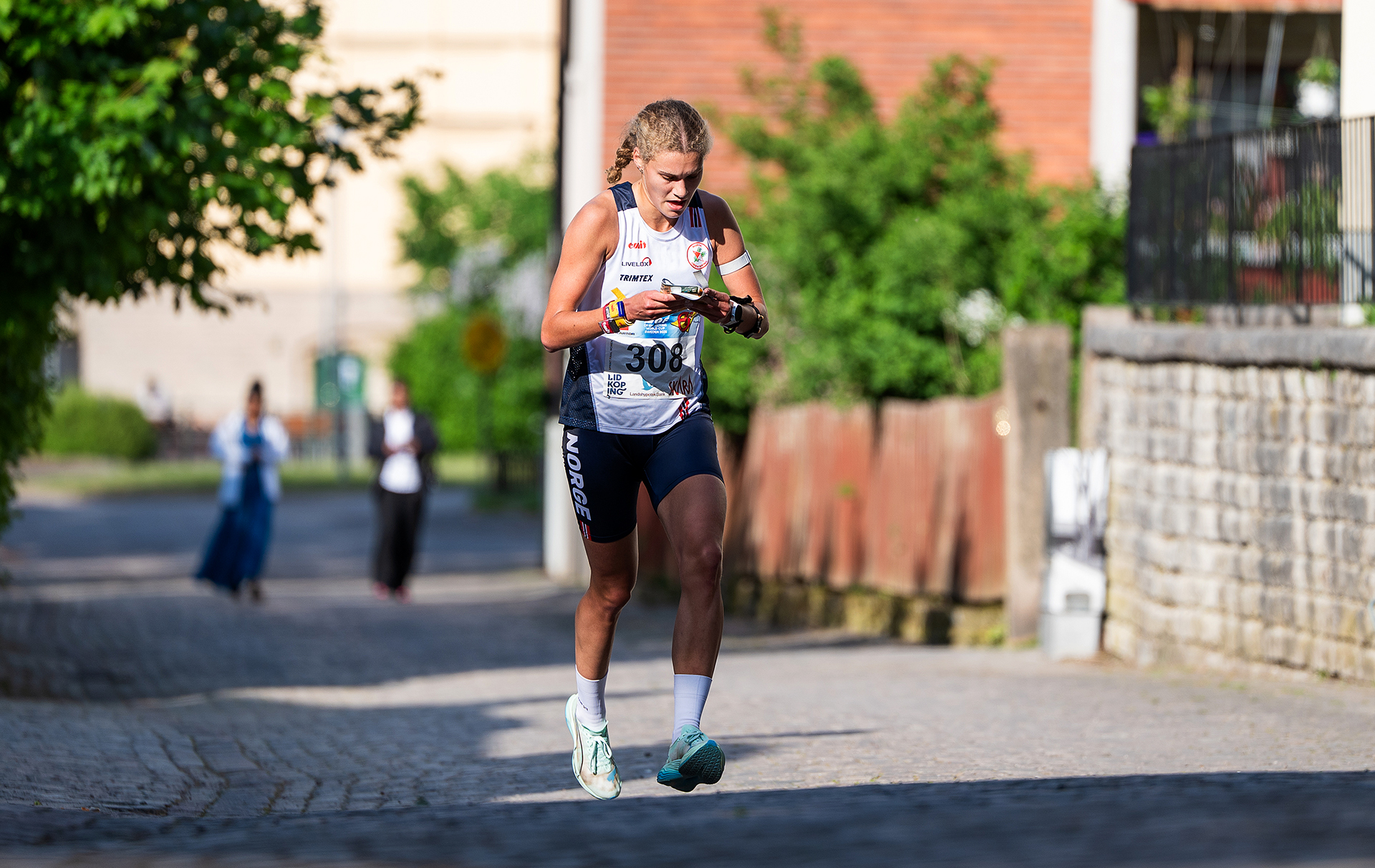
In the women’s elite category, Pia Young Vik of Norway delivered a performance that exuded confidence and tactical mastery. She was drawn into Heat 1, a notoriously challenging draw that featured pre-race favorite Simona Aebersold of Switzerland. Young Vik, starting immediately behind Aebersold, demonstrated exceptional control from the outset. She consistently maintained a superior position throughout the course, crossing the finish line a significant seven seconds ahead of the Swiss star. This decisive victory not only secured her direct passage to the final but also provided a substantial boost of self-assurance heading into the medal races. The close proximity of other strong competitors, including Sweden’s Sanna Fast and the Czech Republic’s Lucie Dittrichova, who finished between Young Vik and Aebersold, underscored the depth of talent in this heat and the high level of competition expected in the finals.
Another Norwegian, Ane Dyrkorn, also demonstrated a steady and reliable performance in the same heat. She secured a sixth-place finish, a commendable result that saw her comfortably within the top 15 qualifying positions. Her performance, while not as spectacular as Young Vik’s, highlighted the team’s overall strength and depth in the women’s field.
Kristin Melby Jacobsen’s Surprising Surge
The second women’s heat saw an impressive display from Kristin Melby Jacobsen. Despite not being seeded among the top contenders for this heat, the Larvik native executed a strong late-race surge. Starting further down the rankings, she steadily overtook multiple competitors in the latter stages of the course, ultimately securing a fifth-place finish. Her performance was particularly noteworthy as she finished only eight seconds behind Finland’s Inka Nurminen, who claimed second place. The heat was dominated by the Czech Republic’s Tereza Rauturier, who delivered an overwhelming victory, finishing a remarkable 23 seconds ahead of Nurminen and 31 seconds ahead of Melby Jacobsen. Jacobsen’s unexpected strong showing indicates a potential dark horse in the final, showcasing the unpredictable nature of the sport.
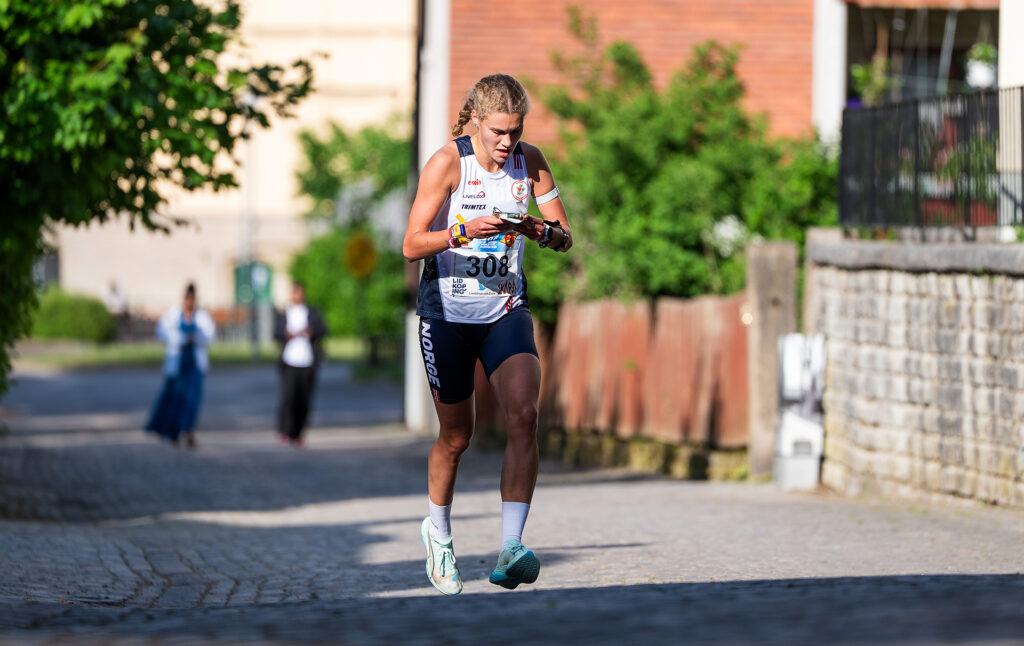
Victoria Håstad Bjørnstad’s Solid Performance
In the third women’s heat, Sweden’s Hanna Lundberg solidified her status as a favorite with a dominant performance, clocking the fastest time across all three women’s heats at 12 minutes and 15 seconds. France’s Cecile Calandry, the reigning European Champion, also impressed, finishing just six seconds behind Lundberg. Norway’s Victoria Håstad Bjørnstad delivered a strong third-place finish, a mere 11 seconds adrift of Lundberg. This performance by Bjørnstad further bolstered Norwegian optimism for the women’s final, indicating multiple medal contenders within the team.
Men’s Heats: Mixed Fortunes and Tense Moments
The men’s competition presented a more varied picture for the Norwegian team. In Heat 1, Eirik Langedal Breivik, another of Norway’s strong medal hopes, experienced a somewhat turbulent qualification. He lost time mid-course and ultimately finished 51 seconds behind the heat winner, Tino Polsini of Switzerland, securing a ninth-place finish. While parts of his run demonstrated his inherent speed and capability to compete at the top, Breivik will need to string together a cleaner, more consistent performance in the final to challenge for a medal. The heat also featured an impressive third-place finish from Spain’s Alvaro Casado, representing Haldens, highlighting the international breadth of talent.
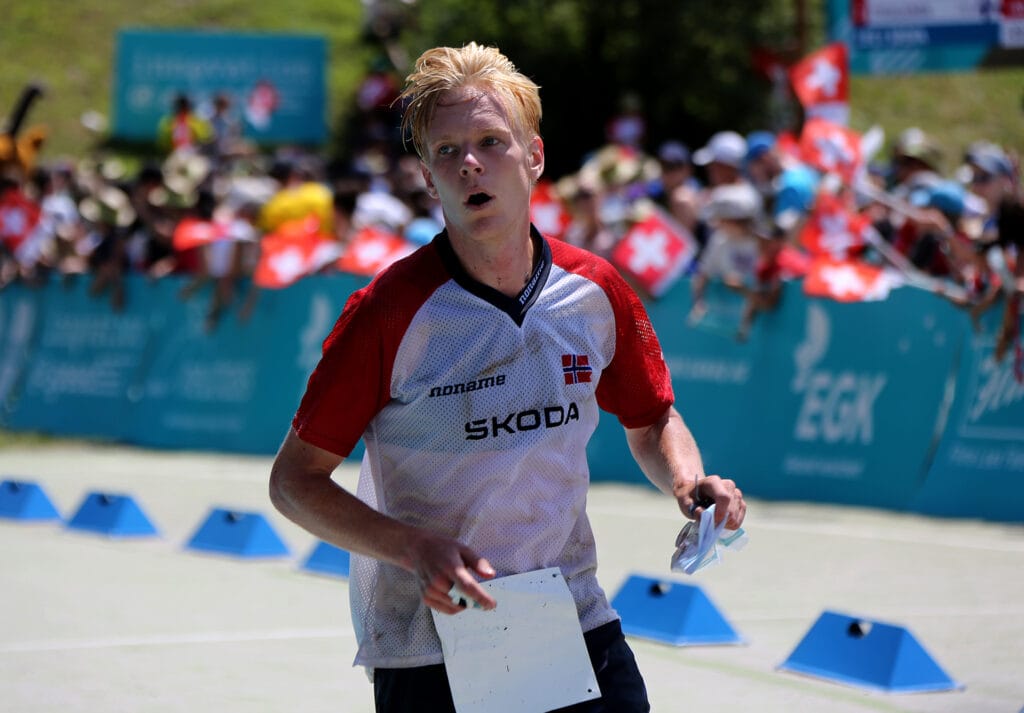
The second men’s heat became the most dramatic and nerve-wracking for Norwegian supporters. Lukas Liland found himself in a precarious position early in the race. The situation intensified when Poland’s Michal Olejnik was initially disqualified but later had his result reinstated. This technicality, while ultimately not costing Liland a place in the final, added to the tension. Liland’s qualification was secured by the narrowest of margins, sharing 15th place with Canada’s Isak Fransson. Both athletes finished 1 minute and 15 seconds behind the heat winner, Isac von Krusenstierna of Sweden. This close call underscores the critical importance of every second and every navigational decision in sprint orienteering. The image of Liland’s strained effort, captured in photographs, visually represents the immense pressure of the qualification.
Kasper Fosser’s Controlled Victory
In contrast to the earlier men’s heats, Kasper Fosser, Norway’s premier gold medal contender, delivered a performance characterized by control and efficiency in Heat 3. Starting first in his heat, Fosser navigated the course without any apparent errors, winning with a comfortable margin. His winning time of 13 minutes and 45 seconds was significantly faster than the times posted in the other men’s heats, reinforcing his favorite status. The O-technical difficulty of the qualification courses was noted by some observers as perhaps less demanding than anticipated, but the speed and precision required were still immense. Competitors like France’s Mathias Barros Vallet, the European Champion, who finished only two seconds behind Fosser, and his compatriot Guilhem Verove, who was 13 seconds back, demonstrated that the French challenge will be formidable in the finals.
Context and Implications for the Finals
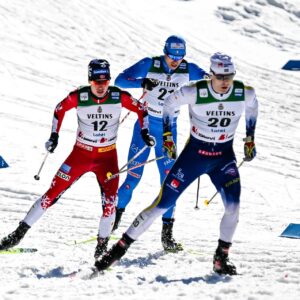
The qualification round in Genoa has set the stage for what promises to be a thrilling World Championship sprint final. All seven Norwegian athletes have demonstrated the capability to compete at the highest level. Pia Young Vik and Kasper Fosser have clearly established themselves as top contenders, while other Norwegian athletes, including Kristin Melby Jacobsen and Victoria Håstad Bjørnstad, have shown the potential to surprise and challenge for podium places.
The qualification results provide valuable data points for strategists and athletes alike. The varying levels of technical difficulty across heats and the different pacing strategies employed offer insights into potential approaches for the finals. The close finishes in several heats suggest that the final will likely be decided by a matter of seconds, emphasizing the need for flawless execution in both skiing and navigation.
The close call for Lukas Liland serves as a stark reminder of the unforgiving nature of sprint orienteering. Even a minor navigational error or a slight lapse in concentration can have significant consequences. His ability to secure a qualifying spot under such pressure, however, speaks volumes about his resilience.
The performances of international competitors, particularly from Switzerland, Sweden, France, and the Czech Republic, indicate a highly competitive field. The French team, in particular, appears to be in strong form, with multiple athletes demonstrating excellent speed and technical skill.
Looking Ahead: The Championship Final
The final races are scheduled to commence at 14:10 local time today. The live broadcast will be available through Classis.com and the IOF Orienteering platform, allowing fans worldwide to follow the action. The results from the qualification round are available for detailed analysis on the official results portal at https://app.liveresults.it/woc2026/sq/classes.
The Norwegian Ski Orienteering Federation will undoubtedly be analyzing these results to fine-tune strategies for the finals. The blend of established stars and emerging talents within the Norwegian team offers a compelling narrative for the championship. The success in Genoa, despite the moments of tension, signifies a strong position for Norway as they aim to secure World Championship titles in this demanding and dynamic sport. The anticipation is palpable as the athletes prepare to contest the ultimate prize in ski orienteering.

