
The indefinite suspension of summer skiing operations on the Horstman Glacier at Whistler Blackcomb marks a definitive turning point for the North American winter sports industry, signaling the end of an era that once defined the peak of high-altitude athletic training. For Mike Douglas, a professional skier and Salomon brand ambassador often heralded as the "Godfather of Freeskiing," the loss of the glacier is more than a logistical hurdle for athletes; it is a profound environmental indictment. Douglas, who spent the 1990s utilizing the glacier as a proving ground for the burgeoning freeskiing movement, has witnessed a three-decade transformation that has seen the once-mighty ice mass recede into a state of near-total depletion. As the outdoor industry grapples with the accelerating effects of climate change, the partnership between Salomon and the advocacy group Protect Our Winters (POW) has emerged as a primary framework for how global brands and elite athletes can pivot from passive observation to active systemic intervention.
The Decline of the Horstman Glacier: A Chronological Perspective
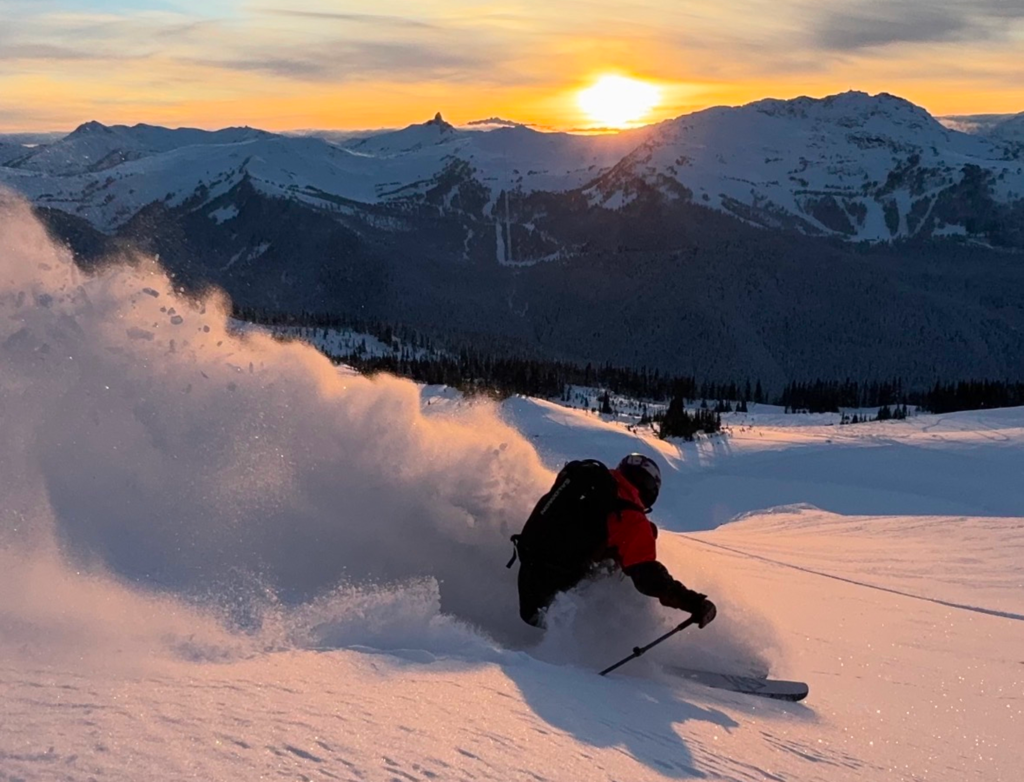
The Horstman Glacier, situated on Blackcomb Mountain in British Columbia, served for over 30 years as the premier destination for summer ski camps and professional training. During the 1980s and 1990s, the glacier provided a reliable snowpack through July and August, allowing athletes like Douglas to refine their skills year-round. This accessibility was instrumental in the development of twin-tip skis and the progression of freestyle maneuvers that eventually found their way into the Olympic Games.
However, the timeline of the glacier’s decline reflects broader global warming trends. By the mid-2000s, Whistler Blackcomb began implementing snow-harvesting and grooming techniques to preserve the surface of the ice. In 2015, the resort installed snowmaking infrastructure on the glacier—a move that was then considered a radical measure to combat thinning ice. Despite these efforts, the "heat dome" events and record-breaking summer temperatures of the early 2020s accelerated the melt beyond the capacity of artificial intervention. In 2023, the resort officially announced that summer operations would be suspended indefinitely, citing the physical instability of the ice and the inability to maintain a safe skiing surface.
The closure is not an isolated incident but part of a documented retreat of glaciers across the Pacific Northwest. According to data from the University of Northern British Columbia, glaciers in Western Canada are projected to lose 70% to 90% of their volume by the year 2100 if current greenhouse gas emission trajectories continue. For the ski industry, the Horstman Glacier is the "canary in the coal mine," representing the first major casualty in a series of expected topographical shifts.
Data-Driven Impacts on the Winter Sports Economy
The economic implications of shrinking snowpacks and vanishing glaciers are significant. The global ski resort market, valued at approximately $13 billion annually, relies on predictable seasonal cycles. In the United States and Canada, the ski industry contributes billions to the GDP and supports hundreds of thousands of jobs in rural mountain communities.
Research conducted by Climate Central indicates that since 1970, the winter season has warmed by an average of 3 degrees Fahrenheit across the contiguous United States, with some northern regions seeing increases of over 5 degrees. This warming results in shorter seasons, increased reliance on energy-intensive snowmaking, and a "squeezing" of the industry into higher elevations. For brands like Salomon, which manufacture hardware ranging from skis to boots and bindings, the contraction of the winter season poses a direct threat to the long-term viability of the equipment market.
Salomon’s Strategic Pivot: Manufacturing and Sustainability
In response to these environmental pressures, Salomon has overhauled its corporate strategy, moving away from traditional manufacturing models toward a "circular economy" framework. The company’s "Play-Minded" program serves as the blueprint for this transition, focusing on four key pillars: the players (athletes), the playmakers (employees), the playground (the environment), and the toys (the products).
A critical component of this strategy is the development of the "S/MAX eSkin" and the "Addikt Pro" ski lines, which incorporate recycled materials and are designed for easier disassembly at the end of their lifecycle. Traditionally, skis are difficult to recycle because they are composed of complex layers of wood, metal, plastic, and epoxy resins. Salomon’s research and development teams have been tasked with finding bio-sourced alternatives to petroleum-based plastics and reducing the carbon footprint of the supply chain.
According to internal reports, Salomon aims to reduce its overall carbon emissions by 30% by 2030 and ensure that 100% of its new products are designed with circular economy principles. This includes a transition to 100% renewable energy in its primary manufacturing facilities and the elimination of perfluorinated chemicals (PFCs) from its outerwear and equipment.
Athlete Advocacy and the Role of Protect Our Winters
The collaboration between Salomon and Protect Our Winters (POW) represents a shift in the role of the professional athlete. In the past, brand ambassadors were primarily valued for their performance and marketing appeal. Today, athletes like Mike Douglas are increasingly utilized as "climate communicators."
POW, founded in 2007 by professional snowboarder Jeremy Jones, has become a formidable political force, focusing on non-partisan policy changes rather than individual lifestyle shifts. The organization trains athletes to meet with lawmakers, participate in climate summits, and use their massive social media platforms to educate the public on legislative solutions, such as carbon pricing and renewable energy incentives.
Douglas, a member of the POW Canada Alliance since 2018, views his role as a bridge between the high-performance demands of the sport and the practicalities of industrial sustainability. "I like to think I can help balance the desire for net zero from the team at Salomon HQ and the practical realities of participating in high-level sports," Douglas noted. His involvement extends to the Quality Ski Time (QST) tour, where Salomon and POW engage directly with local ski communities to discuss climate resilience and the future of the sport.
Official Responses and Industry Sentiment
The shift toward sustainability has drawn support from various sectors of the outdoor industry. Representatives from Vail Resorts, the parent company of Whistler Blackcomb, have expressed a commitment to their "Commitment to Zero" initiative, which aims for a zero net operating footprint by 2030. This includes zero net emissions, zero waste to landfill, and zero net operating impact on forests and habitat.
Industry analysts suggest that Salomon’s proactive stance is not merely an ethical choice but a strategic necessity. "The outdoor industry is uniquely vulnerable to climate change," says Dr. Elizabeth Burakowski, a research assistant professor at the University of New Hampshire who studies the intersection of winter tourism and climate. "Brands that fail to lead on climate advocacy risk losing their core demographic, which is increasingly composed of environmentally conscious younger consumers."

Furthermore, the European Outdoor Group (EOG), a trade body representing over 100 brands, has called for greater transparency in carbon reporting across the industry. Salomon’s willingness to share its sustainability metrics and participate in cross-brand initiatives like the "Carbon Transparency Project" is seen as a model for corporate transparency.
Broader Implications: The Future of Winter Culture
The loss of the Horstman Glacier and the subsequent response from Salomon and POW point toward a broader transformation of winter culture. As traditional glaciers disappear, the industry is forced to reconsider the definition of "outdoor recreation." This includes a greater emphasis on backcountry skiing, which requires less infrastructure than resort-based skiing, and a focus on "low-impact" tourism.
However, the challenges remain immense. The carbon footprint of global athlete travel and the logistics of shipping heavy equipment worldwide continue to be significant hurdles. Douglas acknowledges the inherent contradictions of being a professional athlete in a carbon-intensive world but argues that silence is no longer an option. "If we don’t speak up, who will?" he asks, emphasizing that the influence of the outdoor community is a powerful tool for driving large-scale policy change.
The trajectory of the ski industry over the next decade will likely be defined by the success or failure of these corporate and advocacy partnerships. As snowlines recede and winters become more volatile, the focus has shifted from "saving the season" to "saving the system." The message from Douglas and Salomon is clear: the era of passive observation has ended. For the ski industry to survive, it must become a leader in the global transition to a low-carbon economy.
As Douglas concludes, the window for meaningful action is closing rapidly. The disappearance of the Horstman Glacier is a permanent reminder of what has already been lost, but it also serves as a catalyst for what might still be saved through collective responsibility and rigorous corporate action. The partnership between Salomon and Protect Our Winters provides a roadmap for an industry in transition, proving that while the ice may be melting, the resolve of the outdoor community is only beginning to solidify.

