
In a series of rapid-fire executive and departmental actions coordinated during the recent holiday season, the Trump administration has initiated a fundamental restructuring of United States energy and environmental priorities. These measures, ranging from the suspension of multi-billion-dollar offshore wind developments to the proposed opening of nearly all federal waters to oil and gas exploration, represent a decisive pivot away from the decarbonization goals of the previous four years. The administration characterizes these moves as essential for national security and energy dominance, while critics and industry analysts warn of significant economic disruption, legal challenges, and a degradation of the scientific infrastructure necessary to monitor extreme weather and climate shifts.
Immediate Suspension of Major Offshore Wind Infrastructure
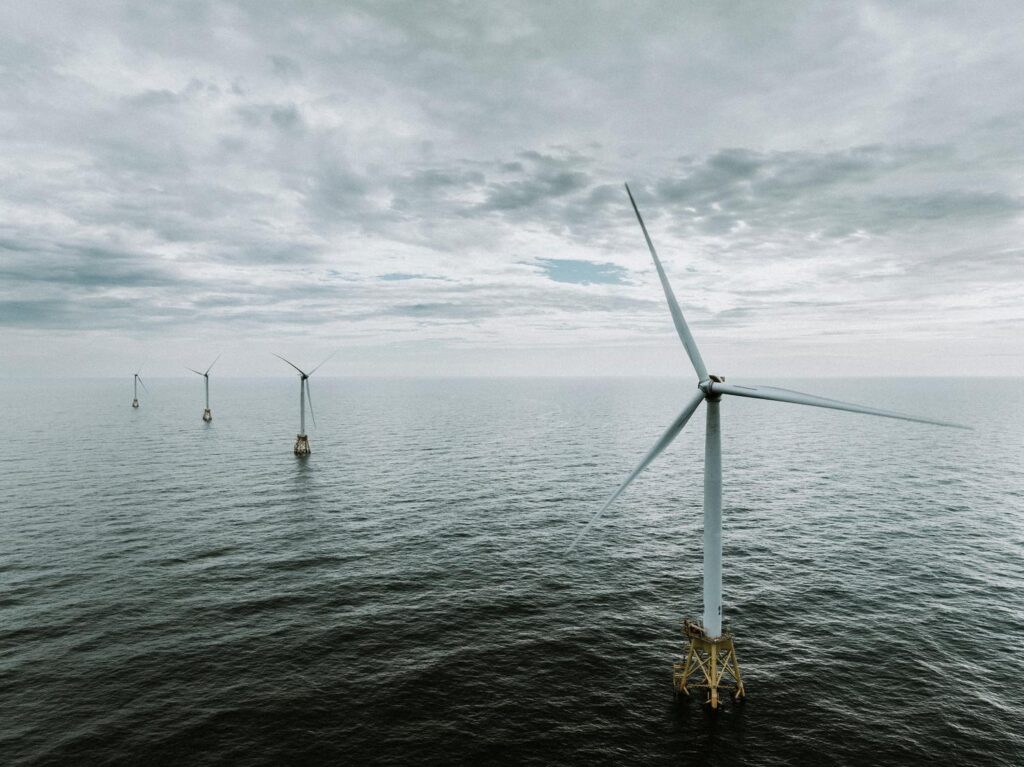
The Department of the Interior (DOI) has issued orders to halt five major offshore wind projects that were already in various stages of construction and commissioning. The affected developments include Vineyard Wind (Massachusetts), Revolution Wind (Rhode Island/Connecticut), Coastal Virginia Offshore Wind (Virginia), Sunrise Wind (New York), and Empire Wind (New York). Collectively, these projects represent the vanguard of the American offshore wind industry, intended to provide gigawatts of clean energy to the Eastern Seaboard and fulfill state-level renewable energy mandates.
The administration cited "national security" concerns as the primary justification for the suspension, utilizing classified assessments to bypass standard administrative review processes. This maneuver effectively freezes billions of dollars in private capital investment and stalls the development of a domestic supply chain that had begun to take root in coastal ports.
Economic and Industrial Implications
The suspension of these projects creates a climate of profound uncertainty for the renewable energy sector. According to data from the American Clean Power Association, the offshore wind pipeline was projected to support more than 80,000 jobs by 2030. By halting projects mid-construction, the administration risks not only the immediate loss of labor hours but also the potential for long-term litigation from developers who had secured federal permits under the previous regulatory framework.

From a grid reliability perspective, these projects were slated to replace aging thermal power plants scheduled for retirement. The sudden removal of this projected capacity necessitates a recalculation of regional energy needs by organizations such as ISO New England and PJM Interconnection. Furthermore, the use of classified "security" claims limits the ability of developers to challenge the decision in open court, as the evidence used to justify the stoppage remains shielded from public and corporate scrutiny.
Proposed Expansion of Offshore Drilling to 1.27 Billion Acres
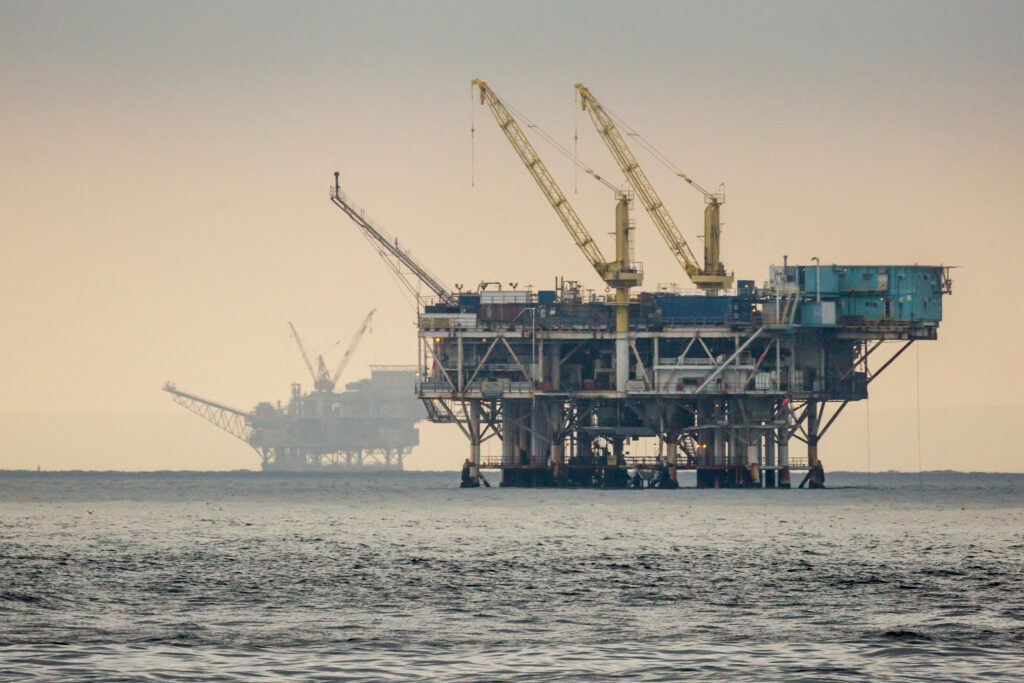
Simultaneous with the contraction of the offshore wind sector, the administration has unveiled an expansive Five-Year Outer Continental Shelf (OCS) Oil and Gas Leasing Program. The proposal aims to open 1.27 billion acres of U.S. waters to private extraction, encompassing nearly the entirety of the Pacific and Atlantic coasts, as well as vast tracts of the Arctic and the Gulf of Mexico.
This proposal marks the most significant expansion of potential offshore drilling in American history, reversing a decade of policies that had restricted leasing in environmentally sensitive or economically vital coastal zones. The plan targets regions such as the California coast and the Florida Eastern Seaboard, areas where local bipartisan opposition has historically been strong due to the risks posed to tourism, fishing, and marine ecosystems.
Environmental and Geographic Scope
The inclusion of the Arctic and the Eastern Seaboard is particularly significant. The Arctic National Wildlife Refuge (ANWR) and the adjacent Beaufort and Chukchi Seas are considered high-risk, high-reward environments where oil spill response is complicated by extreme weather and ice cover. On the Atlantic coast, the proposal faces immediate pushback from state governors who cite the potential impact on the multi-billion-dollar coastal recreation economy.
Data from the Bureau of Ocean Energy Management (BOEM) suggests that while these areas contain significant undiscovered technically recoverable resources, the timeline for actual production ranges from 10 to 15 years. Analysts argue that this move is less about immediate energy production and more about establishing a long-term legal and regulatory preference for fossil fuel extraction over renewable alternatives.
Threat to the National Center for Atmospheric Research (NCAR)
The administration has signaled its intent to potentially shutter or significantly defund the National Center for Atmospheric Research (NCAR), located in Boulder, Colorado. Founded in 1960 and managed by the University Corporation for Atmospheric Research (UCAR) under a cooperative agreement with the National Science Foundation (NSF), NCAR is a cornerstone of global climate and weather science.
The center provides the high-performance computing resources and modeling frameworks that underpin the nation’s most accurate weather forecasting and climate projections. The administration’s scrutiny of the institution appears to be part of a broader skepticism regarding federal climate research, which officials have characterized as duplicative or ideologically driven.
Impact on Weather Forecasting and Public Safety
The potential dissolution of NCAR would have immediate ramifications for public safety and economic planning. NCAR’s "Community Earth System Model" is used by local governments to plan for water scarcity, by agricultural sectors to project crop yields, and by emergency managers to understand wildfire behavior and hurricane intensification.
Scientists warn that losing NCAR’s centralized data repositories and supercomputing capabilities would "blind" the United States to emerging atmospheric trends. Without the data generated by NCAR, the precision of 10-day weather forecasts—essential for aviation, shipping, and logistics—would likely degrade. The move has sparked a wave of concern from the scientific community, which views the threat as an attempt to dismantle the evidentiary basis for climate-related policy.
Federal Intervention in Colorado’s Energy Market: The Craig Generating Station
In an unprecedented application of federal emergency powers, the U.S. Department of Energy (DOE) has ordered the Craig Generating Station Unit 1 in Colorado to remain operational. The coal-fired unit, which is nearly 50 years old, was scheduled for retirement as part of a long-negotiated transition plan between the state of Colorado, Tri-State Generation and Transmission Association, and environmental stakeholders.

The DOE invoked Section 202(c) of the Federal Power Act, a provision intended for use during "war or other emergencies," to keep the plant online. This order was issued despite the fact that Unit 1 was already offline due to mechanical failures and was deemed uneconomic by its operators.
Regulatory Conflict and Economic Analysis
The decision to force a coal plant to remain open overrides state-level "Clean Energy Plans" and contradicts the market-based decisions of the utility owners. Tri-State had determined that retiring the unit was the most cost-effective path for its members, as the cost of maintaining the aging infrastructure exceeded the cost of purchasing power from newer, cleaner sources.
By forcing the plant to stay online, the federal government is effectively mandating higher electricity rates for rural consumers in the West. Furthermore, the decision creates a regulatory conflict between federal mandates and state emissions laws. Legal experts suggest this intervention sets a precedent for the federal government to seize control of local grid decisions, potentially forcing other states to keep aging fossil fuel assets in operation against the wishes of local regulators and market participants.
Chronology of Recent Actions
The timeline of these events reflects a deliberate strategy of rapid implementation during a period of reduced public and media attention:
- Late December: The DOI quietly issues suspension orders for the five offshore wind projects, citing classified national security assessments.
- December 30: The DOE issues the emergency order for Craig Generating Station Unit 1, less than 24 hours before its scheduled decommissioning.
- January 2: The administration formally announces the 1.27 billion-acre offshore drilling proposal, initiating a 60-day public comment period.
- January 5: Internal memos from the Office of Management and Budget (OMB) are leaked, detailing a plan to "reorganize or terminate" the National Center for Atmospheric Research as part of a broader scientific spending freeze.
Broader Impact and Policy Implications
The shift in U.S. policy has sent shockwaves through both domestic and international markets. For the past decade, the United States has been a primary destination for global investment in renewable energy. The sudden reversal of permits and the use of emergency powers to support coal suggest a move toward a command-and-control energy policy that prioritizes traditional fuels regardless of market demand.
Legal and Market Stability
The administration’s actions are expected to trigger a deluge of litigation. States like California and New York have already indicated they will sue to block offshore drilling and wind suspensions. Additionally, the use of the Federal Power Act to keep individual plants open will likely be challenged as an overreach of executive authority.
For the private sector, the primary concern is "policy whiplash." Major infrastructure projects require decades of planning and regulatory certainty. By demonstrating that fully permitted projects can be halted mid-construction via executive fiat, the administration may inadvertently discourage investment across all energy sectors, including the oil and gas industries it seeks to promote.
Climate and Environmental Accountability
The combination of increased drilling, the preservation of coal, and the defunding of atmospheric research represents a comprehensive withdrawal from the global effort to mitigate carbon emissions. The U.S. is currently the world’s largest producer of oil and gas; expanding this capacity while simultaneously suppressing the science that monitors its impact suggests a fundamental change in the nation’s role in global environmental governance.
As the 2026 midterm elections approach, these energy policies are expected to become a central point of contention. The debate will likely center on whether the administration’s "energy dominance" strategy successfully lowers costs for consumers or if the disruption of the clean energy transition leads to long-term economic and environmental liabilities. For now, the administration continues to move forward, asserting that these actions are necessary to ensure the United States remains the preeminent global energy power in an increasingly volatile world.

