
The transition from elite winter sports to high-intensity fitness racing has gained significant momentum in recent months, with Italian biathlon legend Dorothea Wierer becoming the latest high-profile athlete to pivot toward the rapidly expanding discipline of Hyrox. After concluding an illustrious 17-year career in international biathlon at the conclusion of the 2026 Olympic Winter Games on home soil, Wierer is set to test her physical limits in a drastically different competitive environment. Her debut is scheduled for September 27 in Rome, where she will face the unique rigors of a sport that combines endurance running with functional strength training.
A Legacy of Excellence in Biathlon
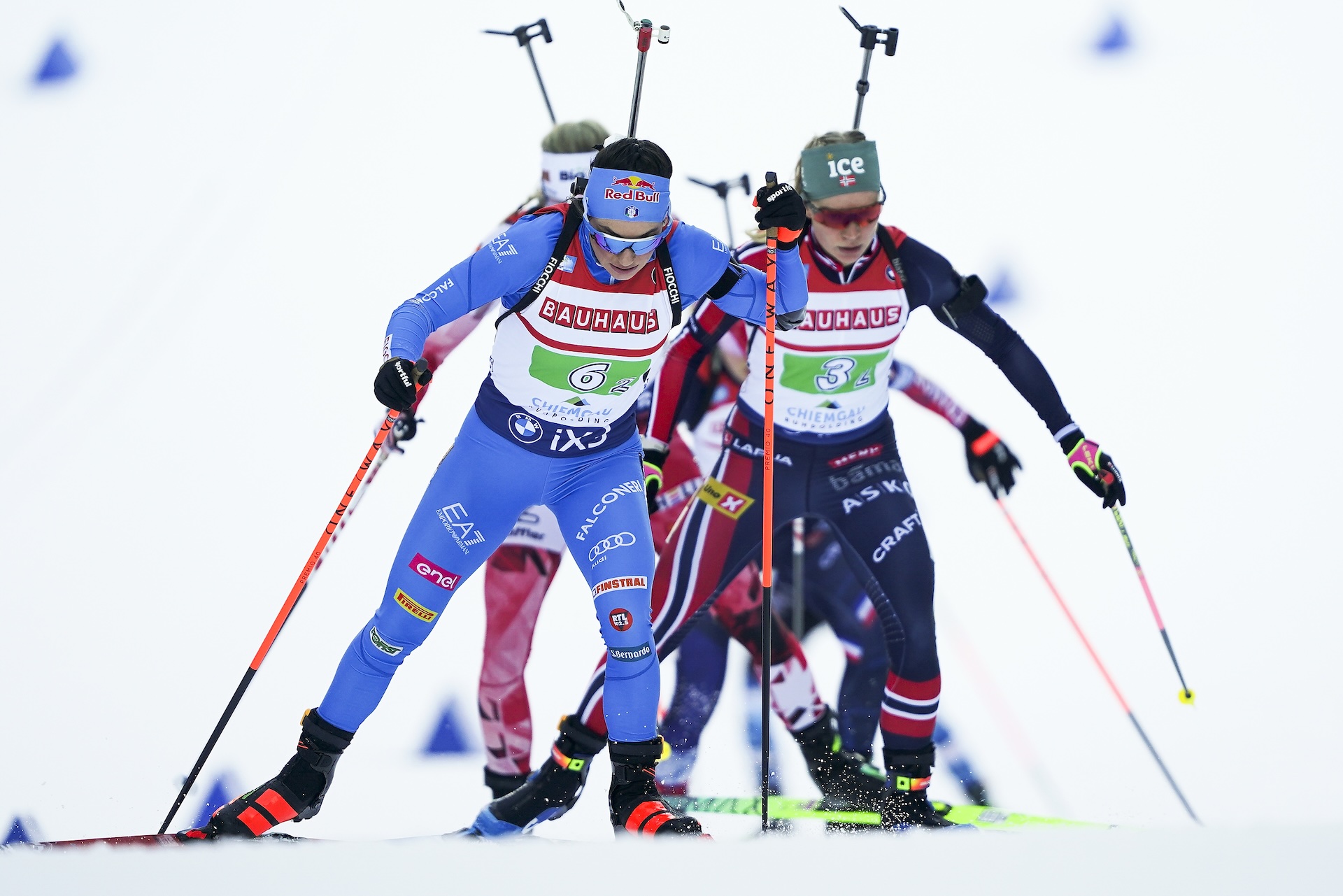
To understand the significance of this move, one must first consider the magnitude of Wierer’s achievements. Her retirement earlier this year marked the end of an era for Italian winter sports. Throughout her career, Wierer secured four Olympic medals across four separate Olympic cycles, cementing her status as one of the most consistent performers in the history of the sport. Her resume includes four World Championship gold medals, 23 individual World Cup victories, and two overall World Cup titles (2019 and 2020).
Having debuted in the World Cup circuit during the 2009 season, Wierer participated in 440 individual races. Her decision to retire immediately following the 2026 Olympics in Anterselva was a calculated conclusion to a grueling career, yet her competitive drive appears to have remained intact. The transition to Hyrox, a sport that demands a different physiological profile than the precision and aerobic capacity required for biathlon, presents a new set of challenges that the 36-year-old is eager to navigate.
The Challenge of Hyrox
Hyrox is often described as the "World Series of Fitness Racing." Unlike biathlon, which relies on the combination of cross-country skiing speed and marksmanship, Hyrox is a standardized competition consisting of eight 1-kilometer runs, each followed by a functional movement station. These stations include movements such as the Sled Push, Sled Pull, Burpee Broad Jumps, and Wall Balls.
Wierer’s decision to enter the arena follows a direct challenge from Danish Hyrox professional Ida Mathilde Steensgaard. The nature of the competition is starkly different from the repetitive motion of skiing. Wierer has been candid regarding her apprehension, noting that her lifelong training in biathlon focused on aerobic threshold and technical accuracy, whereas Hyrox requires explosive power and sustained muscular endurance under extreme fatigue.
"I have spent my entire life training for one thing, and now I am entering an environment that is completely foreign to me," Wierer remarked in a recent interview. She highlighted the technical requirements of the movements, particularly the burpee broad jumps, as a point of concern. Due to her stature, she acknowledges that the biomechanical advantages enjoyed by taller competitors in certain movements may present a hurdle she will need to overcome through conditioning and tactical pacing. Her stated goal for the Rome event is to complete the course in under two hours, a target that serves as both a benchmark for her fitness level and a reflection of her cautious optimism.
The Growing Trend of Elite Athletes Migrating to Fitness Racing
Wierer is part of an emerging trend where retired winter Olympians are finding success and community within the Hyrox circuit. The accessibility of the sport, coupled with its focus on measurable physical output, has attracted numerous athletes from the world of Nordic skiing and biathlon.
In June 2026, Swedish cross-country skiing stars Moa Lundgren and Gustaf Kvarnbrink competed in the Hyrox World Championships, securing a bronze medal in the mixed doubles category. Their performance served as a proof-of-concept for the viability of elite endurance athletes in fitness racing. Similarly, former Norwegian star Helene Marie Fossesholm, who stunned the sports world by retiring from professional cross-country skiing shortly before the 2026 Olympic season, finished fifth in her age group during the same World Championship event.
This migration has not gone unnoticed by industry leaders. Petter Northug, the legendary Norwegian skier and entrepreneur, has actively sought to incorporate Hyrox athletes into his professional Ski Classics team. This cross-pollination of disciplines underscores a shift in how professional athletes view their post-career options, moving away from traditional coaching or commentary roles toward high-intensity, competitive fitness circuits.
Fact-Based Analysis: Physiological Implications
The physiological demands of Hyrox versus biathlon are distinct, and Wierer’s transition offers a case study in athletic adaptation. Biathlon is characterized by high-intensity interval performance punctuated by moments of extreme mental focus during shooting bouts. The heart rate must be managed to ensure stability during the shooting phase.
In contrast, Hyrox is a test of "glycolytic capacity" and "muscular stamina." The athlete is under constant load, meaning the cardiovascular system must handle the strain of running while the upper and lower body muscles are simultaneously fatigued by heavy, functional movements. For an athlete of Wierer’s caliber, the primary challenge will be the recovery rate between the functional stations. While her aerobic base is undoubtedly world-class, her ability to sustain power output in the sled push—a movement that recruits massive amounts of energy—will be the defining factor in her performance.
Industry Impact and Future Outlook
The entry of high-profile athletes like Dorothea Wierer serves to legitimize and promote Hyrox within the broader sports ecosystem. As the sport seeks global recognition, the involvement of decorated Olympians helps bridge the gap between traditional professional athletics and mass-participation fitness events.
From an organizational standpoint, the presence of these athletes provides a clear narrative for the sport’s growth. The fact that the Rome event has garnered attention from international media outlets—as evidenced by the engagement with organizations like Red Bull—demonstrates that the market for fitness-based competition is expanding rapidly.
However, the implications go beyond mere marketing. Wierer’s foray into Hyrox also highlights the evolving lifecycle of professional athletes. As sports science advances and athletes remain in better physical condition for longer, the desire to compete at a high level does not necessarily vanish upon retirement from professional leagues. Hyrox offers a structured, competitive, and highly scalable environment that allows these athletes to maintain their identity as competitors while pivoting to a new challenge.
Chronology of Key Developments
- February 2026: Dorothea Wierer concludes her career at the Olympic Winter Games in Anterselva, Italy.
- June 2026: Swedish athletes Moa Lundgren and Gustaf Kvarnbrink achieve a podium finish at the Hyrox World Championships, signaling the entry of Nordic skiers into the sport.
- Summer 2026: Helene Marie Fossesholm continues her transition into the fitness racing scene, placing fifth in her age group at the world championships.
- September 2026: Dorothea Wierer formally announces her debut in the Hyrox discipline following a challenge from Ida Mathilde Steensgaard.
- September 27, 2026: Scheduled date for Wierer’s debut competition in Rome.
Final Preparations
As the date for the Rome competition approaches, Wierer has emphasized that her training remains a work in progress. While she has relied on the foundational fitness built over nearly two decades of biathlon, the specific training required for the functional movements—such as the sled pull and wall balls—is being integrated into her schedule only recently.
Her participation in Rome will be closely watched by fans of both sports. If she succeeds in her goal of finishing under two hours, it will likely serve as a catalyst for further recruitment of retired winter athletes into the Hyrox circuit. Regardless of the outcome, Wierer’s transition signifies a broader shift in the sports landscape, where the boundary between professional performance and elite fitness racing continues to blur. Whether this remains a one-time challenge or the beginning of a second athletic career remains to be seen, but the move undoubtedly adds a compelling chapter to her already storied legacy.

