
The crisp winter air of the Sierra Nevada mountains usually brings joy to thousands of weekend warriors and elite athletes alike, but for orthopedic surgeons like Dr. Greg Lichtman, the peak winter season also marks the arrival of a devastating and all-too-familiar cohort of patients. Operating out of Auburn, California, near the Lake Tahoe region, Lichtman spends a significant portion of his professional life reconstructing torn anterior cruciate ligaments (ACLs). Yet, despite his proficiency in modern sports medicine and surgical reconstruction, his ultimate professional aspiration is remarkably counterintuitive: he wants to keep skiers completely out of his operating room.
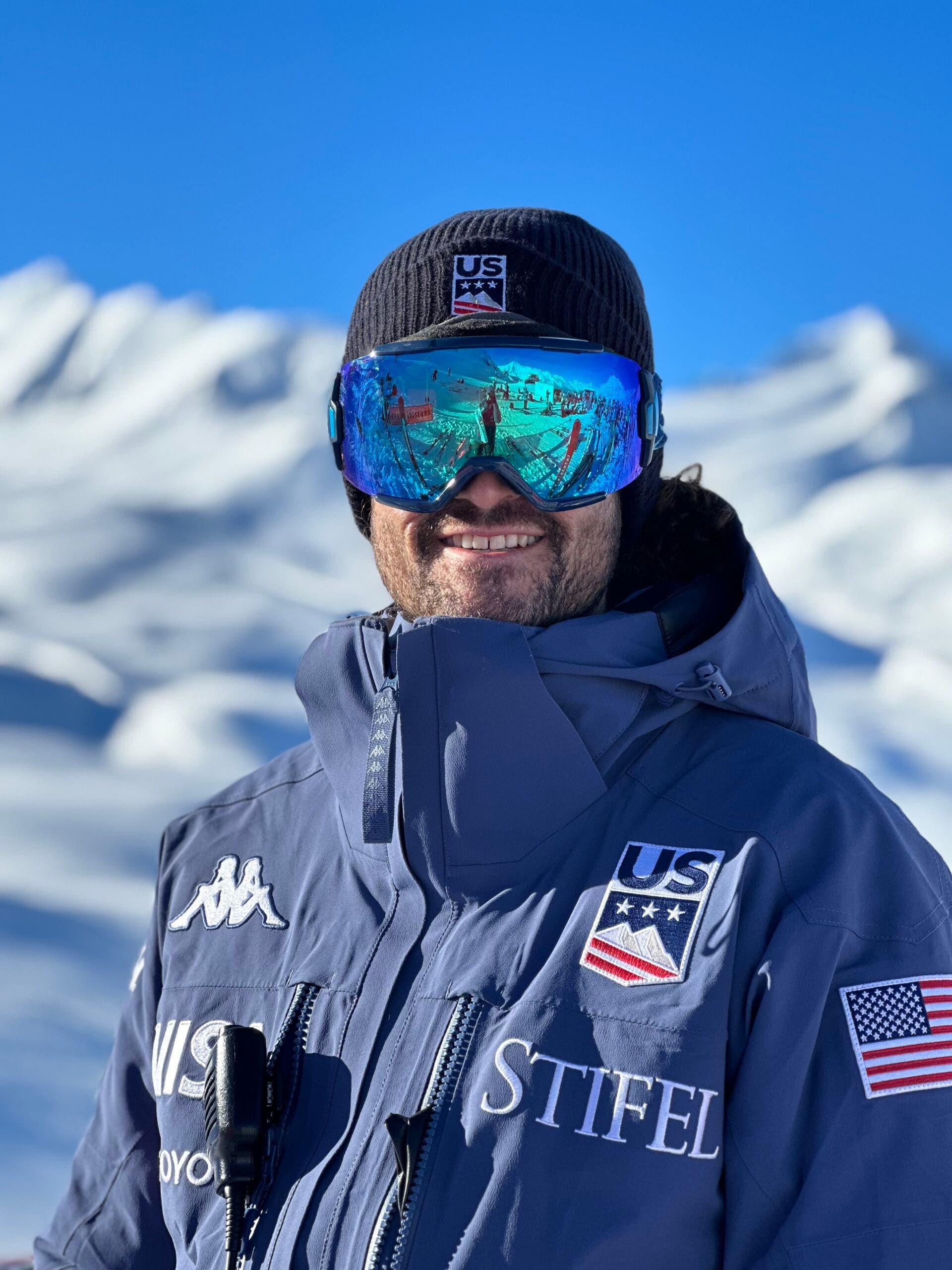
Lichtman’s dedication to knee preservation is not merely theoretical. It is deeply rooted in an elite educational and practical background that bridges clinical orthopedics with world-class athletic competition. His specialized understanding of alpine trauma traces back to a transformative fellowship at Vail’s prestigious Steadman Philippon Research Institute, followed by specialized sports medicine training at the University of Massachusetts. Today, alongside his thriving private practice, Lichtman serves as a pool physician for the U.S. Women’s Ski Team, accompanying elite racers across treacherous international courses from Portillo, Chile, to Val d’Isère, France, with upcoming deployments slated for Lillehammer, Norway.
While the medical community continues to refine surgical techniques and rehabilitation protocols, Lichtman and a growing contingent of sports medicine specialists argue that the alpine sports industry lags dangerously behind land-based athletics when it comes to preventative education. By dissecting the precise biomechanics of knee trauma, understanding environmental risk factors, and re-evaluating off-season dry-land training regimens, medical professionals hope to stem a rising tide of devastating knee injuries that sideline recreational and professional skiers alike.
The Genesis of an Injury Prevention Advocate
Dr. Lichtman’s journey into sports medicine and knee pathology began during a formative gap year spent at the Steadman Philippon Research Institute in Vail, Colorado. While many medical trainees spend their early years buried in textbooks, Lichtman found himself immersed in the epicenter of elite winter sports trauma. Working side-by-side with renowned surgeons, he observed countless surgeries performed on members of the U.S. Ski Team, gaining an intimate, firsthand look at the catastrophic failure of the anterior cruciate ligament. Simultaneously, he logged extensive days on the slopes, connecting clinical imaging and surgical pathology with the real-world dynamics of alpine sliding.
Later, during his sports medicine fellowship at the University of Massachusetts, Lichtman noticed a stark disparity in the medical literature. While sports like soccer, basketball, and volleyball boasted comprehensive, data-driven neuromuscular injury prevention programs—such as the FIFA 11+ warm-up routine—alpine skiing lacked equivalent standardized protocols. Land-based sports had successfully utilized targeted neuromuscular training to drive down ACL injury rates by 40 to 60 percent. Skiing, conversely, remained largely reactive, treating trauma after the bindings released and the ligament snapped rather than systematically mitigating the risk before the first snowfall.
This realization shaped Lichtman’s dual mission: to provide world-class surgical care when accidents prove unavoidable, and to arm the skiing public with the biomechanical knowledge required to prevent those accidents in the first place. His role as a U.S. Ski Team pool physician further reinforces this perspective, offering a front-row seat to the stresses endured by the human body when hurtling down icy tracks at speeds exceeding 80 miles per hour.
Anatomy of a Disaster: The 60-Millisecond Window
To understand how to prevent an ACL tear, skiers must first understand the precise mechanical failure of the knee joint. According to Lichtman, the overwhelming majority of recreational and competitive ACL tears occur in a remarkably brief timeframe—a mere 60 milliseconds—long before a ski binding ever ejects the boot from the ski.
Skiers are most vulnerable when they find themselves in the "backseat," a colloquial term for a body position where the hips drop backward behind the center of mass, the knees and hips are deeply flexed, and the upper body loses forward pressure against the shins. Once a skier enters this compromised seated position, dynamic control of the joint is severely compromised.
Lichtman identifies two primary injury mechanisms that frequently precipitate an ACL rupture on the mountain:
-
The Slip-Catch Mechanism: This phenomenon occurs predominantly on hard-packed, icy, or variable terrain commonly found across East Coast resorts or during early-season freeze-thaw cycles. As a skier initiates a turn, the downhill ski briefly loses contact with the snow surface. Upon re-engaging with the hardpack, the leg straightens abruptly, then experiences a sudden, forceful compression. This sharp transition forces the lower leg (the tibia) into a valgus position and internal rotation. That rapid internal twisting motion over a compressed, flexed knee is what places catastrophic stress on the anterior cruciate ligament, resulting in a tear within milliseconds.
-
The Phantom Foot Mechanism: Frequently observed when skiers attempt to recover from an off-balance fall, the phantom foot injury arises when a skier slips backward with their weight shifted onto the downhill ski. The uphill arm often trails backward toward the mountain slope, unweighting the uphill ski while concentrating the skier’s entire body weight onto the inside edge of the downhill ski. In this configuration, the ski boot and ski effectively function as a long lever arm—a "phantom foot"—that violently twists the knee joint before the binding safety mechanism has an opportunity to release.
Recognizing Environmental and Physiological Risk Factors
Beyond biomechanical positioning, orthopedic data reveals distinct temporal and environmental patterns that dictate when and where ACL injuries occur. For instance, orthopedic clinics across North America consistently report a significant influx of acute knee injuries during the month of December. This seasonal spike correlates directly with the onset of winter, when eager skiers hit the slopes before their bodies have adapted to the demands of alpine terrain, and when muscle fatigue quickly sets in.
Fatigue is arguably one of the most insidious contributors to alpine trauma. As quadriceps, hamstrings, and core stabilizing muscles tire over a long day of skiing, an individual’s structural integrity deteriorates. Exhausted skiers unconsciously slip backward into the dreaded backseat position, surrendering their athletic stance and exposing their knees to vulnerability. Lichtman stresses the importance of fatigue awareness, noting that recognizing physical exhaustion and calling it a day before the final run can mean the difference between a safe return home and a season-ending trip to the orthopedic clinic.
Environmental conditions also play a critical role in injury rates. Flat-light conditions—where contrast disappears and the snow surface appears completely uniform—rob skiers of depth perception, frequently triggering sudden balance loss. Similarly, variable snow conditions, ranging from icy crusts to heavy, wet powder colloquially known in the Sierra Nevada as "Sierra Cement," present hidden traps for unsuspecting recreationists. Furthermore, excessive speed relative to an individual’s actual technical proficiency remains a persistent hazard. Landing awkwardly in the backseat off a terrain park jump or attempting to ski aggressively beyond one’s skill threshold dramatically elevates the probability of ligament failure.
Reimagining Off-Season Conditioning: Beyond the Basic Wall Sit
For decades, traditional pre-season ski conditioning has relied on a simplistic formula: a few weeks of lunges, squats, and a two-minute wall sit to build quadriceps endurance. While strong quads are undeniably essential for carving turns and absorbing bumps, modern sports medicine indicates that traditional dry-land routines overlook critical stabilizing muscle groups that govern knee alignment.
Lichtman advocates for a comprehensive, multi-planar core and lower-extremity conditioning regimen that specifically targets the neglected muscles responsible for maintaining dynamic knee stability. Chief among these is the gluteus medius, a key hip abductor muscle responsible for executing lateral leg raises. A strong gluteus medius is instrumental in preventing the knees from collapsing inward (dynamic valgus), ensuring that the knee tracks safely directly over the toes throughout a turn.
Additionally, core strength must extend far beyond basic rectus abdominis sit-ups. Integrating exercises that challenge the obliques and deep transverse abdominis provides the torso stability necessary to recover quickly when external forces attempt to knock a skier off balance. By stabilizing the core and pelvic girdle, athletes can maintain their forward athletic stance, keeping pressure firmly planted against the tongues of their ski boots even when navigating challenging terrain.
Equipment Limitations and the Future of Ski Safety
A common misconception among recreational skiers is that modern ski bindings act as a foolproof shield against all lower-extremity trauma. Because the catastrophic forces that rupture an ACL often occur within fractions of a second—long before the mechanical release mechanisms of standard alpine bindings are triggered—recreational skiers must adopt realistic expectations regarding their gear.
Proper equipment maintenance and professional tuning remain non-negotiable. Recreational skiers must ensure that their DIN settings—the numerical scale governing how easily a binding releases based on age, height, weight, skier type, and boot sole length—are professionally calibrated annually. Amateurs must recognize that they do not possess the superhuman reaction times or conditioning of elite World Cup racers like Breezy Johnson, and adjusting bindings to excessively high retention levels creates an unnecessary hazard.
While modern bindings such as Look’s multidirectional release designs offer advanced safety profiles, no existing alpine setup provides absolute immunity against internal rotation injuries. Lichtman points out that the next frontier in ski safety research must involve the development of intelligent binding systems equipped with high-sensitivity sensors capable of detecting harmful internal rotational forces in real-time, instantly ejecting the boot before the ligament reaches its tensile limit.
Until such technological breakthroughs become mainstream, the onus remains on education, conditioning, and self-awareness. By understanding the biomechanics of the slip-catch and phantom foot mechanisms, respecting environmental variables, recognizing the dangers of fatigue, and committing to targeted off-season neuromuscular training, skiers can drastically reduce their risk of catastrophic knee injury. For Dr. Greg Lichtman and his colleagues across the orthopedic community, empowering skiers with this knowledge represents the most effective prescription for keeping patients off the operating table and out on the mountain where they belong.

