
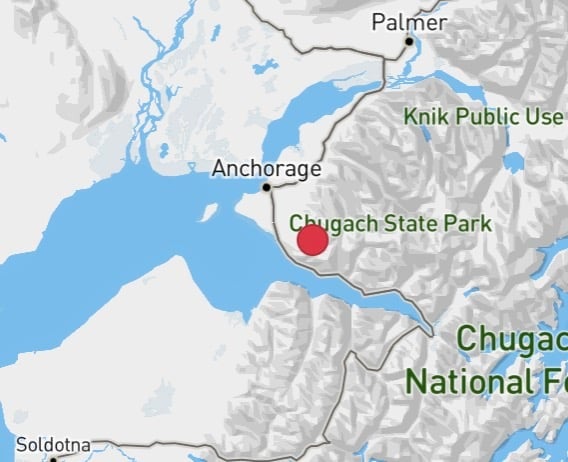
Three hikers experienced a harrowing ordeal on Saturday, April 25th, 2026, when they were caught and carried by a substantial avalanche on the north side of Peak 3 within Alaska’s expansive Chugach State Park. While the incident resulted in injuries for multiple individuals, emergency responders and park officials have confirmed that there were no fatalities. The swift and coordinated response from various groups, including fellow recreationists, professional rescue teams, and law enforcement, played a critical role in managing the aftermath of the dangerous event.
The avalanche, described as very large, occurred on a steep slope characterized by significant wind loading, a common precursor to avalanche formation in mountainous terrain. Preliminary assessments by the Chugach Avalanche Center indicate the slide was substantial in scale, averaging three to six feet in depth, approximately 450 feet in width, and descending roughly 1,200 vertical feet. The resulting debris field reached depths of up to 13 feet in places, highlighting the immense power of the snow mass that was released. This incident serves as a stark reminder of the inherent risks associated with winter backcountry recreation in Alaska’s rugged landscapes.
Chronology of the Incident and Rescue Efforts
The sequence of events began on the afternoon of Saturday, April 25th, 2026. At approximately 1:30 PM local time, a group of three hikers triggered a large avalanche while traversing the north-facing terrain of Peak 3. The snow slab released carried the individuals down the slope, resulting in injuries.
Within minutes of the avalanche, other groups recreating in the vicinity observed the event and immediately initiated a response. Their quick actions to reach the scene and assess the situation were crucial in the initial stages of the rescue.
Concurrently, the Chugach Avalanche Center was alerted to the incident. Their team, along with the Alaska Mountain Rescue Group, Alaska State Troopers, and Chugach State Park personnel, were mobilized. The coordinated effort involved multiple agencies and organizations working in tandem to ensure the safety and well-being of the stranded hikers.
The Alaska Mountain Rescue Group, a highly trained volunteer organization specializing in backcountry rescues, played a pivotal role in providing advanced medical care and extricating the injured hikers from the debris. Their expertise in avalanche rescue techniques, including the use of specialized equipment and search protocols, was instrumental in a successful outcome given the challenging conditions.
Details of the Avalanche and Snowpack Conditions
The avalanche that engulfed the hikers was a significant event, characterized by its size and the depth of its debris. The Chugach Avalanche Center’s detailed observation summary provided critical insights into the factors contributing to the slide.
Key Avalanche Characteristics:
- Location: North side of Peak 3, Chugach State Park, Alaska.
- Trigger: Hiker-triggered.
- Size: Large, estimated width of 450 feet.
- Depth: Average depth of 3-6 feet, with debris up to 13 feet deep.
- Vertical Run: Approximately 1,200 vertical feet.
- Released Layer: The investigation revealed the avalanche released to the ground, indicating a failure on a deeply buried weak layer. This layer was identified as large, "chained" depth hoar facets. Depth hoar, a type of crystalline snow that forms in air-filled spaces within the snowpack, is notoriously weak and prone to failure, especially when it becomes well-developed.
- Overlying Slab: The snow slab that slid was composed of multiple layers. The sides of the avalanche path indicated release on the same depth hoar layer or on facets beneath a hard wind slab. The wind slab itself was described as "finger to knife hard," suggesting it had been compacted and consolidated by wind action, creating a strong but brittle layer.
- Snowpack Moisture: The entire snowpack was reported to be moist, which can contribute to instability. Blocky debris, over one to two meters deep, was a common observation in the avalanche path.
- Elevation Range: The avalanche initiated at approximately 3,500 feet and ran down to below 2,400 feet.
The presence of well-developed depth hoar is a significant concern in avalanche forecasting. This structure forms when temperature gradients within the snowpack cause ice crystals to sublimate and re-deposit, creating large, cup-shaped crystals that have very little strength. The "chained" nature suggests these weak crystals were interconnected, forming a more cohesive but still highly unstable layer.

Contributing Factors and Snowpack Analysis
The Chugach Avalanche Center’s analysis highlighted several critical factors that contributed to the avalanche’s formation and severity:
- Wind Loading: The north-facing slope was subject to significant wind loading. Winds can transport snow from exposed areas and deposit it in sheltered locations, creating thicker, denser slabs that are more prone to failure. These wind slabs can sit precariously atop weak layers.
- Persistent Weak Layer: The underlying depth hoar represented a persistent weak layer. These layers can remain unstable for extended periods, posing a threat even after significant snowfall has ceased. The fact that the avalanche released to the ground indicates a complete propagation of the fracture through the snowpack, a particularly dangerous scenario.
- Moist Snowpack: A moist snowpack can reduce friction between layers, making it easier for an avalanche to propagate. It can also indicate recent warming or precipitation that could have further stressed weak layers.
- Steep Terrain: The steep gradient of the slope (estimated to be over 30 degrees in the release zone) is a fundamental requirement for avalanche formation.
The observation of an older, large avalanche on an adjacent slope to the east, likely from the previous day, further underscored the unstable conditions present in the area. Additionally, ongoing wind loading and variable precipitation were noted, suggesting that the avalanche danger remained high.
Official Responses and Safety Warnings
The Chugach Avalanche Center expressed relief that no lives were lost in the incident, emphasizing the potentially fatal consequences of such a large avalanche. Their observation summary serves as a critical warning to backcountry users.
"This incident could have very easily resulted in deaths, and the folks at Chugach Avalanche Center are very happy that everyone was able to return home," the center stated in their report. They reiterated the danger posed by the deep and hard wind slabs and the underlying impressive depth hoar.
The center also noted that the avalanche buried over 100 yards of the Powerline trail, a popular route for hikers and skiers, highlighting the potential impact on established recreation areas.
The incident has led to renewed calls for caution and adherence to avalanche safety protocols. Backcountry users are strongly advised to:
- Consult Avalanche Forecasts: Always check the latest avalanche forecast from reputable sources like the Chugach Avalanche Center before venturing into the backcountry.
- Carry Essential Safety Gear: Ensure you have an avalanche transceiver, probe, and shovel, and know how to use them.
- Travel with Experienced Partners: Never travel alone in avalanche terrain.
- Maintain Situational Awareness: Continuously assess snowpack conditions, weather, and terrain.
- Educate Yourself: Consider taking an avalanche safety course to learn about snow science, risk assessment, and rescue techniques.
Broader Implications and Analysis
The Peak 3 avalanche incident underscores the persistent and often underestimated dangers of backcountry travel in mountainous regions like Alaska. While the immediate outcome was positive in terms of no fatalities, the event serves as a critical case study for avalanche professionals and the public alike.
Key Implications:
- Underestimation of Risk: The fact that a group of hikers triggered such a large avalanche highlights a potential underestimation of the current snowpack instability. Even experienced individuals can be caught off guard by rapidly changing conditions or by underestimating the depth and connectivity of weak layers.
- Importance of Professional Forecasting: The detailed analysis provided by the Chugach Avalanche Center is invaluable. These observations help refine forecasting models and provide crucial real-time information to the public. The reliance on accurate and timely avalanche forecasts is paramount for safety.
- Effectiveness of Rescue Systems: The rapid and effective response from multiple agencies and the actions of good samaritans demonstrate the strength of Alaska’s emergency response network for backcountry incidents. The seamless coordination between civilian rescuers, park rangers, state troopers, and specialized mountain rescue teams is a testament to preparedness.
- Long-Term Snowpack Stability: The mention of "unusually dangerous snowpack" by the Chugach Avalanche Center suggests that underlying structural weaknesses may persist. This implies that avalanche conditions could remain hazardous for an extended period, even as the season progresses. The presence of deep depth hoar is a particularly concerning indicator of long-term instability.
- Public Awareness and Education: Incidents like this serve as powerful reminders of the need for continuous public awareness campaigns regarding avalanche safety. Education is the first line of defense for anyone venturing into avalanche-prone terrain. The goal is to equip individuals with the knowledge and skills to make informed decisions and avoid dangerous situations.
The successful rescue of the injured hikers is a positive outcome, but the event itself is a stark warning. The Chugach State Park, while a beloved destination for outdoor enthusiasts, demands a profound respect for its wild and dynamic environment. The lessons learned from this near-tragedy will undoubtedly inform future safety protocols and reinforce the critical importance of avalanche awareness and preparedness in Alaska’s backcountry. The ongoing monitoring of snowpack conditions by the Chugach Avalanche Center remains essential for guiding safe recreation in the region.

