
The core of elite performance lies in the distinction between raw physical capacity—measured in a static, controlled gym environment—and usable performance on the slope. While traditional strength training programs often prioritize the development of maximal force, the reality of World Cup competition demonstrates that an athlete’s ability to access that strength is governed by a complex, dynamic nervous system. This article examines the intersection of neuroscience and biomechanics in the context of high-performance alpine skiing, providing a framework for understanding why strength alone does not dictate success.
The Neurological Regulation of Force
The human nervous system does not function as a simple on-off switch for muscular contraction. Instead, it operates as a sophisticated command center, integrating a constant stream of sensory feedback, mechanical stress, perceived risk, and historical experience to organize movement. When a skier enters a turn, the nervous system makes instantaneous decisions regarding motor-unit recruitment, firing rates, and reflex modulation.
Research indicates that the nervous system often exercises a "protective" form of inhibition when it perceives the environment to be threatening or unfamiliar. This is not necessarily a failure of the athlete, but rather an adaptive response. For instance, when a skier encounters an icy, high-speed section of a course, the brain may limit motor-unit recruitment to prevent tissue damage or structural failure, resulting in a performance that feels "stiff" or "guarded."
Disinhibition, the process by which this regulatory "brake" is released, is a critical area of study. While eccentric strength training has been shown in clinical trials to reduce corticospinal inhibition—essentially teaching the nervous system that it is "safe" to produce more force—the application of this to the ski hill is nuanced. The goal for coaches and athletes is to facilitate a state where the nervous system is confident enough to express maximal power without sacrificing the precision required for high-level technical control.

Chronology of Neuromuscular Research in Athletics
The evolution of our understanding of force expression has been marked by several key scientific milestones:
- 1990s: The Rise of EMG Studies: Early electromyographic (EMG) research began to map how muscle activation patterns shift during high-impact landings. These studies confirmed that athletes reorganize their movement strategies when faced with uncertainty, such as unknown drop heights.
- 2005-2010: The Eccentric Training Shift: Researchers identified that the nervous system responds differently to eccentric (lengthening) muscle actions compared to concentric (shortening) actions, leading to a revolution in how ski academies approached pre-season training.
- 2015-Present: Integration of Perceptual-Motor Training: Current research, notably from organizations like the Rowmark Ski Academy, has moved beyond simple force production, focusing on how visual perception and environmental uncertainty influence the "bottleneck" of neurological output.
Data-Driven Performance Analysis
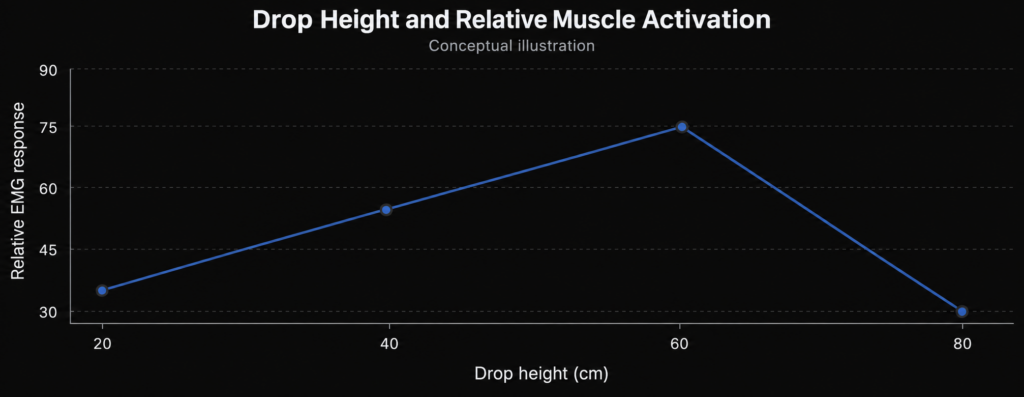
Studies of single-leg landings and drop-jump maneuvers provide a window into the skier’s experience. Data shows that as mechanical demands increase—such as increasing the height of a jump or the hardness of the landing surface—the body does not simply scale up its force production linearly. Instead, there is often a "drop-off" point where the nervous system shifts strategy, often increasing cocontraction (the simultaneous activation of agonist and antagonist muscles).
While cocontraction increases joint stability, it can be detrimental to the fluid movement required in a race turn. If an athlete relies too heavily on protective cocontraction, they lose the ability to refine their edge angles and pressure control. The implication for coaches is clear: training must be designed to expose the athlete to "controlled chaos." By simulating the fatigue and sensory overload of a race course in a controlled training setting, coaches can train the nervous system to remain "disinhibited" under pressure.
Building a Physical Reserve
A critical component of this performance framework is the concept of a "physical reserve." If an athlete requires 90% of their maximal physical capacity to navigate a routine turn, they are operating with an incredibly thin margin for error. Any change in snow conditions, a sudden gust of wind, or a slight miscalculation in line choice will push the athlete beyond their current physiological ceiling, forcing a breakdown in technique.
By increasing the absolute physical reserve—improving maximal strength, power, and tissue tolerance—the same turn might only require 60% of the athlete’s capacity. This provides a "buffer zone." When the nervous system perceives that the athlete has a surplus of capacity, it is less likely to trigger the protective inhibitory mechanisms that limit speed and performance. Consequently, the athlete can ski with greater relaxation, better flow, and more precise edge control, even as the race conditions become more extreme.
The Four Components of Performance
Experts categorize the requirements for elite alpine skiing into four interconnected domains:
- Force Capacity: The raw, physiological potential of the musculature to generate and withstand load.
- Force Regulation: The nervous system’s ability to "throttle" force, knowing exactly when to express it and when to conserve it.
- Coordinated Expression: The technical ability to transfer generated force through the boots and skis into the snow surface effectively.
- Perceptual-Protective Threshold: The mental and neurological limit at which the brain decides to prioritize safety over performance.
Implications for Training and Development
The findings suggest that the traditional approach to athlete development—which often emphasizes gym-based strength gains as the primary goal—is incomplete. While maximal strength is the foundation, it is effectively useless if it cannot be transferred to the snow.
Coaches at high-performance centers are increasingly adopting a "transfer-centric" model. This involves:
- Progressive Eccentric Loading: Using heavy, slow movements to prepare tissues, followed by high-speed, reactive movements to train the nervous system.
- Environmentally Variable Training: Moving away from static drills and toward scenarios that introduce uncertainty, forcing the athlete to solve motor problems in real-time.
- Refinement of Technical Feedback: Focusing on the "feel" of force transfer rather than just the visual outcome of the turn.
As the U.S. ski community continues to refine its athlete development models, the focus is shifting toward a more holistic view of the skier. Rowmark Ski Academy, through its ongoing Science Corner series, emphasizes that the best athletes are not necessarily those who can lift the most weight, but those who have mastered the art of regulating and coordinating their power. By expanding the conditions under which an athlete can remain coordinated, coaches are not just building stronger skiers; they are building more adaptable, resilient, and effective competitors.
The path to the podium is paved with more than just muscle; it is a complex negotiation between the brain and the mountain. Success requires that the athlete, the coach, and the training plan all respect the profound influence of the nervous system. Ultimately, the objective of modern sports science in skiing is to ensure that when the gate drops and the speed increases, the athlete’s physical capacity is not inhibited by the very systems meant to protect them, but is instead fully available for the demands of the course.

