
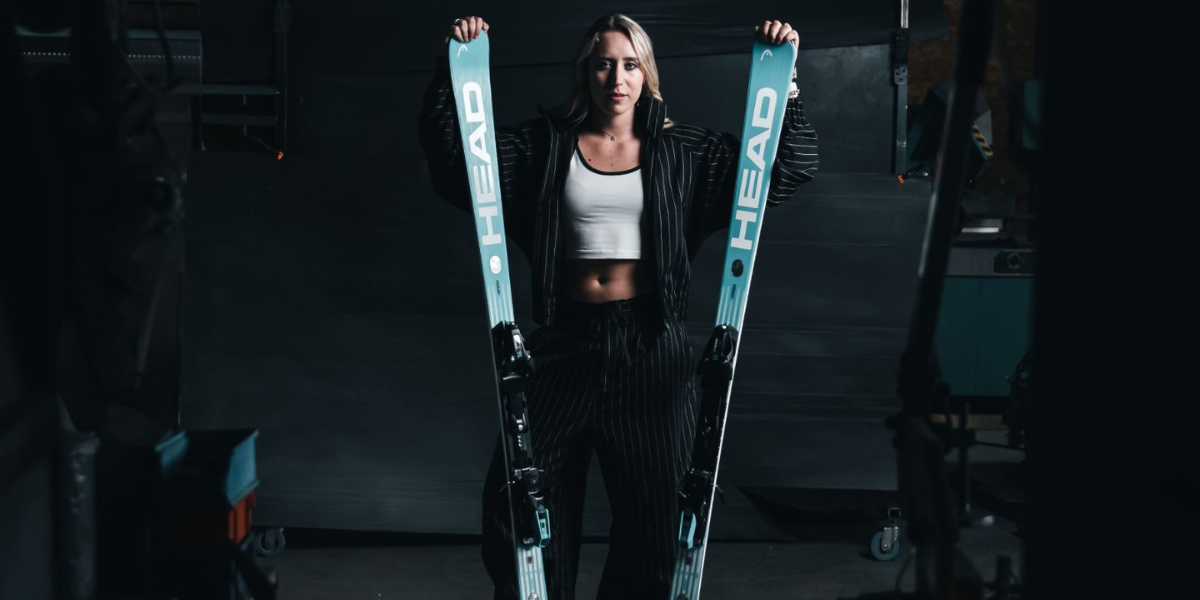
At just 19 years old, Albanian alpine skiing sensation Lara Colturi is not merely adapting to change; she is actively pursuing an elevated trajectory in her already remarkable career. Her recent decision to transition to HEAD, one of ski racing’s most storied and successful brands, signals a profound commitment to unlocking her full potential, driven by an unwavering belief that another level of excellence is within her grasp. This pivotal equipment switch, coming at a natural inflection point in her burgeoning career, underscores a meticulously calculated strategy for continued advancement rather than a reactionary pivot.
A Meteoric Rise and Consistent Progression
Colturi has, in a remarkably short span, carved out a formidable presence on the World Cup circuit. Having completed four demanding World Cup seasons by the conclusion of 2025-26, she has already graced the podium seven times, firmly establishing herself as one of the sport’s most promising young talents. Her ascent has been characterized not by sudden, fleeting bursts of brilliance, but by a steady, deliberate accumulation of experience and results.
Her breakthrough onto the elite stage was marked by three World Cup podium finishes during the 2024-25 season, a testament to her burgeoning skill in both slalom and giant slalom. Demonstrating an impressive capacity for continuous improvement, Colturi then elevated her performance further in the 2025-26 season, adding four more podiums to her tally. This consistent progression cemented her status as a legitimate contender among the world’s best in the technical disciplines, routinely challenging established champions. Her ability to consistently deliver top-tier performances against seasoned veterans speaks volumes about her inherent talent, mental fortitude, and dedicated work ethic. Her overall World Cup standing has seen a year-on-year improvement, with her ranking in the top 15 of both slalom and giant slalom disciplines by the end of the 2025-26 season, a remarkable feat for an athlete of her age and independent program.
The Strategic Imperative of an Equipment Change
The decision to change equipment manufacturers is one of the most significant and consequential choices an alpine skier can make. It transcends mere brand loyalty, delving deep into the intricate relationship between athlete, ski, boot, and binding. For Colturi, this move to HEAD after four years with Tecnica Blizzard represents more than just a new sponsor; it is a strategic investment in her future, aligning herself with a brand renowned for its cutting-edge technology and unparalleled success in competitive racing.
HEAD’s pedigree in alpine skiing is virtually unmatched. The brand has consistently dominated various disciplines, producing equipment that has propelled numerous athletes to World Cup titles, Olympic gold medals, and World Championship glory across generations. Icons like Hermann Maier, Lindsey Vonn, Aksel Lund Svindal, and Ted Ligety, among many others, have achieved their greatest successes on HEAD equipment, building a legacy of innovation and performance. The brand’s commitment to research and development, coupled with its extensive athlete testing programs, ensures its equipment remains at the pinnacle of performance. This historical context of excellence and the brand’s contemporary leadership in racing—a fact Colturi herself acknowledged, stating, "HEAD has proven to be the leading company in racing in recent seasons"—made the opportunity to test their equipment irresistible.
For an athlete like Colturi, who has completed her first Olympic cycle and four seasons on the demanding World Cup tour, the timing was opportune. Her skiing is evolving, and she seeks every possible advantage to refine her technique and maximize her speed. This transition is not about abandoning a successful past but rather about embracing a future optimized for peak performance. It reflects a proactive mindset, seeking marginal gains that can differentiate her in a sport where hundredths of a second separate victory from defeat. The detailed testing process following the World Cup Finals in Norway, where she meticulously evaluated both giant slalom and slalom equipment, highlights her analytical approach. "The team of HEAD proposed different solutions, and run after run, we focused on what worked better for me, after my feedback and some analysis," Colturi explained, emphasizing the collaborative and data-driven nature of her decision. This careful consideration underlines the profound impact such a change can have, not just on performance, but on a skier’s confidence and adaptability to varying snow conditions and course settings.
A Season of Milestones and Lessons Learned (2025-26)
The 2025-26 season, while ultimately successful in terms of podium finishes, was also a crucible of learning for Colturi. She described it as a "positive one," particularly noting her strong start in slalom. "It started really well, especially in slalom," she recounted. "I felt very solid and could ski well, especially at the beginning of the season, when we find conditions with a hard snow surface." This early season form was critical in building momentum and confidence.
A standout moment was her second-place finish in the Levi slalom, achieved on her 19th birthday. This podium underscored her potential to contend for victories and marked a significant personal milestone, earning her valuable World Cup points and boosting her slalom ranking. However, the season was not without its trials. Colturi battled illness for several weeks, even competing in Kronplatz with a high fever, a testament to her determination and resilience. Despite often delivering strong first runs, translating that initial advantage into consistent two-run performances proved to be a persistent challenge in several races. For instance, in some technical events, a strong top-10 first run might be followed by a more cautious or error-prone second run, leading to a slip outside the desired result. Yet, these experiences, rather than deterring her, fueled her motivation. "Generally, I am satisfied because I gave it my all, and I am motivated to do better," she affirmed.
Her mature reflection on these challenges encapsulates her philosophy: "They say you win or you learn, and I had several races of learning. I risked more in some races to find the limit. In past seasons, that’s not often been the case. And despite being on the tour for four seasons, I am still a rookie. I am 19 years old. There is still much to learn." This humility, coupled with an insatiable hunger for improvement, is a hallmark of elite athletes who achieve sustained success. It signifies a willingness to push boundaries and accept temporary setbacks as part of a larger developmental process.
The Unconventional Path: Albania and a Family-Centric Team
Lara Colturi’s journey in alpine skiing has been anything but conventional. Born into one of Italy’s most celebrated ski racing families—her mother, Daniela Ceccarelli, is a 2002 Olympic Super-G gold medalist, and her father, Alessandro Colturi, is a former coach and highly respected figure in Italian skiing—Lara chose to represent Albania throughout her FIS career. This unique decision has allowed her to cultivate a highly personalized, close-knit program built around the individuals she trusts most.
Representing Albania has offered distinct advantages, fostering a unique sense of independence and control over her training and competition environment, sidestepping the often rigid structures of larger national federations. "I am most thankful because I could and I can continue skiing with my parents," Colturi expressed. This family-centric model provides a stable and supportive foundation, minimizing external pressures and maximizing focus on her individual development. It also means that decisions regarding her schedule, training camps, and equipment choices can be made with her specific needs as the paramount consideration. Furthermore, her success has had a tangible impact on winter sports in Albania, a nation not traditionally known for alpine skiing. Her performances have sparked increased interest and engagement within the country. "I’ve experienced a lot of development with the federation, with the Albanian audience in general, who are now more interested in winter sports. That is a very positive thing," she noted, highlighting her role as an ambassador for the sport in a non-traditional skiing nation and contributing to the growth of the Albanian Ski Federation, which has been steadily building its infrastructure since its inception.
Her core team, led by her parents Daniela Ceccarelli and Alessandro Colturi as coaches, is augmented by a cadre of highly specialized professionals. Longtime serviceman Andrea Vianello ensures her equipment is perfectly tuned, a critical factor given the precision required in World Cup racing. Osteopath Martino Delleani addresses her physical well-being and recovery, crucial for enduring the demanding World Cup calendar. Slalom coach Claudio Ravetto and performance specialist Luisa Finotti contribute to her technical refinement and overall physical conditioning. A significant addition this offseason is athletic trainer Martin Hager, whose impressive resume includes previous work with French World Cup star Alexis Pinturault. Hager now spearheads Colturi’s physical preparation, bringing an elite level of expertise to her program as she enters this next critical phase of her career. This carefully assembled, albeit small, team emphasizes trust, personalized attention, and a strategic blend of experience, allowing Colturi to maintain a sense of "home" even amidst constant travel. "Even if I’m far away from home, I’m kind of always home," she mused.
Olympic Debut and Future Aspirations
The 2026 Olympic Winter Games in Cortina d’Ampezzo marked another significant milestone for Colturi. While she initially hoped to approach the Olympics like any other race, the sheer scale and atmosphere of the event quickly disabused her of that notion. "It was a great experience," she recalled, "I wanted to live it like any other race, but then you realize it’s not a normal race." The unique pressures and global spotlight of the Olympics present a different mental challenge for even the most seasoned athletes.
Her Olympic preparation was far from ideal, hampered by several weeks of illness, including a cold, fever, lung problems, weakness, and exhaustion. Despite these formidable challenges, Colturi delivered a memorable performance, particularly in the Giant Slalom. Her crossing the finish line of the first run with the fastest time was an indelible moment, a flash of brilliance that showcased her potential on the biggest stage. "When I crossed the line of the GS first run with the best time, it’s a memory I will never forget," she stated. This achievement, under duress, further cemented her reputation for resilience and raw talent. The unique beauty of Cortina, with its stunning scenery and vibrant finish area atmosphere, also left a lasting impression. Representing Albania on this global stage was special, yet not unfamiliar, as she already considered Albania "her team" since joining the federation in 2022.
Looking ahead, Colturi plans to reintroduce Super-G into her World Cup program for the upcoming season. This decision, following her securing the necessary FIS points for favorable World Cup start positions in the discipline, marks a crucial step in her long-term development as a multi-disciplinary skier. FIS points are a global ranking system determining start order, with lower points indicating better performance and thus better starting positions in races. Her final race of the 2025-26 alpine calendar, on April 22, was a Super-G event where she successfully secured these vital points. "I was happy to be able to do that, as I finished on a high note and secured the FIS points I needed to compete in the SG World Cup next season," she affirmed, adding that "the plan is to compete in some of them." This cautious approach underscores her philosophy of steady progress: "It’s a positive thing, but my goal is to perform at my best, not overdoing it, but advancing step by step into SG. I know I have to gain experience on the course, on everything, and I put no pressure on myself for bibs." This measured re-entry into a speed discipline, after a previous injury in 2023, demonstrates her prudence and focus on sustainable growth.
Rigorous Offseason Preparation and Holistic Development
Colturi’s offseason transformation extends beyond the equipment change, encompassing a significant overhaul of her physical preparation. She is undertaking an extended block of dryland training in Austria, collaborating closely with her new athletic trainer, Martin Hager, who is based there. This strategic location allows for intensive, focused work. She also plans to utilize the renowned Red Bull Athlete Performance Center facilities, known for their state-of-the-art training methodologies and comprehensive support for elite athletes across various sports. Following this dryland phase, she will transition back to snow training in Europe—likely Saas-Fee, a popular glacier training site—before continuing her preparation in New Zealand, maximizing her time on snow across different hemispheres to hone her skills on diverse snow conditions.
Crucially, Colturi did not take an extensive break immediately after the demanding World Cup Finals. Instead, she immediately immersed herself in equipment testing and further Super-G training and racing, demonstrating her relentless pursuit of improvement. This measured, continuous approach reflects her understanding that sustained success in alpine skiing requires year-round dedication and a seamless transition between competition and preparation phases.
Beyond the slopes and gym, Colturi maintains a balanced life. After her rigorous post-season schedule, she took a well-deserved break in May, embarking on an RV trip through Albania, exploring parts of her adopted country for the first time. "It was a great trip, even if the weather wasn’t always perfect," she recounted. "I really enjoyed being off from training and racing." These moments of respite, coupled with personal interests like playing tennis, spending time with friends, relaxing by lakes and rivers, and enjoying the occasional barbecue, are vital for mental and physical rejuvenation before the grueling winter season recommences. This ability to disconnect and recharge is a hallmark of mentally resilient athletes.
Looking Ahead: The Path to Completeness
As the new season approaches, Colturi’s focus is firmly back on racing. She eagerly anticipates returning to Killington, a World Cup venue in the United States known for its enthusiastic crowds and challenging slalom/giant slalom courses, which she missed last season. She also holds aspirations to compete in Super-G at Val di Fassa, a race held near her winter base in Italy, offering a potential "home race" advantage. Her simple yet profound observation, "Every race has something special," encapsulates her genuine passion and appreciation for the sport, regardless of the discipline or location.
With seven World Cup podiums, four seasons of invaluable experience on the World Cup circuit, and an Olympic appearance under her belt, Lara Colturi has undeniably cemented her status as one of alpine skiing’s most compelling young talents. Yet, she articulates her future with the same curiosity and ambition characteristic of an athlete convinced her best performances are still to come. The strategic partnership with HEAD, the meticulously structured new training regimen with Martin Hager, and the deliberate reintroduction of Super-G into her World Cup schedule are not indicative of a desire to fundamentally change who she is as a skier. Instead, these moves are integral components of a thoughtful, long-term plan designed to evolve her capabilities, refine her craft, and ultimately, make her a more complete and formidable force on the global alpine stage. Her pursuit is not reinvention, but rather, an relentless quest for completeness, aiming to challenge for titles across multiple disciplines and further elevate Albanian representation in elite winter sports.

