
On May 6, 2026, the Bonneville judicial court in Haute-Savoie, France, delivered a significant verdict in a case that has resonated throughout the international snowsports community. A 43-year-old male skier was found guilty of the manslaughter of a five-year-old British girl following a high-speed collision in the resort of Flaine. The court sentenced the defendant to a 12-month suspended prison term and ordered the payment of €165,000 (approximately £142,000) in damages to the bereaved family. This ruling concludes a legal process that began in 2022 and has since ignited a fierce debate regarding the adequacy of safety regulations on European ski slopes, the role of speed-tracking technology, and the responsibility of experienced skiers in beginner zones.
The 2022 Incident: A Chronology of the Tragedy
The incident occurred during the peak of the 2022 ski season on a blue-graded piste in Flaine, part of the Grand Massif ski area. The victim, a young British girl, was participating in a supervised ski school lesson. According to court records and eyewitness accounts, she was positioned at the rear of her group’s "snake" formation—a standard instructional method where children follow an instructor in a line.
As the group navigated a section of the slope, the defendant, an experienced skier, struck the child from behind. Data presented during the trial indicated that the man was traveling at approximately 60 kilometers per hour (37 mph) at the moment of impact. The force of the collision was so great that both the defendant and the victim traveled a "considerable distance" down the mountain before coming to a rest.
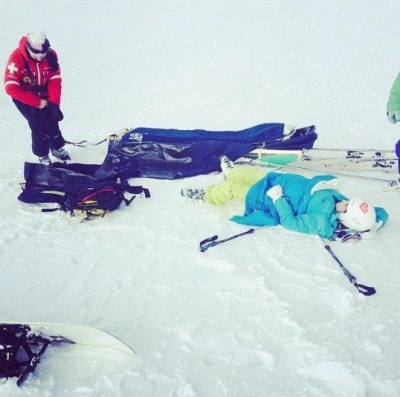
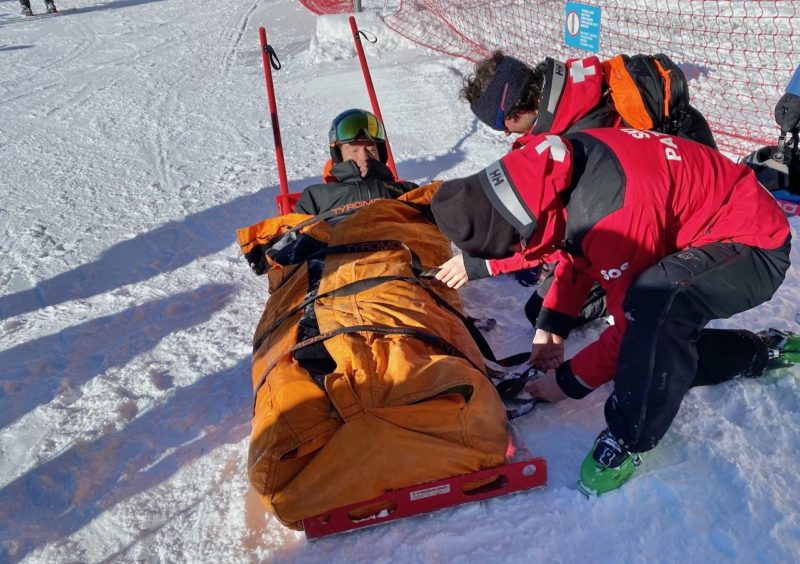
Emergency services and piste patrollers provided immediate first aid at the scene. The child was stabilized and transported via helicopter to the Sallanches hospital. Despite the efforts of medical professionals, she was pronounced dead shortly after arrival. The cause of death was attributed to multiple traumatic injuries sustained during the high-velocity impact.
Legal Proceedings and the Defendant’s Admission
During the trial at the Bonneville judicial court, the prosecution focused on the "inappropriate" nature of the defendant’s speed relative to the environment. Under French law, involuntary homicide (manslaughter) in a sporting context requires the prosecution to prove a "manifestly deliberate violation of an obligation of safety or prudence."
The defendant acknowledged in court that his speed was likely excessive for the conditions. Blue runs are designated for intermediate and beginner skiers, and the presence of a ski school group should have necessitated a significant reduction in speed. The court heard testimony regarding the "FIS Rules of Conduct," specifically Rule 2, which states that "a skier or snowboarder must move in control" and "must adapt his speed and manner of skiing to his personal ability and to the prevailing conditions of terrain, snow, and weather as well as to the density of traffic."
The 12-month suspended sentence has drawn mixed reactions from the public. Some observers suggest the sentence is a formal recognition of criminal negligence that will set a precedent for future collisions, while others, including many in the PlanetSKI readership, have argued that a suspended sentence offers little justice for the loss of a young life.
Statistical Context and the Growing Problem of Piste Speed
While skiing is statistically safer than many other high-speed activities, the severity of collisions involving high velocity is a growing concern for resort operators. According to data from the Association des Médecins de Montagne (MDM), which tracks injuries in French resorts, collisions between skiers account for approximately 5% to 10% of all reported injuries. However, these incidents are disproportionately responsible for the most severe traumas and fatalities.
The physics of such collisions are often compared to vehicular accidents. A skier weighing 80kg traveling at 60km/h possesses kinetic energy comparable to a small car moving at lower speeds, but without the crumple zones or safety features of an automobile. When such force is directed at a 20kg child, the results are almost invariably catastrophic.
The rise of "speed culture" on the slopes has been identified as a primary contributing factor. With the advent of modern carving skis, even intermediate skiers can reach high speeds with relatively little effort. This technical advancement has not always been matched by a corresponding increase in situational awareness or the ability to perform emergency stops.
The Role of Speed-Tracking Apps and Ego
A significant portion of the public reaction to the Flaine verdict has centered on the influence of digital tracking technology. Applications such as Strava, Slopes, and Garmin allow users to record their maximum speeds and share them on social media leaderboards.
Critics argue that these apps incentivize "straight-lining"—skiing directly down the fall line without turning—to achieve a higher "max speed" reading. This behavior is frequently observed on blue and red runs, where the terrain is smooth enough to encourage speed but often crowded with less experienced skiers. Readers of PlanetSKI have proposed that resorts should ban the use of such apps or that app developers should remove "maximum speed" as a trackable metric to discourage reckless behavior.
Proposed Reforms: Enforcement, Technology, and Education
The Flaine tragedy has led to a call for a fundamental shift in how ski resorts are managed. Several key themes have emerged from the discourse among snowsports enthusiasts and safety experts:
1. The Implementation of "Ski Police"
In North American resorts, "Yellow Jackets" or safety patrols are a common sight. These officials have the authority to revoke lift passes for reckless skiing. In contrast, European "Piste Patrollers" (Pisteurs-Secouristes) are primarily focused on mountain safety, avalanche control, and rescue, rather than policing behavior. There is a growing demand for a dedicated enforcement body in European resorts to monitor speed in "slow zones" and near ski schools.
2. Technological Monitoring and Geo-Fencing
Proponents of technological solutions suggest that lift passes could be equipped with GPS chips. If a pass holder is detected traveling at excessive speeds in a designated beginner area, the pass could be automatically flagged or deactivated at the next lift gate. Furthermore, some suggest that "speed cameras" or radar guns, similar to those used on roads, should be placed at "choke points" where slopes narrow.
3. Structural Changes to Ski School Formations
The Flaine incident highlighted the vulnerability of the "tail" of a ski school group. Some experts suggest that for young children, groups should have two adults—one at the front to lead and one at the rear to act as a "buffer" and monitor approaching traffic.
4. Mandatory Insurance and Licensing
Drawing parallels to the automotive industry, some argue that skiers should be required to pass a basic safety test or hold a "license" that demonstrates knowledge of the FIS rules before being allowed on public slopes. Mandatory civil liability insurance is already a requirement in countries like Italy, and there are calls for France to adopt similar measures.
Case Study: The Long-Term Impact of Hit-and-Run Collisions
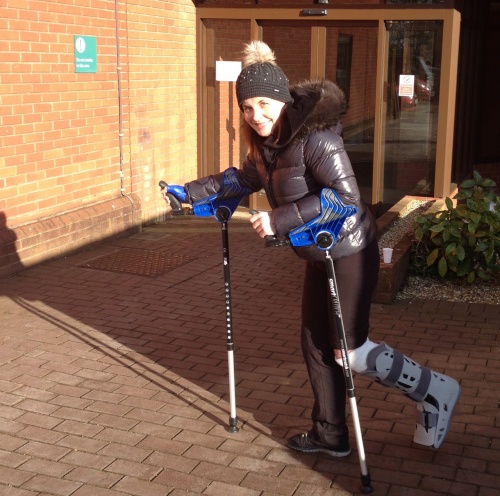
The reality of piste reckless behavior is further illustrated by the experience of Clare Meaney, a reporter who was involved in a "hit-and-run" incident in Val d’Isère in 2015. Unlike the Flaine case, the individual who struck Meaney fled the scene, leaving her with life-changing injuries.
Meaney’s journey—documented through years of rehabilitation and a eventual return to adaptive skiing—serves as a stark reminder that the consequences of a few seconds of recklessness can last a lifetime. Her case highlights a secondary issue: the difficulty of identifying and prosecuting offenders in a mountain environment where masks, helmets, and goggles provide anonymity.
Broader Implications for the Snowsports Industry
The Flaine verdict arrives at a time when the snowsports industry is under pressure to maintain its appeal in the face of rising costs and climate change. Safety is a critical component of resort reputation. If families perceive slopes as "danger zones" populated by "ego-driven" speeders, the long-term viability of family-oriented resorts may be at risk.
Resorts in Italy have already begun a more proactive approach, with local police (Carabinieri) patrolling slopes and issuing fines for skiing under the influence of alcohol or for reckless behavior. The Flaine ruling may act as a catalyst for French authorities to reconsider their traditionally "hands-off" approach to piste regulation.
The tragedy in Flaine was not an isolated accident but the result of a preventable failure to adhere to the basic principles of mountain safety. As the 43-year-old defendant begins his suspended sentence and pays the mandated damages, the industry is left to grapple with a difficult question: how to preserve the freedom and exhilaration of skiing while ensuring that the most vulnerable participants are protected from those who treat public slopes as private racetracks. The consensus among the skiing public appears clear: the era of self-regulation may need to come to an end in favor of stricter enforcement and greater personal accountability.

