
Austrian alpine skiing icon Manuel Feller has officially confirmed that he will not join the national team for their high-altitude training camp in Chile, marking a significant hurdle in his recovery from major back surgery. The 33-year-old slalom specialist, who has been battling persistent spinal complications, revealed that a recurrence of symptoms has necessitated a shift in his rehabilitation strategy, forcing him to remain in Europe to prioritize long-term physical integrity over immediate performance goals.
The decision to bypass the South American training block, which is traditionally a cornerstone of the preparation for the northern hemisphere World Cup season, underscores the fragile nature of Feller’s recovery. While he has avoided the need for a secondary surgical intervention, the recent diagnostic findings—which include a flare-up of a herniated disc and shifting disc material—have effectively set his training timeline back by at least four weeks.
A Chronology of Physical Adversity
Feller’s path to the 2026-27 season has been anything but linear. After ending his 2025-26 campaign prematurely in March to address chronic back pain that had hindered his performance, the Tyrolean underwent surgery with the hope of returning to full fitness during the off-season. Throughout the summer, he maintained a guarded silence regarding his progress, offering only sporadic updates to his fan base.
In an Instagram video addressing the situation, Feller was candid about the lack of visibility regarding his recovery process. "There hasn’t been much to show because rehabilitation isn’t particularly spectacular," he explained. "But it is also because, unfortunately, it hasn’t gone quite the way we would have hoped."
The timeline of his injury remains a point of concern for his support staff and the Austrian Ski Federation (ÖSV). Approximately eight weeks ago, as Feller began increasing his load, he experienced a symptomatic shift in his lower back. This setback was not merely a case of muscle soreness; it represented a structural complication that halted his transition from dry-land training to on-snow maneuvers. By deciding to skip the Chile camp, Feller is effectively conceding the early-season training volume that many of his rivals—such as Clément Noël and Loïc Meillard—will utilize to sharpen their edge before the Sölden opener.
Performance Context and Recent Career Milestones
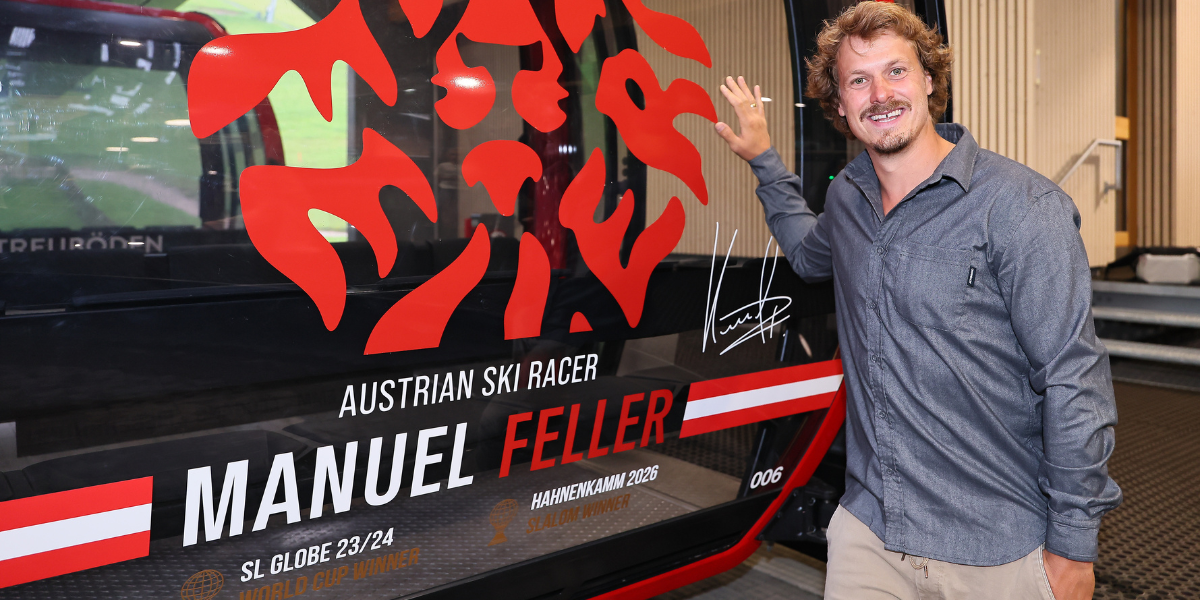
The current injury cycle contrasts sharply with the momentum Feller generated over the past two seasons. In 2024, Feller solidified his status as the premier technical skier on the circuit by securing the World Cup slalom Crystal Globe. His campaign was defined by remarkable consistency; he finished inside the top five in every slalom event on the calendar, a feat that highlighted his tactical maturity and technical precision.
Beyond the Crystal Globe, the 2025-26 season saw Feller reach emotional and career heights. In January, he secured a victory at the iconic Kitzbühel slalom, an achievement often regarded as the pinnacle for an Austrian skier. Winning on the Ganslernhang in front of a home crowd served as a career-defining moment, validating his years of persistence. Shortly thereafter, he contributed to Austria’s success at the 2026 Winter Games in Italy, securing an Olympic silver medal in the men’s team combined event. This added to his previous Olympic experience, including a silver medal from the 2018 PyeongChang Games. With seven individual World Cup victories to his name, Feller is currently in the prime of his athletic career, making his absence from training particularly impactful for the Austrian men’s technical squad.
Analysis of the Tactical Implications
From an analytical perspective, Feller’s absence from the Chile camp is a calculated risk aimed at preventing a catastrophic breakdown during the World Cup season. Elite alpine skiers rely on high-volume training on snow to recalibrate their proprioception and physical tolerance for the high-G forces encountered in slalom racing. By remaining in Austria, Feller loses the opportunity to test his back against specific, varied terrain conditions that only southern hemisphere winter training provides.
Medical experts in sports rehabilitation note that the type of spinal injury Feller is managing requires a fine balance between strengthening the core musculature and avoiding the high-impact vibrations of skiing. Should he return too early, the risk of permanent nerve damage or the necessity of a more invasive spinal fusion increases. The decision to skip the camp suggests that the ÖSV medical team and Feller’s private physical therapists have adopted a "health-first" protocol, prioritizing his ability to compete in the latter half of the season—and potentially future seasons—over his readiness for the first few races of the winter.
Official Stance and Team Dynamics
The Austrian Ski Federation has maintained a supportive, albeit cautious, stance regarding Feller’s recovery. While no official statement has been released regarding the specific medical prognosis, the consensus among observers is that Feller’s experience grants him the autonomy to determine his own readiness.
Feller has been transparent about his motivation, noting that his desire to continue racing is contingent upon his quality of life. "I said from the beginning that I would like to remain in the sport for another year or two," Feller stated. "But the condition is that it has to be fun. And it is only fun when you are fit and not in pain."
This sentiment reflects a growing trend among veteran athletes who are increasingly prioritizing longevity and life after sport. At 33, Feller is an elder statesman of the slalom circuit, and he is clearly unwilling to sacrifice his long-term health for the sake of a single season if he cannot compete at his desired level.
Looking Toward the Future
As the World Cup circuit prepares for the winter, the spotlight will inevitably turn to how Feller’s absence affects the broader field. With the season opener approaching, the Austrian team will look to depth players to fill the void left by their lead slalom technician. However, the technical discipline is notoriously difficult to master, and the loss of Feller’s data-driven approach to course inspection and line choice will be felt by the entire team.
For Feller, the immediate future involves a disciplined, home-based regimen. He has promised to provide updates as his condition improves, though he has jokingly indicated that his content will remain limited to "vacation and fishing photos" until he can return to the slopes with confidence.
The primary question remains: will he be ready for the opening World Cup slalom of the season? Feller has yet to commit to a specific return date, emphasizing that his primary goal is to reach a 100% pain-free state before attempting to gate train. Whether this requires missing the initial races of the season or simply delaying his first on-snow sessions until the late autumn, the alpine skiing world remains in a holding pattern.
The complexity of his recovery serves as a reminder of the physical toll exacted by modern slalom. As the equipment becomes faster and the courses more demanding, the body’s ability to withstand the forces remains the ultimate limiting factor. For a skier of Feller’s caliber, the battle is no longer against the clock, but against the structural limitations of his own anatomy. His fans and peers alike will be watching closely as he navigates these next few weeks of rehabilitation, hoping that the veteran can find the path back to the podium once more.

